Tropisms
Tropism is a growth response to a stimulus in plants
Phototropism: growth response to the direction of light, so they can receive light for photosynthesis
Geotropism: growth response to gravity, so they can anchor the plan and obtain mineral ions
Hydrotropism: growth response to water, some roots are attracted to water
Stimulus | Response | Shoots | Roots |
Light | Phototropism | Positive Phototropism | Negative Phototropism |
Gravity | Geotropism | Negative Geotropism | Positive Geotropism |
Water | Hydrotropism | n/a | Positive Hydrotropism (some species) |
Tropisms are controlled by auxins (plant hormone) which are produced in the tips of shoots. These stimulate cells to grow longer on one side and stop growth on the other.
Growth of shoots in light
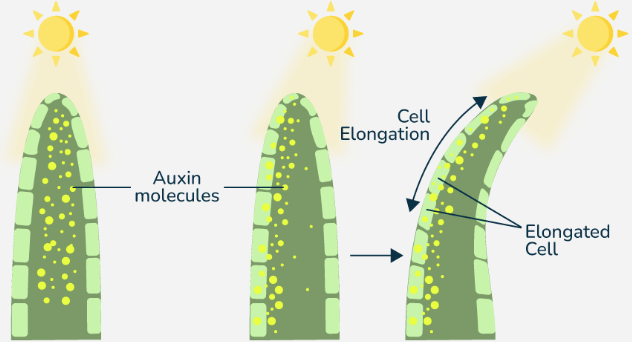
If all sides of the shoot receive the same amounts of light, the same amount of auxin is diffused, so all parts of the shoot grow equally, meaning the plant grows straight up.
If only one side receives light, the auxin will collect on the shaded side, stimulating the cells on the shaded side to elongate, this difference in growth causes the plant to curve towards the light.
Inhibition of growth in roots from gravity
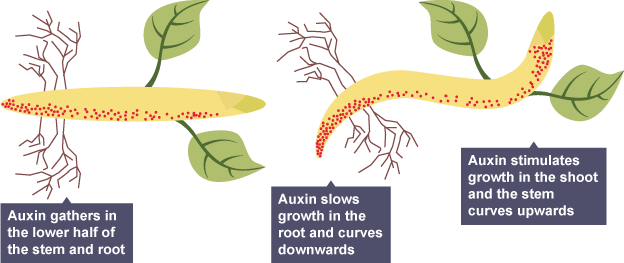
Auxins are also made in root tips and inhibits cell elongation
When roots are pointing straight down all sides receive the same amount of hormones so all cells have the same level of elongation.
When roots are growing at an angle against gravity, the collection of hormones on the lower side reduce the amount of elongation in the cells, so the root starts to curve downwards until in line with gravity.
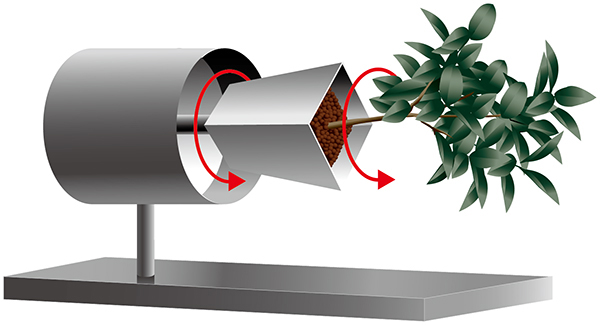
A Clinostat is a piece of apparatus (electric motor turning a cork disc). Germinating seeds can be attached to the disc. The motor turns the disc so that no directional stimulus can act on the seeds. This is used to demonstrate geotropism in roots.