Factors of Production
We've spent a lot of time so far talking about resources—whether or not they're scarce, why it's important to use them efficiently by making good choices, and what we must take into account when making those choices. In today's lesson, we're going to discuss what exactly we're referring to when we use the word resources. More specifically, we're going to talk about factors of production—the productive resources used to produce goods and services. There are four factors of production: natural resources, human resources, capital resources, and entrepreneurship.
Goods and Services

Goods

Services
Before we talk about our four factors of production, let's take a moment to define the two types of products that can be produced: goods and services. Goods are physical objects that satisfy human wants, such as diamonds, apples, or shirts. Conversely, services are actions performed for consumers. Mowing someone's lawn or running a retail store are services. Both of these types of products will require resources to produce. You can't sell apples without actually having apples as well as someone to pick them, and you can't mow someone's lawn without a lawnmower and someone to operate it.
Natural Resources
When you think of resources, the first items that might come to mind are natural resources—raw materials supplied by nature. Natural resources include everything from copper to oil to apples. Every product we consume begins with one or more of these natural resources.
To be considered a natural resource, an item must have two characteristics:
It is found in nature.
It can be used to produce goods and services.
So, just because something is found in nature, it doesn't mean it's a natural resource. Take oil, for example. Oil has existed on Earth for thousands of years. A few centuries ago, however, oil was generally considered worthless. There were no cars that needed fuel or roads that needed new asphalt. Anyone who found oil on their property would've been annoyed or merely indifferent. In order for oil to become a natural resource, humans had to find a use for it.

The value of natural resources can also change over time. Iron, wood, and grain were once critical components of every civilization. They continue to have value in the present day, but not to the same extent. Now, energy resources like oil, coal, and natural gas are more highly valued. Even their value, however, has begun to fluctuate as new energy technologies like wind and solar power threaten to make fossil fuels obsolete. In just two years, from 2014 to 2016, the price of oil fell from over $110 a barrel to $35 a barrel. Then, two years after that, it was back up to $70 a barrel.
Natural resources are finite, but there are three ways that we can increase the amount we have available to us:
The discovery of new natural resources, such as finding a new deposit of gold that can be mined
The discovery of new uses for natural resources; the discovery of how to use oil to power engines is an example of this
The discovery of new methods of extracting natural resources; there used to be fears that the world's supply of oil would run out, but the discovery of fracking allowed companies to extract oil from shale rock, greatly increasing the world's accessible oil reserves
Human Resources
Human resources refers to the human labor involved in production. Without human labor, we wouldn't be able to take advantage of the natural resources that are available to us. Workers are needed to collect those resources, turn them into usable products, and then distribute those products to consumers.
When you go to a restaurant, have you ever thought about all of the people that were involved in getting that food onto your plate? Let's say that you went to a steakhouse and ordered a tender, ten-ounce ribeye. Just at the restaurant, you were relying on the labor of several people. You were likely seated by a host, then had your order taken by the server. The cook had to make your order, and after you left, your table had to be cleaned by a busser. All of these employees were also being overseen by a manager, who might have stopped by to ask if you were enjoying your dining experience. That was a lot of people working to help you enjoy the meal!
There are even more human resources at work here, however. Someone had to raise and then slaughter the cattle that your steak came from. Then, the meat had to be processed, inspected, and shipped—all by different workers. Other people also built the building you were sitting in, produced the plate you were eating off of, and wired the lights you were seeing with. It's very likely that dozens, if not hundreds, of workers played some part in delivering you that satisfying dinner.
Capital Resources
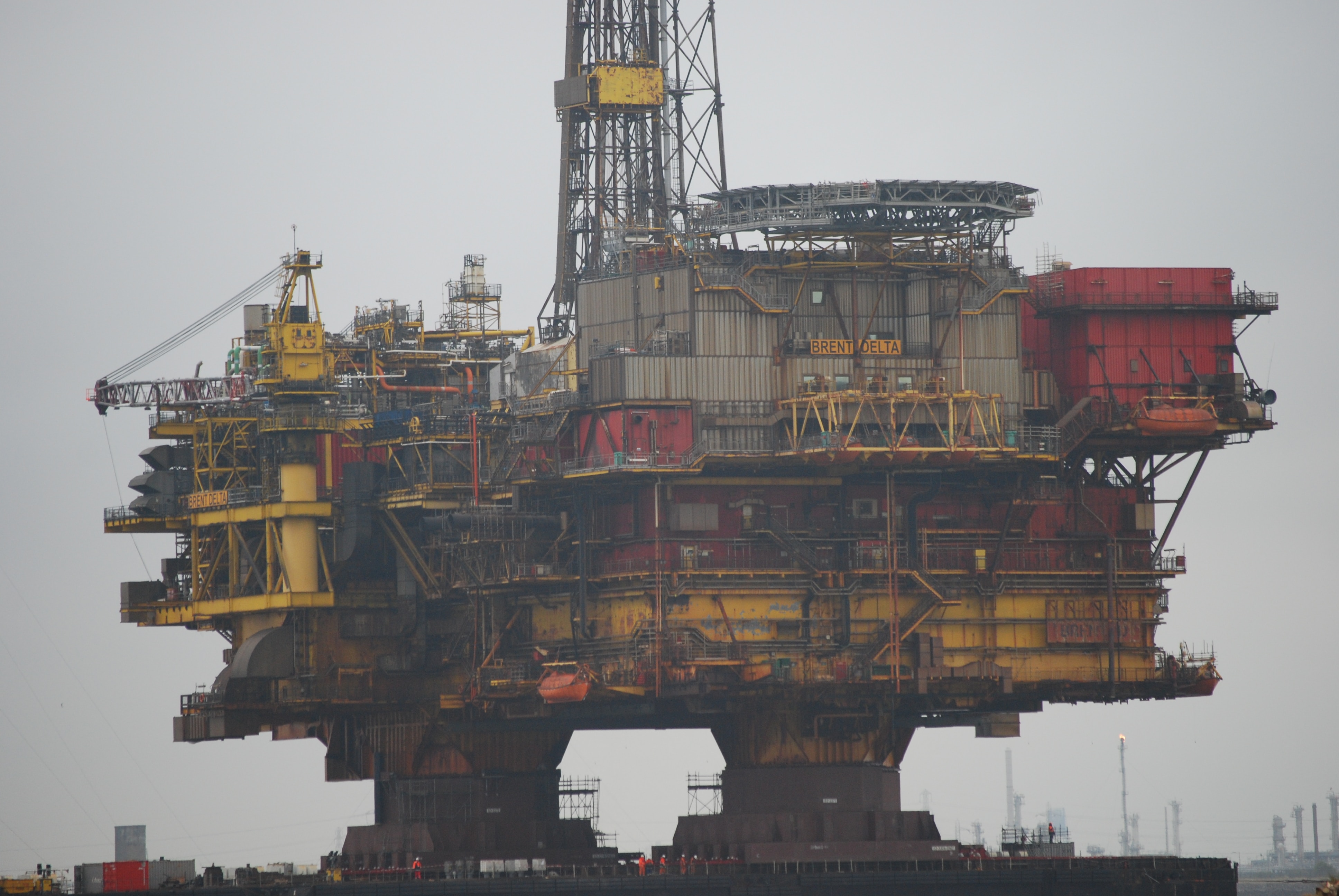
If you want to extract oil from the ocean, you first need the actual oil (the natural resource) to be there. You also need human resources to work to get the oil. But no matter how much effort they expend, the workers won't be able to get the oil from the bottom of the ocean on their own. That's where the third factor of production comes in. In order to extract the oil, the workers will need an oil rig and a drill. These are capital resources: human-made goods that are used to produce other goods or services.
In order to be considered a capital resource, a good must have two characteristics:
It was produced by people.
It can be used to produce other goods and services.
A factory is a great example of a capital resource. Factories are built by humans, and they're used to produce more goods. Tools like hammers and screwdrivers, desks and chairs in an office, and roads and airports are also capital resources.
It's important to recognize that how an item is used determines whether or not it is a capital resource. If you own a personal truck and use it to transport yourself and your family around town, then it's not a capital resource. It's not being used as a factor of production. However, if a business owns a truck that transports goods to and from factories or warehouses, then it would be considered a capital resource. It's a vehicle just like your truck, but it's being used as a factor of production.
What about money? Is that a capital resource? If you've ever paid attention to the financial world, you may have heard money referred to as capital. However, money is not in and of itself a capital resource because it doesn't directly contribute to the production of a good or service. You can't use literal money to create a product—try living in a house constructed from stapled-together dollar bills and see how that goes.
Money, however, does facilitate production by allowing individuals and companies to purchase the resources they need. Money is therefore a type of financial capital—money and credit can be used to facilitate the production of goods. It's important to understand the difference between financial capital and a capital resource. Financial capital can be used to purchase factors of production but is not actually used in production. Capital resources are themselves factors of production and are a vital part of the production process. They're the factories that make the toys, the warehouses that store them, and the trucks that transport them.
Entrepreneurship
The last factor of production is responsible for combining all the other factors in the most efficient way possible. Entrepreneurs are individuals who take risks to bring natural, human, and capital resources together in order to develop new products and start new businesses. Entrepreneurs take on these risks because they believe the potential rewards (usually profit and wealth) are worth it. The founder of Exxon was an entrepreneur. He took the natural resource of oil, the human resource of numerous workers, and the capital resources of oil rigs and drills and put them together to build a long-lasting, successful company. Entrepreneurs are essential to building a vibrant, diverse economy.
Review of Key Terms
factors of production: the productive resources used to produce goods and services
goods: physical objects that satisfy human wants
services: actions performed for consumers
natural resources: raw materials supplied by nature
human resources: human labor involved in production
capital resources: human-made goods that are used to produce other goods or services
financial capital: money and credit used to facilitate the production of goods
entrepreneurs: individuals who take risks to bring natural, human, and capital resources together in order to develop new products and start new businesses
Combining these factors of production in the most efficient way possible is essential to building a prosperous economy. Of course, this is easier said than done, and the best way to do things has been debated by economists for centuries. In the next lesson, we'll look at the economic theories of history's most famous economist, Adam Smith.