Lecture 5
Introduction to Core Concepts of Light and Visual Processing
Vision Importance: Vision is the processing of light, serving as the preferred sensory modality for most individuals due to the extensive and diverse information it provides about our surroundings. Vision allows for color differentiation, spatial awareness, and motion detection, being critical for navigating and interacting with the environment. A large portion of the human brain is dedicated to processing visual information, reinforcing its central role in perception and cognition.
Key Points:
Discussion on how light interacts with matter to facilitate vision.
Importance of distinguishing between the physical properties of light and the biological processes involved in visual perception.
Introduction to the limitations of human perception in interpreting light stimuli.
Definition of Light and Properties
Definition of Light: Light is a narrow band of electromagnetic radiation that can be conceptualized as a wave or as a stream of photons.
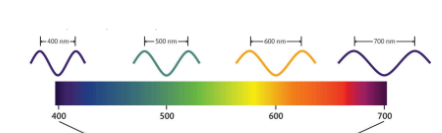
As a Wave: Light behaves as a waveform characterized by its frequency and wavelength (electromagnetic spectrum).
As Photons: Light can be viewed as a stream of photons that exhibit both particle-like and wave-like properties.
For the purpose of the course, we’ll consider light as a waveform when it travels in space, and as a photon as it hits the retina and is transduced in neuronal activity.
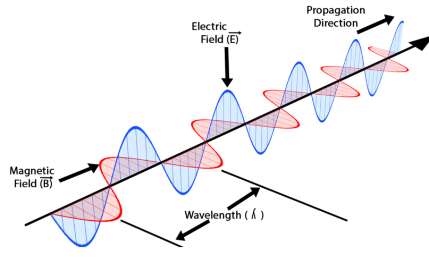
When the electric field’s oscillation is restricted to the vertical plane light is said to be
vertically polarized.
In normal situations, every potential angle of polarity is equally present in most light sources. For this reason, most of the light we experience is unpolarized.
Polarizing glasses that only let light pass with a certain polarity can be used to reduce the total amount of light that reaches the retina, as with sunglasses, or to present slightly different visual information to the left and right eye, as with modern 3D glasses.
Light Characteristics:
Reflection: Light bounces off the surface of a material.
Specular Reflection: Occurs on smooth surfaces, like mirrors, where light rays reflect off in an orderly manner.
Diffuse Reflection: Occurs on rough surfaces where light scatters in many directions, allowing perception of texture.
Refraction: Bending of light as it transitions between different mediums (e.g., air to water). passes to another medium and changes direction
Transmission: The process by which light waves pass through a medium without being absorbed, allowing for clarity and visibility of objects behind the medium. just goes through without changing direction
Absorption: When light interacts with surfaces, converting light energy to heat (light energy disappears) partially absorbed, partially reflected
Scattering: when light hit really small particles
Definition: Light scattering is the process by which light is forced to deviate from a straight trajectory due to non-uniformities in the medium, resulting in a change in the direction of light propagation (phenomenon depends on the size, shape, and composition of the particles of light).
Rayleigh Scattering: Shorter wavelengths scatter more (blue light), explaining the blue sky. When light hits air molecules, the light scatters, and short waves are more sensitive.
Mie Scattering: Scattering of all wavelengths equally, explaining white clouds.When light hits larger molecules like water droplets and dust. That’s why clouds are perceived as white (mix of all colors).
Non-Selective Scattering: Large particles scatter all colors similarly (bigger water droplets and fog).
Eye Anatomy and Functions
Key Points:
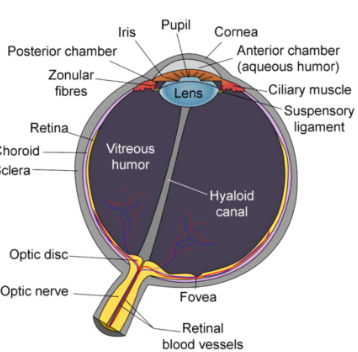
Major components of the eye and their functions:
Cornea: Dome-shaped transparent front layer that focuses light onto the retina. (1)
Anterior chamber: Fluid-filled space between the cornea and the iris that nurishes the cornea and lens (acqueous humor) (2).
Pupil: Adjustable opening that regulates the amount of light entering the eye. Acts as a diaphragm since it opens and closes, at the center we can find the iris.(3)
Lense: refracts the light and redirects it on the retina (cochlea) (4).
Vitreous Humor: Gel-like substance that maintains the eye's shape and transmits light to the retina.(5)
Choroid: The vascular layer between the retina and sclera that
provides oxygen and nutrients to the outer layers of the retina. (6)
Sclera: The tough, white, outer layer of the eye that provides
structural support and protection. (7)
Retina: Layer containing photoreceptive cells (rods and cones) that convert light into neural signals.(8)
The eye
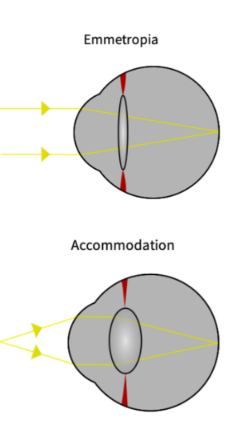
Optical Infinity: The concept that light rays from distant objects are essentially parallel when they reach the eye, allowing for clear vision without the need of any accommodation. Objects located at optical infinity (6 meters or more), are naturally focused on the retina.
lense is relaxed
Accommodation: The process by which the eye adjusts its focal length to maintain a clear image of objects at varying distances, ensuring that the lens changes shape to focus light precisely on the retina.
lense has to contract to create more refraction of the light to the retina
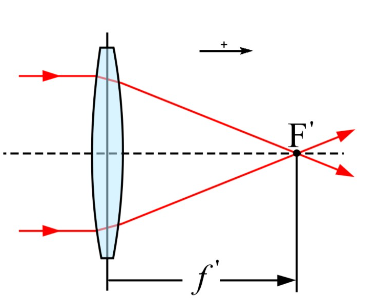
Focal Length: The distance between the optical center of a lens and its focal point, where parallel rays converge or appear to diverge. It determines the lens’s magnifying power and ability to focus on objects at various distances.
Presbyopia: Age-related condition where the lens starts to be more stiff and loses the ability to accommodate near vision.
Hyperopia: A condition where distant objects are seen more clearly than near ones due to the eye being too short or the lens not being able to curve enough, resulting in light rays focusing behind the retina. refractive error
Myopia: A condition where nearby objects are seen clearly while distant objects appear blurry, typically due to the eye being too long or the lens curving too much, causing light rays to focus in front of the retina. refractive error
Astigmatism: A condition characterized by an irregular shape of the cornea or lens, leading to distorted or blurred vision at all distances due to light rays being focused at multiple points on the retina (light is redirected in many directions and there are many focal points) refractive error
The blind Spot
The brain makes up for the blind spot by filling in the missing information based on surrounding visual cues, allowing us to perceive a continuous image despite the absence of visual input from that area.
The Retina
Fundus (back of the eye): The fundus contains important structures including the optic disc, where the optic nerve exits the eye, and the macula, which is responsible for high-acuity vision.
Optic Disc (left to the macula): The optic disc is also known as the blind spot, as it lacks photoreceptors and therefore does not detect light, but the brain compensates for this gap in vision.
region where the optic nerve exits the eye to reach the brain
where blood vessels that feed the retina enter the eye
where the axons of the retina ganglion cells merge into optic nerves
Macula (spot on the retina): A crucial area responsible for central vision, providing the sharpest vision due to its high concentration of photoreceptor cells.
Fovea (shallow area): A small depression located in the macula that contains the highest density of cone cells, allowing for the most detailed and color-sensitive vision. inside the macula and the center of the retina
accurate precision in small visual field (central)
RODS normally prevail but not in the FOVEA
Central Vision: The fovea is primarily responsible for central vision, which is critical for tasks that require detailed visual acuity, such as reading and recognizing faces.
but it still accounts for a tiny fraction of the visual field
Visual acuity: Visual acuity is highest in the fovea, where cone cells are densely packed, allowing for detailed and sharp vision.
Visual Angle: The visual angle refers to the size of the object as perceived by the eye, which is crucial for determining the clarity of vision within the fovea (determined by the size of the object and the distance from the eye).
Visual Processing Components
Key Points:
Explanation of key players in visual signal transmission:
Ganglion Cells (in the retina): Neurons that carry visual information from bipolar cells to the brain via their axons.
which forms the optic nerve
Bipolar cells: Interneurons in the retina that receive input from photoreceptors (rods and cones) and transmit signals to ganglion cells, playing a crucial role in processing visual information before it is sent to the brain.
Photoreceptors:
Definition: Specialized cells in the retina that detect light and convert it into electric signals
Rods: For low-light vision (night vision).
Cones: For color detection and high acuity vision.
Discussion on how visual signals are integrated and processed in the brain for complete perception.