Lab Practical 2 Exam
Modules 14-21
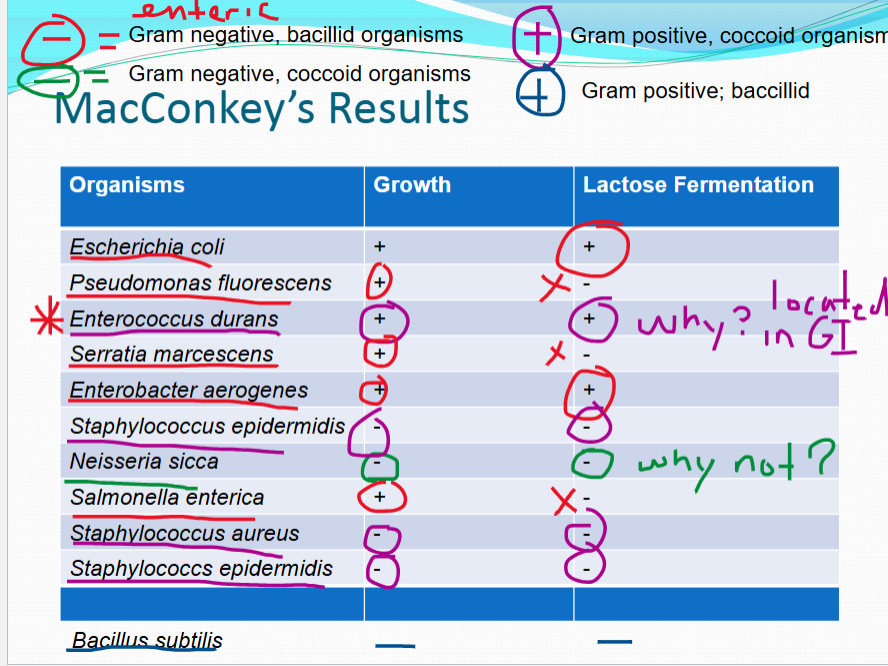
Module 14a ((Isolation and beginning ID of Gram negative Bacilli specimen-—MacConkey’s & Columbia CNA)
Selective media: media made to inhibit the growth of some organisms and encourage the growth of others
Differential media: Media that contains indicators that reveal differences between organisms
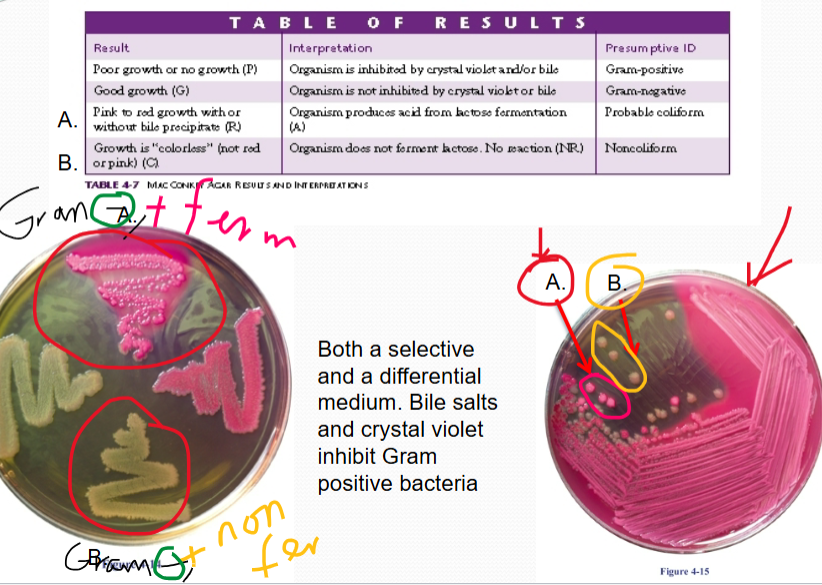
Media can be both selective and differential
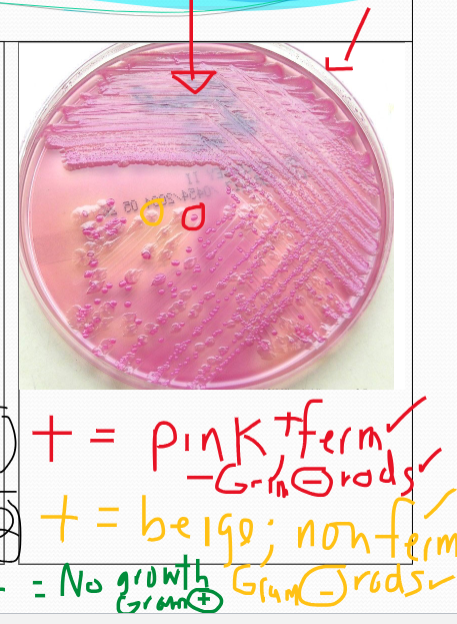
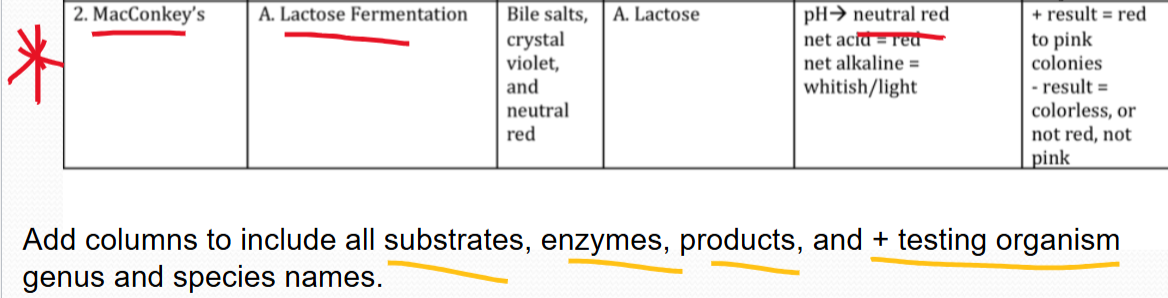
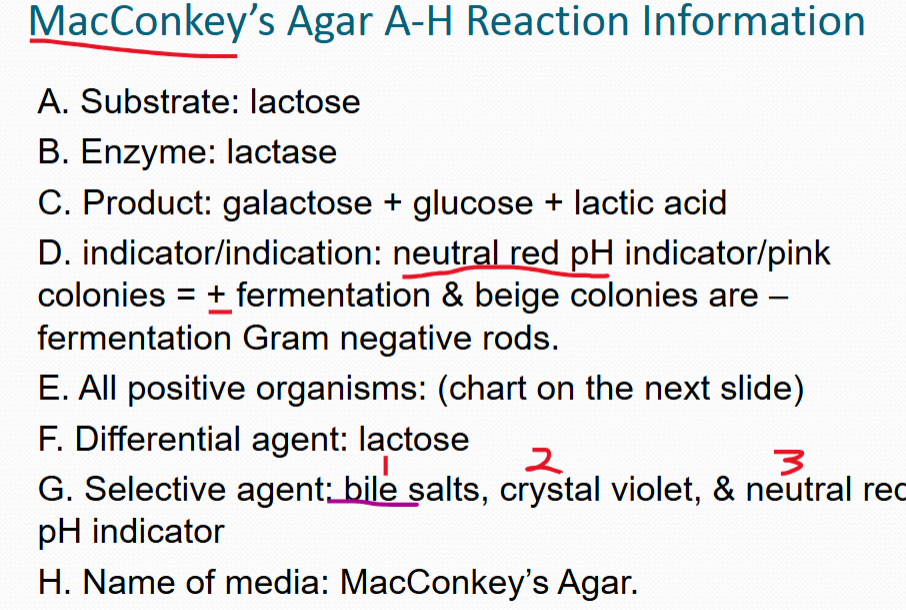
Acid product changes pH, which changes colony color. This indicates that the microorganism has the enzyme lactase
Lactose is the substrate, lactase is the enzyme, and galactose, glucose, and lactic acid are the products.
Not all enteric organisms can metabolize lactose
Enteric means “intestinal”; most gram-negative bacteria are intestinal
Bile salt is the selective agent b/c made in the small intestine and intestinal bacteria have adapted to it
MacConkey’s agar is mainly used in the identification of lactose-fermenting, gram-negative enteric pathogens and in inhibiting the growth of gram-positive organisms.
Organisms that do not ferment lactose do not have a color change
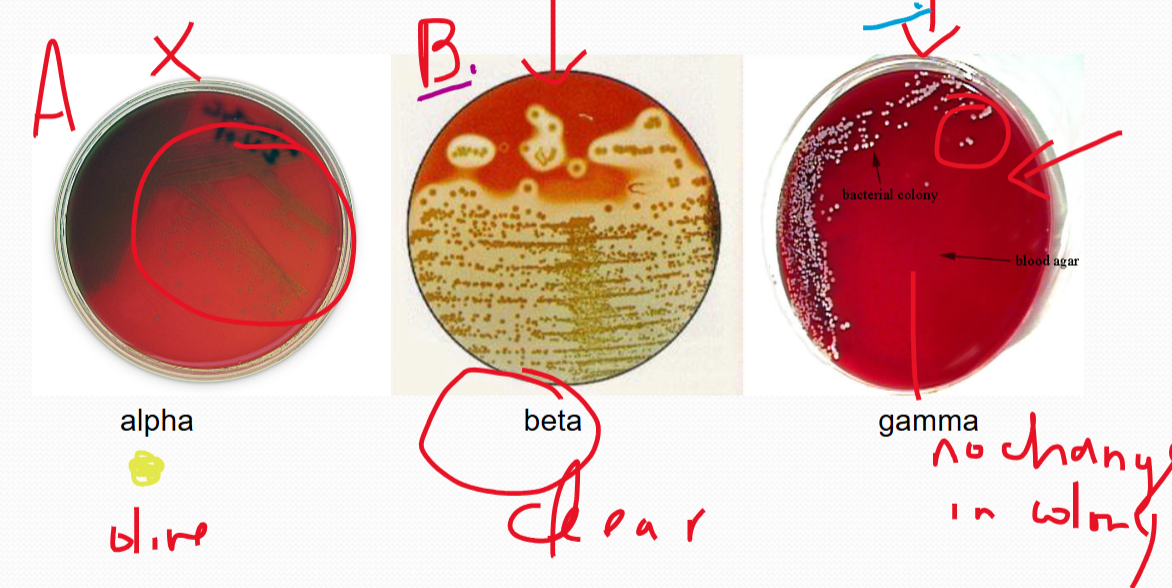
Hemylosin is the name of the enzyme bacteria use to digest blood cells or blood proteins. There are three hemolysin types. (A, B, & G)
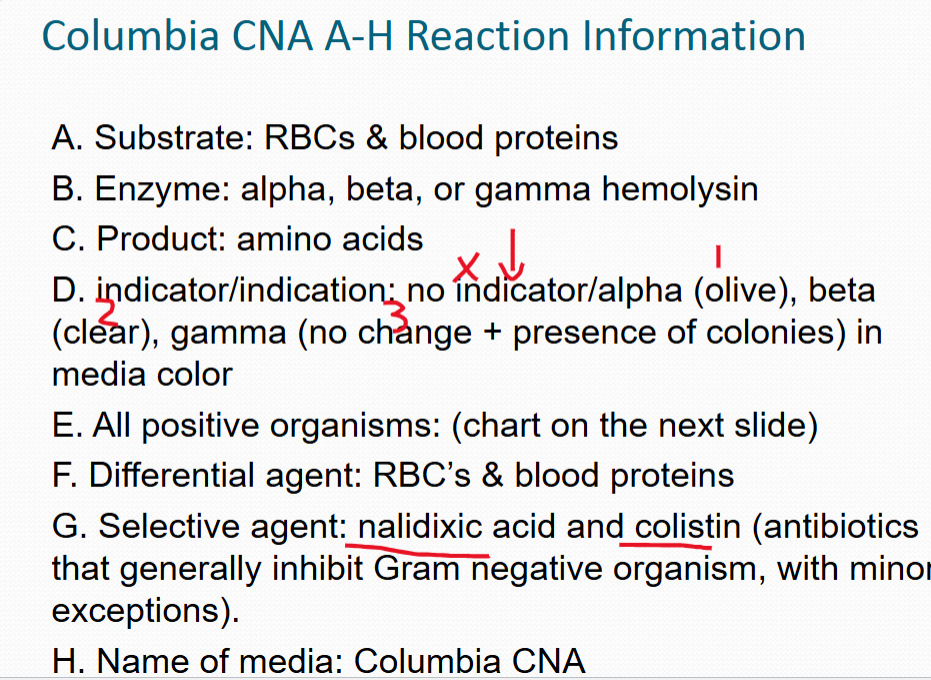
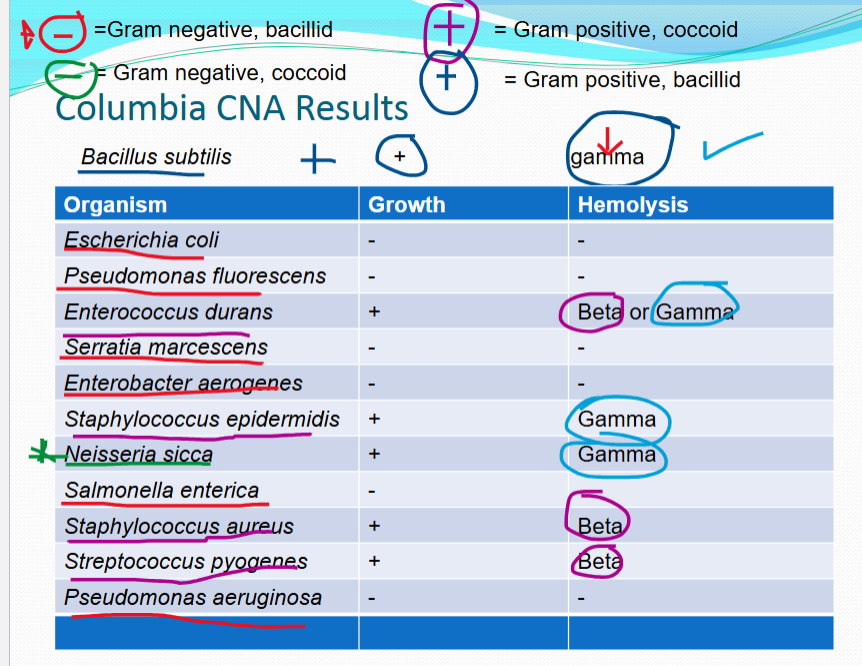
Columbia CNA Agar inhibits most gram negative bacteria
Columbia CNA agar is both selective & differential blood agar
C- Colistin, NA- nalidixic acid
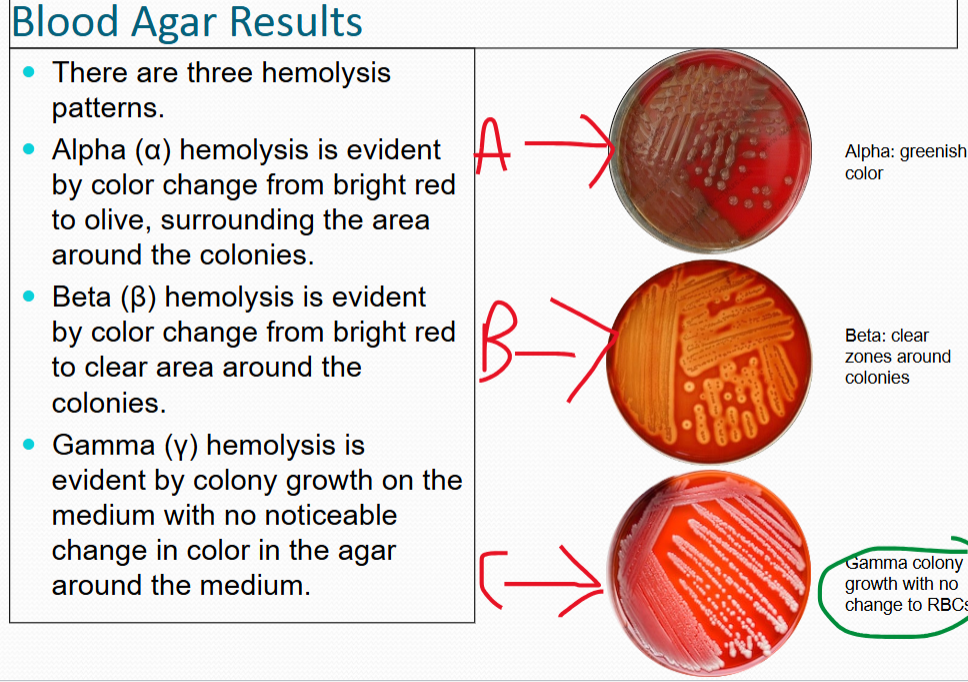
There are three hemolysis patterns: Alpha (α) Hemolysis is evident from partial color change from bright red to olive, surrounding the area around the colonies
Beta(b): Hemolysis is evident by complete color change from bright red to clear area around colonies
Gamma(y): Hemolysis is evident by colony growth on the medium, and no noticeable change in color in the agar around the medium.
14b (Isolation and beginning ID of Gram negative Bacilli specimen- Carbohydrate Fermentation tests)
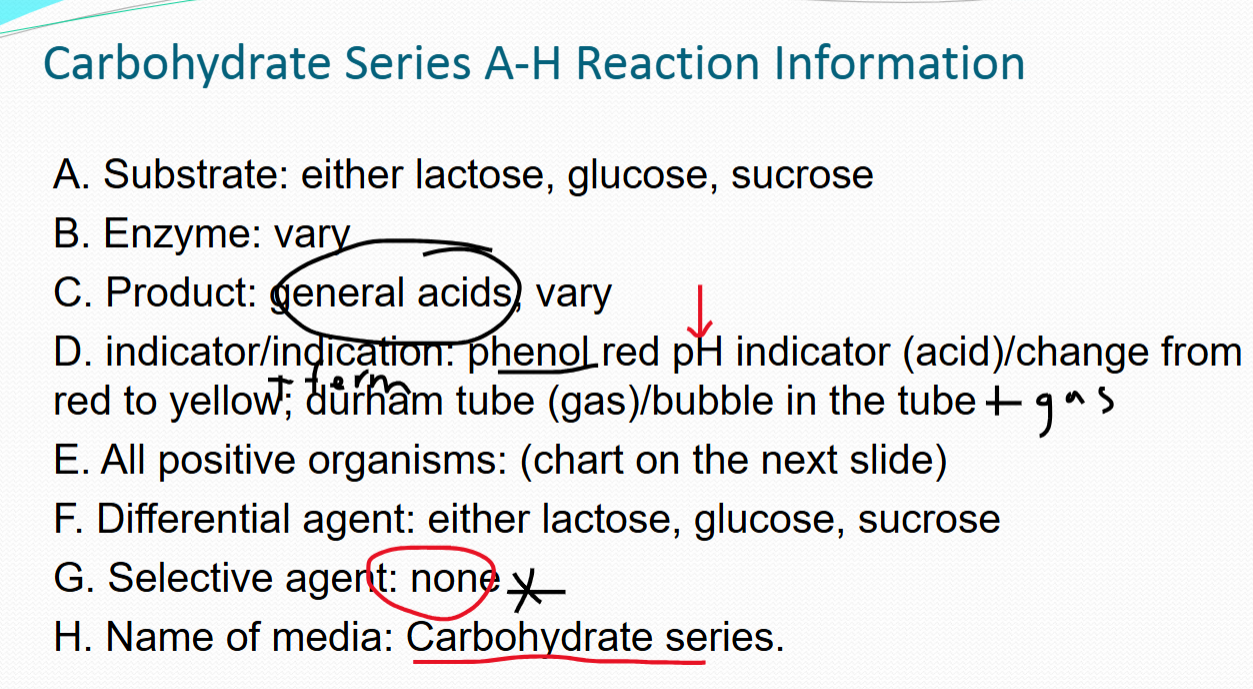
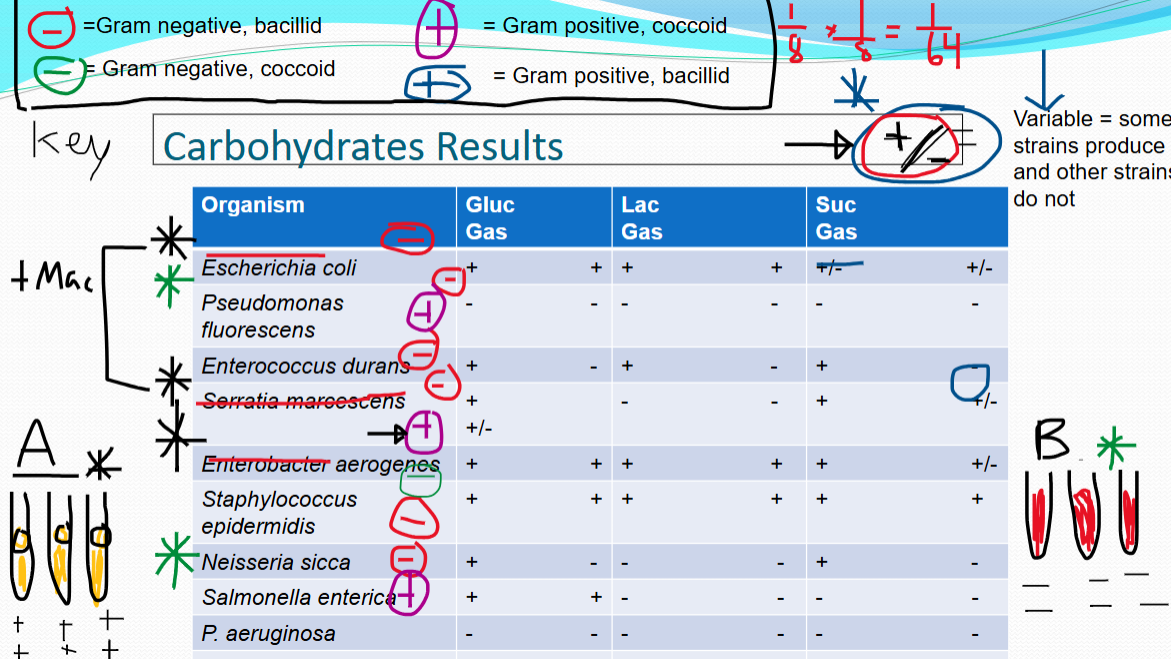
The tests in this chapter are used to check their ability to ferment 3 carbohydrates and potentially produce CO₂ as a waste product.
Carbohydrates are composed of carbon, hydrogen, and oxygen. They’re usually classed as sugars or starches
When carbohydrates are fermented as a result of bacterial enzymes, the following fermentation and end products may be produced: Acid end products or acid and gas end products.
In order to test for fermentation, you inoculate and incubate tubes of media containing a single carbohydrate such as lactose or maltose, a phenol indicator such as phenol red, and a Durham tube, which is a small inverted tube that detects gas production. If the carbohydrate isn’t fermented, no acid or gas will be produced, and the phenol red will remain the same.
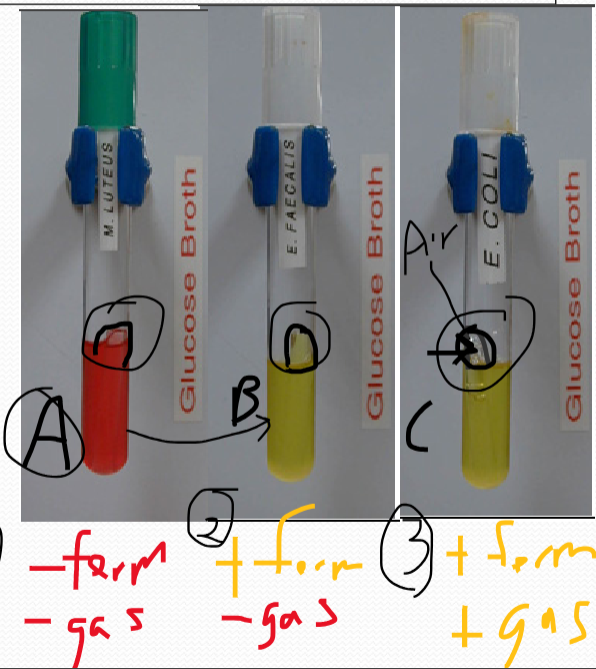
Red and no durham tube displacement : Negative acid, Negative Gas
Yellow and no tube displacement: positive acid, negative gas
Yellow and tube displacement: Positive acid, positive gas
Module 15
(Additional Biochemical Tests to Identify Gram Negative Bacilli Specimen)
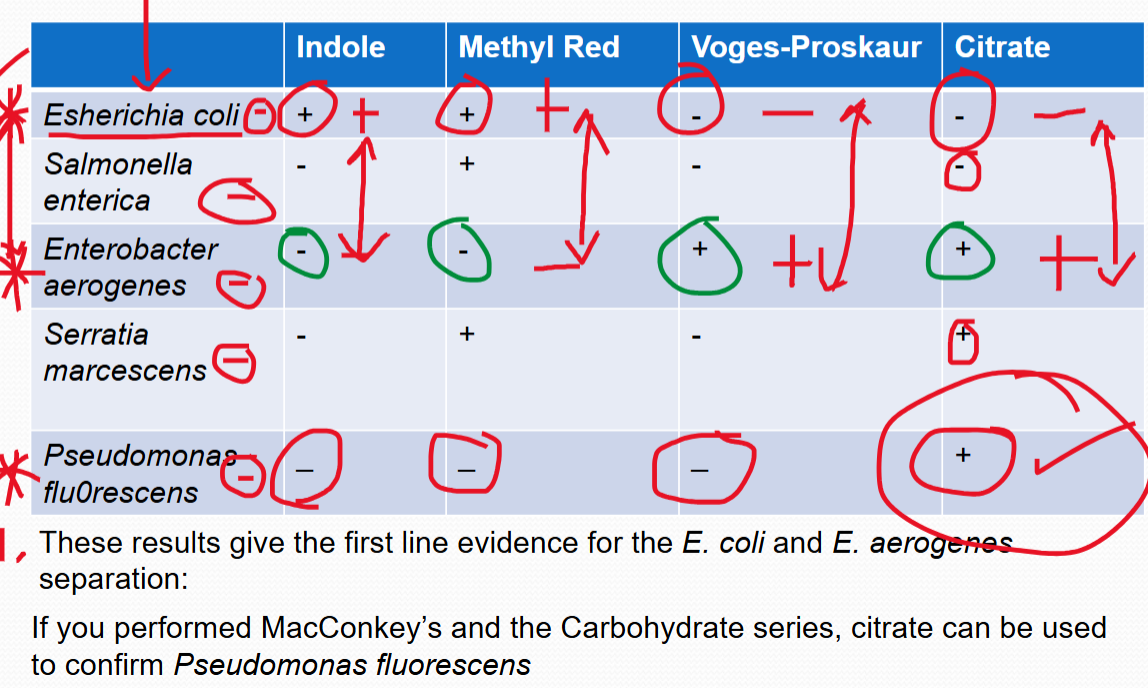
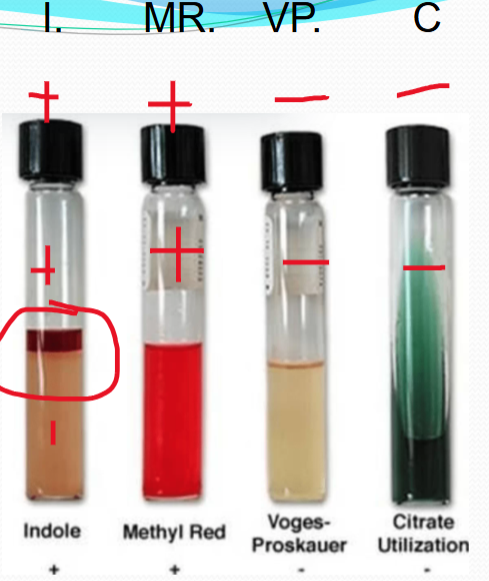
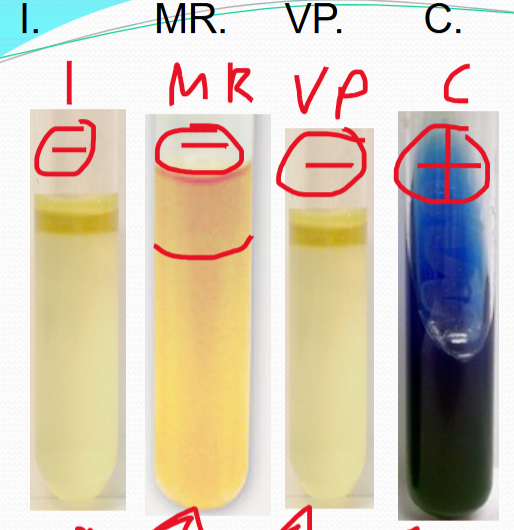
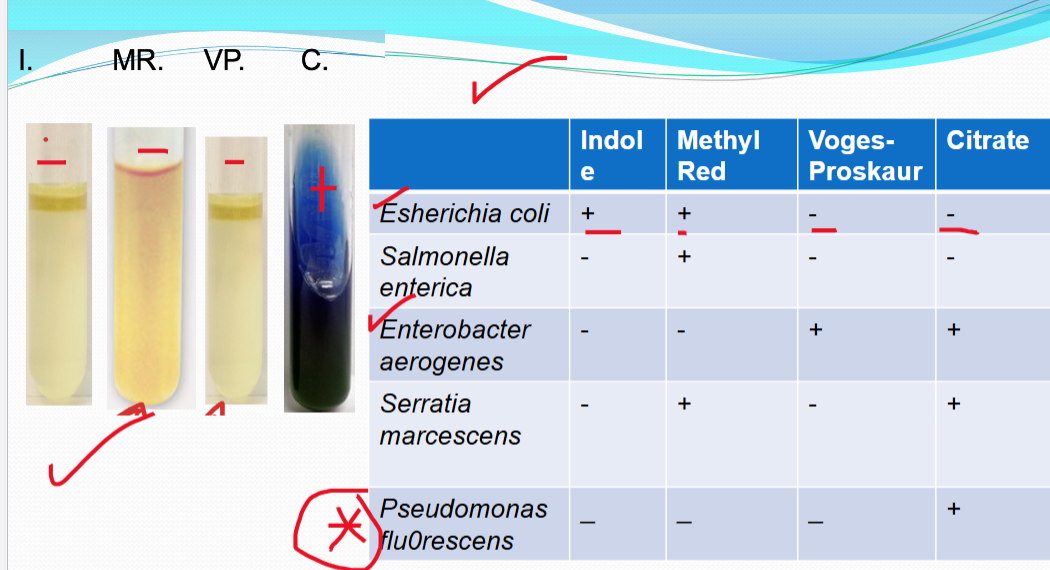
The IMVIC test is a series of four individual tests that are useful for differentiating bacteria within the Enterobacteriaceae family.
Take-home message: If you do a Gram stain with a Gram-negative bacillus, you would want to do the MacConkey agar and all of the IMVIC tests.
I- Indole test
M- Methyl red test(MR)
V- Voges-Proskauer test (VP)
C- Citrate test
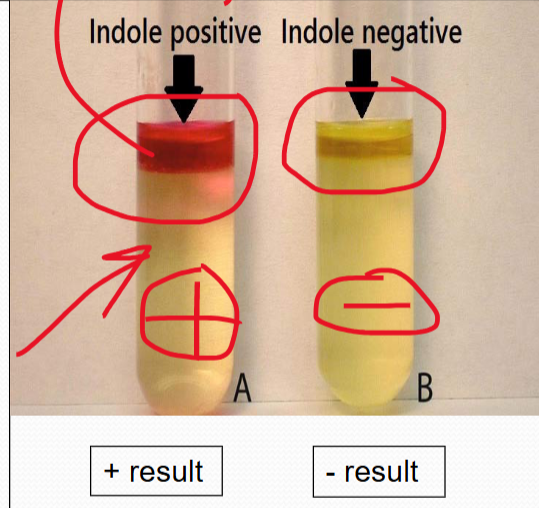
Indole medium contains tryptophan or tryptone broth. Korvac’s is the indicator reagent that reacts with indole and turns the solution red. After incubating indole, add a full dropper of Korvac’s to the tube and gently mix.
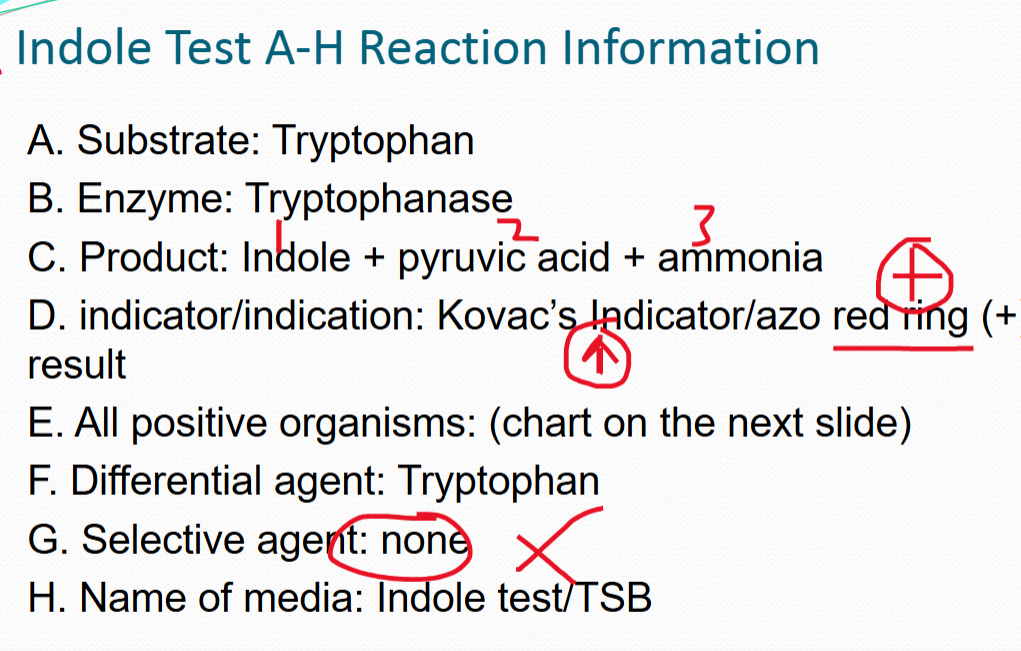
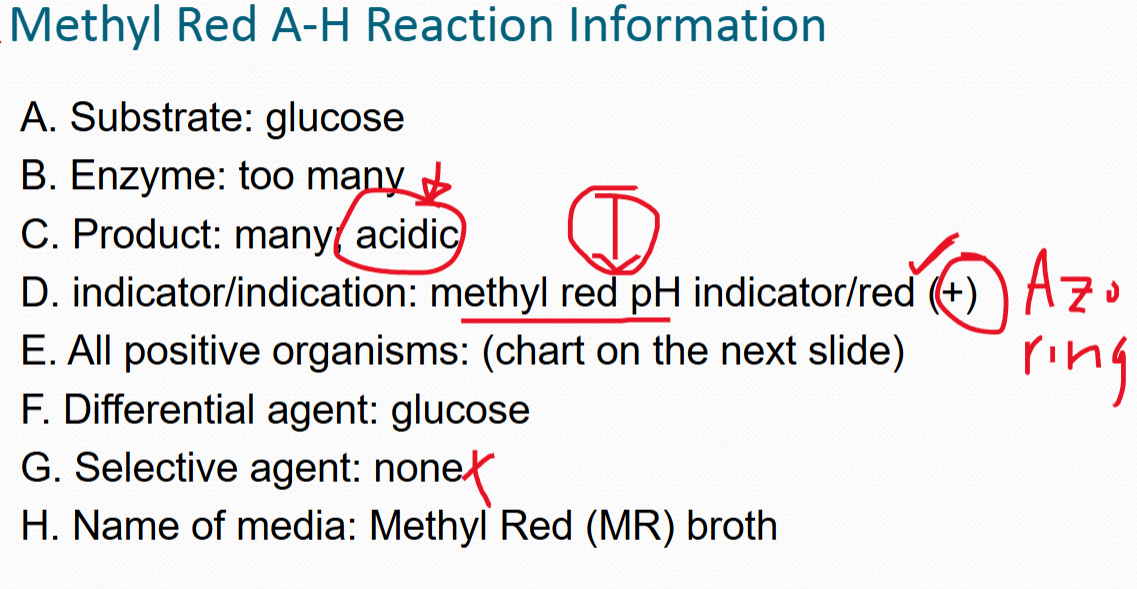
MR/VP is a fermentation test for glucose
Usually the results are opposite for MR & VP
MR+ Bacteria can produce lactose, acetate, succinate, and formate
VP+ Bacteria can produce acetoin, acetyl methyl, carbinol, ETOH
(The point of these two tests is to determine whether the bacteria is a glucose fermenter)
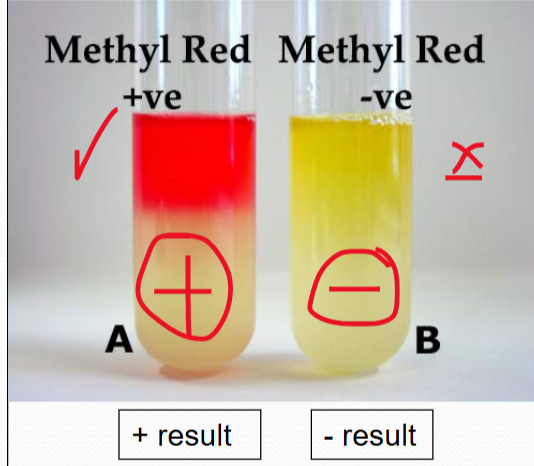
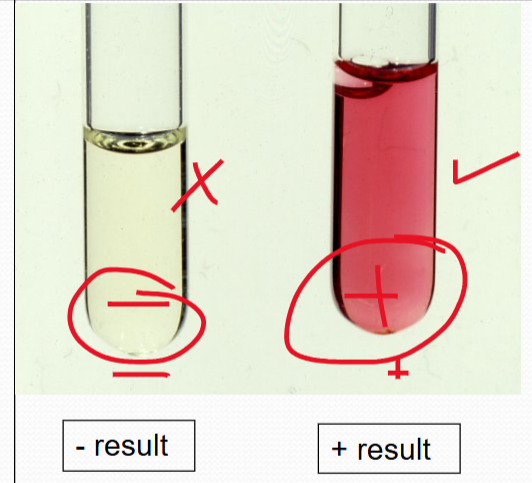
Methyl red pH indicator will turn red if mixed acid fermentation has occurred
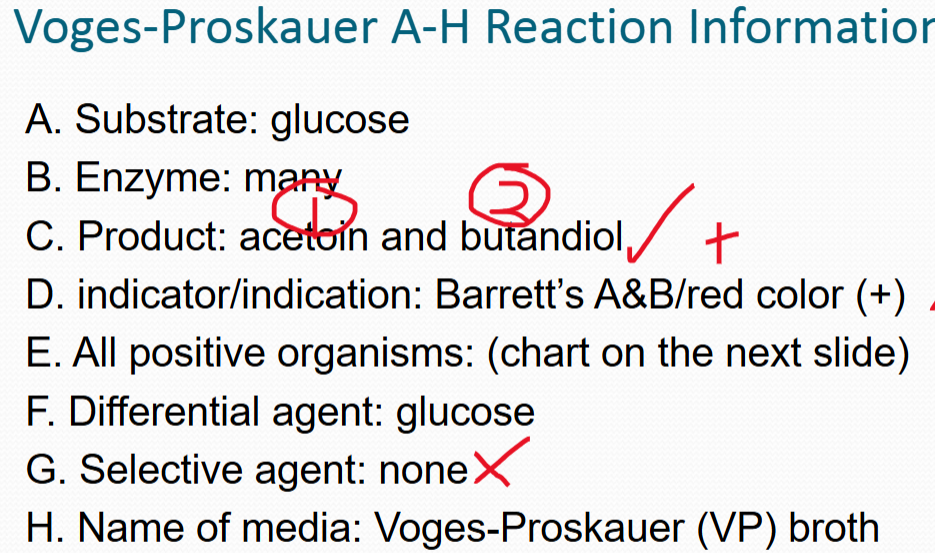
The indicators for VP are Barret’s A & Barrets B , both of which react with acetoin to produce a color change, confirming the presence of neutral fermentation products.
Add a full drop of Barret’s A then B solution after incubation to see results.
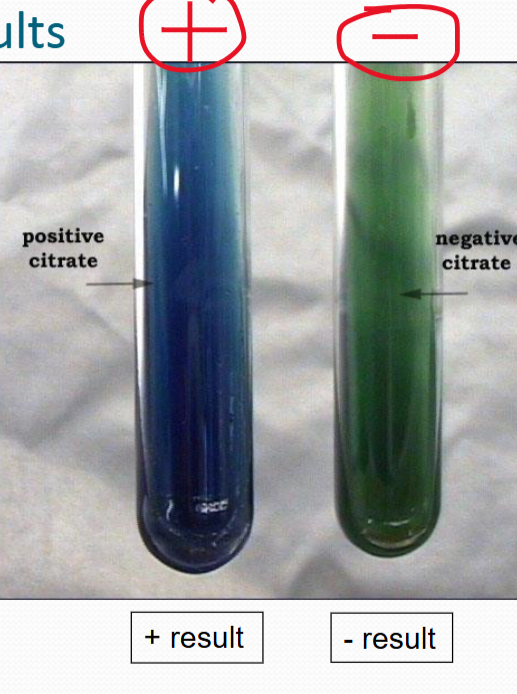
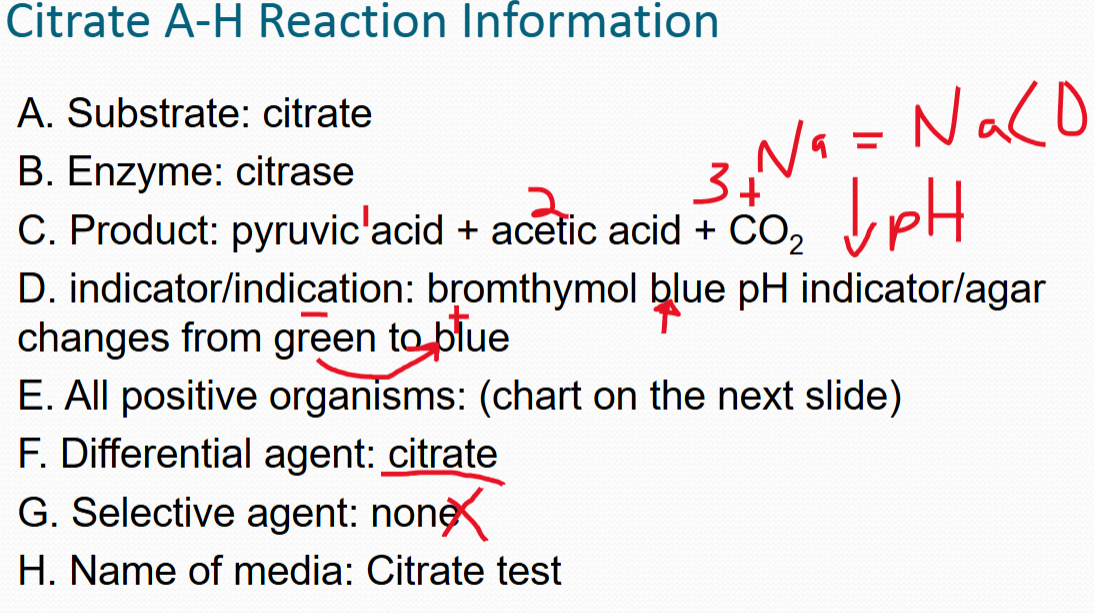
Simmon’s citrate agar is used to determine an organism’s ability to use citrate as a sole carbon source.
Bromothymol blue (BTB) is the pH indicator
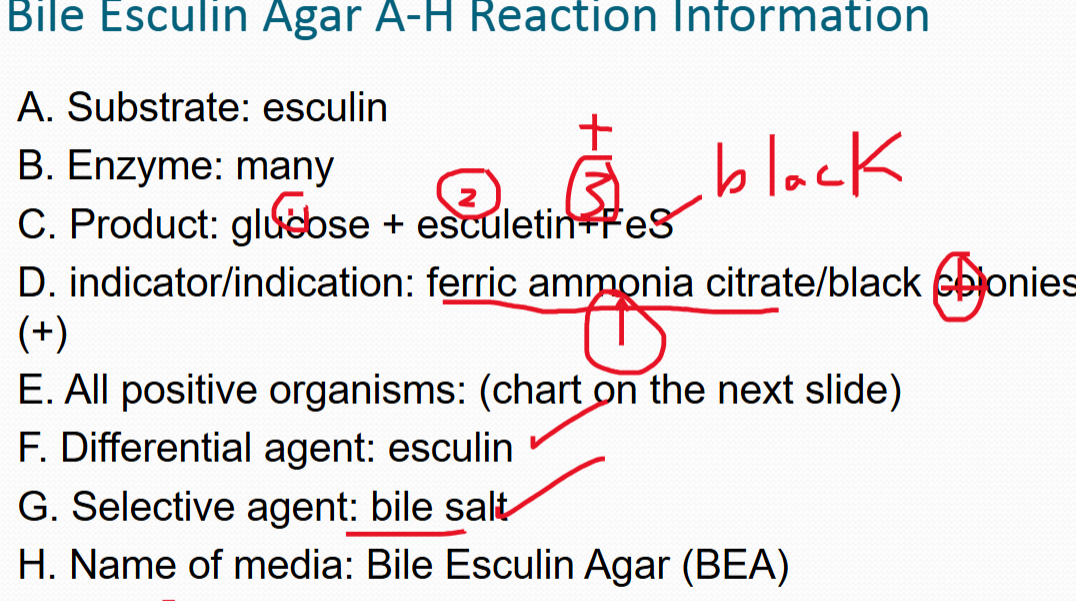
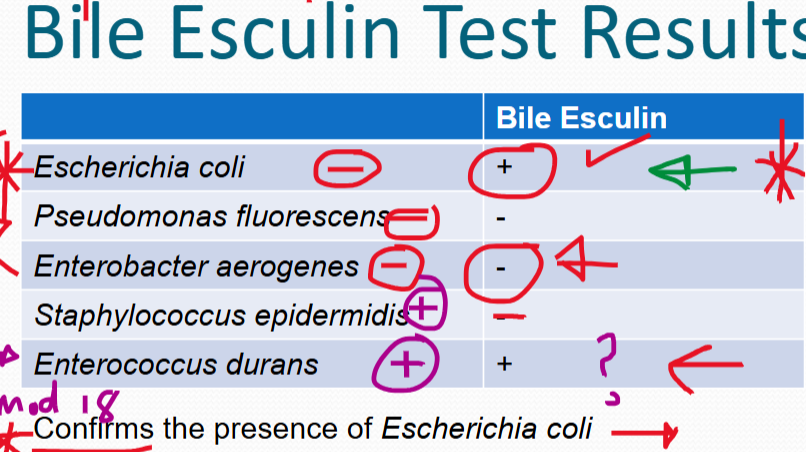
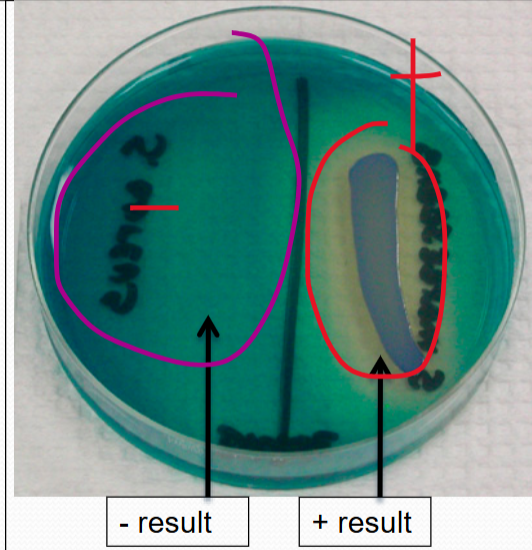
Bile esculin agar is a selective and differential medium that is used to presumptively identify enterococci and group D streptococci and some gram-negative organisms based on their ability to hydrolyze esculin.
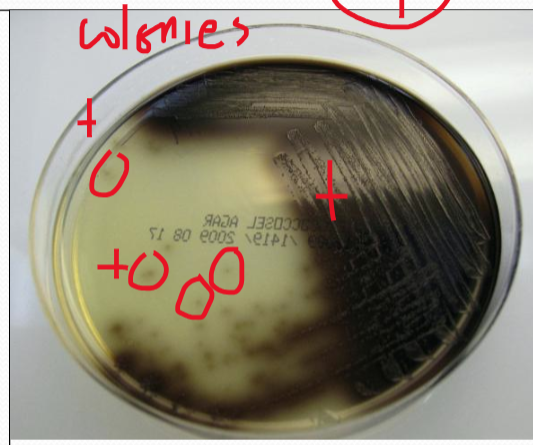
Black colonies show esculin positive
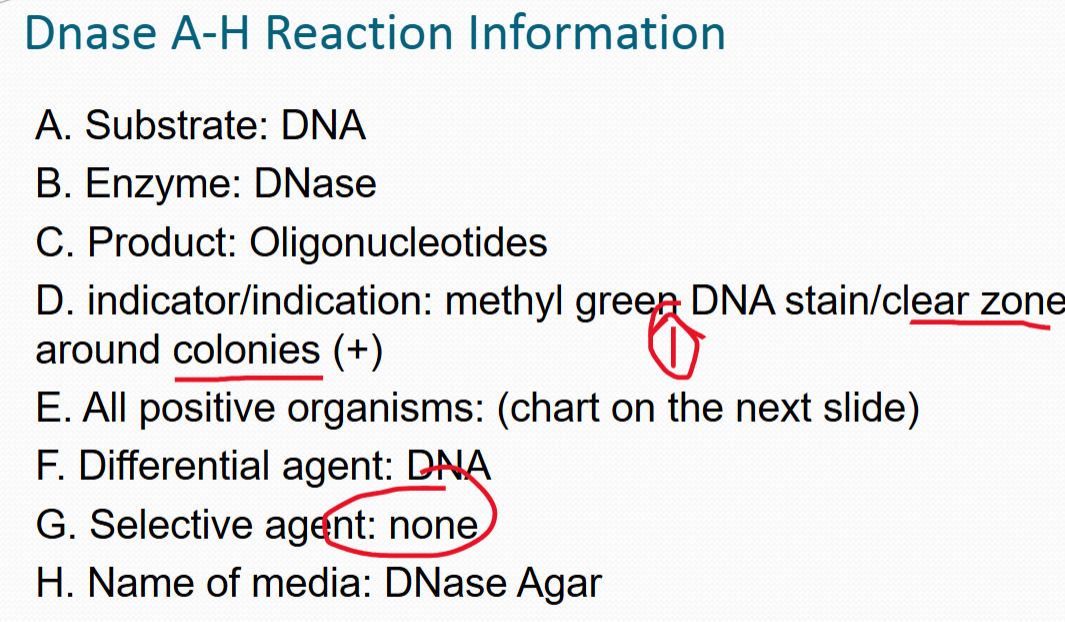
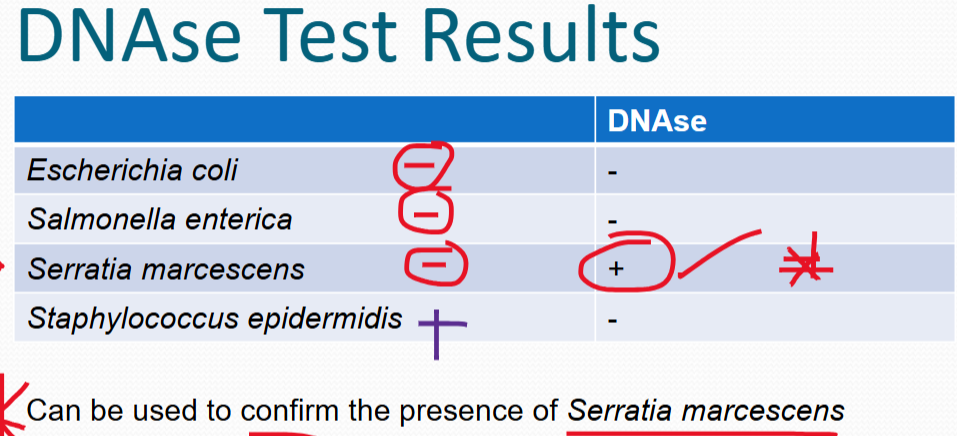
DNAse agar is a differential medium that tests the ability of an organism to produce an exoenzyme, called deoxyribonuclease or DNAse, that hydrolyzes DNA.
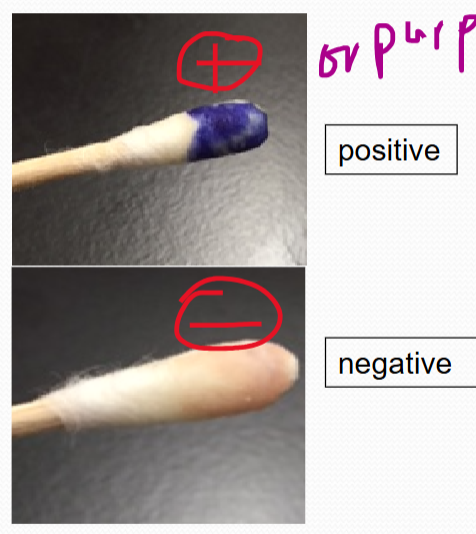
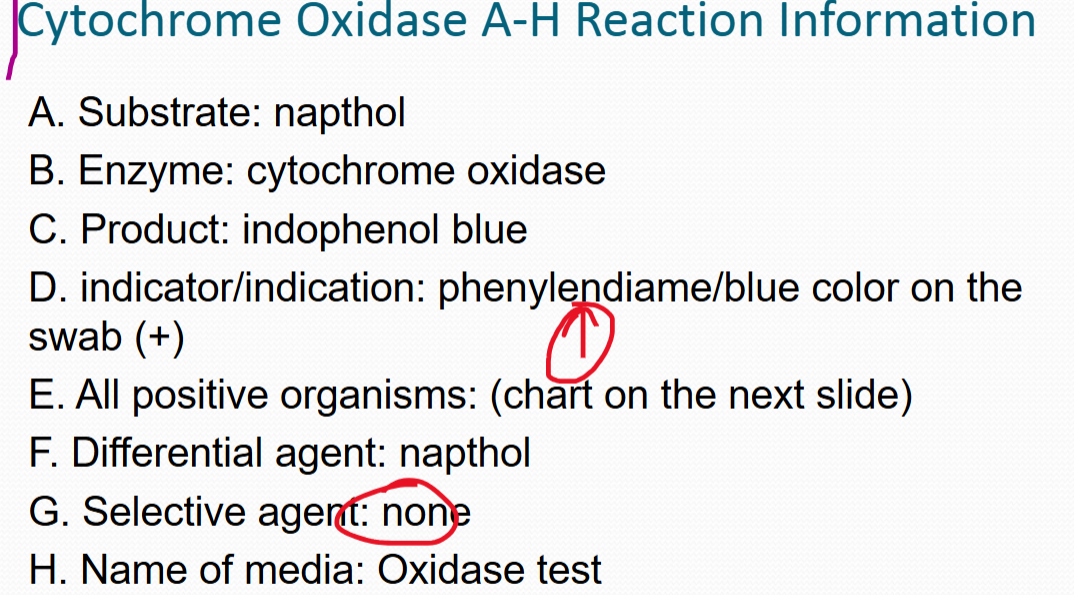
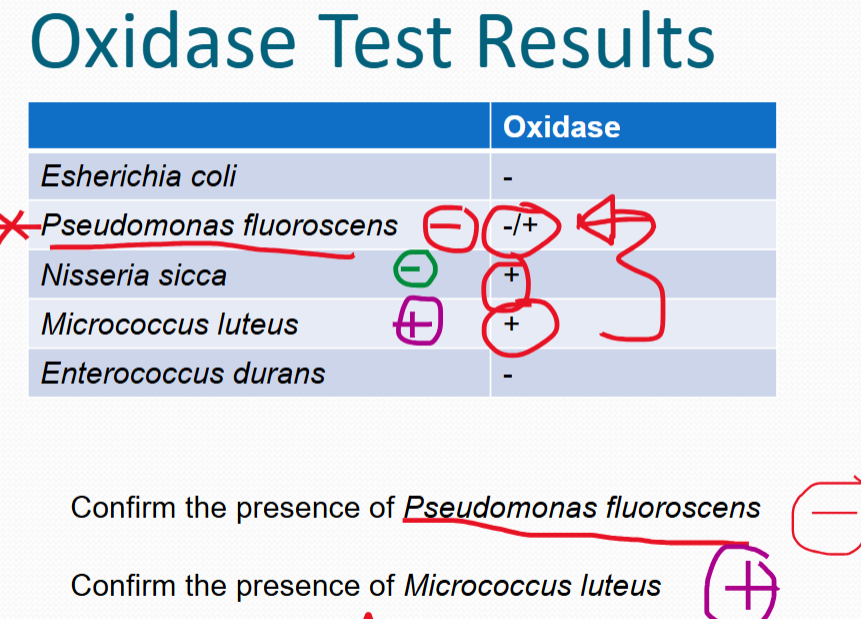
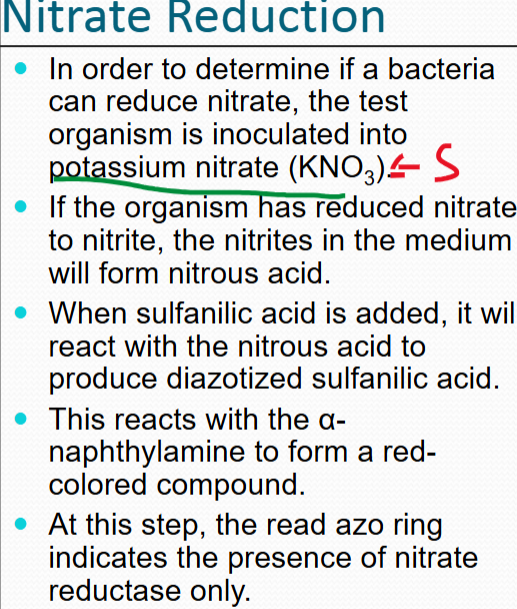
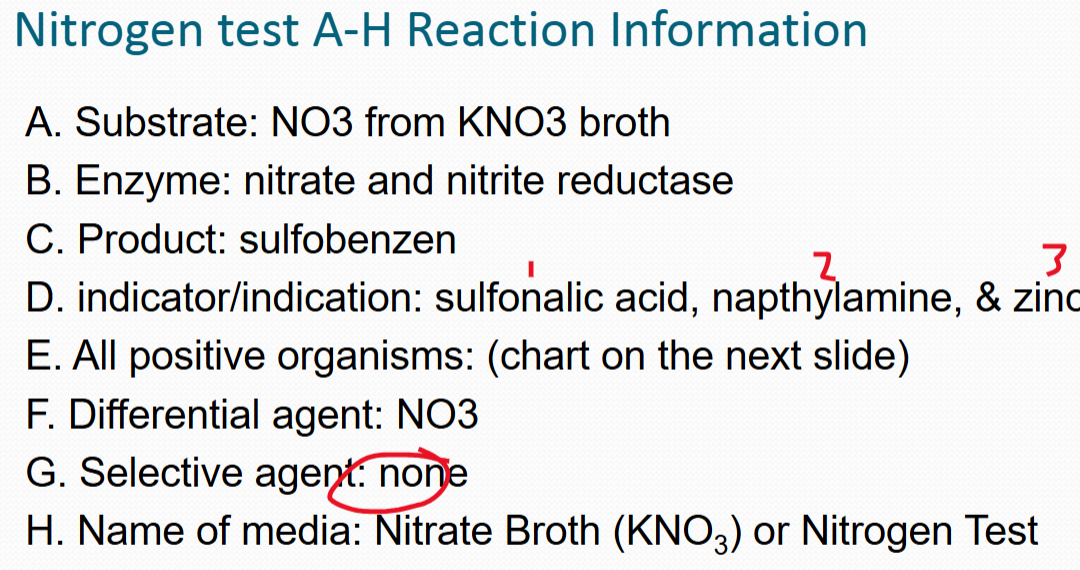
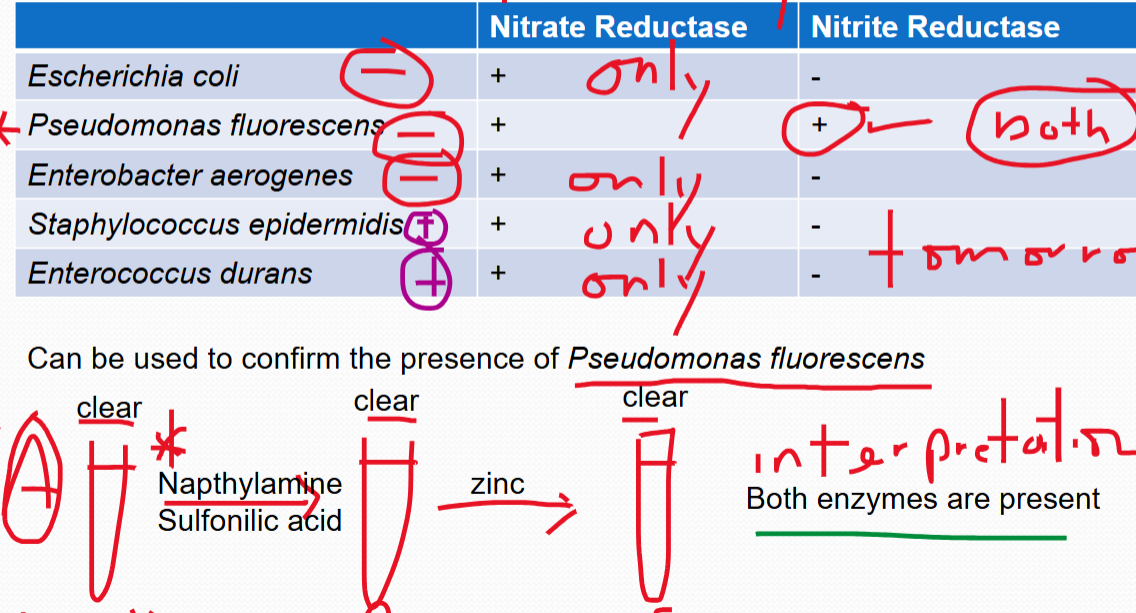
The oxidase test Identifies organisms that produce the enzyme cytochrome oxidase.
Cytochrome oxidase is the enzyme and phenylenediamine is the indicator.
Module 16 (Bacterial Counts of food)
Spoilage—When bacterial enzymes or fecal contaminants with viruses are introduced to food sources and change from usable substrates to unusable products
Conditions for spoilage: Water, pH, physical structure, oxygen, and temperature
Minimize contamination by : good management processes, acceptable sanitary practices, rapid movement of food through the processing plant, and well-tested preservation procedures.
Staphylococcus aureus is the number one cause of illness
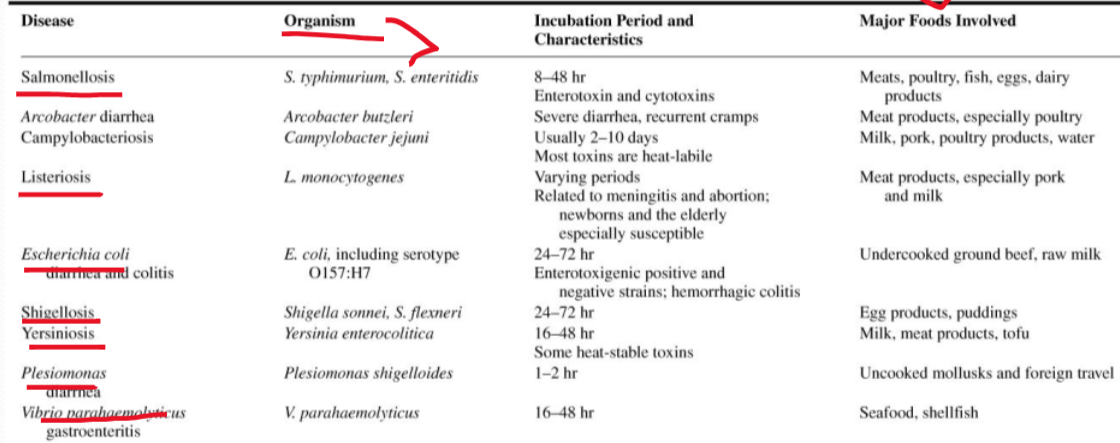
Some microbes that can grow as toxins in foods are staphylococcal food poisoning, Bacillus cereus, botulism, and Clostridium perfringens food poisoning.
Ergotism- Caused by growth of fungus in grains
Aflatoxins- Carcinogens produced in fungus-infected grains and nut products
Fumonisins—carcinogens produced in fungus infected corn
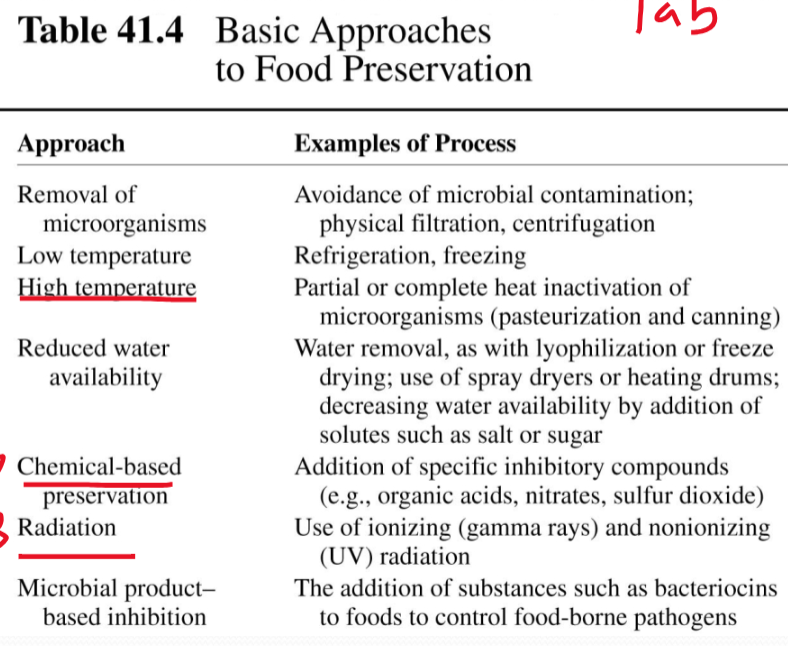
Removal of microorganisms is usually acheived by filtration. Commonly used for water, beer, wine, juices, soft drinks, and other liquids.
Refrigeration at 5°C slows but doesn’t stop microbial growth
Canning and pasteurization are examples of high heat
Mod 17 (Tests for Gram Positive Cocci: Micrococcaceae Staph and relatives)
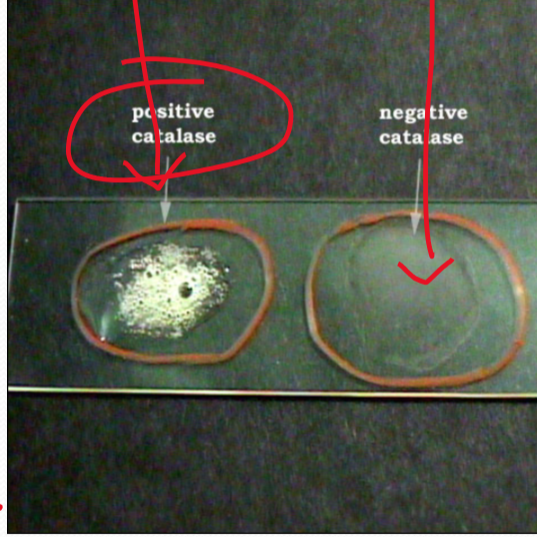
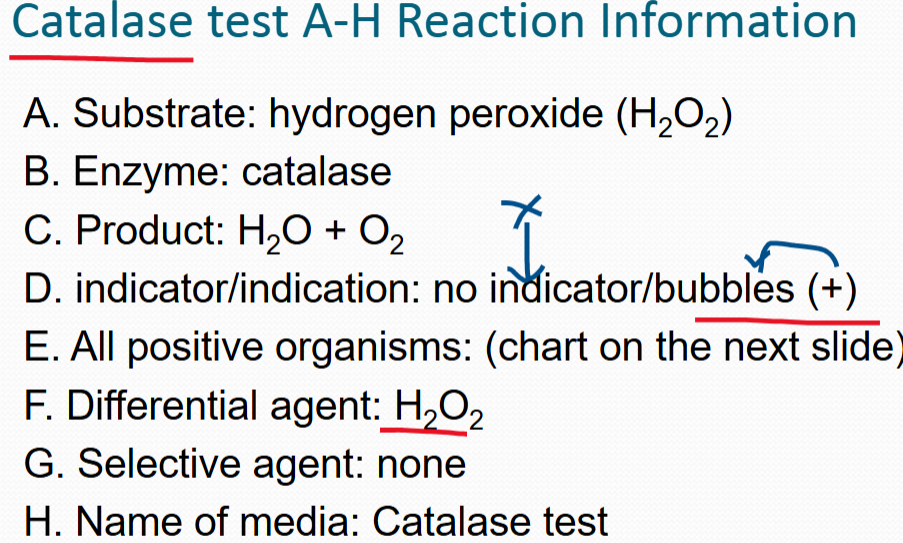
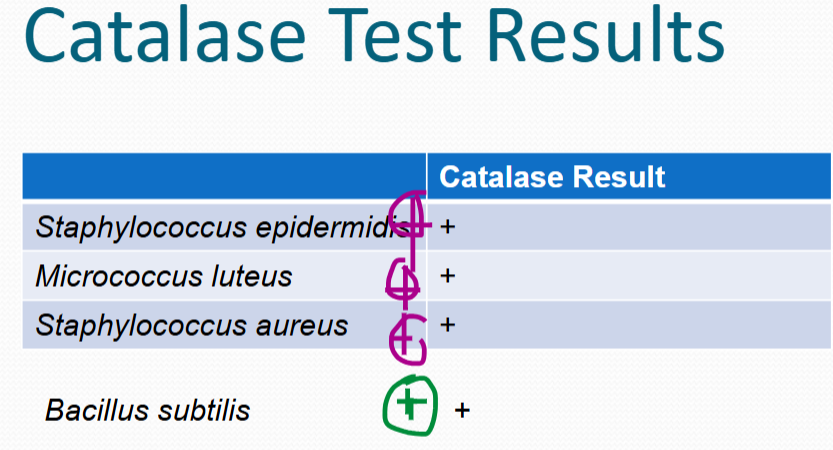
The catalase test determines if organisms produce the enzyme catalase, which breaks down hydrogen peroxide to water and oxygen.
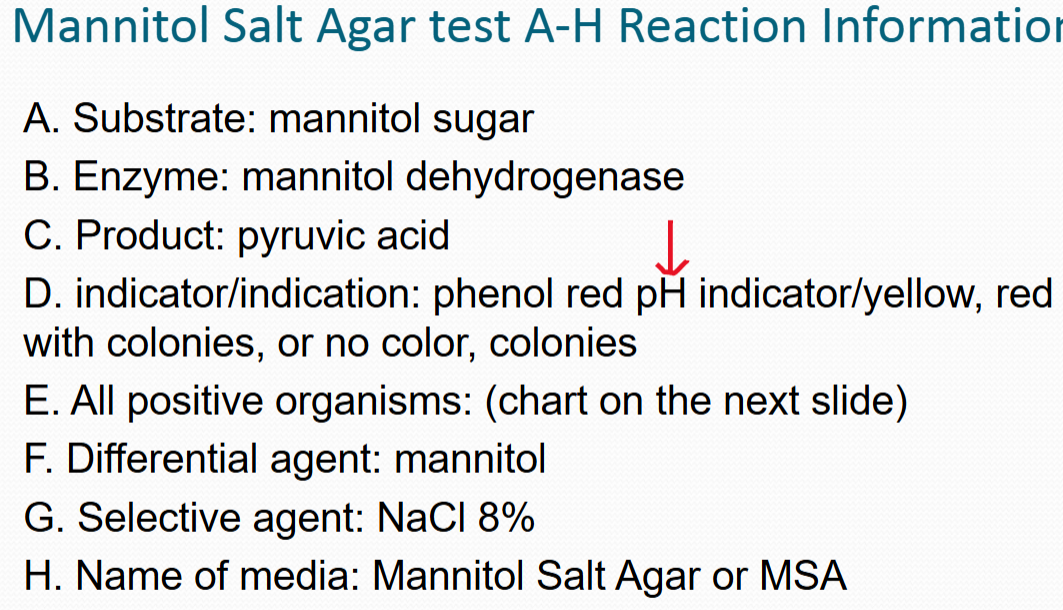
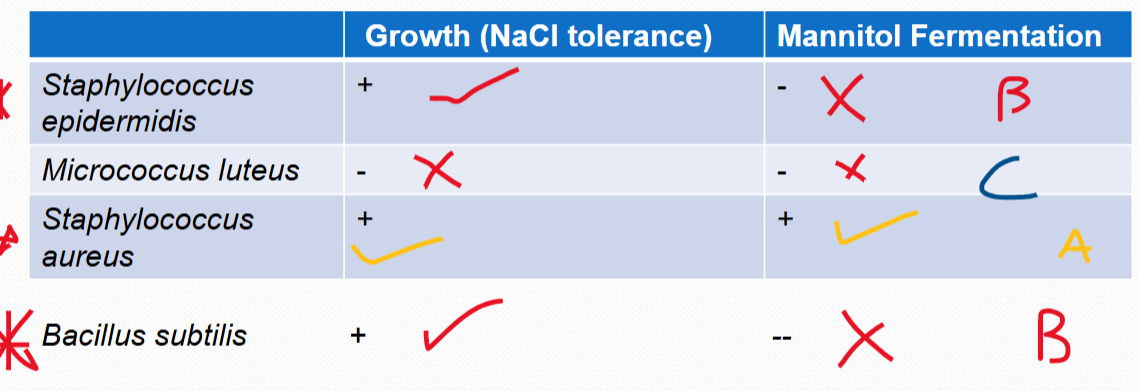
Mannitol salt agar contains a high salt concentration, so only salt-tolerant organisms will grow on it. Mannitol salt agar contains the indicator phenol red.
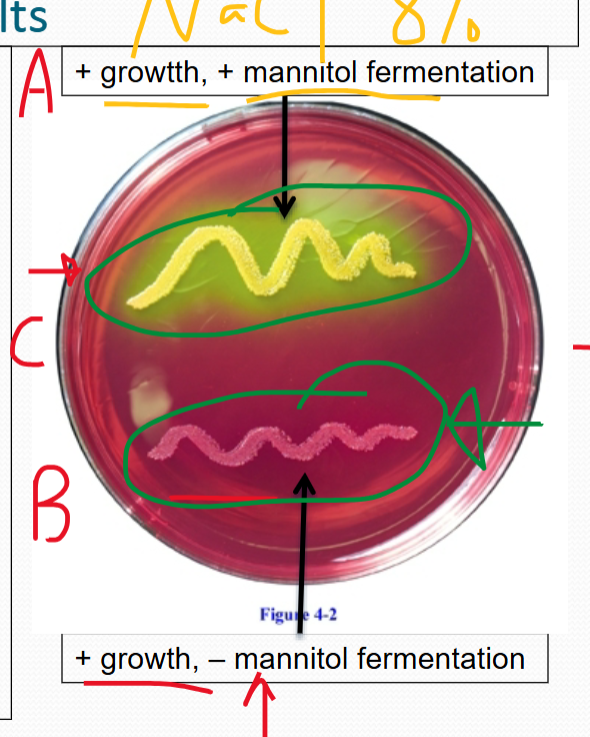
If an organisms can ferment mannitol, an acidic byproduct is formed that will cause the phenol red in the agar to turn yellow.
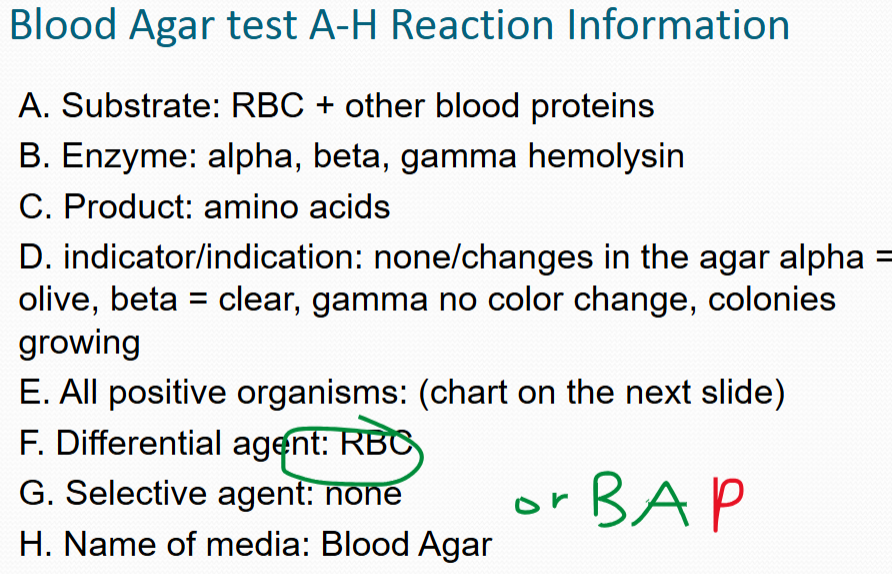
Blood agar is not a selective medium, which is the difference between blood agar and Columbia CNA agar.
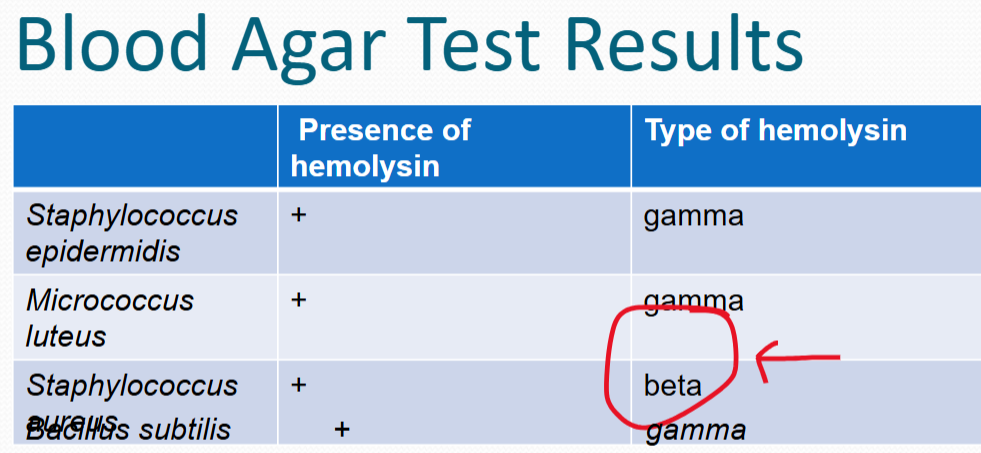
Blood agar is a differential medium because certain bacteria produce enzymes (hemolysins) that act on red blood cells to lyse or break them down.
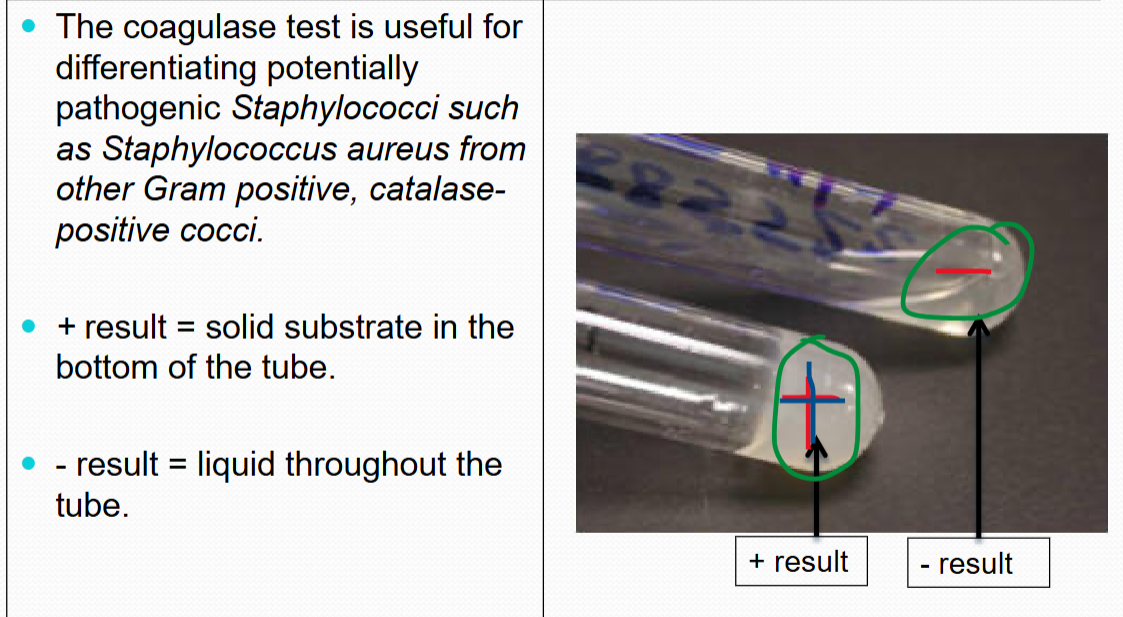
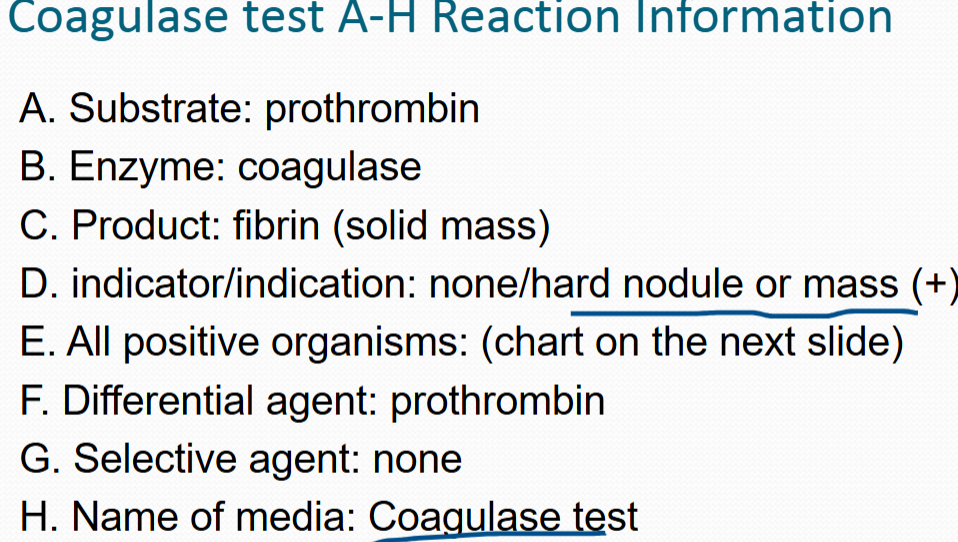
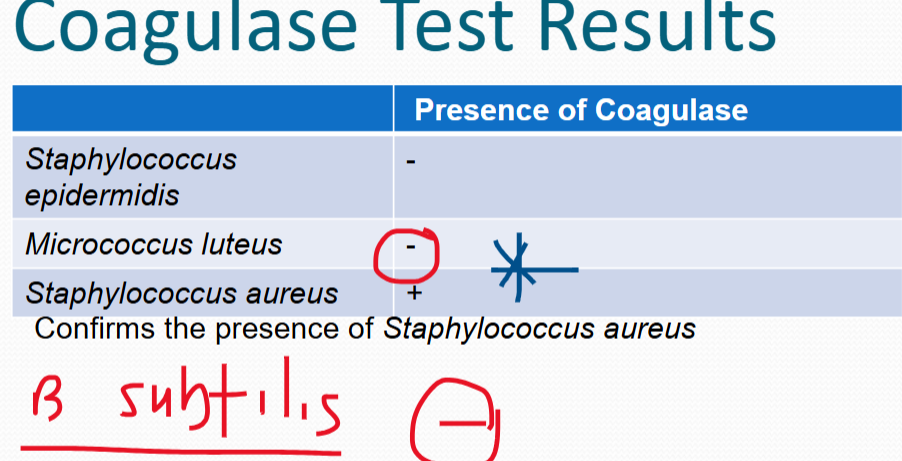
The coagulase test is only a differential test
Mod 18 (Tests for Gram-positive cocci-—Family Streptococcaceae step and relatives)
(The catalase test, blood agar test, and bile esculin test apply.)
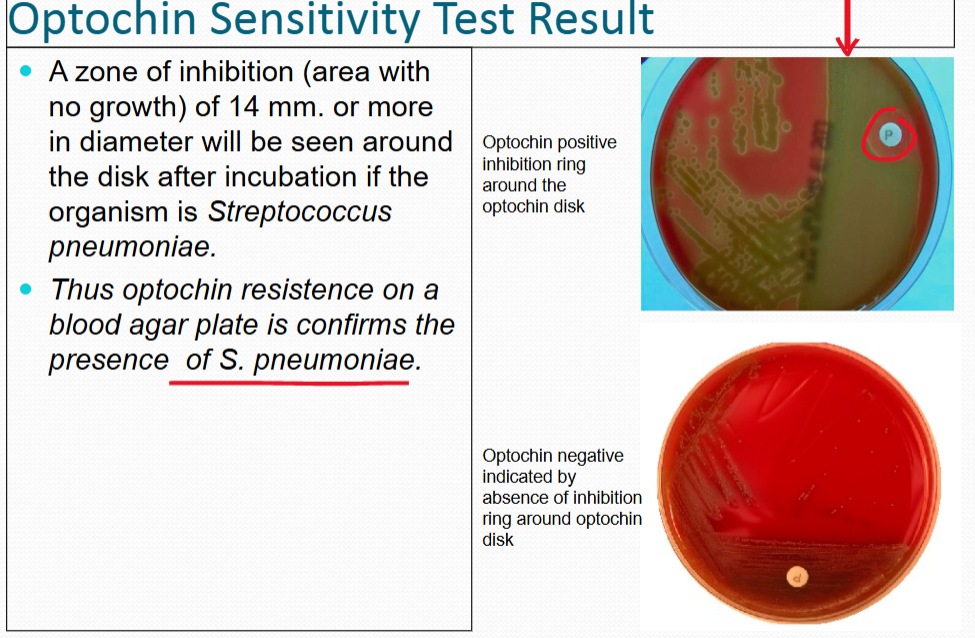
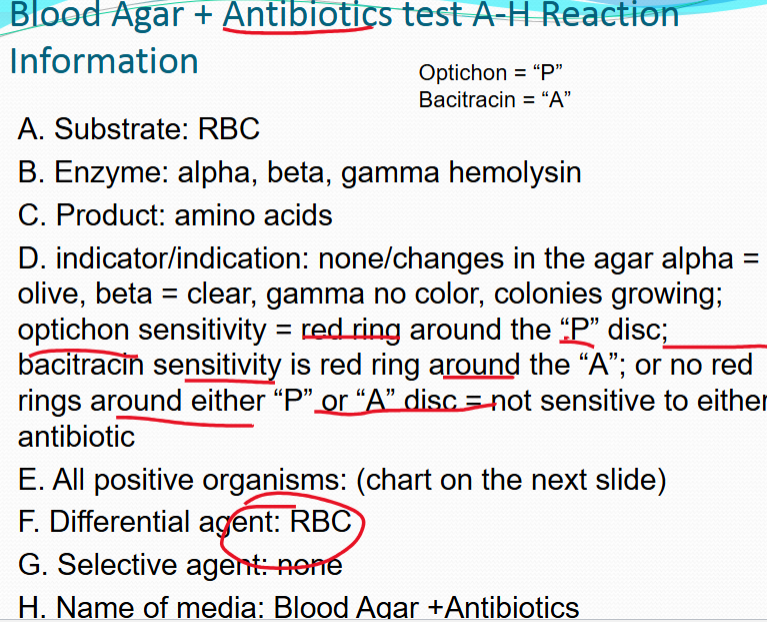
Optochin (ethylhydrocupreine hydrochloride) is a chemical related to quinine. It acts like a detergent and specifically breaks apart pneumococcal bacteria.
A sterile disk impregnated with optochin is placed on the first
sector(confluence) of an isolation plate before incubation.
A zone of inhibition (area with no growth) of 14 mm. or more in
diameter will be seen around the disk after incubation if the organism
is Streptococcus pneumoniae.
Other alpha-hemolytic streptococci are resistant to (not killed by)
optochin. Their colonies will thus grow right up to the disk of optochin
or have zones of inhibition less than 14 mm. in diameter
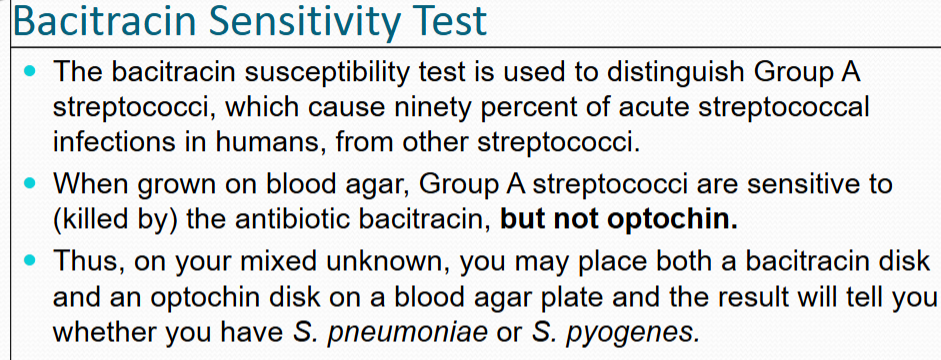
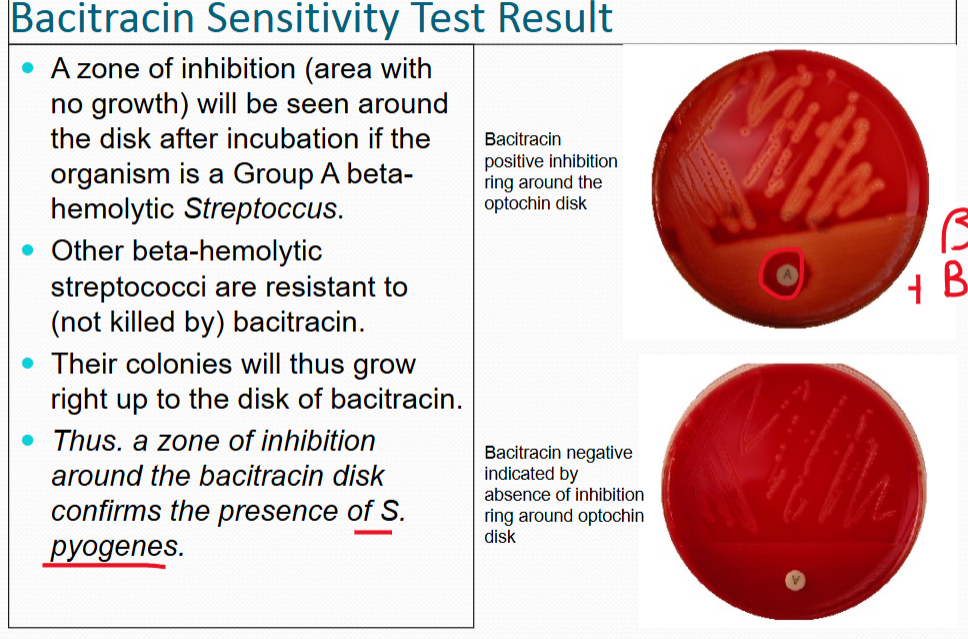
Bacitractin
Module 19
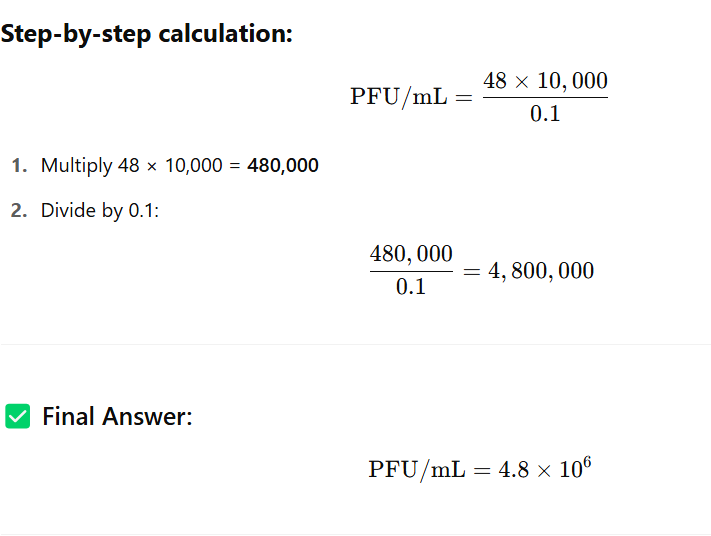
Mod 20 (Estimating Viral titer)
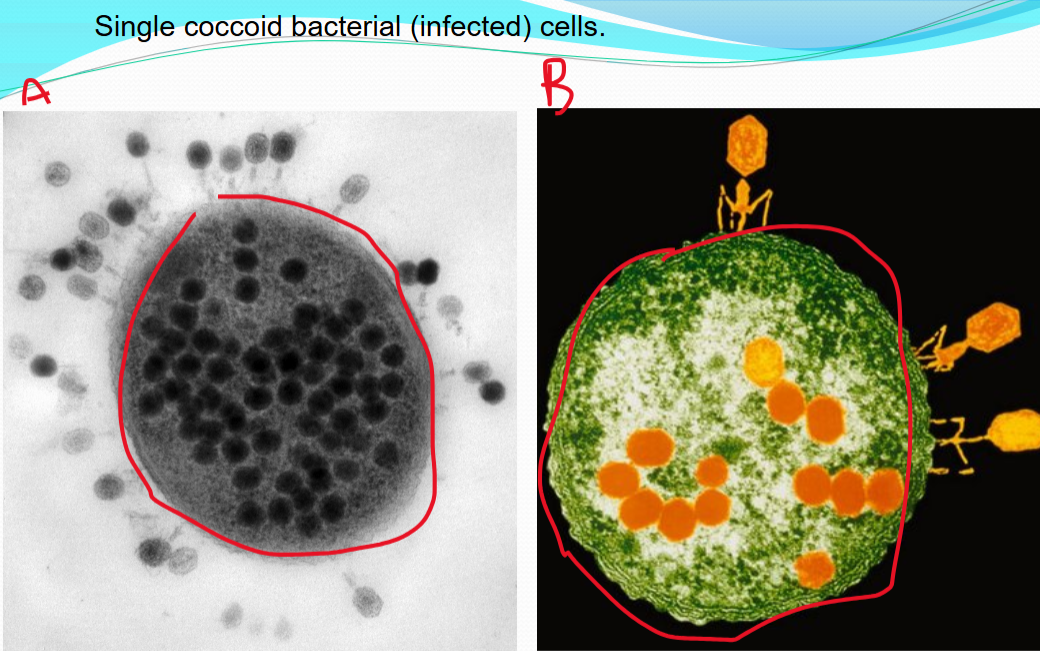
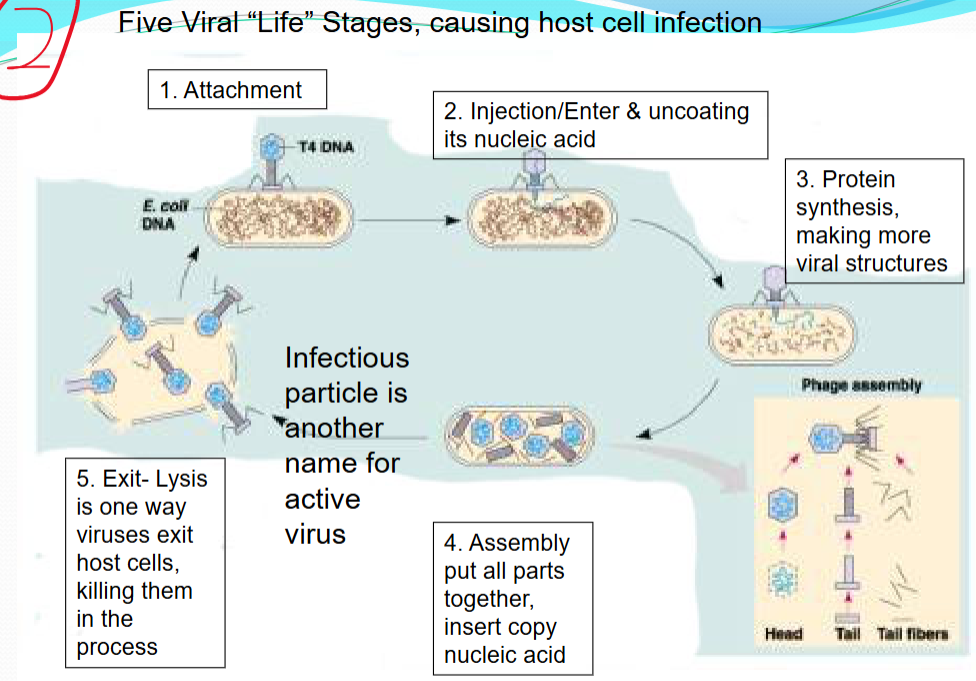
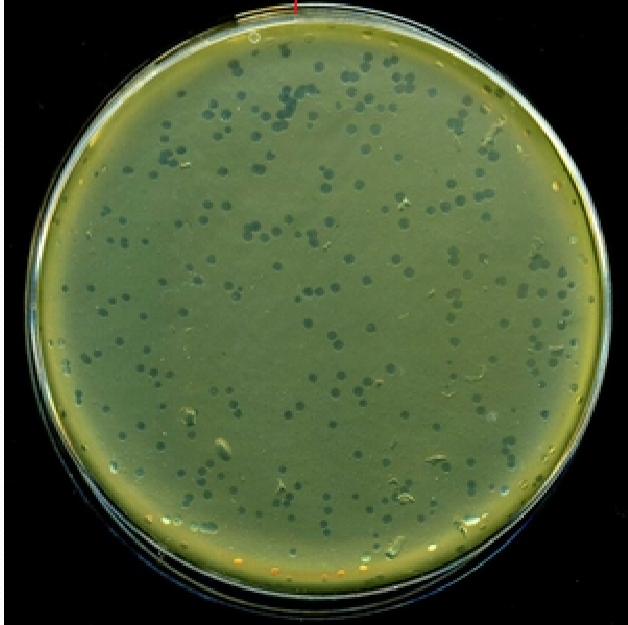
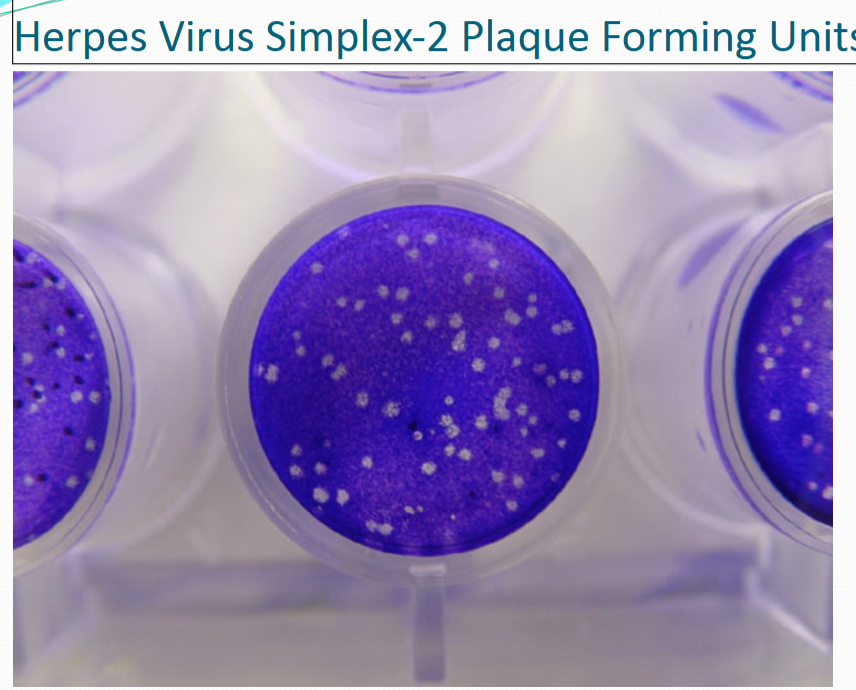
Plaque agar is an agar that has infected bacteria cells and the resulting lysis by those cells is obvious by the holes.
Mod 21 (Most probable Number)
Most probable number is used to assess water quality
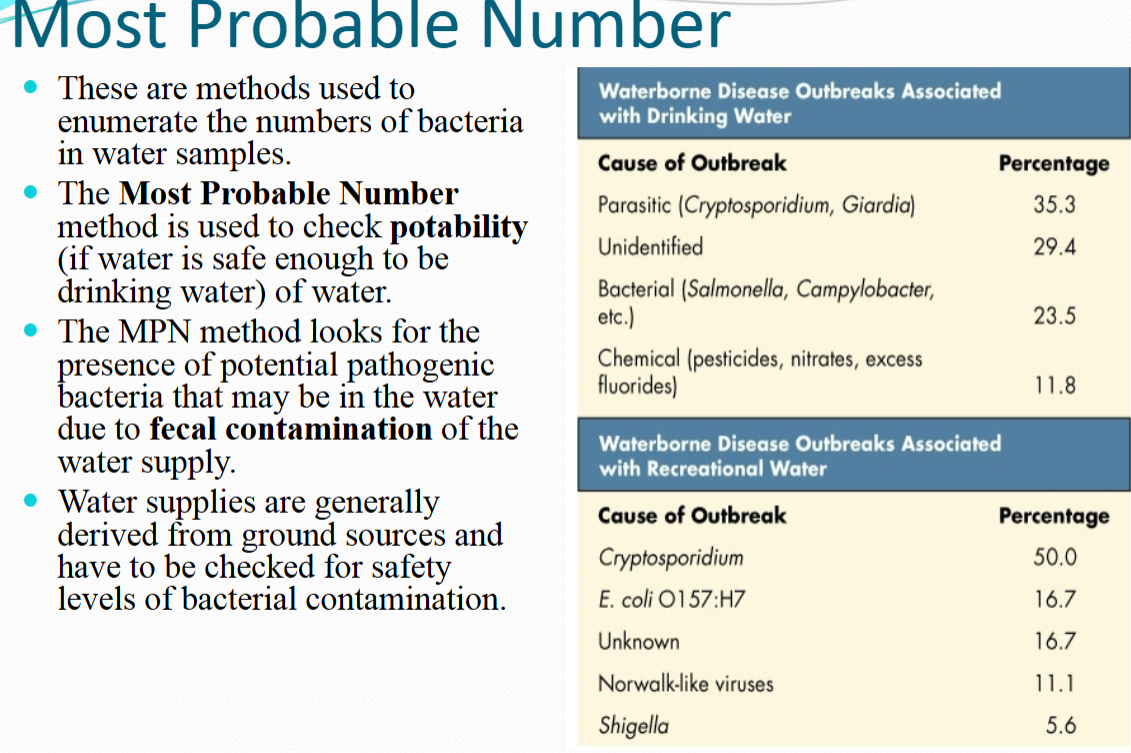
Most Probable number method enumerates the enteric bacteria called coliforms, specifically fecal coliforms
Coliforms are gram-negative bacilli that have the ability to ferment lactose with the production of acid and gas.
E. coli is used as an indicator organism for this type of testing.
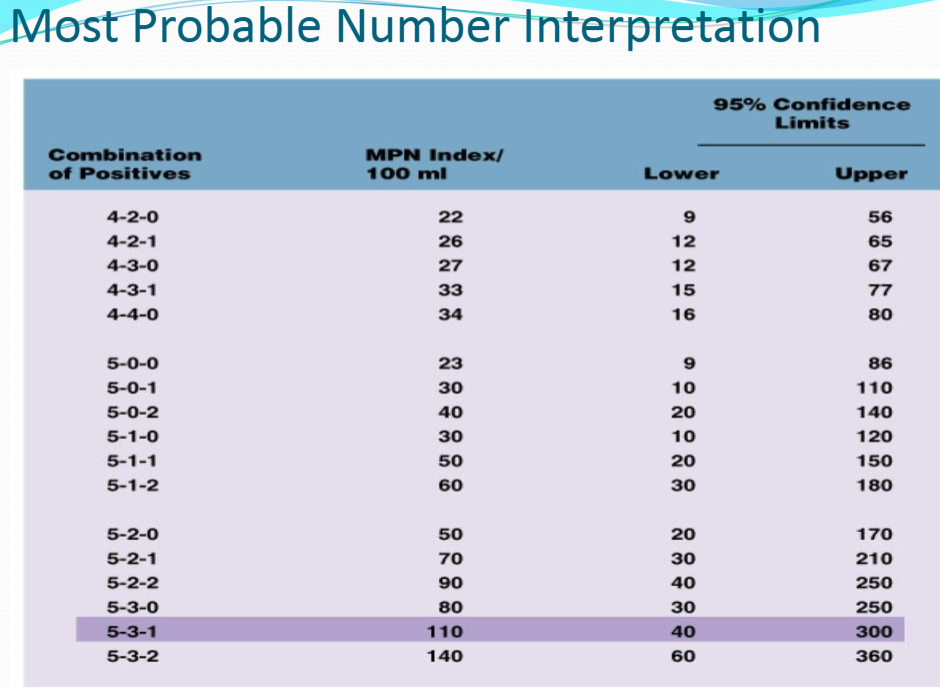
Most probable number tests include three levels of testing, which are presumptive, confirmed, and completed.
The presumptive test looks for fecal coliforms in water by inoculating lactose broth with the sample water.
The confirmed test uses selective/differential medium to highlight growth.
A completed test is only done when there are legal issues involved and the bacteria is identified by a full completion of tests
/