6. English Accents
1.Received Pronounciation
status: small minority of educates southern English speakers, often serves as reference accent in dictionaries
Names: RP, Queen’s/King’s English (Roach)
Internal variation
Conservative, Mainstream, Advanced forms (Gimson)
→ increasing competition from other speech norms
“Estuary English”
2.British and American pronounciation
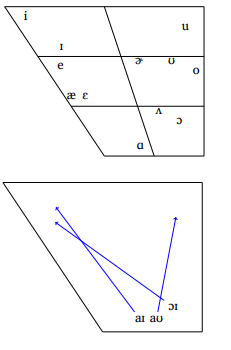
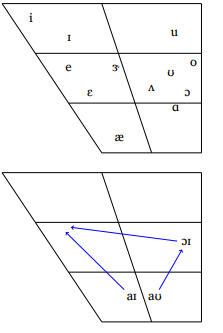
Comparison of British and American transcription systems
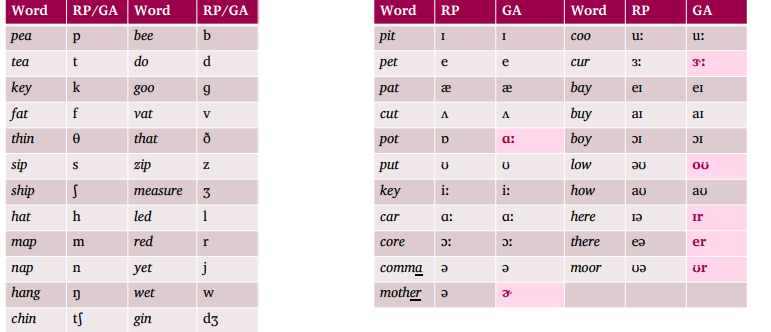
no national pronounciation norm for American English, “General American” =?
Pronounciation differences in GA:
Retention of post-vocalic /r/ e.g. car
unrounded low back vowel /ɑː/ e.g. pot, possible merger of /ɒ/ and /ɔː/ (cot - caught)
RP /ɑː/ > /æ/ (before voiceless fricatives and nasals): staff, dance
Length diferences of vowels
/uː/ for RP /juː/ in words like tune, new, Duke, duty
Tendency towards sonorisation of intervocalic /t/: city, writer - rider; Example: New York City → ‘flapped t’ /sɪti̬/
3. Sound changes
fundamental laws, frequently phonetic explanations/broad descriptions
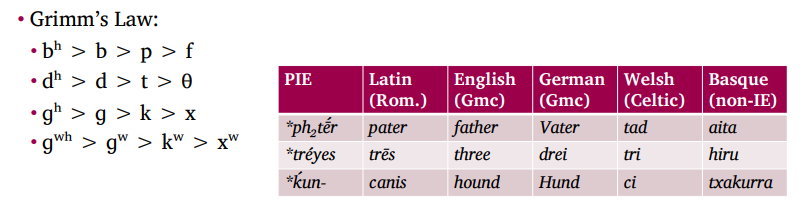
Great vowel shift (late ME, EME)
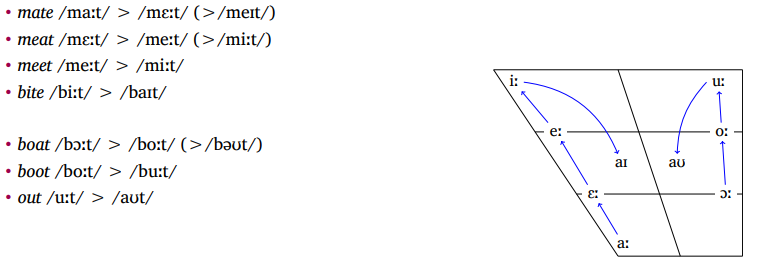
evidence:
loan words
french words borrowed before 1400 have undergone phonetic change, but not french words borrowed after GVS
spellings
retains spelling from before GVS in many cases
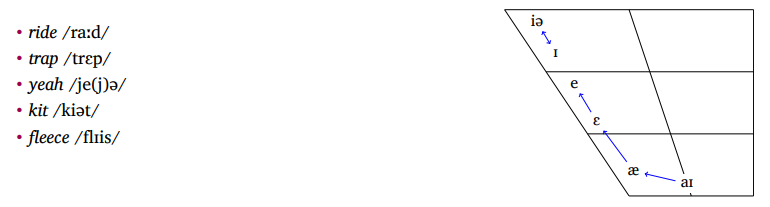
Northern cities shift
→ inland north dialects, USA, cities:
Chicago, Milwaukee, Detroit, Cleveland, Buffalo, Rochester
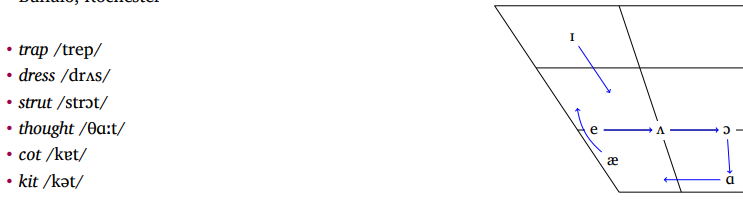
Southern shift
→ southern American English dialects, SE of the USA
4.Other English accents
Australian English
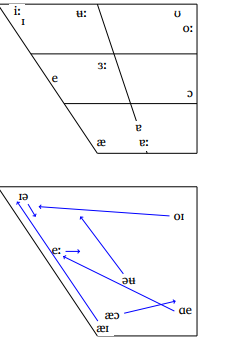
Tyneside English
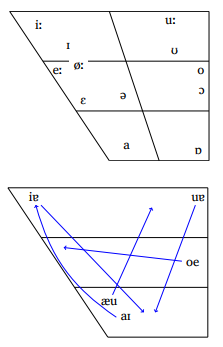
Southern Michigan (northern city)
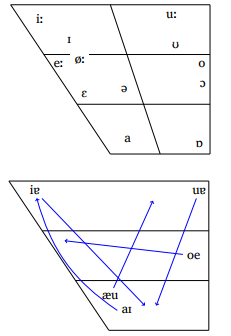
Liverpool (Scouse)
Philippines English
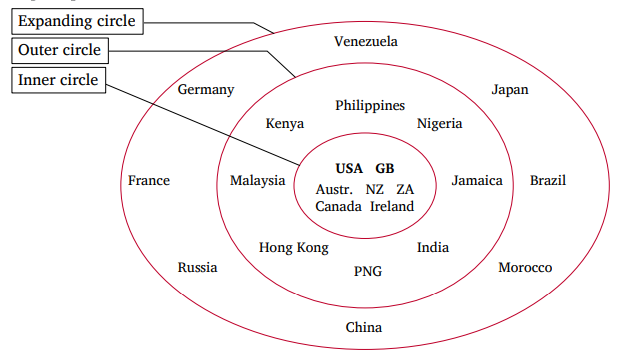
expanding circle = norm-dependent
outer circle = norm-developing
inner circle = norm-providing