SIN & FORGIVENESS REVISION NOTES
Religious Studies Revision Guide
Component Two: "Applied Catholic Theology"
Topics for Study
Death and the Afterlife
Crime and Punishment
Component 2 – 2.1: Death and the Afterlife
Key Concepts
Death
Definition: The end of physical life when the physical body ceases completely to function.
Eternal Life
Definition: Term referring to life in heaven after death; a state of living as God intends, leading to life in heaven.
Heaven
Definition: A place for those who have accepted God’s grace and forgiveness in this life, resulting in eternal existence in God’s presence.
Key Function: Face-to-face encounter with God often referred to as Heaven.
Hell
Definition: A state for those who, through their own free will, ultimately reject God’s grace and forgiveness, leading to living forever without God’s presence (eternal separation).
Judgement
Definition: At the end of one's life, individuals face a choice between accepting or rejecting God, leading to judgement that decides their eternal destiny (Heaven or Hell).
Magisterium
Definition: The teaching authority of the Catholic Church, exercised by bishops in communion with the Pope, guided by the Holy Spirit to interpret Scriptures and Tradition faithfully.
Resurrection
Definition: Raising of the body to life again after death; belief that Jesus experienced resurrection, and that all will at the end of time.
Soul
Definition: The eternal part of a human being, given at conception, which lives on after the death of the body, also refers to a human being’s rational nature.
Catholic Teachings on Death and Dying Well
Catholic Perspective on Death
Death is seen as not the end of existence; belief in eternal life in heaven for those who believe in Jesus.
Biblical Support:
"I am the resurrection and the life. Those who believe in me will live even though they die" (John 11:25).
"For God loved the world so much that he gave his only son, so that everyone who believes in him may not die but shall have eternal life" (John 3:16).
Impact on Life
This belief shapes how Catholics live, affecting their treatment towards the dying and their personal approach to death.
Dying Well
Respecting the natural end of life; complete rejection of euthanasia and assisted suicide.
Focus on hospice work that provides palliative care, enabling patients to maintain dignity until death.
Hospices: Focus on pain relief and emotional support as life ends.
Preparing individuals for death by managing personal affairs and reconciling with loved ones.
Rituals such as funerals to support grieving, emphasizing hope in eternal life.
Euthanasia and Assisted Suicide
Definitions
Euthanasia: Procedure where a medical professional administers medication to end a person’s life suffering from unbearable pain due to a prolonged incurable condition (Voluntary euthanasia is when the individual requests this).
Assisted Suicide: An individual seeks help to end their own life in a pain-free manner.
Catholic Teaching on Euthanasia and Assisted Suicide
Overall Stance: Completely against euthanasia and assisted suicide based on beliefs about the sanctity of life.
Rationale:
Life is a divine gift, respected from conception to natural death.
Both practices contradict the sanctity of life and violate the commandment, "Do not murder."
Promotion of hospice work that provides adequate care for the terminally ill, focusing on quality of life.
Palliative Care
Definition: Aimed at controlling pain and improving the quality of life for terminal patients; often involves medication for pain management.
Endorsed by Pope St John Paul II in 1995 through "Evangelium Vitae" (Good News of Life).
Different Views on Quality and Sanctity of Life
Sanctity of Life: Viewed as a sacred gift from God, demanding respect from conception to natural death.
Quality of Life: Emphasizes well-being, suggesting that life must have benefits to be worth living.
Controversy exists in assessing quality of life, as it is subjective.
Scriptural References:
"Thou shall not kill" (Exodus).
"Life belongs to God from conception until its natural end" (Catechism).
Palliative care is seen as a valid alternative to ease painful deaths.
Arguments Regarding the Right to Die
For the Right to Die
Advocates argue it’s a basic human right to control one’s ending, especially with advances in medical technology.
Emphasis on voluntary euthanasia as a means to alleviate suffering.
Against the Right to Die
Opponents argue that life is sacred as it is God's creation, and euthanasia undermines this.
Concerns about slippery slopes from voluntary to compulsory euthanasia and the trust relationship with medical professionals.
Catholic Beliefs about Life After Death
Body and Soul Dualism
St. Paul describes earthly bodies as perishable compared to heavenly bodies that are imperishable (1 Corinthians 15).
The resurrection implies a bodily existence after death, akin to Jesus'.
Eschatology: Study of the end times, summarized in four last things:
Death
Judgment
Heaven
Hell
Judgment, Heaven, Hell, and Purgatory
Judgment
Each person faces judgment after death based on their actions, aligned with teachings from parables in the Gospels (e.g., the Parable of the Unforgiving Servant).
Final judgment of all creation will occur.
Heaven
Reward for those who lead holy lives; envisioned as a realm of eternal happiness and communion with God.
Usually described as a banquet or feast without pain or sadness.
Purgatory
A temporary state for purifying souls before entering heaven, likened to a place of purifying fire.
Not accepted by Protestant Christians; Catholics can aid souls in purgatory through prayers.
Authority of the Catholic Church
Magisterium: Defined as the teaching authority exercised by bishops in communion with the Pope, guided by the Holy Spirit.
Second Vatican Council (Vatican II): Convened to address changes post-World War II, resulting in sixteen impactful documents.
Changes Due to Vatican II
Mass language changed from Latin to local languages for better understanding.
Emphasis on community involvement in Mass with lay participation.
Promotion of invitations for unity among Christians and open dialogue with other faiths.
Christian Artefacts in Relation to Beliefs on Eternal Life
Sarcophagus: A stone coffin featuring biblical scenes, notably reflecting Jesus' Passion.
Paschal Candle: Special candle symbolizing the Resurrection, used during significant Catholic ceremonies.
The Role of Music in Catholic Worship
Music during Mass: Various forms highlight the importance of the Eucharistic celebration and the messages of the Gospels.
Faure's Requiem: A musical composition portraying sadness over death while incorporating hope for eternal life.
Catholic Funeral Rite
Symbolic actions during funerals emphasize the hope of resurrection, allowing families to find comfort in their faith.
Catholic Prayer
Purpose and Forms: Communication with God; includes traditional and spontaneous prayers focusing on intercession for the deceased.
Example: 'Eternal Rest' prayer.
Component 2 – 2.2: Crime and Punishment
Key Concepts
Absolutism: The belief that specific actions are intrinsically right or wrong, with moral laws existing eternally.
Relativism: The doctrine that moral laws are human constructs that vary over time and culture.
Salvation: Belief that through Jesus' life and death, humanity gains the possibility of eternal life with God.
Making Moral Decisions
Morality explores the complexity of right and wrong.
Absolute Morality: Principles that do not change with circumstances, e.g., stealing is always wrong.
Relative Morality: Recognizes context matters; stealing may be justified under specific circumstances.
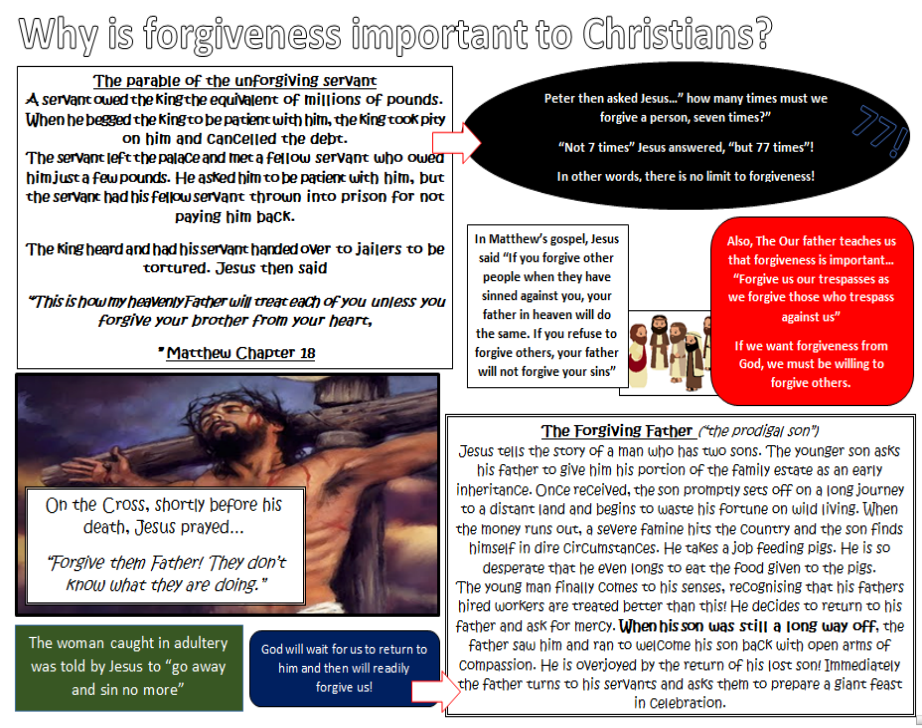
Christian Teachings on Forgiveness
A blend of punishment and forgiveness, where God judges humans based on their behaviors.
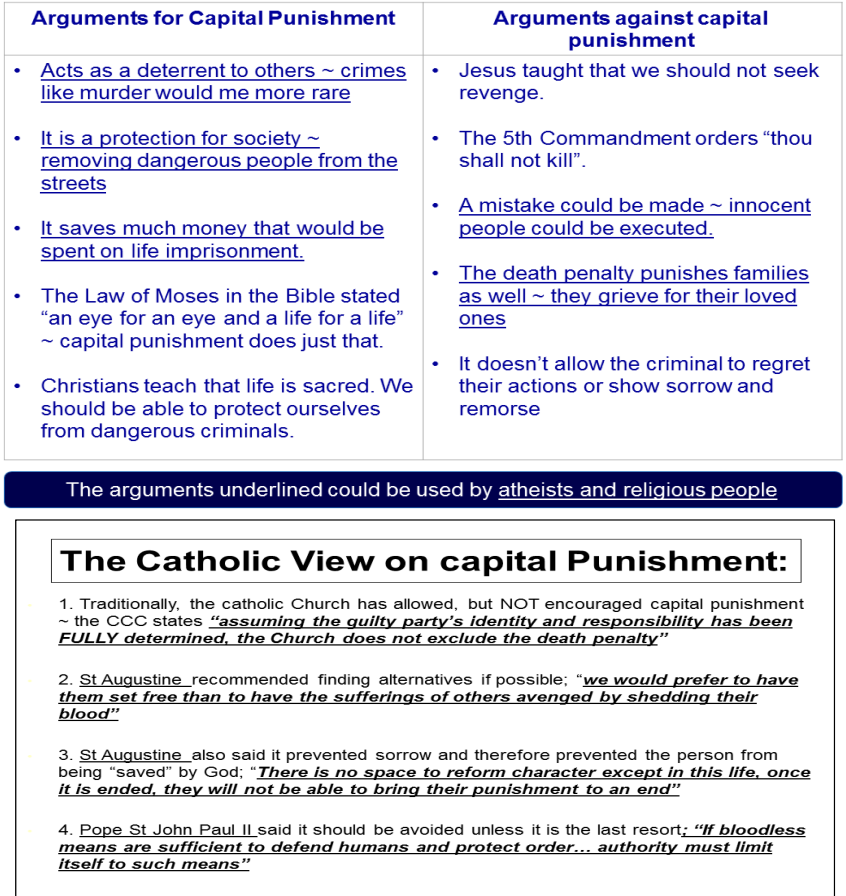
Capital Punishment
Definition: The death penalty, where individuals are executed for serious crimes; has legal status in some regions but was abolished in the UK in 1965.
Redemption
Concept: Restoring the broken relationship between God and humanity due to sin.
Mechanism: Through Jesus' death, believed to be a divine and perfect sacrifice—offering salvation to all.
The Paschal Mystery
Refers to the last days of Christ, including his passion, death, resurrection, and ascension.
Significance of the Resurrection: Affirmative proof of Jesus as the Son of God, showcasing God's omnipotence, and offering a prospect of life after death to all believers.
The Nature of God
Routed in mercy, allowing free will for humanity, invoking personal responsibility for choices between good and evil.
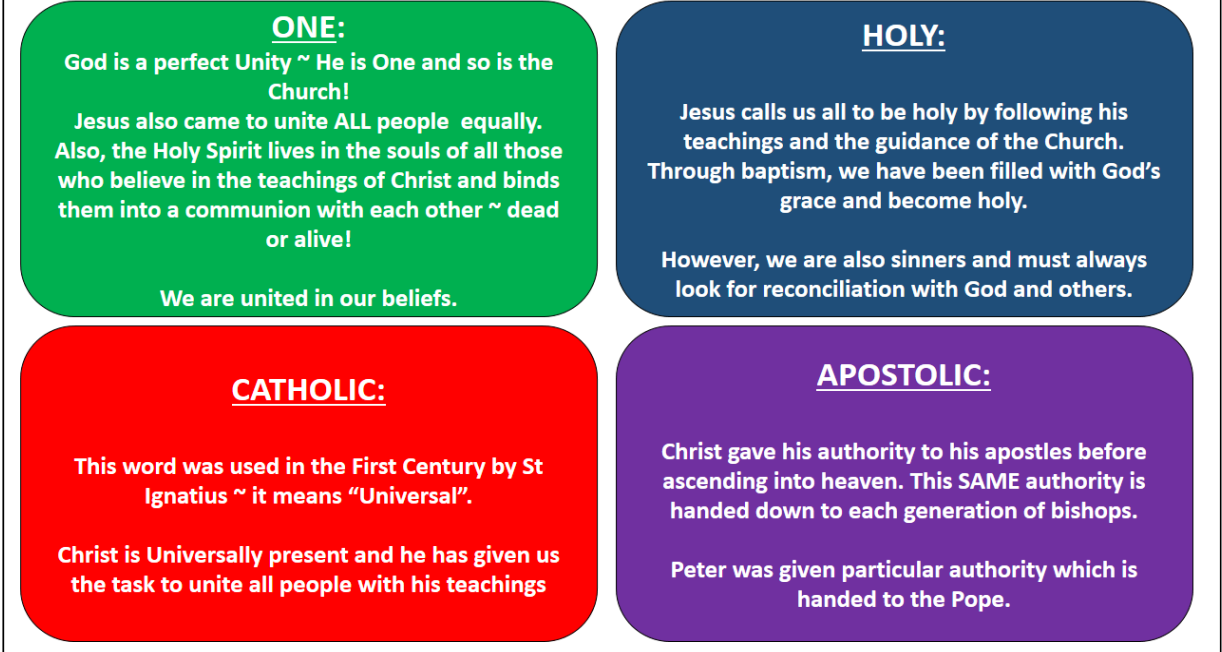
The Church
Characteristics: Defined by its oneness, holiness, catholicity, and apostolic nature as per the Council of Nicea.
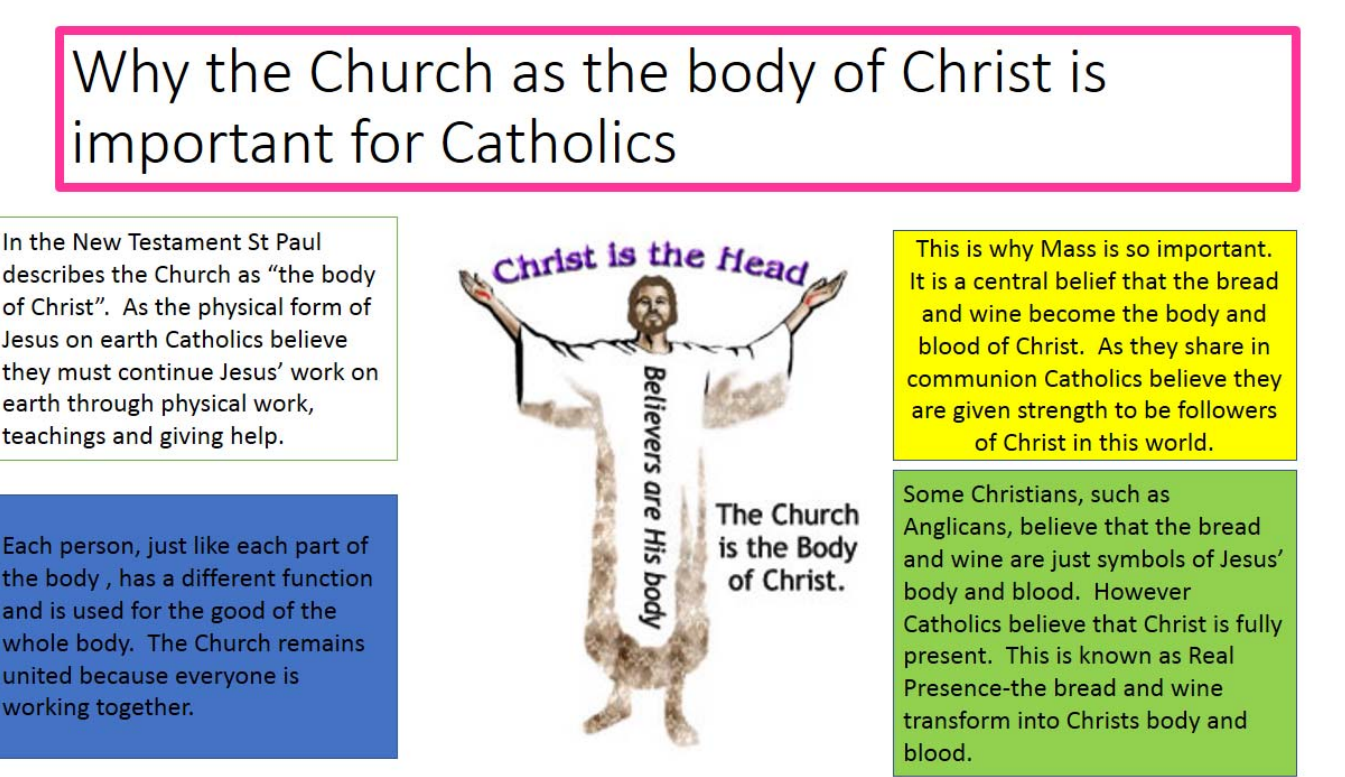
Mary as Model of Discipleship: Celebrated for her faith and role as Jesus' mother, Christians regard her as an intercessor but not divine.
/
The Importance of Sacraments
Defined as visible signs of God’s love and grace, each sacrament provides a visible connection to Jesus' teachings.
The Mass/Eucharist
Central to Catholic practice, the Eucharist is celebrated nearly every day, fostering a deeper relationship with God.
Mission and Evangelization
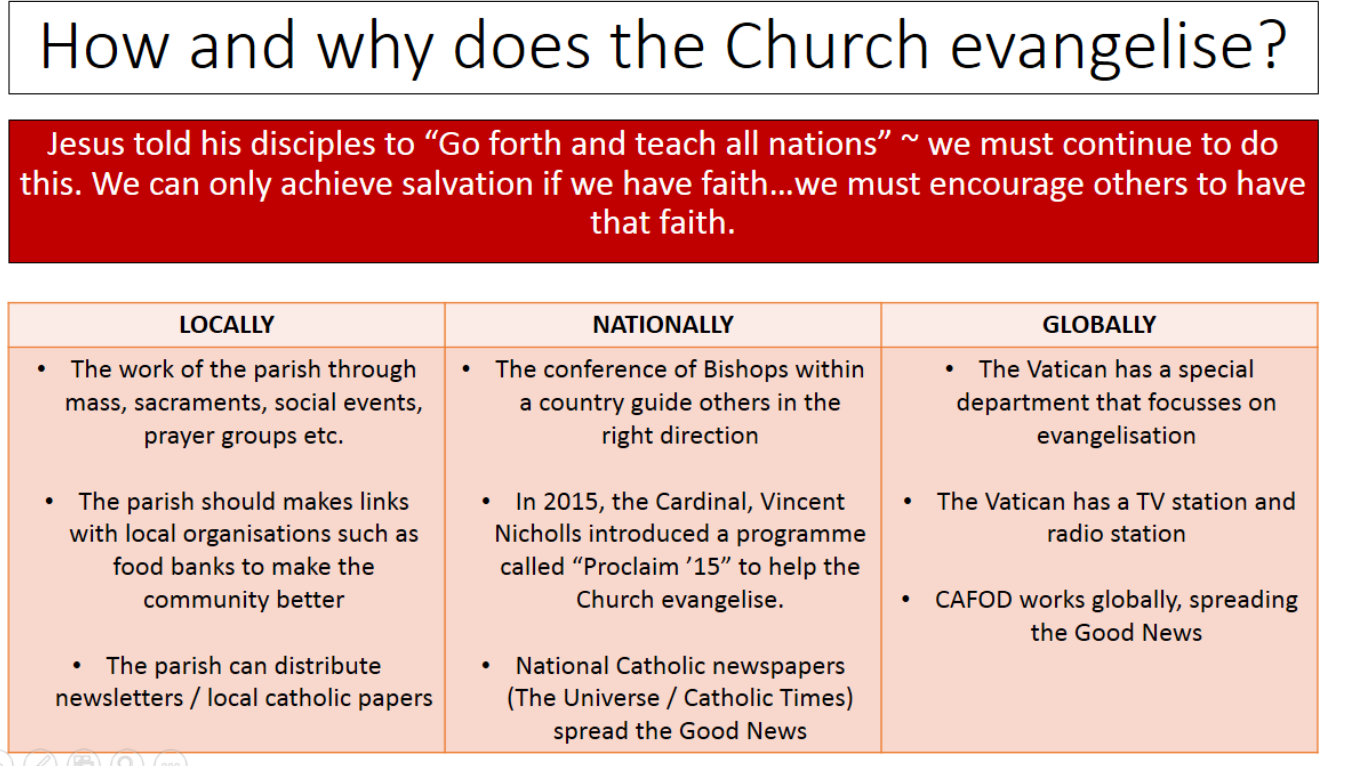
The Church's mission to share Christ’s teachings continues both historically and in modern contexts, adapting to changing societal norms.
Recent Changes in Practice
Observing shifts in religious practices, including the rise of secularism affecting Catholic traditions and observances.