Unit 1 test essay step-by-step
The question is talking about the scientific method and graphing. Check Homework (12 points)
Independent Variable: The type of fertilizer used (name-brand vs. generic).
Dependent Variable: The size of the tomatoes produced (measured in weight and diameter).
Control Variables: Type of tomato seeds, soil type, amount of water, sunlight exposure, temperature, and overall care of the plants.
To test whether a name-brand fertilizer produces larger tomatoes than a generic one, grow 20 tomato plants of the same variety, using identical soil and environmental conditions. Use name-brand fertilizer on 10 plants and generic fertilizer on the other 10. Measure the average weight and diameter of the tomatoes at harvest. The independent variable is the type of fertilizer, and the dependent variable is the size of the tomatoes. The hypothesis is that tomatoes from the name-brand fertilizer will be larger. The expected outcome is that the name-brand fertilizer will produce significantly larger tomatoes compared to the generic fertilizer.
Talking about hydrolysis and how it works with ATP (10 points) ATP hydrolysis is the process of breaking down ATP to release energy that's stored in the bonds of ATP, which is then used to power cellular processes
Rate is how fast something is.
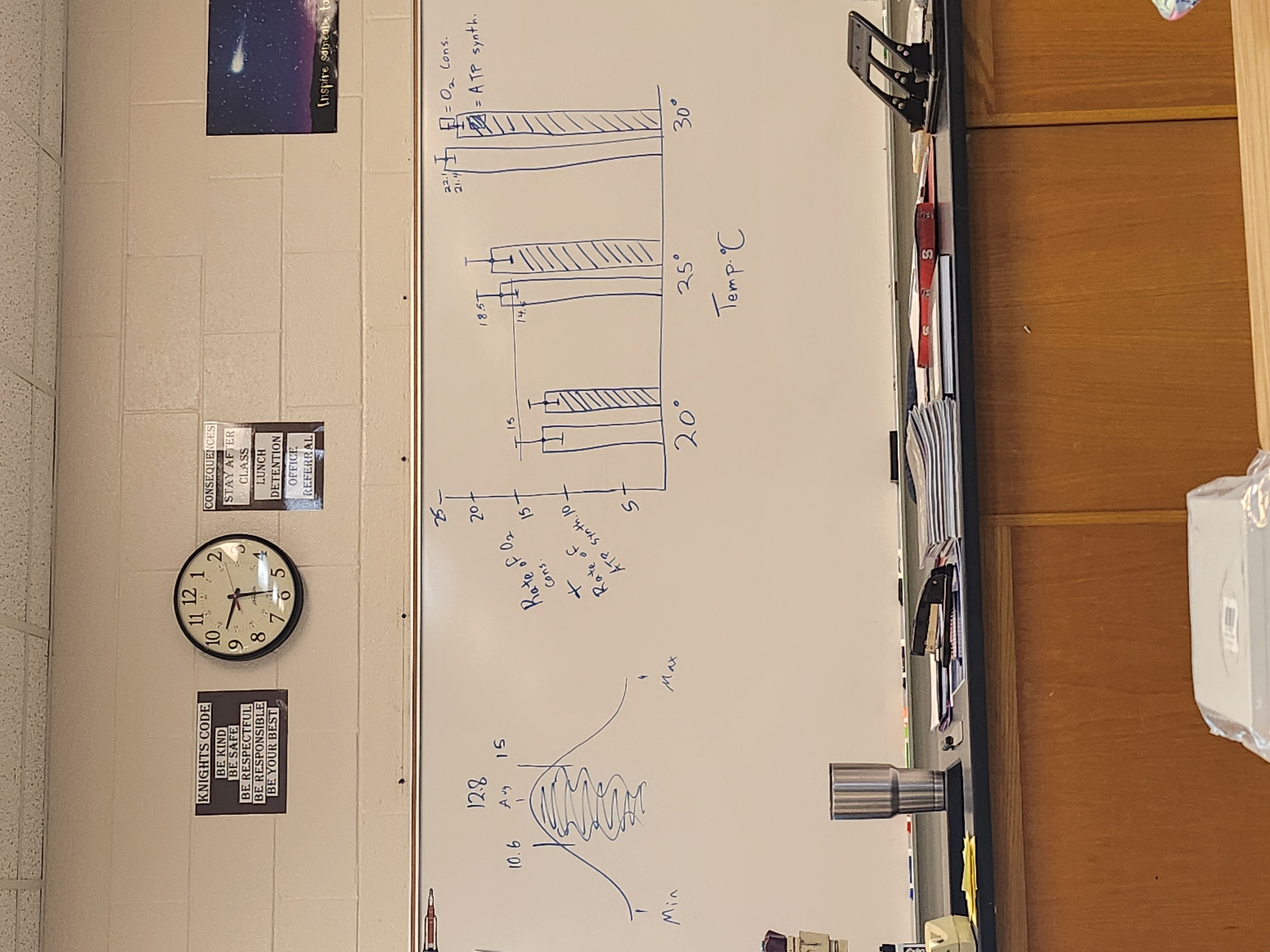
Part b I: Make a bar graph. The graph's temperature (20, 25, 30) is at the bottom. Check the unit to see if this game is on the other side of the graph (Rate of 02 cons and Rate of Atp synth). Make a key so that the grader knows what it represents. (Put a range bar for the other on the side (2.2)) As the temperature goes, more oxygen or ATP
Part b II: If the range more are overlapping, then in writing at 30 degrees Celsius
You have to describe all of the four things. Tell what they do and what they are. (8 points)
Carbohydrates are the body's primary fuel source, providing energy for breathing.
Lipids are fatty compounds that perform many bodily functions, such as hormone regulation because of steroid hormones, including estrogen.
Proteins are essential for cellular communication. They are crucial for repairing and building cells and for growth and development in children.
Nucleic acids Use primarily functions as the storage and transmission of genetic information within a cell