CH 6. Psychotropic Drugs
6.1 Sedative-Hypnotics & Antianxiety Drugs
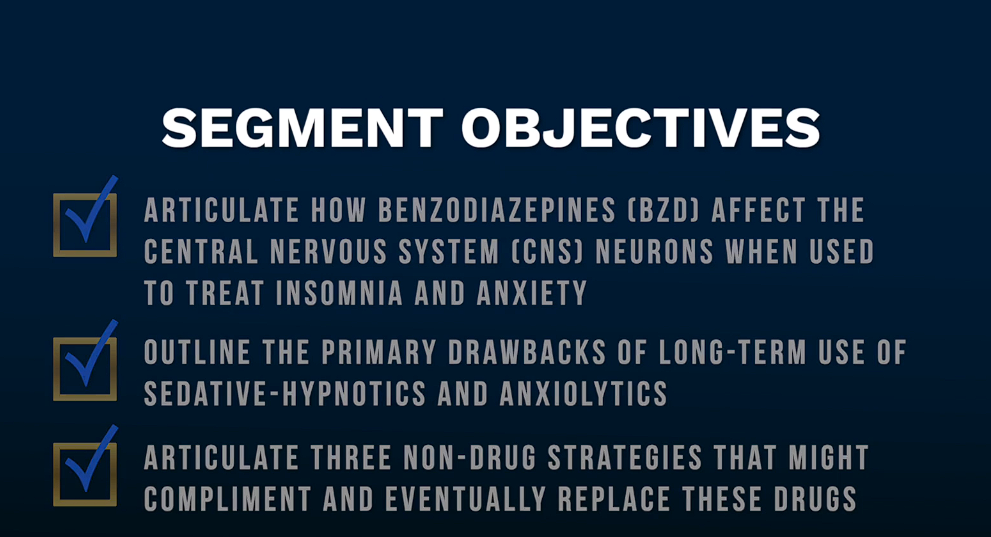
How do Benzodiazpines affect CNS when treating insomnia and anxiety
Primary drawbacks using sedative hypnotics and anxiolygics for long periods
Increased fall risk
alzheimers?
hangover effect
rebound effect
anterograde amnesia
explain non-drug strategies that will replace the drugs
Solving the root problem since drugs only solve symptoms (exercise, counseling)
Newer Sedative-Hypnotics
Zolpidem + Zaleplon
work like BZD but less rebound insomnia when discontinued
Eszopiclone
affects GABA
Ramelteon (NON GABA)
Affects melatonin receptors
Newer Anti-Anxiety Drugs
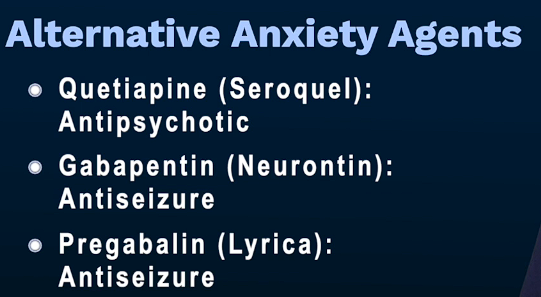
Azapirone: Buspirone
stimulates serotonin receptors in CNS
decrease anxiety with less sedation and less dependence
BUT slow onset + moderate efficacy (used for mild anxiety)
What antidepressant drugs have anxiolytic effects? —> Paroxetine and Venlafaxine
less chance of side effects/addiction
Adverse Effects
Hangover effects that is hard to time
Anterograde amnesia
short-term learning slips
Rebound Effect
stopping drug suddenly without solving problem = vengence
Falls
Tolerance and dependence
Avoid use in age >60
6.2 Antidepressants
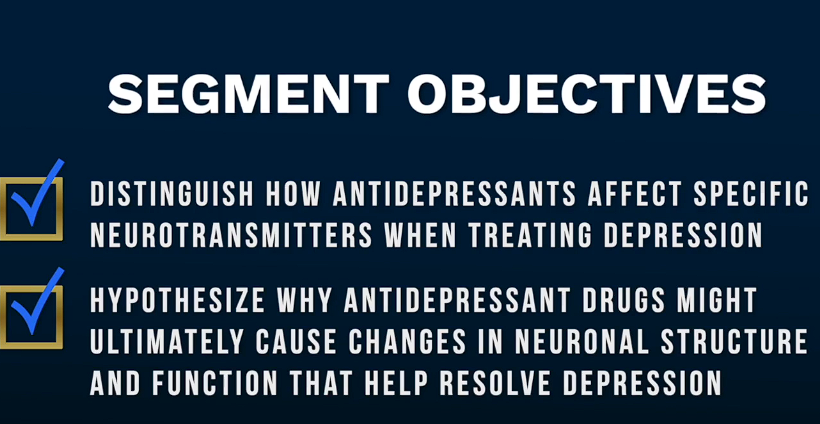
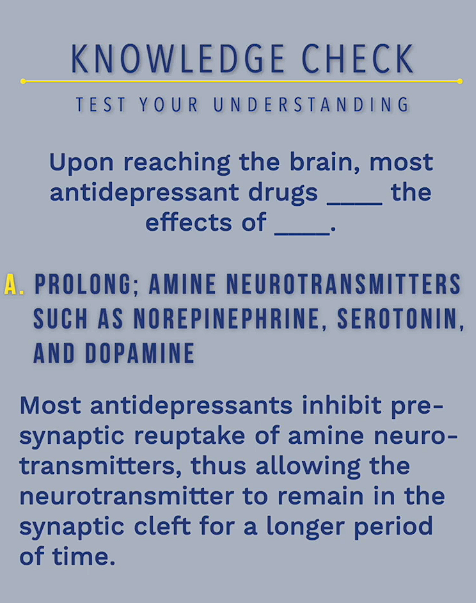
Describe drugs and the neurotransmitters they effect for depression
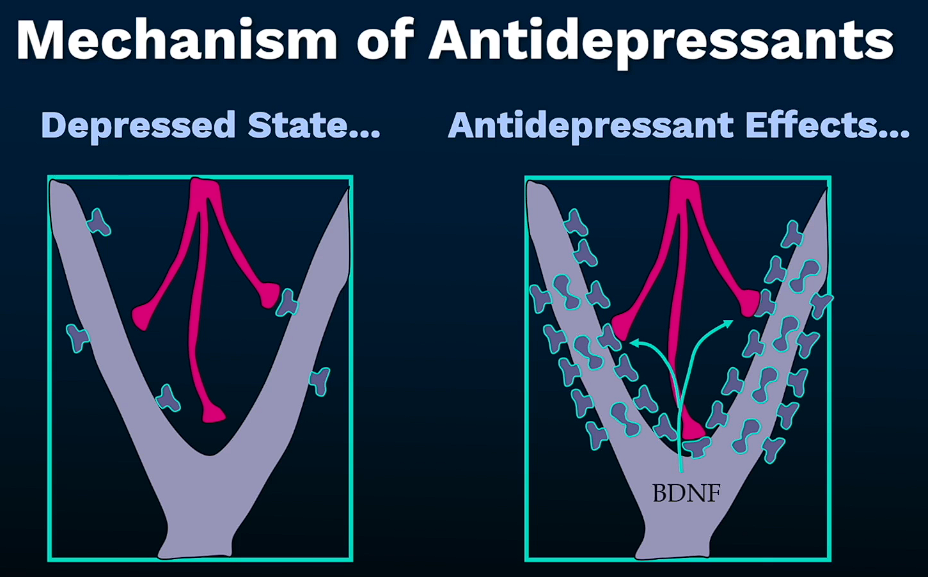
Mechanisms of antidepressant drugs + permanent changes
Increase synapses which grows hippocampus
Neurotransmitters in deficit in depression —> norepinephrine, Dopamine, Serotonin
SSRIs (Selective Serotonin Reuptake inhibtors)
boost serotonin
SNRIs
boost norepinephrine
Tricyclics
affect all 3 (nonephrine, dopamine, serotonin)
(THESE THREE BLOCK REUPTAKE SO STAY AROUND LONGER)
Monoamine Oxidase (MAO) inhibitors (LAST RESORT)
(INHIBIT ENZYME THAT BREAKS DOWN)
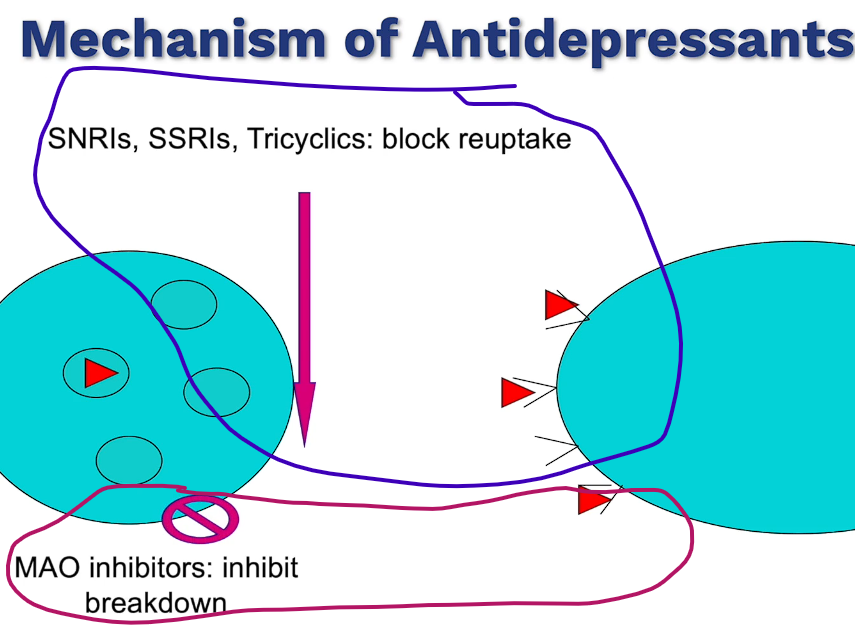
Theory on How these drugs work
Drugs also growth hippocampus (brain derived neurotrophic factor)
increase connections
6.3 Antidepressants + Bipolar Syndrome
What are adverse effects with antidepressants
6-8 weeks for peak weeks
How does Ketamine resolve depression
decreases excitatory amino acids and NMDA
blocks receptors (serotonin, dopamine, GABA)
Conventional vs alternative treatment for bipolar disorder
Tricyclics cause:
sedation
anticholinergic effects (dry mouth + constipation)
CV problems
Seizures + increased risk of overdose
MAO inhibitors cause
CNS excitation
Increase blood pressure (+fermented foods)
SSRI + SNRIs (First since better tolerated)
increase seizure
More GI problems
Serotonin Syndrome
flooding of serotonin
S/S: high HR/BP, confusion, hallucinations, agitation, sweating, shivering, dyskinesias
Antidepressants lag before symptoms improve with 1-2 weeks and peak at 6-8
EDUCATE PATIENTS ABOUT PEAK WEEK TIME AND WORSE S/S
Ketamine
Anesthetic
Less NMDA and decrease effect of excitatory amino acids (glutamate)
affects serotonin, GABA, dopamine, acetylcholine, receptors
Fast acting, low dose to decrease depression (LAST RESORT) via IV or nasal spray
Antidepressants for Chronic Pain
Cymbalta is only drug FDA approved
Treating Bipolar Syndrome
Lithium
stabilizes mood to prevent episodes
What organ failure should be regarded when using lithium —> kidney since element are only excreted through kidney
Antiseizure and antipyschotics used for bipolar
6.4 Antipsychotic Medications
How do antipsychotics fix neurotransmitter abnormal levels?
All antipsychotics block dopamine receptors; newer atypical drugs affect serotonin
Why do antipsychotic drugs cause abnormal movement patterns?
Basal ganglia dopamine production is disrupted
Main mechanism of antipsychotic drugs —> Block D2 mesolimbic dopamine receptors
Atypical Antipsychotics
Weak blockers of D2 receptors
Strong blockers of serotonin receptors
Adverse effects (ALL INCLUDE MOTOR SIDE EFFECTS AKA EXTRAPYRAMIDAL)
disrupted lipid/glucose metabolism
weight gain
both share tardive permeant dyskinesia ¼ affected (extensive face movements), akathsia (fidgeting)
Why do motor side effects occur when taking antipsychotics? —> drug makes its way to basal ganglia (motor control) and inhibits dopamine
Adverse Effects (Traditional)
Orthostatic hypo
Sedation
Anticholinergic efx (constipation, urinary retention)
Drugs for Tardive Dyskinesia
prevent storage of dopamine, norepinephrine and serotonin in pre-syn terminals
Neuroleptic Malignant Syndrome
Catatonia, rigidity, tremors, fever
Risk factors: high dose, agitated patient/impaired mental function
6.5 Treatment of Dementia
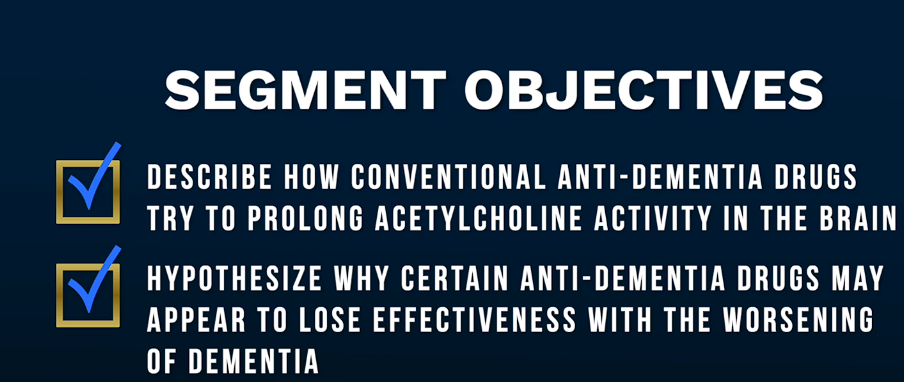
How does anti-dementia drugs extend Acetylcholine in brain
extend release of Ach from neurons
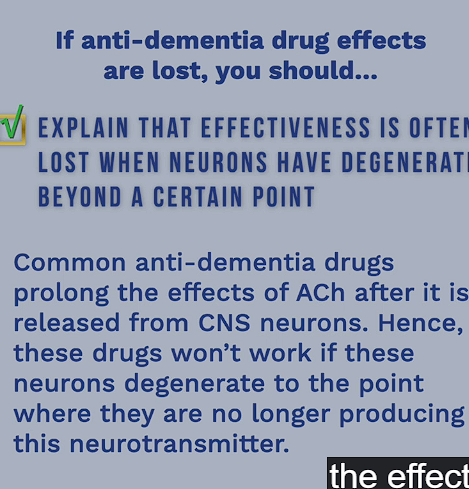
Why do anti-dementia lose effectiveness as dementia progresses
Damaged neurons no longer produce any Ach so there is nothing to prolong which is main mechanism behind the drug
Anti-dementia drugs
Cholinergic stimulants
extend Ach activity
Indirect Cholinergic Stimulant
Inhibit cholinesterase that breaks down Ach due to short half life of Ach
Memantina (Namenda; new drug)
Blocks NMDA-glutamate receptors (excitatory amino acid)
Too much in Alzheimer’s
Drug combo for AD
Donepezil + Memantine = Namzaric
slows progression + prolong effect of Ach
Aduhelm (Aducanumab; NEWEST DRUG)
antibody that gloms to amyloid protein to prevent plaque in brain neurons
Monthly IV inject; $56,000 and not even sure it works