SOB: Wingman Intervention & Conflict Management
SOB: WINGMAN INTERVENTION
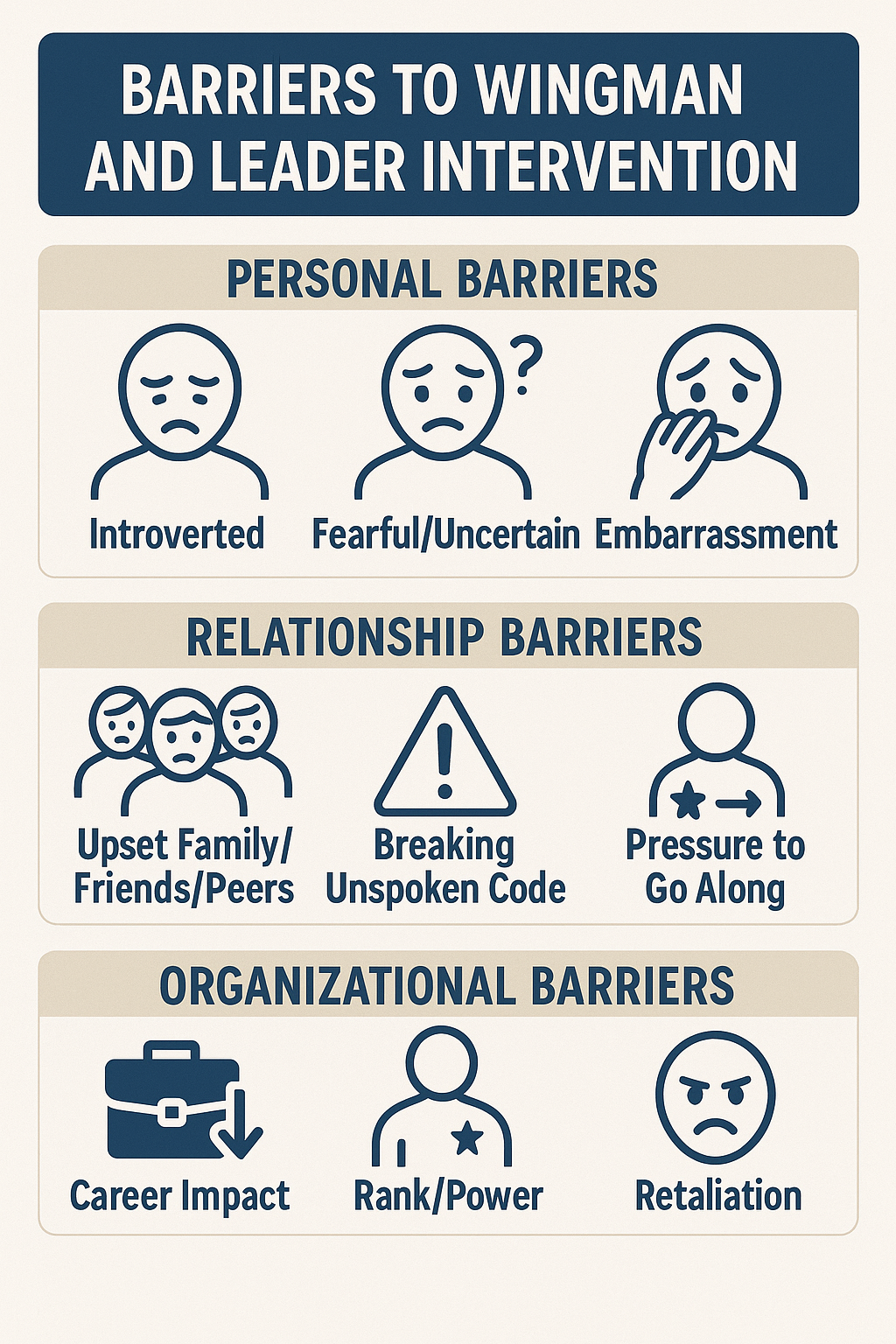
Barriers to Wingman and Leader Intervention
Personal Barriers:
These are internal obstacles that make it difficult for someone to step in and intervene.
* Introverted: Shyness or discomfort in social situations.
* Fearful/Uncertain: Hesitation due to fear of the unknown or potential negative outcomes.
* Embarrassment: Feeling awkward or ashamed to intervene.
Relationship Barriers: These involve concerns about how intervention might affect relationships.
* Upset Family/Friends/Peers: Worrying about causing conflict or upsetting loved ones.
* Breaking Unspoken Code: Violating social norms or expectations.
* Pressure to Go Along: Feeling compelled to conform to group behavior.
Organizational Barriers:
Career Impact: Intervention could potentially harm one's own career or the careers of others involved.
Rank/Power: Differences in rank or power dynamics can create hesitation to intervene, especially when a superior is involved.
Retaliation: Fear of retaliation or negative repercussions from those involved can deter intervention.
The 3 Ds for Wingman and Leader Intervention
Applying the 3 Ds to Prevent Sexual Assault and Interpersonal Violence
The 3 Ds can be practically applied to prevent sexual assault and interpersonal violence:
Direct:
Directly address the individuals involved, expressing concern or disapproval of their behavior.
Clearly communicate that the behavior is inappropriate or harmful.
Delegate:
Involve others who can help, such as friends, authorities, or security personnel.
Seek assistance from individuals with more experience or authority in handling such situations.
Distract:
Create a diversion to interrupt the situation and change the focus.
Interject with a question, offer assistance, or create a reason for the individuals to separate.
SOB: CONFLICT MANAGEMENT
Sources of Conflict (Factors)
Organizational Sources of Conflict:
Communication Factors:
Poor or unclear communication can lead to misunderstandings and conflict.
Structural Factors:
Rewards: When rewards are perceived as unfairly distributed, it can create conflict.
Resource Interdependence: Conflict can arise when different individuals or groups depend on the same limited resources.
Personal Behavior Factors:
Values: Differing personal values can lead to conflict, especially when those values clash significantly.
Perception: How individuals perceive situations and others can be a source of conflict, as interpretations may vary.
Personality: Personality clashes and differences in communication styles can generate conflict.
Additional Factors to Consider:
Who am I dealing with? Understanding the other party's personality and background can help in managing the conflict.
What are the stakes? Assessing the importance of the issue at hand can help determine the appropriate conflict management style.
What is the situation? Considering the context and circumstances of the conflict can inform the approach to resolving it.
Five Conflict Management Styles and Problem-Solving Approaches
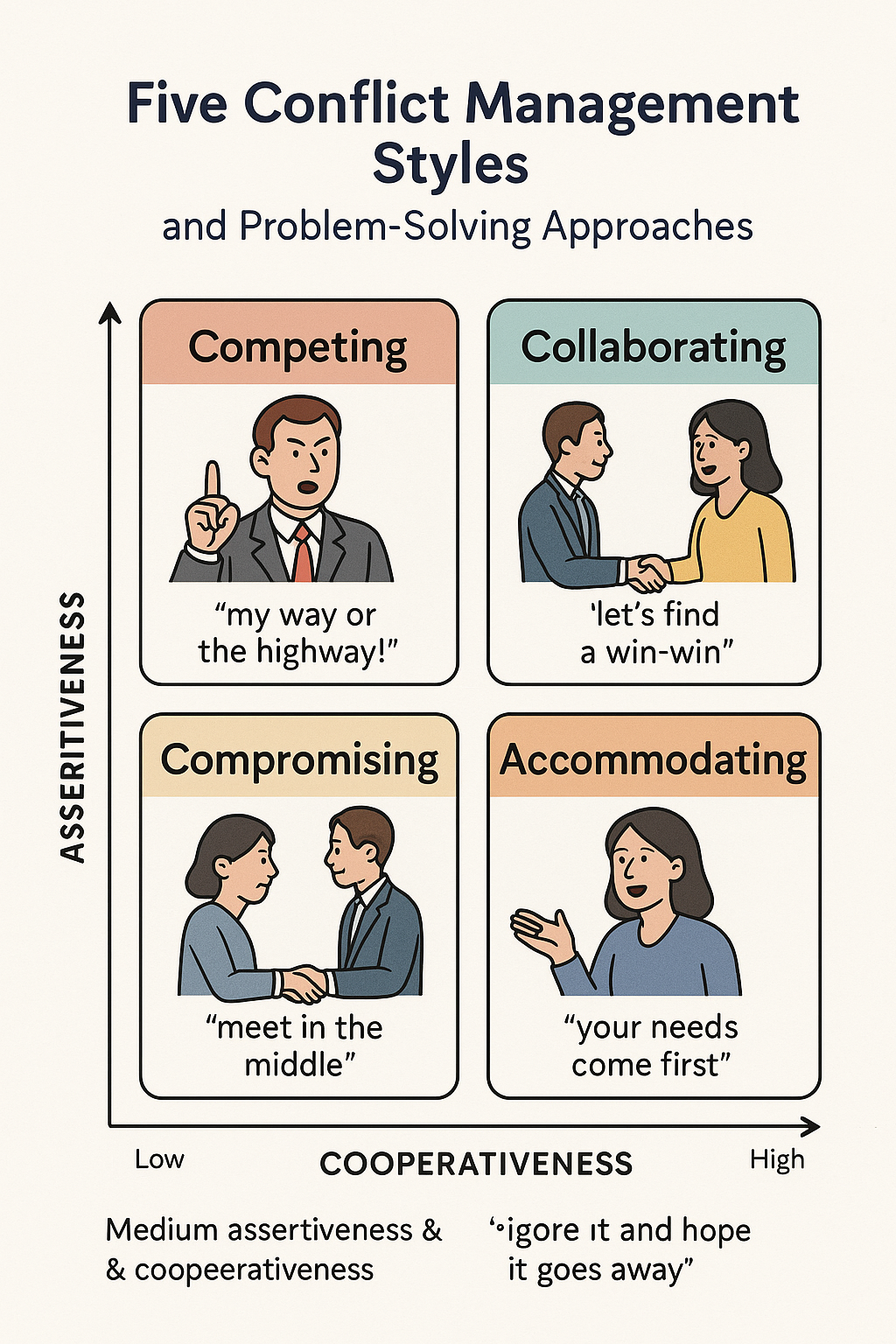
Conflict Management Styles
* Competing: High assertiveness, low cooperativeness (my way or the highway!)
* Collaborating: High assertiveness, high cooperativeness (let's find a win-win)
* Compromising: Medium assertiveness & cooperativeness (meet in the middle)
* Avoiding: Low assertiveness & cooperativeness (ignore it and hope it goes away)
* Accommodating: Low assertiveness, high cooperativeness (your needs come first)
Problem-Solving Approaches
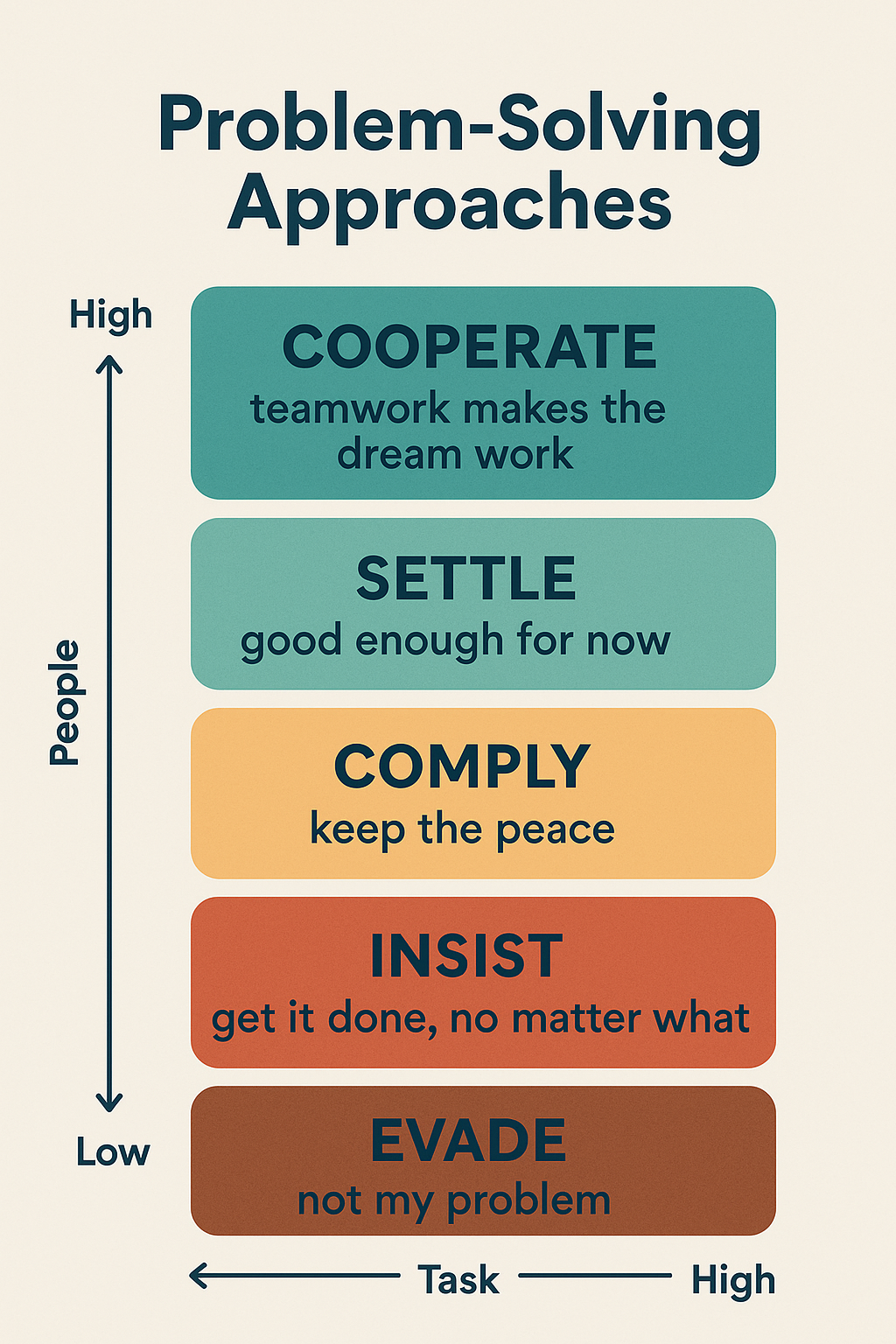
* Cooperate: High task, high people (teamwork makes the dream work)
* Settle: Medium task & people (good enough for now)
* Comply: Low task, high people (keep the peace)
* Insist: High task, low people (get it done, no matter what)
* Evade: Low task & people (not my problem)
Key Questions:
* Who am I dealing with?
* What are the stakes?
* What is the situation?
Bottom Line: Choose the best style based on the situation!