Device Driver In Input-Output Systems For Operating Systems
Device Driver in Input-Output Systems for Operating Systems
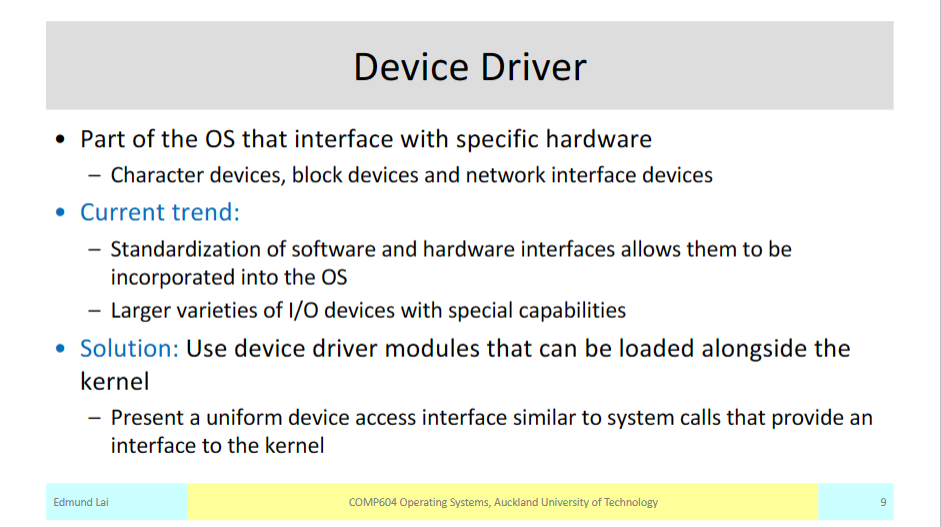
A device driver is a software component that allows the operating system to communicate with a specific hardware device, such as a printer, keyboard, or network card.
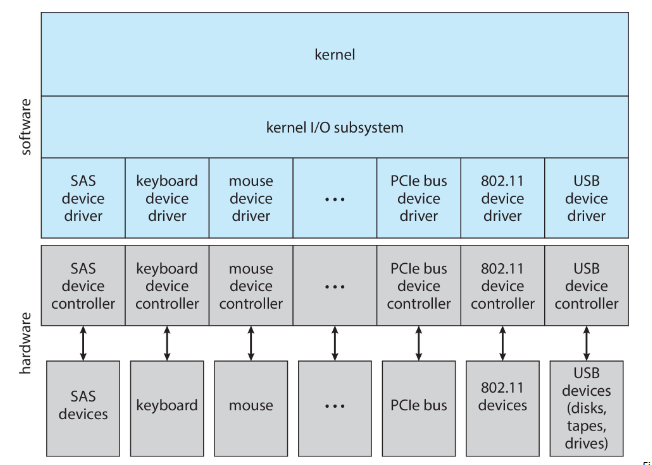
The device driver acts as an intermediary between the operating system and the hardware device, providing a standardized interface for the operating system to control and access the device.
The main functions of a device driver include:
Initializing the device and configuring its settings.
Handling device-specific commands and operations.
Managing data transfers between the device and the operating system.
Handling interrupts and other events generated by the device.
Providing an abstraction layer that hides the hardware details from the operating system.
Device drivers are typically developed by the hardware manufacturer or by third-party developers who have access to the device's specifications and programming interfaces.
The operating system uses device drivers to communicate with various hardware devices, allowing applications and users to interact with them without needing to understand the low-level details of the hardware.
Device drivers are loaded into the operating system's kernel and are responsible for managing the hardware resources and providing a consistent interface for applications to access the device.
Device drivers can be categorized into two types: character device drivers and block device drivers.
Character device drivers handle devices that transfer data character by character, such as keyboards or serial ports.
Block device drivers handle devices that transfer data in fixed-size blocks, such as hard drives or flash memory.
Device drivers play a critical role in the overall performance and stability of an operating system, as they directly interact with the hardware and can impact system responsiveness and reliability.
Device drivers need to be regularly updated and maintained to ensure compatibility with new hardware devices and to fix any bugs or security vulnerabilities that may arise.
In modern operating systems, device drivers are typically loaded dynamically as needed, allowing the operating system to support a wide range of hardware devices without requiring all drivers to be loaded at startup.
→Long detailed sumary below:
Device Driver in Input-Output Systems for Operating Systems
A device driver is a crucial software component that enables the operating system to communicate with specific hardware devices, such as printers, keyboards, or network cards. Acting as an intermediary between the operating system and the hardware device, the device driver provides a standardized interface for the operating system to control and access the device.
The primary functions of a device driver encompass various tasks. Firstly, it initializes the device and configures its settings to ensure proper functionality. Additionally, the device driver handles device-specific commands and operations, allowing the operating system to interact with the hardware device efficiently. It also manages data transfers between the device and the operating system, ensuring seamless communication. In the event of interrupts or other events generated by the device, the device driver is responsible for handling them appropriately. Moreover, the device driver provides an abstraction layer that shields the operating system from the intricate details of the hardware, simplifying the interaction process.
Device drivers are typically developed by the hardware manufacturer or third-party developers who have access to the device's specifications and programming interfaces. By utilizing device drivers, the operating system can effectively communicate with a wide range of hardware devices, enabling applications and users to interact with them without needing to understand the underlying hardware intricacies.
Once loaded into the operating system's kernel, device drivers assume the responsibility of managing hardware resources and providing a consistent interface for applications to access the device. They play a critical role in the overall performance and stability of an operating system, as they directly interact with the hardware. The quality and efficiency of device drivers can significantly impact system responsiveness and reliability.
Device drivers can be categorized into two types: character device drivers and block device drivers. Character device drivers are designed to handle devices that transfer data character by character, such as keyboards or serial ports. On the other hand, block device drivers are responsible for managing devices that transfer data in fixed-size blocks, such as hard drives or flash memory.
To ensure compatibility with new hardware devices and address any bugs or security vulnerabilities, device drivers require regular updates and maintenance. This ongoing effort guarantees that the operating system can support a wide range of hardware devices and provides a secure and reliable user experience.
In modern operating systems, device drivers are typically loaded dynamically as needed. This dynamic loading capability allows the operating system to support a vast array of hardware devices without burdening the system by loading all drivers at startup. By loading device drivers on-demand, the operating system optimizes resource utilization and enhances system efficiency.
Key Information:
Device driver: Software component that enables communication between the operating system and a specific hardware device
Functions: Handle device initialization, data transfer, and error handling
Types: Character device drivers (e.g., keyboards), block device drivers (e.g., hard drives), network device drivers
Kernel mode: Device drivers run in kernel mode to access hardware directly
Interrupt handling: Device drivers handle interrupts generated by hardware devices
Device driver interface: Provides a standardized way for the operating system to interact with device drivers
Device driver development: Requires knowledge of hardware architecture and operating system internals
 .
.