Chapter 5: Business Market and Business Buyer Behavior
Business market definition and characteristics:
a. Definition:
The business market is huge:
Quy mô thị trường B2B thường lớn hơn so với thị trường tiêu dùng.
Nhiều ngành công nghiệp phụ thuộc vào giao dịch B2B trước khi sản phẩm đến tay người tiêu dùng (ví dụ: nhà sản xuất mua nguyên liệu thô, nhà bán buôn cung cấp hàng cho nhà bán lẻ).
In some ways, business markets are similar to consumer markets. Both involve people who assume buying roles and make purchase decisions to satisfy needs. However, business markets differ in many ways from consumer markets.
The business market includes organizational customers who purchase goods and services to support the organization’s activities (B2B) - bao gồm các tổ chức (công ty, cơ quan chính phủ, tổ chức phi lợi nhuận) thay vì người tiêu dùng cá nhân.
b. Characteristics:
Market structure: (Fewer but larger buyer)
Business demand ultimately comes from the demand for consumer goods.
Business purchase usually involves more decision participants
More complex buying decisions (take time)
More formalized (written purchase order)
The buyer and seller are much more dependent on each other
Business buyer behavior:
a. Definition:
Business buyer behavior refers to the buying behavior of the organizations that buy goods and services for use in production of other products and services that are sold, rented, or supplied to others.
b. The model of Business Buyer Behavior:
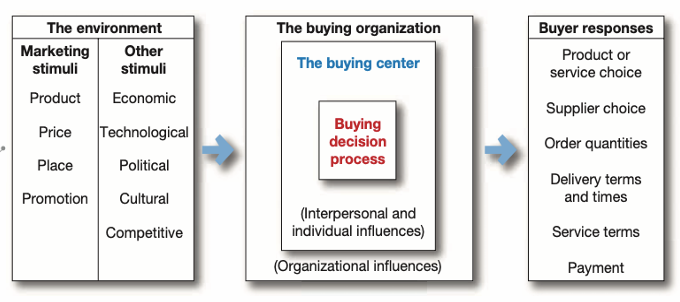
Phase 2: The Buying Center: Nhóm người trong doanh nghiệp tham gia vào quá trình mua hàng, bao gồm các vai trò như người dùng, người mua, người ra quyết định, người ảnh hưởng, người phê duyệt,...
Quy trình ra quyết định mua hàng (Buying Decision Process): Doanh nghiệp không ra quyết định mua hàng nhanh chóng như cá nhân, mà phải trải qua nhiều bước như xác định nhu cầu, đánh giá nhà cung cấp, thương lượng hợp đồng,...
Ảnh hưởng cá nhân và tổ chức (Interpersonal and Individual Influences / Organizational Influences): Các yếu tố như văn hóa công ty, ngân sách, chiến lược kinh doanh cũng ảnh hưởng đến quyết định mua hàng.
c. Major types of buying situation:
Straight rebuy: a routine purchase decision such as reorder without any modifications.
Modified rebuy: a purchase decision that requires some research where the buyer wants to modify the product specification, price, terms, or suppliers.
New task: a business buying situation in which the buyer purchases a product or service for the first time.
Systems selling (or solutions selling): Buying a packaged solution to a problem from a single seller, thus avoiding all the separate decisions involved in a complex buying situation.
d. Participants in the Business Buying Process:
Buying center is all of the individuals and units that participate in the business decision-making process.
Users: are those that will use the product or service.
Influencers: help define specifications and provide information for evaluating alternatives.
Gatekeepers: control the flow of information.
Deciders: have formal or informal power to select and approve final suppliers.
Buyers: have formal authority to select the supplier and arrange terms of purchase.
Ex: Nestlé muốn mua một hệ thống máy đóng gói tự động để tăng năng suất và đảm bảo chất lượng sản phẩm. Quá trình ra quyết định mua hàng sẽ có sự tham gia của nhiều bên liên quan trong công ty.
User: Công nhân vận hành máy móc trong nhà máy sản xuất của Nestlé. Một công nhân nói: "Máy đóng gói hiện tại thường bị kẹt, chúng tôi cần một máy có cơ chế chống tắc nguyên liệu tốt hơn."
Influencer: Kỹ sư Nestlé đề xuất: "Chúng ta nên chọn máy có hệ thống cảm biến hiện đại để giảm lỗi đóng gói.": Đánh giá thông số kỹ thuật của các loại máy đóng gói + Đưa ra khuyến nghị về công nghệ nào phù hợp nhất với quy trình sản xuất.
Gatekeeper: Nhân viên quản lý mua hàng và thư ký giám đốc:
Kiểm soát luồng thông tin giữa Nestlé và các nhà cung cấp.
Lọc danh sách nhà cung cấp tiềm năng trước khi trình lên giám đốc sản xuất.
Giới hạn số lượng báo giá để công ty chỉ tập trung vào những nhà cung cấp uy tín.
Deciders: Giám đốc sản xuất quyết định: "Chúng ta sẽ chọn nhà cung cấp X vì họ có công nghệ đóng gói hiện đại nhất với giá hợp lý.":
Quyết định ngân sách dành cho việc mua máy đóng gói.
Xem xét đề xuất từ Influencers và Buyers trước khi đưa ra quyết định cuối cùng.
Buyers: Bộ phận mua hàng của Nestlé.
Đàm phán giá cả, điều khoản thanh toán, thời gian giao hàng với nhà cung cấp.
Đảm bảo hợp đồng mua bán có lợi cho Nestlé.
Làm việc với bộ phận vận hành để đảm bảo việc lắp đặt và đào tạo sử dụng máy mới diễn ra suôn sẻ.
Major influences on business buyers:
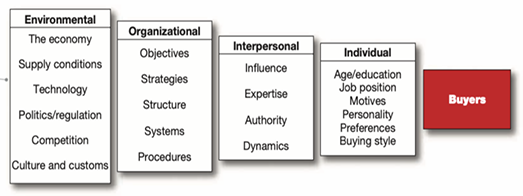
a. Environmental factors:
Business buyers are heavily influenced by factors in the current and expected economic environment, such as the economic outlook, the supply of key materials
Culture and customs can strongly influence business buyer reactions to the marketer’s behavior and strategies, esp in the international marketing environment.
b. Organizational factors:
Each buying organization has its own objectives, strategies, structure, systems, and procedures, and the business marketer must understand these factors well.
How many people are involved in the buying decision?
Who are they?
What are their evaluative criteria?
What are the company’s policies and limits on its buyers?
c. Interpersonal factors:
The buying center usually includes many participants who influence each other, so interpersonal factors influence the business buying process.
Participants may influence the buying decision because they control rewards and punishments, are well liked, have special expertise, or have a special relationship with other important participants.
Interpersonal factors are often very subtle
d. Individual factors:
Each participant brings in personal motives, perceptions, and preferences which are affected by personal characteristics.
Buyers have different buying styles.
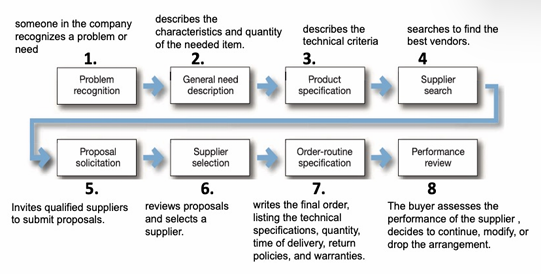
Stages of the business buyer decision process: