Chapter+16+Innate+Host+Defenses
Innate Immunity
Definition: The body's nonspecific defenses present at birth against pathogens and environmental agents.
Types of Immunity:
Innate Immunity: Defenses present at birth.
Adaptive Immunity: Immunity that adjusts to specific microorganisms.
First Line of Defense
Skin:
First barrier against infection.
Human skin covers approximately 2 m2 and consists of three layers:
Dermis: Inner layer made of connective tissue.
Epidermis: Outer layer in direct contact with the environment.
Outer Epidermis: Comprises keratinized dead cells.
Mucous Membranes:
Epithelial layers with underlying connective tissue that secrete mucus, found in areas like the gastrointestinal and respiratory tracts to prevent entry of pathogens.
Expulsion Mechanisms:
Lacrimal Apparatus: Cleanses eyes.
Saliva: Dilutes and cleans mouth.
Ciliary Escalator: Prevents mucus accumulation and traps microbes in respiratory tract.
Urine & Vaginal Secretions: Prevent colonization and move microorganisms out of the body.
Defecation & Vomiting: Propels microorganisms out of the gastrointestinal tract.
First Line Chemical Factors
Perspiration:
Flushes the skin and contains lysozyme, an enzyme that targets bacteria.
Earwax:
Contains fatty acids that inhibit fungal and bacterial growth.
Saliva:
Slightly acidic and contains lysozyme.
Gastric Juices:
Highly acidic, which aids in digestion and pathogen elimination.
Vaginal Secretions and Urine:
Slightly acidic and contain lysozyme, contributing to their antimicrobial properties.
Resident Microbiota
Definition: Microorganisms that establish a permanent or semi-permanent residence on the body, helping to prevent disease.
Mechanisms of Defense:
Prevent overgrowth of harmful microorganisms.
Limit attachment sites for pathogens.
Produce inhibitory substances.
Contribute to immune system development from an early age.
Second Line of Defense
Activated when the first line of defense is breached.
Defensive Cells:
Neutrophils, macrophages, and other white blood cells participate in immune response.
Inflammation: A localized response to infection.
Fever: A systemic response to infection.
Antimicrobial Substances:
Include various proteins and compounds important in fighting infections.
Formed Elements in Blood
Components of Blood:
Plasma: Liquid component containing nutrients and hormones.
Formed Elements:
Erythrocytes: Red blood cells for oxygen transport.
Leukocytes: White blood cells involved in immune response.
Thrombocytes: Platelets crucial for blood clotting.
Hematopoiesis:
Process of blood cell formation from stem cells in the bone marrow, differentiating into various leukocytes like neutrophils, basophils, eosinophils, monocytes, dendritic cells, and lymphocytes (T cells and B cells).
Phagocytes
Definition: Cells that perform phagocytosis, which is the ingestion and destruction of pathogens.
Key Phagocytes:
Neutrophils, macrophages, and dendritic cells.
Steps of Phagocytosis
Sensing: Phagocyte senses and adheres to the pathogen (chemotaxis).
Ingestion: Pathogen is engulfed.
Phagosome Formation: The pathogen is enveloped into a vesicle.
Phagolysosome: A lysosome fuses with the phagosome.
Digestion: Pathogen is broken down.
Residual Body: Indigestible materials accumulate.
Discharge: Waste materials are expelled.
Inflammation
Definition: Local body response to tissue damage characterized by localized pain, redness, swelling, and heat.
Stages of Inflammation:
Early Inflammation: Triggered by foreign substances causing cytokine production, activating inflammatory cells.
Vasodilation: Blood vessels dilate, and clot formation prevents spread of pathogens.
Phagocyte Migration: Phagocytes arrive at the site, sticking to vessels and entering the damaged area to eliminate pathogens.
Tissue Repair: Involves replacing dead or damaged tissues, starting with scab formation and eventually scar tissue.
Fever
Definition: A systemic inflammatory response with abnormally high body temperature (>37.5°C).
Mechanism: Cytokines stimulate the hypothalamus to increase body temperature, enhancing viral combat and tissue repair rates.
Antimicrobial Substances
Types:
Complement System: A cascade of proteins aiding in pathogen destruction.
Interferons: Cytokines that help combat viral infections by inducing antiviral responses in nearby cells.
Antimicrobial Peptides (AMPs): Short proteins that disrupt pathogen cell walls, creating pores, or degrading genetic material.
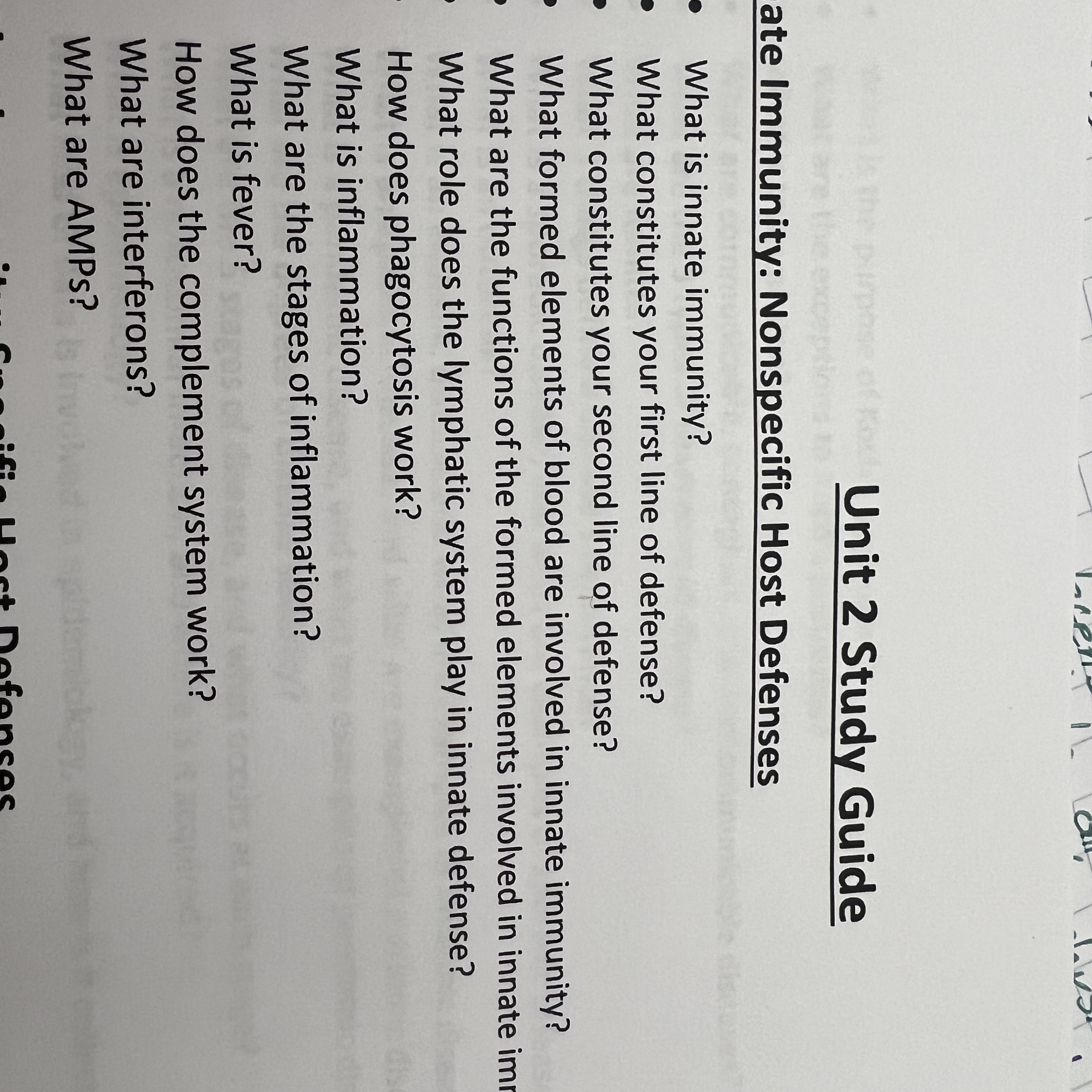
Role of the Lymphatic System in Innate Defense
Fluid Balance: The lymphatic system helps maintain fluid balance by returning excess interstitial fluid to the bloodstream, preventing tissue swelling and promoting effective circulation of immune cells.
Transport of Immune Cells: It transports lymphocytes (such as T cells and B cells) and other immune cells throughout the body, enhancing the immune response against pathogens.
Lymph Nodes: These are critical sites for immune cell activation. When pathogens are present, lymph nodes filter lymph and house immune cells that respond to invaders.
Pathogen Removal: The lymphatic system helps remove pathogens from tissues by filtering lymph fluid through nodes, where macrophages can destroy pathogens.
Collaboration with the Immune System: The lymphatic system interacts closely with both the innate and adaptive immune systems, facilitating the initiation of immune responses and enhancing overall defense against infections.
Second Line of Defense in Innate Immunity
The second line of defense is activated when the first line is breached and includes:
Defensive Cells:
Neutrophils: First responders to infection that engulf and destroy pathogens.
Macrophages: Larger cells that’s ingest pathogens and also play roles in initiating immune responses.
Other White Blood Cells: Includes eosinophils and basophils that are involved in responses to specific types of infections.
Inflammation:
A localized response characterized by pain, redness, swelling, and heat, aimed at isolating and removing pathogens.
Fever:
A systemic response resulting in elevated body temperature to inhibit pathogen replication and enhance immune function.
Antimicrobial Substances:
Proteins and compounds like interferons and the complement system that help neutralize and destroy pathogens.
The second line of defense plays a crucial role in controlling infections and activating the adaptive immune system for a more targeted response.