Argentina/Tango
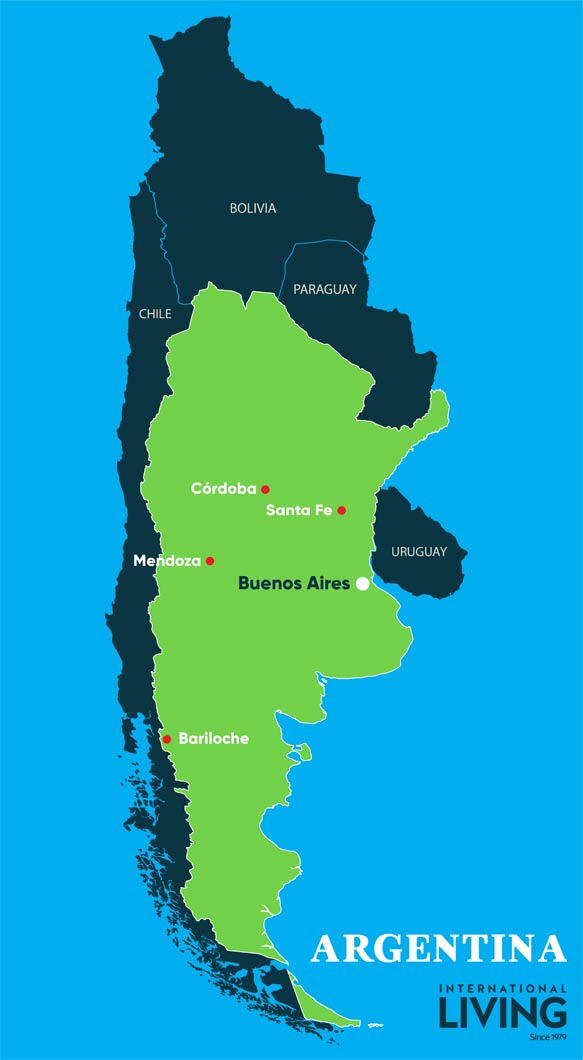
Tango
Tango is a:
Dance
Instrumental type
Song form
Tango embodies passion
History/Background
From Buenos Aires, Argentina
Buenos Aires resettled by Spanish sailors in 1580
By 1880 important port city—economic and cultural center of Latin America
Developed in poor slum areas (brothels) on outskirts of Buenos Aires
Seedy subculture of taverns and bordellos
Knife fights and bar brawls over women were common—usually with drunken sailors
Tango reflects these possessive relationships—originally casting 2 men and 1 woman
Dance Characteristics
Straight upper body and forward tilt of spine (knife-fight stance)
Smooth intricate dance steps
Popularity
Originally spurned by aristocrats because of bad associations
Grew to be the most popular Argentine urban dance
Became internationally popular in the 1900’s (Paris 1907; London 1912)
By 1910 (1907) was exported to Paris – embraced by polite society
In London by 1912
Captured youthful passions of popular culture
Rudolph Valentino – made the tango even more popular in the movie “The Four Horsemen of the Apocalypse” (1921)
Instruments and Musical Characteristics
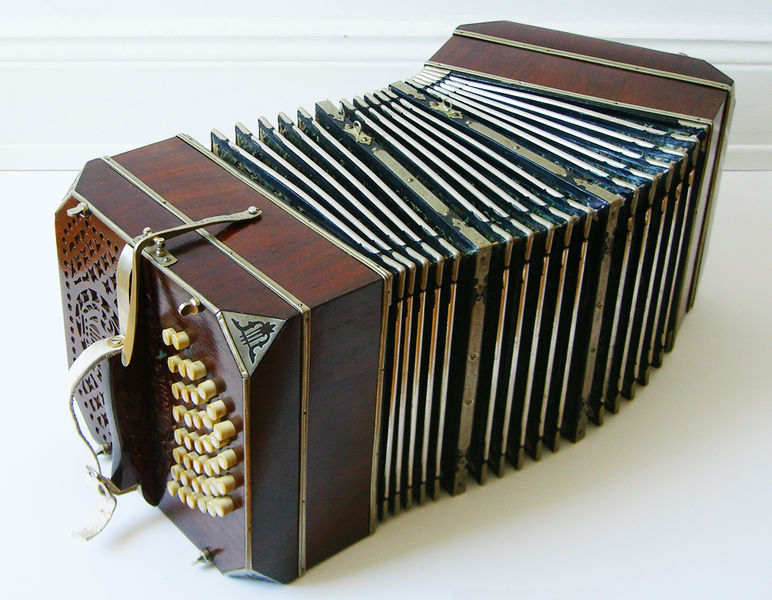
The Bandoneon –
Typical Tango Orchestra
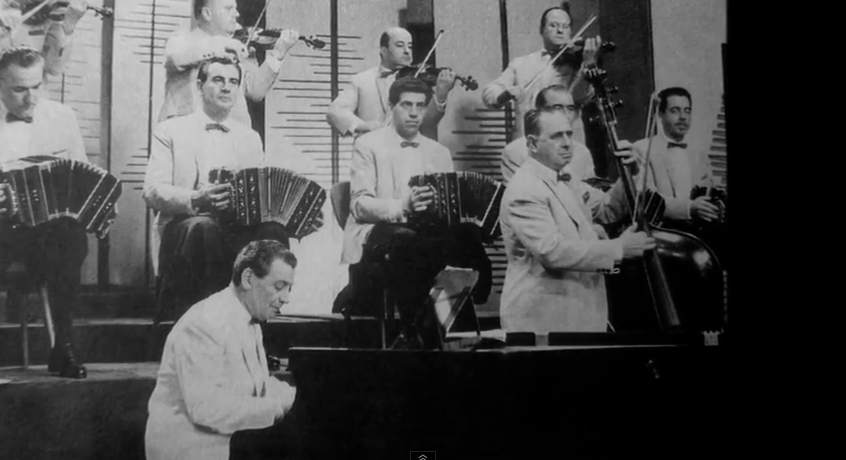
Bandoneons, violins, piano, bass, guitar (especially with vocals), cello (maybe), flute (maybe)
Musical Characteristics
Rhythms/Meters
Prevailing duple meter—bass line steady rhythmic patterns
Melody usually more ornamented and freely moving above the bass
Frequent Syncopations
Musically related to Cuba habañera and contradance (Listen to the famous Carmen—habanera – especially bass rhythms)
Harmony
Mostly minor
Some passages in major
Keeps the music unbalanced
Instrumental tangos
Keep feeling and rhythms of the dance
Has more complex instrumental parts
Tango Songs
Have song texts to melodies over tango rhythms – often accompanied by guitar
Carlos Gardel (1890-1935) – early movie star and composer and recording star of tango songs
international popularity – advanced the popularity of tango music
Tango’s Most Famous Song – La Cumparsita
Music by Gerardo Matos Rodriguez – a student from Montevideo, Uruguay
Gave the music to band leader Firpo (for 20 pesos)
Lyrics added later by Enrique Maroni and Pascual Contursi and renamed Si Supieras
Became a big hit in Buenos Aires and Paris – and then the world
Was the musical “face” of tango
Also recorded by Carlos Gardel (1928)
Has become synonymous with tango – the musical face of tango
Tango's Most Famous Song – La Cumparsita
The cafe 'La Giralda' in Montevideo, Uruguay, occupies a special place in Tango history.
It was there in the year 1917 that a young Gerardo Matos Rodriguez gave (anonymously) the music score of a tango he had written to the orchestra of Roberto Firpo to play for the first time. Gerardo was then an adolescent (17 years old) who was barely making it as a student in the faculty of Architecture in Montevideo. Was it modesty? shyness? fear of ridicule? who knows why he wanted to remain anonymous?
Firpo only knew that the name of the young composer was Gerardo. It was only later that the full identity of the author was known. He was young, educated, well mannered and sensible. He was also a bit naive. He sold for 20 pesos his rights of authorship to the Breyer publishing house. After some moderate success the composition was forgotten.
Seven years later, in 1924, Gerardo was living in Paris and he met Francisco Canaro who had just arrived with his orchestra.
That's when he found out that La Cumparsita was a major hit.
The tango lyricists Enrique Maroni and Pascual Contursi had added words to the tango and renamed it 'Si Supieras'—If you knew.
All of Buenos Aires was hearing, dancing, and demanding to buy the score for the tango that was seemingly everywhere in shows, recordings, and broadcasts.
Shortly after, La Cumparsita arrived in Paris where, in the full grip of the roaring 20's, people danced charlestons, shimmys, one-steps, bostons, and when the crowd asked for a tango, they danced La Cumparsita.
From Paris La Cumparsita spread to the four corners of the world and has since and forever after become synonymous with Tango.