Solutions and Their Properties
16.1 Properties of Solutions
Groundwater dissolves rock, forming limestone caves; sinkholes occur when cave roofs collapse.
Solution Formation: Factors affecting the dissolving rate:
Sugar type (granulated vs. cube).
Temperature.
Stirring (agitation).
Solutions are homogeneous mixtures (solid, liquid, or gas).
Dissolving Factors:
Solute/solvent compositions determine if dissolving occurs.
Stirring, temperature, and particle surface area influence the dissolving rate.
Key Concepts:
Dissolving rate factors.
Solubility expression.
Solute amount in a solvent.
Vocabulary: saturated, solubility, unsaturated, miscible, immiscible, supersaturated, Henry's law.
Stirring and Solution Formation
Stirring granulated sugar in tea increases the rate at which it dissolves.
Stirring brings fresh solvent into contact with the solute's surface, speeding up dissolving at the surface of sugar crystals.
Agitation affects the dissolving RATE, not the AMOUNT of solute that dissolves.
Insoluble substances remain undissolved with agitation.
Temperature and Solution Formation
Higher temperatures cause sugar to dissolve more rapidly.
Increased kinetic energy of water molecules at higher temperatures increases the frequency/force of collisions with sugar crystals.
Particle Size and Solution Formation
Smaller solute particles (granulated sugar) dissolve faster due to greater surface area exposure.
Dissolving is a surface phenomenon.
Solubility
Example: 36.0 g NaCl in 100 g water at 25°C dissolves completely.
Adding more salt results in only 0.2 g dissolving.
Water molecules continuously bombard excess solid, solvating ions (kinetic theory).
Exchange process: solvation of new particles and crystallization of dissolved particles occur simultaneously.
Dynamic Equilibrium: In a saturated solution, solvation and crystallization rates are equal; undissolved crystal mass remains constant.
Saturated Solution: Contains the maximum solute amount for a given solvent quantity at constant temperature/pressure.
Example: 36.2 g NaCl in 100 g water at 25°C.
Solubility: The Solute amount dissolving in a solvent quantity at a specific temperature/pressure to produce a saturated solution.
Expressed as grams of solute per 100 g solvent, or g/L for gases.
Unsaturated Solution: At a given temperature/pressure, it contains less solute than a saturated solution; additional solute will dissolve.
Miscibility:
Miscible Liquids: Infinitely soluble (e.g., water and ethanol).
Partially Miscible Liquids: Slightly soluble (e.g., water and diethyl ether).
Immiscible Liquids: Insoluble (e.g., oil and water).
Saturated Solution: Contains the maximum amount of solute for a given quantity of solvent at a constant temperature and pressure.
Factors Affecting Solubility
Solubility: Mass of solute dissolving in a solvent mass at a specified temperature.
Temperature: Affects solid, liquid, and gaseous solutes; pressure affects gaseous solutes.
Temperature
Solid Solubility: Usually increases with temperature increase.
Mineral Deposits: Occur around hot springs due to cooling of saturated mineral solutions.
Ytterbium Sulfate (Yb2(SO4)3): Solubility decreases with temperature increase (44.2 g/100g water at 0°C to 5.8 g/100g water at 90°C).
Supersaturated Solution: Contains more solute than theoretically possible at a given temperature; crystallization starts with a seed crystal.
Warm a saturated solution to dissolve more solute, then cool it carefully.
Crystallization can be initiated by adding a seed crystal or scratching the container.
Rock Candy: Produced by sugar crystallization from a supersaturated solution.
Gases in Liquids: Solubility decreases as temperature rises (opposite of solids).
Oxygen: Less soluble in water at higher temperatures, impacting aquatic life.
Thermal Pollution: Industrial plants increase lake temperature, lowering dissolved oxygen concentration.
Pressure
Solids/Liquids: Pressure has little impact on solubility.
Gases: Solubility increases as gas's partial pressure above solution increases.
Carbonated Beverages: High CO2 pressure forces gas into solution; opening decreases pressure, releasing CO2 bubbles.
Henry's Law: At a given temperature, gas solubility (S) is directly proportional to gas pressure (P) above the liquid.
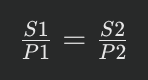
: Solubility at pressure ; : Solubility at pressure .
Sample Problem 16.1: Calculating the Solubility of a Gas
Given: Gas solubility is 0.77 g/L at 3.5 atm. Find: Solubility at 1.0 atm (constant temperature).
Solution:

Solubility at 1.0 atm is 0.22 g/L.
A Solution for Kidney Failure
Kidneys filter blood, excreting toxins in urine. Failure leads to hemodialysis.
Nephrons filter blood; collecting ducts carry toxic waste to the ureter.
Hemodialysis: Cleanses blood outside the body. Blood from vein -> dialysis machine -> dialyzing bath -> back to vein.
Semi-permeable membrane: Allows small particles (waste) to flow through, while retaining large particles (blood cells).
Maintaining concentration gradient: Fresh dialyzing fluid is added while removing waste-filled solution.
16.2 Concentrations of Solutions
Clean Water: Governments set limits on contaminants (metals, pesticides, bacteria).
Concentration of a solution: Amount of solute in a solvent quantity.
Dilute Solution: Small solute amount; Concentrated Solution: Large solute amount.
Qualitative terms: "concentrated" and "dilute". Quantitative expression: Molarity.
Molarity
Molarity (M): Moles of solute per liter of solution.
Volume: Total solution volume(solvent + solute).
3M is “three molar sodium chloride solution”.
Sample Problem 16.2: Calculating the Molarity of a Solution
IV saline solution: 0.90 g in 100 mL solution. What is the molarity?
Solution:
Convert g/100 mL to mol/L.
Use molar mass of (58.5 g/mol).
Sample Problem 16.3: Finding the Moles of Solute in a Solution
Laundry bleach: dilute solution. How many moles of solute in 1.5 L of the 0.70M solution?
Solution:
If the molarity and volume are known, the moles of solute is .
Making Dilutions
Dilution: Reducing solute's moles per unit volume (total solute moles remain constant).
Moles of solute before dilution = moles of solute after dilution
i.e (Molarity Initial x Volume Initial = Molarity Final x Volume Final)
Using the same volume units throughout is essential.
Sample Problem 16.4: Preparing a Dilute Solution
Dilute to prepare of . Volume of needed?
Solution:
Percent Solutions
Expressing concentration as solute percentage.
Ratio of solute volume to solution volume (% (v/v)).
Ratio of solute mass to solution mass (% (m/m)).
Concentration in Percent (Volume/Volume)
Ratio of solute volume to solution volume when both are liquid
Sample Problem 16.5: Calculating Percent (Volume/Volume)
What is the percent by volume of ethanol (C2H6O) when the 85 mL of ethanol is diluted to 250 mL with water?
Solution:
Concentration in Percent (Mass/Mass)
Solution concentration as grams of solute per 100 g of solution, particularly with solids solute.
16.3 Colligative Properties of Solutions
Colligative Property: Depends on solute particle number, not identity. Includes vapor-pressure lowering, boiling-point elevation, freezing-point depression.
Vapor-Pressure Lowering
Nonvolatile solute lowers vapor pressure.
Solvation reduces solvent molecules escaping as vapor.
Ionic solutes (e.g., NaCl, CaCl2) lower vapor pressure more than non-dissociating solutes (e.g., glucose).
Vapor pressure decrease is proportional to solute particles.
Freezing-Point Depression
Solute disrupts solid formation; more kinetic energy needed to solidify solution compared to pure solvent.
Freezing point of the solution is lower than the original solvent.
Also a colligative property: The number of solute particles determines the magnitude of the depression.
Salting icy surfaces lowers freezing point.
Ethylene glycol in car cooling systems prevents freezing.
Boiling-Point Elevation
Adding nonvolatile solute decreases solvent's vapor pressure.
More kinetic energy increases liquid's vapor pressure & initiates boiling.
Solution's boiling point is higher than the pure solvent's.
It depends on particle concentration rather than identity.
16.4 Calculations Involving Colligative Properties
Molality and Mole Fraction
Molality (m): Moles of solute per kilogram of solvent.
For water: 1 kg (1000 g) equals 1 L (1000 mL).
Sample Problem 16.6: Using Solution Molality
How many grams of potassium iodide are needed in of water to produce a KI solution?
Solution:
Mole Fraction
Ratio of one substance's moles to total solution moles.
If solute A is and the solvent B is , then the mol fractions are these equations
Sample Problem 16.7: Calculating Mole Fractions
What is the mole fraction of each compound in a solution containing 1.25mol ethylene glycol(EG) & 4.00 mol of water?
*Solution:EG mole fraction calculation
Water mole fraction calculation
Freezing-Point Depression and Boiling-Point Elevation
Nonvolatile solute addition lowers solvent's freezing point and increases boiling point.
Change in freezing temperature () is the difference between solution and pure solvent's freezing point
Boiling point elevation related to molality of solute and equation is
Where m is equal to molality
If the solute it boiling, the equation is
Sample Problem 16.8: Calculating the Freezing-Point Depression of a Solution
Calculate freezing-point depression and freezing point for solution with 100g ethylene glycol in 0.500 kg water
Solve for the moles
Molality from previous calculation
Solve for freezing point using the equation
Answer
Freezing point of the solution:
Sample Problem 16.9: Calculating the Boiling Point of a Solution
What is the boiling point of a 1.50m solution?
The solution will boil at