Succession
Succession
the gradual process by which ecosystems change and develop overtime
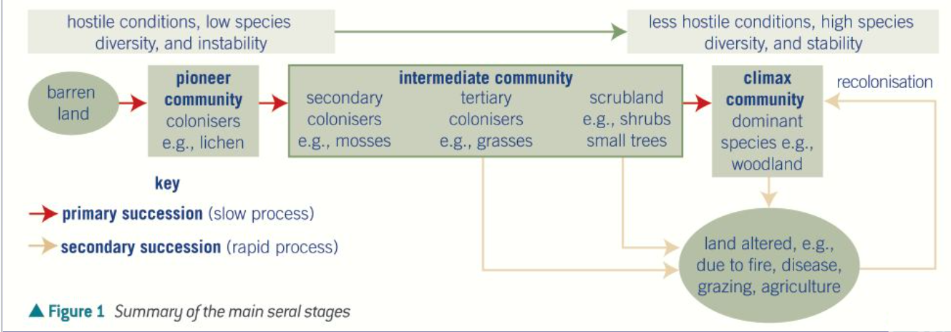
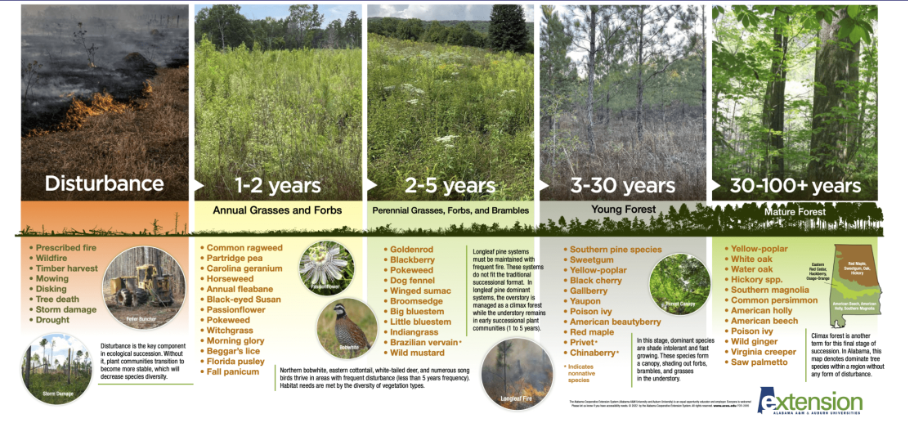
it occurs in stages called seral stages
each stage has a distinct community of organisms
change the physical characteristics of the habitat in some way enabling new organisms to become established
Types of succession
primary succession
changes that occur to not previously colonised land
secondary succession
changes that occur to ground that has been previously colonised but then disturbed
Primary succession
pioneer species
eg algae/lichen
spores or seeds arrive by wind or are dropped by birds or animals
tolerant to extreme conditions
able to fix nitrogen
can photosynthesise
produce many spores or seeds that germinate rapidly
decomposition of these species adds organic matter (humus) to the ground
secondary colonisers
eg mosses
arrives as spores or seeds
weathering of rocks starts to form soil
humus adds minerals (nitrates) and the ability to release water
decomposition of secondary colonisers adds more humus to the soil that is present
some animals may also start to colonise the area as they may feed on pioneer species
tertiary colonisers
eg ferns/herbs
waxy cuticle that helps them retain water
abiotic factors are improving
climax community
very little change over time
a few dominant species present
final species depends on climate
temperate - large trees
sub-arctic - small shrubs
Deflected succession
prevents the formation of a climax community
forms a plagioclimax community instead
caused by:
mowing
farming
land clearance (eg burning)
grazing and trampling by animals