Nutrition
IMPORTANT TERMS
Glucose Spike
Sudden Increase of Sugar level cause by eating carbs first
GOOD FOOD VS BAD FOOD
(BASE ON FOOD PYRAMID)
Fruits
Good Food | Bad Food |
|---|---|
Apple | Banana |
Lemon | Watermelon |
Calamansi | Mango |
Melon | |
Papaya |
Good Food
Fruits with Average sugar content or citrus fruits
Bad Food
Fruits with High Sugar content/ Fructose
Dairy
Good Food | Bad Food |
|---|---|
Yogurt | Milk |
Cheese |
Good Food
Due to being Fermented
Bad Food
The body does not have lactase enzymes anymore
Carbohydrates
Sources
1. Sugar
2. Rootcrops and other vegetables (green leafy vegetables- the greener the more
chlorophyll is stored)
3. Milk
4. Fruits
5. Cereals and grains
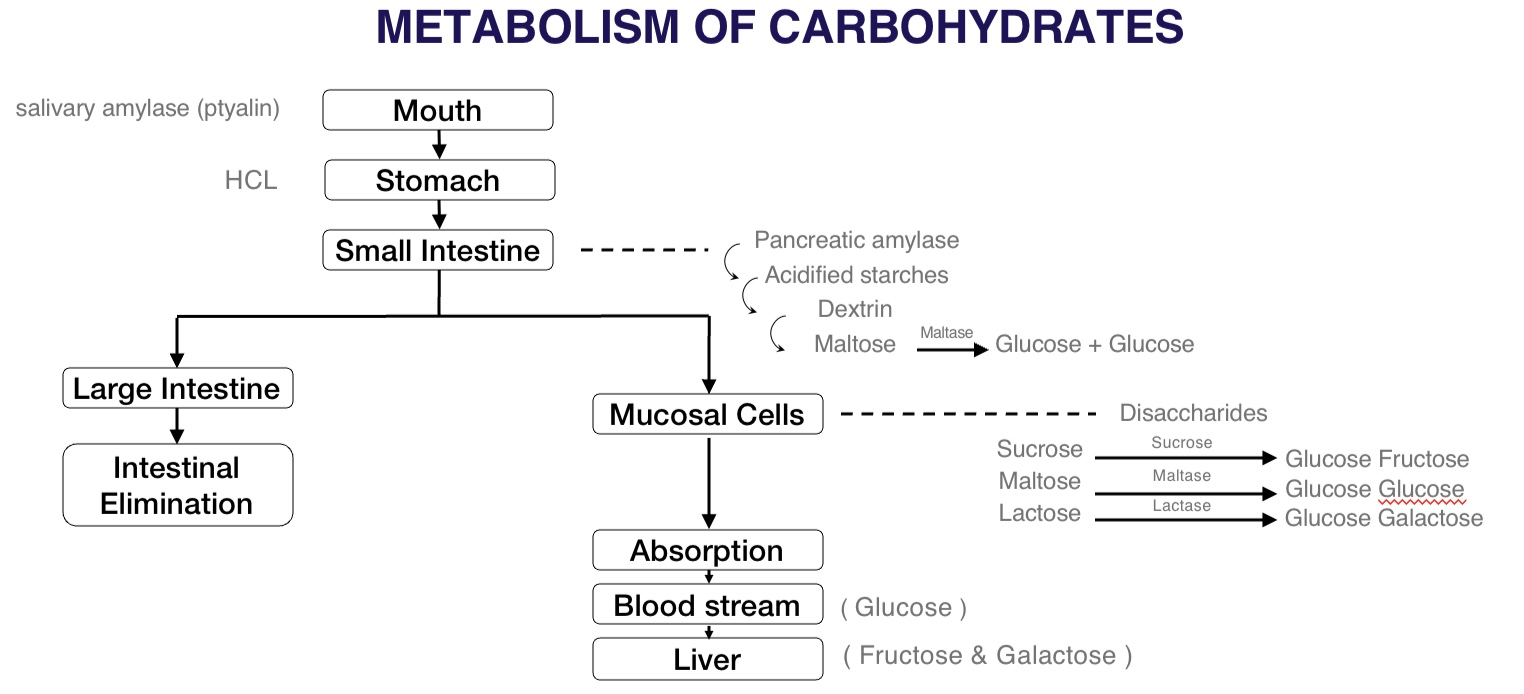
- Digestion starts in the mouth
- Salivary amylase (ptyalin)
- Stomach
- HCl - For protein
- Small intestine
- Peristaltic movement
- Pancreas releases enzymes: pancreatic amylase
- Example:
- Disaccharide: maltose
- In presence of enzymes, it’ll be broken down to 2 glucose molecules
- Glucose + glucose
- Intestinal enzymes: maltase
- Disaccharides: sucrose
- From the table sugar
- Enzyme: sucrase
- Glucose + fructose
- Disaccharides: lactose
- Milk
- Enzyme: lactase
- Glucose + galactose
- Disaccharide: maltose
Polysaccharide to oligo to di to mono to be absorbed in the intestinal walls
o Down: duodenum and jejunum
o Duodenum: entry of pancreatic amylase
o When eating fatty food, gallbladder is where bile is excreted
o Lower: absorption part (absorbed in the intestinal wall)
o Going to bloodstream
o Example:
- If you have fructose and galactose, re-organized into glucose
molecules in the liver before proceeding to the bloodstream
- Glucose partner to enter cell of each organ for nutrition to be
assimilated by the body: insulin
- 1 mol of glucose partnered with insulin to get into cell
- Insulin-resistant: there’s blockage
- Breaks down ‘til energy is produced: ATP
CLINICAL MANIFESTATION OF FAULTY INTAKE CARBOHYDRATES
A. Inadequate intake
a. Weight loss
b. Retarded growth
c. Low blood sugar level (check level with device and take medicine)
i. Didn’t eat and insulin comes: insulin shock
B. Excessive intake
a. Dental caries
i. Ate too much sweets
ii. Ate but didn’t clean: residues turn into sugar and bacteria is always
present in the mouth -> acidic pH -> removes mineral of enamel -->
demineralization ---> enamel easily breaks --> dissolution of enamel
b. Gas formation
i. Eaten sweet potatoes
c. Gastric mucosa irritation
i. Overload organs (pancreas, liver)
d. High blood triglyceride level
i. Triglycerides high (fat portion to heart): rice
e. Obesity
DISEASES ASSOCIATED WITH FAULTY CARBOHYDRATE METABOLISM
1. Diabetes mellitus: complications in the kidney and heart
a. Prolonged medication but with no checkup
i. Kidney complications=dialysis
b. Maintenance for sugar, blood pressure for high bad cholesterol
2. Galactosemia: many glucose in the bloodstream
3. Disaccharide intolerance
Function: energy
Sources of fiber: green leafy vegetables
o One day: 25g of fibers
o Example:
½ cup of fruit = 3g
If 1 cup: 3g x 2 =6g
½ cup of kidney beans = 10g
o Fiber benefits
- easily stools
- Absorbs water (softening of the stool)
- Almuranas: blood pressure rises = bleeding (surgery for hemorrhoid
- condition)
- Prevent ulcerative colitis
- Inflammation of the colon
- Prevent diverticulosis
- Pocket formation in the intestinal wall
- Undercut: where stool goes and inflammation occurs (need
- surgery)
- Prevent Hemorrhoid, appendicitis, and colon cancer
- Colon is cleaned by vegetable
- Broccoli: anti-cancer (anti-oxidant)
Carbohydrates counting
- 15g
- Only 100g in the bloodstream supposedly
o Example:
- 1 slice of bread =15g
- How many kilocalories? X4 =60 kilocalories
- 1/3 cup of rice =15g
- ½ cup of fruit =15g
- ½ banana
- 1 cup of veggie =10g (x4) = 40 kilocalories
- ½ cup =5g
- 1tsp sugar =4g (x4) =16 kilocalories
- No sugar/coffee or black coffee
- Lukewarm coffee
GLYCOLYSIS
Glucose with partner insulin enters the cell
When it enters the cell, “lysis” – means breakdown
Glucose breaks down to pyruvic acid and further breaks to acetyl co-A, becoming energy (ATP)
GLYCOGENESIS
Genesis “beginning”
Excess glucose is stored as glycogen stored in liver, muscle and other parts
LIPOGENESIS
Excess glucose stored as fat
When you fast, it will break down
GLYCOGENOLYSIS
Break down of stored glucose (glycogen) and energy is needed
Example: 16 hours fasting
Break down of fatty liver (stored glycogen breaks down to glucose)
GLUCONEOGENESIS
‘neo’ –meaning other source: protein, amino acid, fatty acid (as energy source) which
will also turn into glucose
Adipose tissue
Visceral fats: cushion for organs
Dietary Requirement
Glycemic index: there are food high and low glycemic effect
- Example:
- White rice: no covering (turns into glucose immediately)
- Brown/black/red rice: with covering (takes time for covering to be removed)
With low glycemic index (slow glucose on bloodstream)
Leafy veg alternative to rice
Diabetes mellitus
Type 2: as we age pancreas weakens and secretes only little insulin
Adjust amount of food we take
Insulin-resistant
Produced by the hormone resistin of fat cells
Simultaneously cut down intake of fatty food where the hormone comes from
Dental caries
Demineralizarion -> tunaw na enamel
Fluoride counteracts demineralization therefore remineralizing
It is reversible if it is demineralize: white spots
Not reversible: when it has holes
Sugar alcohol
- Alternative
- Example: lipstick
- Xylitol: sugarless
- As we chew, we produce saliva = less caries rate
- Dry mouth because of medicine intake (gargle and drink water)
- Nutritive
- Aspartame: neoplasm causes tumor
- Example:
- Cake slice: no sugar or not an alternative sugar
- Slice of cake: two tbsp
Lipids
- Insolubility: Water
- Solubility: Alcohol, Ether, Chloroform
- Functions: - Building blocks of hormones
- Essential for cellular membranes
- Fat:
- Type of lipid - Stored in adipose tissue
- Absorption of Vitamins: A, D, E, K
- Provides: - Essential fatty acids
- Energy source
- Satiety
- Flavor to food
- Acts as:
- Insulator
- Protector of vital organs
SIMPLE LIPIDS:
- Triglyceride: 3 fatty acid molecules, 1 glycerol
COMPOUND (Phospholipid):
- Example: Lecithin (egg yolk)
- Produces: Phosphoric acid, Choline, Glycerol, 2 fatty acid molecules
DERIVED LIPID:
- Fatty Acid Types:
- Saturated: Palm oil, Red meat, Milk, Chocolate, Butter, Coconut oil
- Monounsaturated: Canola oil, Olive oil, Peanut oil, Almond, Poultry, Egg
- Polyunsaturated: Nuts, Seeds, Fish, Egg, Tuna, Salmon, Spinach, Broccoli, Mango, Lettuce, Flaxseed oil
- Trans Fat: Cakes, Cookies, Pastries, Doughnuts, Chips, Peanut butter, Creamer, Pizza, Fried fast food, Popcorn, Butter, Margarine
Digestion and Absorption:
- Enterogastrone: Inhibits gastric motility
- Bile: Fat emulsifier in small intestine
- Pancreatic & enteric lipase: Breaks down fat
- Medium-chain fatty acid & glycerol: Absorbed by intestinal wall, transported to liver
- Long-chain fatty acid: Forms chylomicron, transported to liver via lymphatic system and blood
ROLE IN DENTAL CARIES
- Fat's Role:
- Creates oily coating on teeth
- Prevents food sticking
- Prevents sugar reduction to acid
- Interferes with cariogenic bacteria growth
Diseases Related to Excess Lipid Intake
- Diseases:
- Hyperlipidemia
- Atherosclerosis
- Prevention:
- Limit organ meat
- Avoid frying
- Limit egg consumption (max 3/week)
- Avoid: Salami, Sausage, Whole milk, Meat
Transfat
- High LDL and High Cholesterol
- Cake
- Cookies
- Oastry
- Crackers
- Doughnour
- Chips
- Peanut Butter
- Creamer
- Pizza
- Fried Fastfood
- Popcorn
- Butter
- Margarine
LDL
- Low Density Lipoprotein
- Bad Cholesterol
- Less protein, More Lipid
- Take Lipid from Liver -> Tissue -> Deposit at Arterial Wall
HDL
- High Density Lipoprotein
- Good Cholesterol
- More Proetien Less Lipid
- Take cholesterol from tissue -> Disposed as Scavenger
Proteins
- large complex mol. carbon, hydrogen,O2, nitrogen
- Arrange into amino acid (peptide)
- muscle is composed of 1/3 of body protein
- Bone. teeth, cartilage composed of 1/5 of body protein
Functions of Protein
1. source of energy ( 1gm = 4 kcal )
2. precursor of antibody
3. essential component of enzyme and hormone
4. constituent of cell nuclei and cytoplasm, building block for cell membrane and tissue structures
5. for repair of tissue and growth
CLASSIFICATION OF PROTEIN
A.Based on Structure:
1.Fibrous(linear in shape) – e.g. collagen,myosin,keratin
2. Globular protein – spherical in shape, e.g. insulin, hemoglobin
3. Intermediate protein – short linear shaped; e.g. fibrinogen
B.Based on Composition:
1. Simple Protein – yields only amino acid on hydrolysis e.g. globulin in legumes (peas, beans), collagen,myosin,keratin,insulin
2. Conjugated Protein – protein mol┼ non protein e.g. heme┼ globin →hemoglobin; lipoprotein,phosphoprotein,glycoprotein
3. Derived Protein – hydrolysis of protein e.g. albumin, proteose(needed for digestion of protein)
C.Based on Functions:
1.enzymes-biological catalysts e.g. lipase
2.hormones- insulin, glucagon
3. transport protein – albumin
4.contractile protein – actin, myosin
Sources of Protein
1. Animal Protein (complete) –has all essential amino acid e.g. egg, milk, meat, fish, cheese
2. Plant Protein – deficient in one or more amino acid, e.g. soy bean, grain, nut, fruit
DIGESTION, ABSORPTION, METABOLISM
1. HCL (gastric juice) and pepsin(splitting enzyme) peptide bond → proteoses, peptones, polypeptides
2. Renin enzyme(chymosin) –in infant stomach; slows down passage of milk, acts on casein(protein in milk) to form digested curd
3.Trypin(pancreatic enzyme) and erepsin(intestinal juice split protein into polypeptides┼ some amino acid
4. Absorption of peptide(small intestine) →portal system →Liver (main site of catabolism which is breaking down into simpler cpd → release of energy
5. DECARBOXYLATION → new cpd e.g. Serotonin, a neurotransmitter for CNS function 6. Nitrogen – end product of protein metabolism → urine (urea, ammonia, uric acid, creatinine) → stool (feces)foul odor is due to sulfur content
EXCESS PROTEIN
- healthy person can tolerate 2-3X excess of daily allowance for protein
- with previous kidney problem → retain nitrogen
- with liver problem → can’t metabolize protein
- high animal protein → osteoporosis
DEFICIENT PROTEIN
Or kwashiorkor(edema, belly fat, fatty liver,light fur patch or hyperkeratosis,anemia)
Marasmus- deficiency in all nutrients; muscle wasting; very thin
DENTAL CORRELATION
Deficiency in Protein may result to :
1. delayed eruption of teeth
2. hypoplasia
3. degeneration of collagen
4. can worsen existing periodontal disease
Equivalent of protein food:
1 pc egg = 7g
1 pc pork chop = 24g
1 medium chicken wing = 6g
1 chicken thigh = 10g
½ chicken breast = 27g
Fish karpa(15x7x2cm) = 35g
3tbsp corned beef = 18g
1 slice cheese = 5g
½ cup tofu = 10g
1/2 cup tuna in water = 19g
1/3 cup nuts = 20g
Essential Amino Acids
1. histidine
2. isoleucine
3. leucine- burn visceral fats
4. lysine- reduce anxiety
5. Methionine
6. phenylalanine- for optimistic mind
7. threonine
8. tryptophan- for sound sleep, good mood
9. valine- muscle repair
Semi-Essential Amino Acid
1. arginine
2. tyrosine
3. cystine
4. glycine
5. Serine
Alkaline Food
- Green beans
- sprouted beans
- mongo beans
- QUINOA
- barley grass
- Soy beans
- cabbage
- celery cucumber
- pepper
- BOK CHOY
- alfalfa
- Cilantro
- garlic
- lettuce
- wheat
- Grass
- thyme
- watercress
- basil
- carrot
- sweet potato
- yam
- beet
- ginger
- almond
- sesame seeds
- flax seed
- pumpkin seeds
- sunflower seed
- stevia leaves
- coconut oil
- avocado oil
- olive oil
- natural fruit juice
- apple cider vinegar
Acidic Food
- Fast food
- Alcohol
- Milk
- Caffeinated drinks
- Soda
- Fried food
- Processed cereals
- Pizza
- Artificial sweeteners
- Peanuts
- Cheese
- Pasta
- Rice
- Bread
- Wheat products
- Butter
- Cold cuts
- Refined vegi oils
- French fries
- Hot chocolate
- Red meat
- Sports drinks
- Table sugar
- Corn syrup
- Pancakes