FOUNDATION OF PHYSICAL EDUCATION
History of Physical Education
Definition and Goals of Physical Education
Physical Education (PE) involves skill learning, knowledge acquisition, and attitude development through movement.
PE is an integral part of education, utilizing games, sports, dance, and fitness activities to help individuals achieve educational goals.
Well-defined PE programs offer cognitive, affective, and psychomotor experiences to individuals at different developmental stages.
The primary goal of PE is to develop physically educated individuals with the knowledge, skills, and confidence for lifelong physical activity.
Physical activity is crucial for good health and overall well-being.
Physical Education in the Philippines
The Philippines has adopted a western approach to education and physical fitness since the 1940s.
Influence from the American PEACE CORPS introduced sports like basketball, tennis, volleyball, boxing, wrestling, and golf.
Martial arts have been integrated into the curriculum, blending eastern and western influences.
Health is a significant component of the PE curriculum in the Philippines.
Dr. Aparicio H. Mequi, known as the 'Father of Philippine Physical Fitness,' introduced initiatives like the physical fitness test and the Hataw dance.
Role of Physical Education
Total Human Development through Physical Activities
Properly selected physical activities contribute to physical, social, emotional, and overall well-being.
PE aims to promote fitness, develop motor skills, and enhance understanding of game rules and strategies.
The goal of PE is not just physical development but also to instill knowledge, skills, values, and enthusiasm for a healthy lifestyle.
Students learn teamwork, leadership, and followership qualities through competitive activities.
PE plays a crucial role in promoting physical fitness and positive health habits.
Objectives and Benefits of Physical Education
Develop motor abilities like strength, speed, endurance, coordination, flexibility, agility, and balance.
Acquire knowledge about the human body and its functioning influenced by physical activities.
Foster socio-psychological aspects like emotional control, balanced behavior, leadership, and team spirit.
Promote positive health-related fitness habits to prevent degenerative diseases.
Enhance physical, social, emotional, mental, and spiritual aspects through well-planned PE programs.
Values and Benefits of Physical Education
PHYSICAL
Benefits | Description |
Reduced heart disease | Counteracts risk factors like obesity, inactivity, and high blood pressure. |
Stronger bones | Increases bone density for a sturdy skeleton. |
Improved fitness | Enhances muscular strength, flexibility, endurance, body composition, and cardiovascular health. |
Weight regulation | Helps regulate weight through calorie burning and body toning. |
Health promotion | Prevents diseases and delays aging effects through appropriate physical activity. |
SOCIAL
Benefits | Description |
Strengthened peer relationships | Facilitates socialization and successful interaction through games and sports. |
More active lifestyles | Promotes a positive attitude towards physical activity. |
Emotional Benefits of Physical Education
Stress Reduction
Physical activity serves as an outlet for releasing tension and anxiety.
Example: Engaging in sports or exercise can help individuals unwind and alleviate stress.
Historical Context: Throughout history, physical activity has been linked to improved mental well-being.
Self-Discipline
Physical education programs teach children to follow rules, procedures, and take responsibility for their health-related fitness.
Example: Following a structured exercise routine instills discipline and accountability.
Case Study: Research shows that regular participation in physical activities can enhance self-discipline.
Improved Self-Confidence and Self-Esteem
Physical education fosters a strong sense of self-worth in children.
Example: Achieving fitness goals can boost confidence and self-esteem.
Reference: Studies indicate a positive correlation between physical activity and self-confidence.
Reduced Risk of Depression
Physical education can mitigate risk factors for coronary heart disease like obesity and inactivity.
Example: Regular exercise releases endorphins, which can help combat depression.
Context: Exercise is often prescribed as part of treatment for depression
Mental and Spiritual Benefits of Physical Education
Improved Judgment
Quality physical education can influence moral development.
Example: Students learn leadership, cooperation, and responsibility through physical activities.
Significance: Physical education provides a platform for character building and ethical decision-making.
Experience Setting Goals
Physical education encourages children to set and strive for personal, achievable goals.
Example: Goal-setting in fitness programs promotes motivation and perseverance.
Application: Setting and achieving fitness goals can translate to other areas of life.
Develops Appreciation of Body-Mind Connection
Engaging in physical education enhances the understanding of the body-mind connection.
Example: Recognizing the link between physical health and mental well-being promotes holistic wellness.
Impact: Increased awareness of the body-mind connection can lead to better overall health outcomes.
Target Heart Training and Body Composition
The Basics of Heart Rate
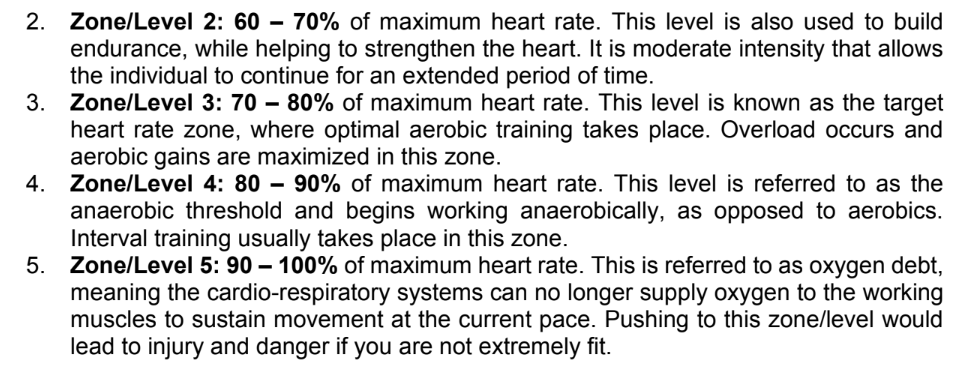
Heart rate reflects the efficiency of the cardiovascular system and is measured in beats per minute (bpm).
Example: Monitoring heart rate helps assess exercise intensity and overall health.
Importance: Understanding heart rate variations is crucial for optimizing fitness routines.
Karvonen Method
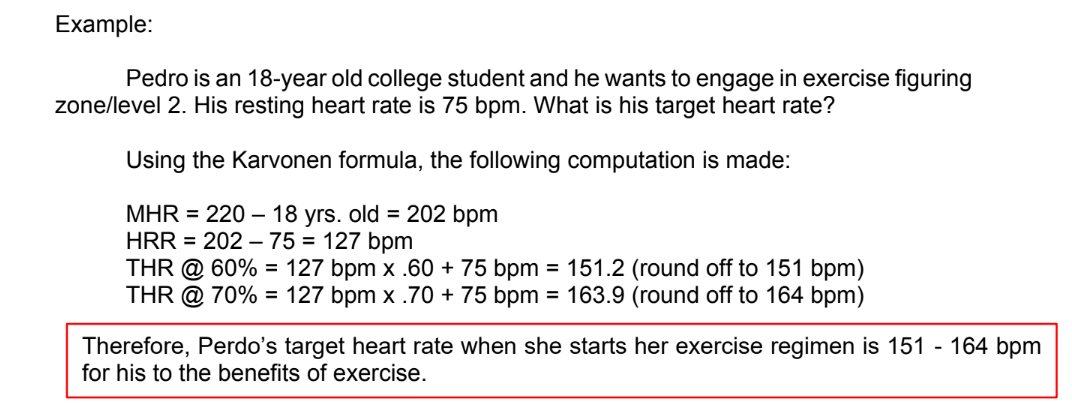
The Karvonen Formula calculates the target heart rate based on Heart Rate Reserve (HRR) and Resting Heart Rate (RHR).
Example: Target Heart Rate is determined by multiplying HRR by the training zone percentage and adding RHR.
Application: The Karvonen Method helps individuals tailor their exercise intensity for optimal benefits.
Body Composition
Body composition refers to the relative percentage of muscle, fat, bone, and other tissues in the body.
Example: Maintaining a healthy body composition involves balancing muscle mass and body fat.
Impact: Even small changes in body composition can lead to significant health improvements.
Computation of Body Mass Index (BMI)
BMI is a value derived from an individual's weight and height, indicating whether they are underweight, healthy, overweight, or obese.
Formula: BMI = weight (kg) / height (m)^2
Significance: BMI is a widely used indicator of overall health and weight status.