06 CVS1 Lymphatic systems
Anatomy of the Circulatory Systems
Lymphatic System Overview
Author: Niggy Gouldsborough
Description: The lymphatic system is an integral part of the circulatory system, consisting of a network of vessels, lymph, and specialized tissues.
Components of the Lymphatic System
Major Components
Network of lymph vessels: Transport lymph throughout the body.
Lymph: The fluid that circulates within the lymphatic system.
Lymphatic tissues and organs: Includes lymph nodes, spleen, and thymus, which play critical roles in immunity.
Functions
Defense Mechanisms: The lymphatic system is involved in the body’s immune response, helping to defend against pathogens.
Fluid Drainage: Provides a mechanism for the drainage of interstitial fluid, preventing tissue swelling and maintaining fluid balance (Martini et al, 2018).
Interstitial Fluid and Capillary Dynamics
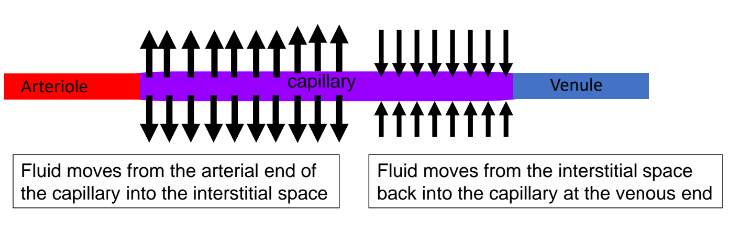
Fluid Dynamics
Interstitial Fluid Movement:
Fluid moves from the interstitial space back into the capillary at the venous end.
Fluid moves from the arterial end of the capillary into the interstitial space.
Labeling:
In the capillary, the fluid is termed plasma.
In the interstitial space, it is called interstitial fluid.
Capillary Exchange Mechanisms
Exchange Processes
Capillary Blood Pressure (CBP):
Pushes fluid out of the capillary into the interstitial fluid (process called filtration).
Facilitates the transport of nutrients and gases.
Blood Colloid Osmotic Pressure (BCOP):
Pulls fluid back into the capillary, aiding in the removal of wastes (process called reabsorption).
Primarily driven by plasma proteins.
Pressure Gradients
Arterial End vs. Venous End:
At the arterial end, CBP is greater than BCOP, leading to filtration.
At the venous end, BCOP is greater than CBP, leading to reabsorption.
CBP decreases over the length of the capillary, while BCOP remains constant.
Capillary Exchange Efficiency
Fluid Reabsorption
Approximately 85% of the filtered fluid is reabsorbed at the venous end.
The remaining 15% enters the lymphatic system, which is critical for preventing edema.
Role of Lymphatic Capillaries
Lymphatic Capillaries
Structure: Blind-ended tubes located adjacent to capillary beds.
Fluid Collection: Excess interstitial fluid that enters the lymphatic capillary is called lymph.
Lymphatic Circulation: Lymph flows through the lymphatic circulation and eventually returns to the blood system.
Lymphatic Drainage Pathways
Pathway of Lymph
Lymph Capillaries
Lymph Vessels
Lymph Trunks
Ducts:
Thoracic Duct: Drains lymph from the left side of the body and the lower body.
Right Lymphatic Duct: Drains lymph from the right side of the head, thorax, and upper limb.
Lymph Nodes: Filter lymph and mount immune responses.
Return to Circulation
Lymph eventually drains into the right subclavian vein and left subclavian vein, re-entering the vascular circulation (Martini et al, 2018).