An animal must receive the proper amounts of nutrients in the right proportions to efficiently produce meat, milk, eggs, wool, work, etc.
A ration is the amount of feed given to an animal to meet its needs during a 24-hour time period
Feed accounts for approximately 75% of the total cost of raising livestock
Ration Function: Maintenance
Approximately half of a commercial ration is used for maintenance
Maintenance includes regulating body temperature
Ration Function: Growth
Nutrients in the ration are used for growth only after the maintenance requirements of the animal are met
Growth is the increase in the size of muscles, bones, organs, and other connective tissues
If animals do not grow properly, they will be unable to produce products (e.g.. calves, meat. wool) at maturity
Ration Function: Fattening
Feed nutrients that are not used for maintenance or growth may be used for fattening
Fat is stored in the tissues of the body. Fat stored within the muscles is called marbling. Marbling creates moisture and flavor in meat.
The ratio of fat to muscle is important when it comes to fattening an animal
Feeds that are high in carbohydrates and fats are used for fattening
Ration Function: Production
Cows, swine, horses, sheep and goats produce milk to feed their young
Dairy goats and dairy cows also produce milk for human use
Chickens produce eggs
Sheep and goats produce wool and mohair
Ration Function: Reproduction
Proper nutrition is required for reproduction
An animal may become sterile or be unable to breed if it does not get adequate quantities of nutrients
Quality nutrition is especially important for pregnant animals
Most of the growth of the fetus takes place during the last third of the pregnancy
Animals need additional amounts of nutrients during pregnancy
Ration Functions: Work
Working animals include, but are not limited to, horses (riding) and dogs (guarding/herding).
The energy needed for work comes from fats, carbohydrates and extra protein in the ration
The other needs of the body are met before nutrients are available for work
An animal may use fat stored in the body for work if the ration does not provide enough nutrients
Animals sweat more when they work; therefore, they need extra salt
Steps in Balancing a Ration
Identify the kind, age, weight, and function of the animal(s) for which the ration is being formulated
Consult a table of nutrient requirements to determine the nutrient needs of the animal(s).
Choose the feeds to be used in the ration and consult a feed composition table to determine the nutrient content of the the selected feeds
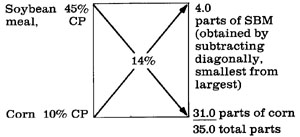
Calculate the amounts of each feed to use in the ration (Pearson Square)
Check the ration that has been formulated against the needs of the animal(s). Be sure it meets the requirements for minerals and vitamins
Using the Pearson Square
Draw a square with lines connecting the opposite corners. Write the desired nutrient value (e.g., 16% crude protein) in the center of the square where the lines cross
Write the feeds to be used and their crude protein percent at the left-hand corners of the square
Subtract the smaller dumber from the larger, along the diagonal lines
Write the difference at the opposite end of the diagonals
Divide the parts of each feed by the total parts to find the percent of each feed in the ration
Determine how many pounds of each feed are needed
Check the mix to make sure each animal’s needs are met