Renal Blood Flow
Renal blood flow (RBF): the volume of blood that is delivered to the kidneys per unit of time.
A crucial parameter for maintaining proper kidney function.
The kidneys receive approximately 20-25% of the cardiac output, which amounts to about 1.2-1.3 liters of blood per minute in a healthy adult.
RBF= (Renal artery pressure - renal vein pressure)/total renal vascular resistance
increase in renal pressure results in an increased renal blood flow
increase in renal vascular resistance decreases renal blood flow
Regulated by various mechanisms to ensure adequate perfusion of the kidneys. Mainly increasing or decreasing arteriolar resistance through adrenaline and Angiotensin II
Mechanisms include: autoregulation, sympathetic (neural regulation), and hormonal regulation.
Determined mainly by: blood pressure gradient across the renal vasculature, renal vascular resistance.
Factors that can affect renal blood flow include blood pressure, blood volume, sympathetic activity, and the release of vasoactive substances such as prostaglandins and nitric oxide.
Changes in renal blood flow can have significant implications for kidney function. Decreased blood flow can lead to reduced filtration and impaired waste removal, while increased blood flow can enhance filtration but may also increase the risk of damage to the renal vasculature.
Measurement of renal blood flow is typically done using invasive techniques such as renal artery catheterization or non-invasive methods like Doppler ultrasound.
Maintaining adequate renal blood flow is crucial for maintaining proper kidney function and overall health. Any disruptions in renal blood flow can have serious consequences and may require medical intervention.
Glomerulus Filtration Rate (GFR): amount of blood filtered each minute.
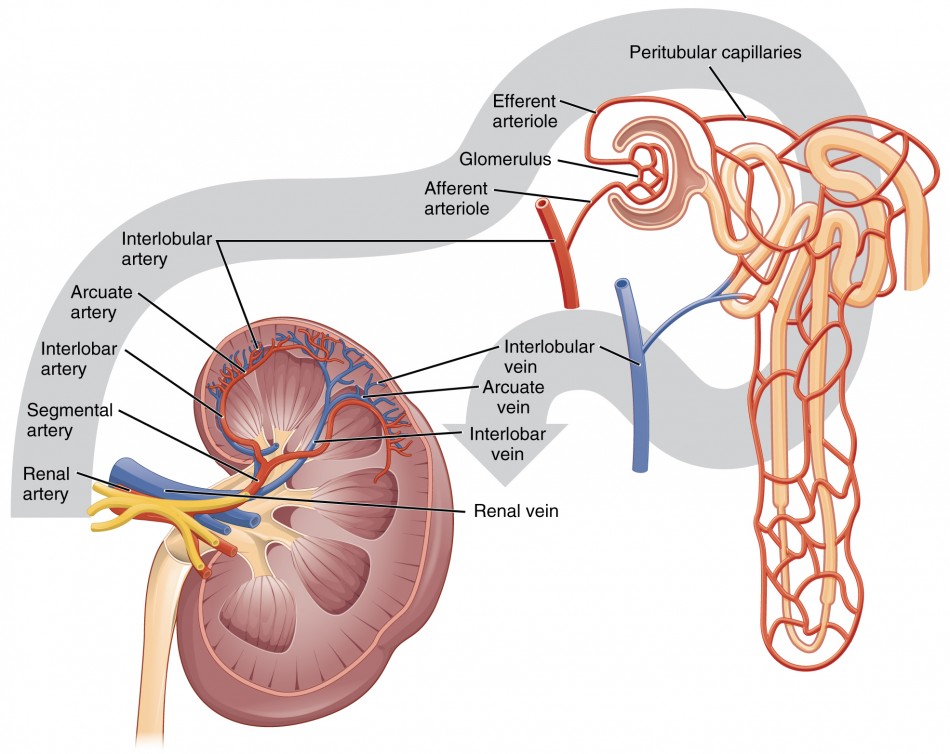
Renal Artery Circulation:
renal artery → segmental artery → interlobar artery → arcuate artery → interlobular artery
Autoregulation
The intrinsic feedback mechanism of the kidneys to maintain a relatively constant RBF and GFR despite changes in arterial blood pressure.
Kidney adjusts its own arteriole resistance
This is achieved through the myogenic mechanism and tubuloglomerular feedback.
Preserves: tissue oxygenation, nutrient supply, metabolic waste excretion
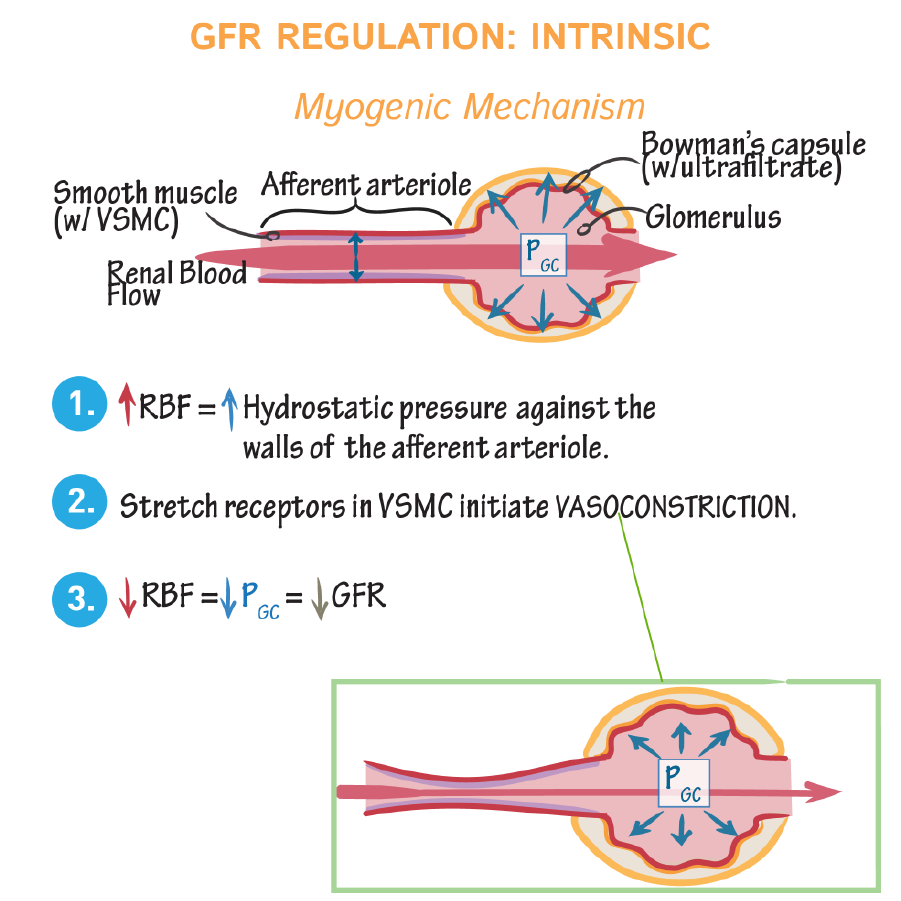
Myogenic Mechanism (Bayliss effect)
reflex of arteriole smooth muscle cells to contract when they are stretched by blood at high blood pressures
vasoconstriction of afferent and efferent arterioles
increase in arterial pressure → stretch of afferent arteriole → Ca++ influx → mechanical activation of vascular smooth muscle → vasoconstriction of afferent arteriole → minimize afferent arteriole distention → dec. RBF
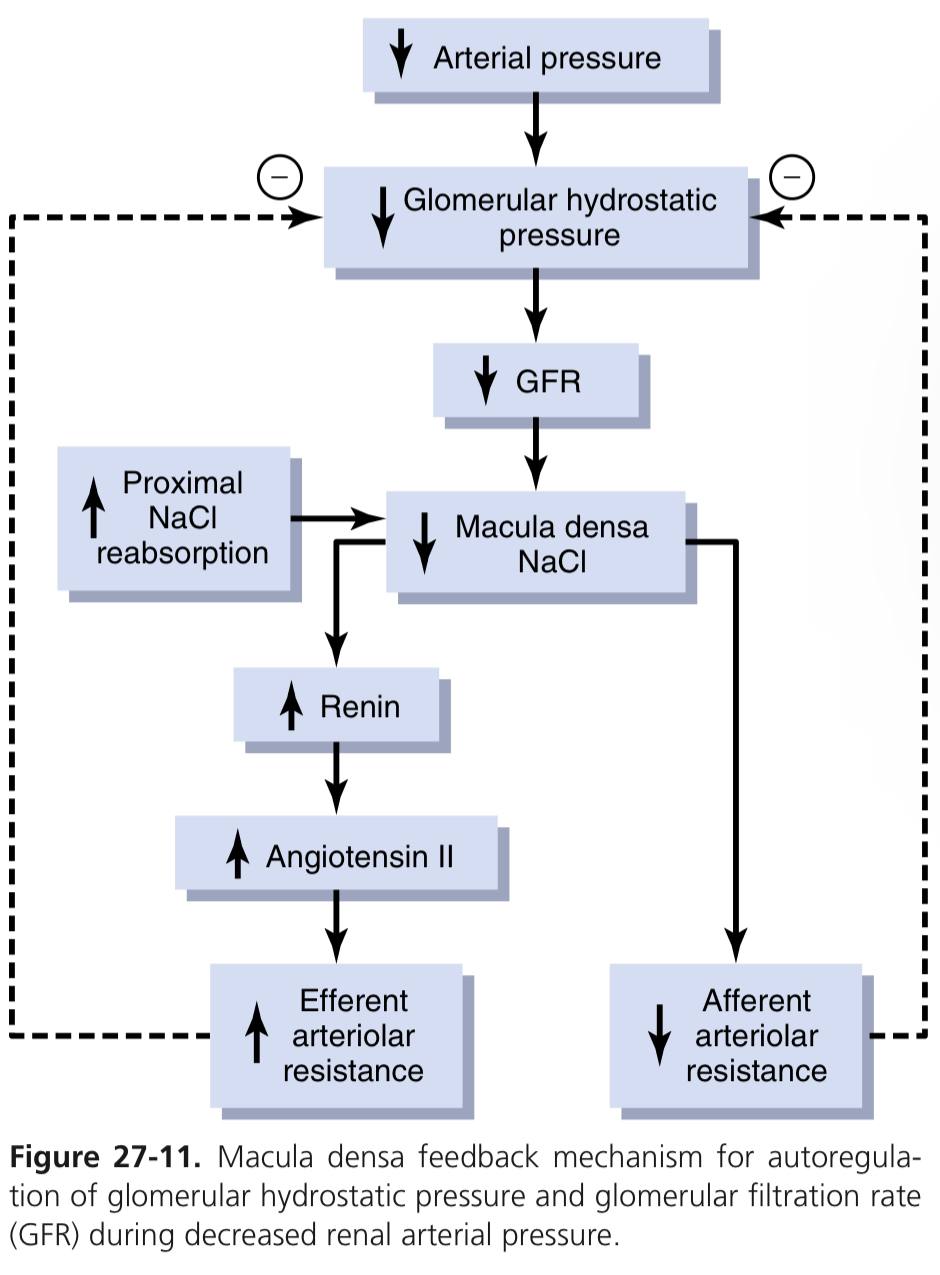
Tubuloglomerular Feedback
decreased macula densa sodium chloride causes dilatation of afferent arterioles and increased renin release
Atrial & Brain Natriuretic Peptides
Involves the sympathetic nervous system
Constrict or dilate the renal blood vessels to adjust blood flow based on the body's needs
RAAS counter-regulation
secreted from the heart and brain
stimulated by hypovolemic states
Functions:
inc. vasodilatation → inc. RBF
inc. natriuresis and diuresis
Hormonal Regulation
Hormonal regulation is primarily mediated by the renin-angiotensin-aldosterone system (RAAS). Renin is released by the kidneys in response to low blood pressure or low sodium levels, leading to the production of angiotensin II, a potent vasoconstrictor.