composites performance characteristics
COMPOSITE PROPERTIES
composites normally have enhanced properties, such as tensile and compressive strength they can also have a controlled density or conductivity of heat and electricity, this can be for application and also ease of manufacture. working properties can also be affected by the composition of materials, for better product performance
EXAMPLES
cermet is tungsten carbide made from ceramic and metal is 100 times stronger than steel and extremely strong, it is used for drilling and tool heads due to its extreme hardness, it has high friction resistance and can be formed using sintering
carbon fibres are very thin fibres that can be woven together and moulded
CFRP is carbon fibre reinforced plastic, it is made from carbon fibre impregnated with resin. it is used for high-tech bike frames and prosthetics, it is corrosion and chemical resistant and is tough, resisting impact. it is also easily formed using bladders to make rotary blades. it is lightweight and can be used for cars but it splinters
GRP is glass reinforced plastic. polyester or epoxy resin is combined with glass fibres. glass fibres are strong in tension and resins are strong in compression, allowing an all round strength. there is some danger though as glasss fibres a re carcinogenic. it is uv resistant and water tight making it suitable for boats, it can easily be moulded and is cheaper than carbon fibre
aluminium composite board is a durable, lightweight and corrosion resistant but not malleable material. it is made from aluminium sheets with a polymer core (commonly polyethylene), it is normally used in exterior applications and can be printed on. it doesn’t change shape with weather unlike some polymers and doesn’t warp making a more versatile façade
fibre cement is used for facades, it made from cement and toxic asbestos fibres, now cellulose and synthetic fibres are used, it is durable and oxidation resistant, it is vapour permeable allowing natural ventilation and also allowing thermal and noise insulation, stopping mould from building up, it has a smooth finish that can be textured
concrete is made from air, cement, water, sand and gravel
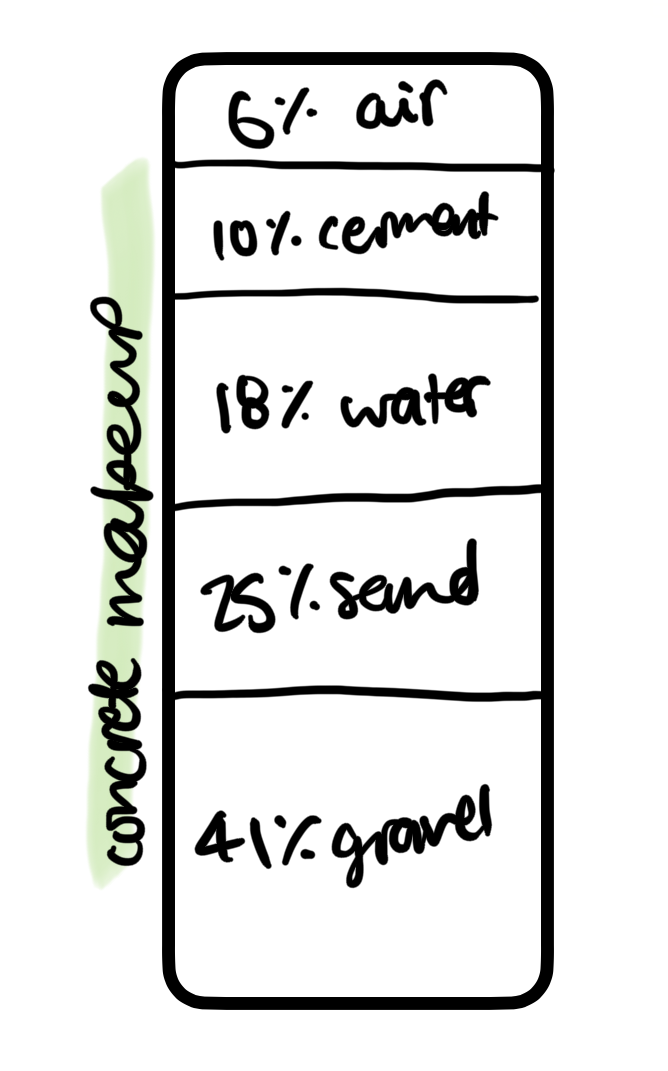 it is durable and has high compressive strength when it is reinforced it also gains tensional strength. concrete is self finishing and easy to mould. it is readily accessible meaning it requires little transport. it is also an insulator or heat, electricity and noise and can be polished. it is also not sucesptable to moisture or environmental attack. the rebar can move and expand - but only at the same rate as concrete
engineered woods are manufactured boards, produced to create the desired characteristics. gluglam is a manurfactuered board made for flexibility. melamine formaldehyde can also be added for a hard wearing finish