humanistic approach
Free will
-humans have free will
-our decisions are our own and are not governed by internal forces(biological factors) or external factors(environmental)
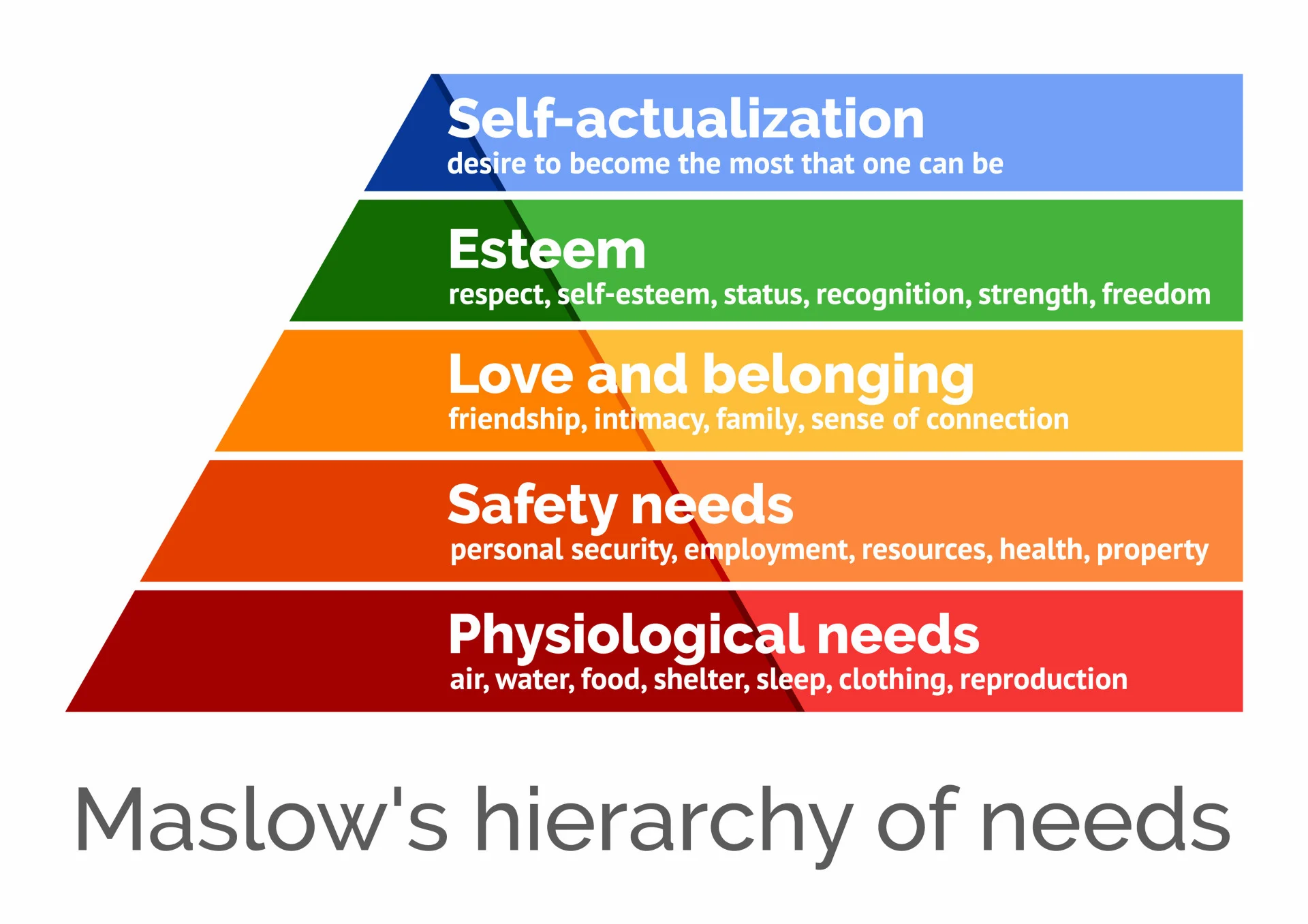
Self actualisation
-to reach your fullest potential but also describes the process of growth and development that you go through to get there
Maslows Hierarchy of needs
The self: Rogers
-everyone is unique, so everyone should understand their self and any psychologist studying them should too.
The self comprises two parts:
The self- how we see ourselves
The ideal self- the self we would like to be
Humanist believe that everyone has an innate drive to grow, develop and reach their fullest potential but potential(their ideal self) to achieve this we must be in a state of congruence
Congruence
-individuals with a high self esteem have congruence (a match) between their self-concept and their ideal self.
-if there is a gap between tge self concept and their ideal self this is incongruence
Conditions of worth
Unconditional
-Roger’s believe that other people usually have a negative influence on the process of self-actualisation
-the love + acceptance given by others may be unconditional (we are accepted for who we are)
Conditional
-however it could be conditional- they are accepted only if they do what others want them to do
Influence of counselling
-Roger’s claimed that an individual’s psychological problems were a direct result of their conditions of worth
-believed that with counselling people would be able to solve their own problems and move towards becoming a more functioning person
-humanistic therapists see themselves as guides to enable self-actualisation
Role of therapist
-therapists are supposed to find empathy and unconditional positive regards to their clients