Lecture 3: The First Human Inhabitants of the Philippines
In 2018, a team of archeologists discovered a set of stone tools buried next to a rhinoceros carcass. Their findings show that the tools were deliberately used to butcher the rhino. This shows that humans have been in our territory for hundreds of thousands of years.
Tabon Man
Discovered in the Tabon Caves, Lipuun Point, Quezon, Palawan in 1965 by Robert Fox
47,000 years old
Stone tools were also discovered at the site (evidence of food gethering)
Tabon Man was Homo sapiens
Callao Man
The metatarsal foot bone was discovered in 2007 near Peñablanca, Cagayan
Dates back 67,000 years
Surrounded by animal bones with cut marks
Features indicate species other than Homo sapiens (such as Homo floresiensis)
More fossils were found in the Callao Cave in 2019
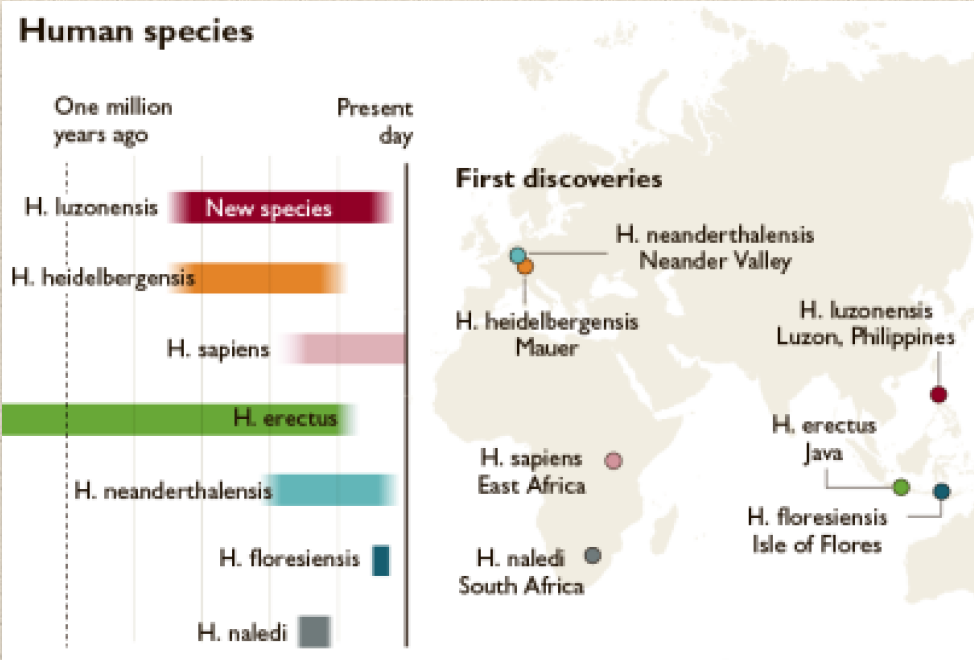
Callao Man / Homo luzonensis
The discovery of seven teeth and six small bones from three individuals represents a new branch in the ancestry of humans
50,000 to 67,000 years old
Had similar features to Homo floresiensis and Australopithecus
“Out of Taiwan” Theory
According to this theory, our ancestors first came from Taiwan through advanced seafaring and navigating, they managed to reach Luzon around 5000 years ago
From Luzon, the Austronesians started migrating to the rest of the Philippines as well as nearby countries in Southeast Asia and Oceania
Studies have shown that countries in Southeast Asia and Oceania share many similar cultural practices and even have similar languages
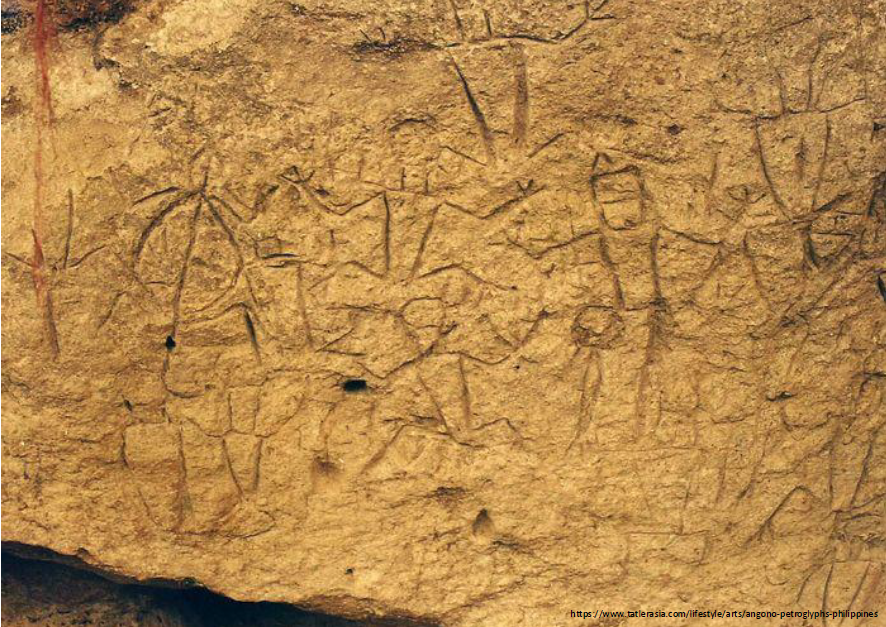
Angono-Binangonan Petroglyphs Site