The Enemy Among Us: Fear, Panic, and Political Hysteria
I. The Red Scare & The Construction of the “Communist Threat”
1. Historical Context: Why Did Communism Become “The Enemy”?
American (and Canadian) attitudes toward the Soviet Union shifted depending on geopolitical convenience:
1914–1917 (WWI): Russia is an ally against Germany → “good”
1917 Bolshevik Revolution: Russia exits war → becomes “bad”
1939: Hitler–Stalin Non-Aggression Pact → Russia “bad” again
1941: Germany invades USSR → Russia becomes “good”
1945 (Post-WWII): Tensions rise → Russia becomes permanent ideological enemy
Post-WWII Division of Europe
Germany divided into 4 zones: French, British, American, Soviet
Europe effectively split into:
Western liberal democracies
Eastern communist states under Soviet influence
Churchill’s “Iron Curtain” Speech (1946)
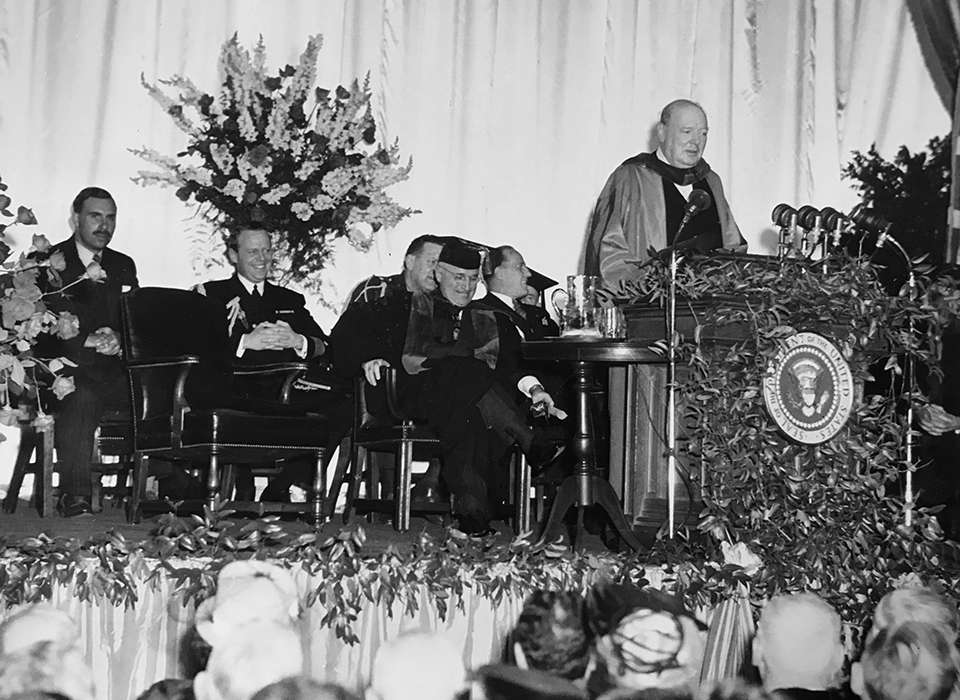


In Fulton, Missouri, Winston Churchill declared:
“An iron curtain has descended across the continent.”
This speech is often seen as the symbolic beginning of the Cold War. It framed the Soviet sphere as totalitarian and undemocratic.
II. The First Red Scare & Living in Fear
Cultural Atmosphere
The Soviet Union portrayed as an “evil empire”
Media reduced complex geopolitics to simple “good vs evil”
Russia became shorthand villain in pop culture
Citizens were told communism threatened “our way of life”
Domino Theory
If one unstable country fell to communism, neighboring states would inevitably follow.
Used to justify:
Vietnam War
Intervention in Greece, Austria, Southeast Asia
Fear was geopolitical but framed as existential.
III. The Gouzenko Affair (Canada’s Red Scare Moment)
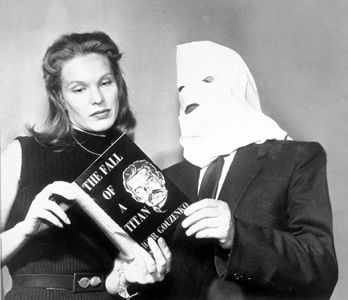
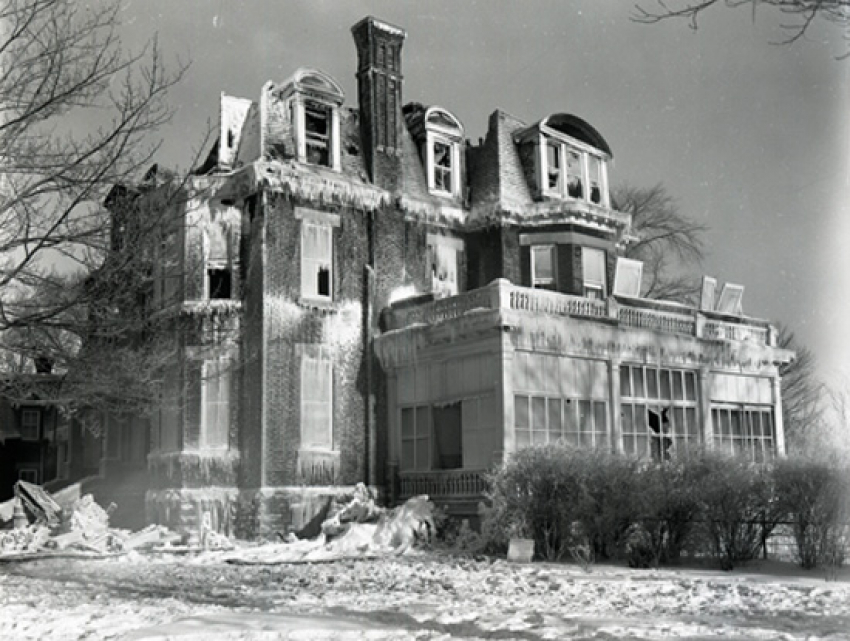


Igor Gouzenko (1945)
Soviet cipher clerk at the Ottawa embassy
Defected with documents proving a Soviet spy ring in Canada
Initially ignored by media and Department of Justice
Soviet agents attempted to kidnap him → government intervened
Revealed Soviet interest in Canadian nuclear research
Impact:
Sparked Canadian Red Scare
Reinforced idea of “enemy within”
Gouzenko lived under protection, always masked in public
Key shift:
Fear moved from physical invasion to ideological infiltration
“They are poisoning our minds.”
IV. Grassroots Anti-Communism & Moral Panic
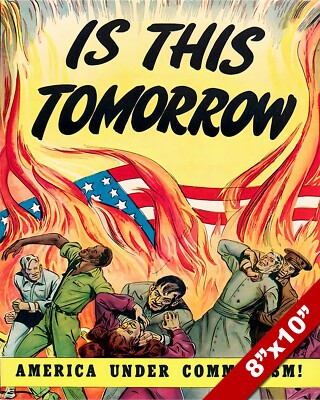
“How to Spot a Communist” (1950)
Educational propaganda taught citizens to identify “subversives.”
Minute Women of America



A grassroots anti-communist women’s organization that:
Protested the UN (viewed as socialist)
Campaigned against free school lunches
Removed books from libraries
Targeted speakers they disliked
Claimed schools were infiltrated by communists
Opposed racial integration (framed as socialism)
This resembles early “cancel culture” campaigns—pressure, boycotts, moral framing.
V. J. Edgar Hoover & Institutional Fear
J. Edgar Hoover, FBI Director:
Intensely anti-communist
Used FBI as tool to root out ideological enemies
Framed communism as:
A “many-faced monster”
A prison of the heart, mind, and soul
The rhetoric moralized the conflict — communism wasn’t just political, it was evil.
VI. HUAC & The Hollywood Blacklist
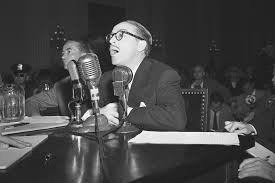


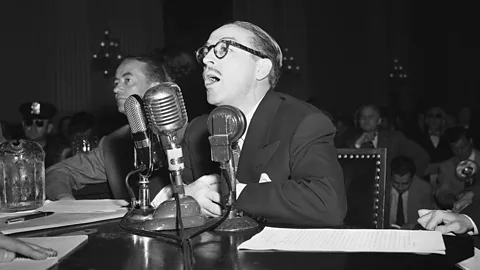
House Un-American Activities Committee (HUAC)
Investigated suspected communists in Hollywood
Pressured witnesses to name others
Famous question:
“Are you now, or have you ever been a member of the Communist Party?”
The Hollywood Ten
Writers/directors who:
Refused to cooperate
Invoked First Amendment rights
Were convicted of contempt of Congress
Served prison time
Blacklisted after release
Blacklist lasted into the 1960s.
Careers destroyed not because of proven crimes—but refusal to conform.
VII. Senator Joseph McCarthy & McCarthyism
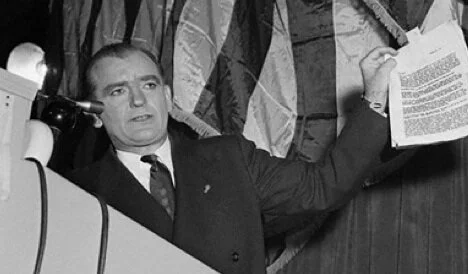


Rise
Claimed 50+ communists in State Department (no proof)
Chaired Government Operations Committee
Aggressively investigated civil servants
Thousands lost jobs
Turning Point: Army-McCarthy Hearings (1954)
Accused the U.S. Army of communist infiltration
Televised hearings exposed his tactics
Joseph Welch confronted him:
“Have you no sense of decency?”
McCarthy was censured by the Senate and politically ruined.
Why Did It Go So Far?
Popular insecurity
Cold War anxiety
Fear of infiltration
People believed accusations because they aligned with existing fears
Reality:
Yes, there were some spies.
But most victims were innocent non-conformists.
VIII. War on Terror & Recurring Panic Patterns
The lecture draws parallels between:
Red Scare
Anarchist panic (late 19th century)
War on Terror
Anarchism Panic
Dynamite bombings
Mass arrests and show trials
Sympathy treated as crime
Eventually moderation broke the cycle
IX. Oklahoma City Bombing (1995)


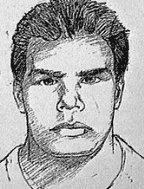

168 killed
Immediate assumption: Middle Eastern terrorists
Media ignored eyewitness sketches of white men
Experts admitted they had no evidence but continued speculation
Actual perpetrators:
Timothy McVeigh
Terry Nichols
Domestic extremists
A journalist later argued:
Blaming foreign terrorists was psychologically “comforting.”
X. Terror Threat Systems & Manufactured Anxiety
The Bikini System (UK)
Threat levels:
Critical
Severe
Substantial
Moderate
Low
Originally meant for internal government use—made public, increasing panic.
National Terrorism Advisory Systems
Reduce complex global events to color codes
Imply trust without transparency
Often inconsistent internationally
Now largely ignored
XI. Statistical Reality vs Emotional Fear
Between 2001–2010 (Britain):
More deaths from falling off ladders than terrorism
Twice as likely to die eating in bed
In America (annual deaths):
Heart disease, cancer, stroke: 1–1.2 million
Medical errors: 100,000
Alcohol: 80,000
Drugs: 41,000
Terrorist attacks: 17
Terrorism receives disproportionate attention relative to statistical risk.
Core Themes of the Lecture
1. Moral Panic
Societies overreact when:
There is uncertainty
There is anxiety
A simple explanation is offered
2. The “Enemy Within”
More frightening than external invasion:
Ideological infiltration
Non-conformity
Difference
3. Political Incentives
Fear can:
Win elections
Expand state power
Silence dissent
4. The Comfort of Simplistic Narratives
It is easier to:
Blame foreign enemies
Reduce complexity
Avoid confronting internal social fractures
Big Takeaway
This lecture is not just about McCarthy.
It is about a pattern:
Crisis or uncertainty
Fear amplified
Political actors exploit fear
Civil liberties shrink
Innocent people suffer
Society later regrets it
And the cycle can repeat.