Week 8 Core Consumer Rights
PART 1 Core Consumer Rights & Ethical Marketing
Consumer rights are vital for addressing issues like misleading ads and addiction marketing.
They serve as the ethical baseline for marketers, empowering consumers when respected and exploiting them when violated.
Consumer rights: Moral and legal protections against exploitation in the marketplace, reflecting ethical duties.
UN's global guidelines protect consumer rights, especially for vulnerable populations, promoting fairness and safety.
UN Consumer Rights:
Right to Safety: Protection from hazardous products.
Addictive products, consumer safety failures, food marketing, and unhealthy food environments.
Right to Be Informed: Access to honest information for informed choices.
Deceptive marketing, misleading health claims, and misinformation.
Right to Choose: Access to diverse goods/services at competitive prices.
Limited consumer choice, ethical concerns around choice for vulnerable consumers.
Right to Be Heard: Express concerns and have them considered.
Right to Redress: Receive fair compensation (Not covered later).
Right to Consumer Education: Acquire knowledge for informed choices.
Right to a Healthy Environment: Live/work in a non-threatening environment.
Environmental impacts, greenwashing, and sustainability misinformation.
Right to Basic Needs: Access essential goods and services.
Tied to food insecurity.
Australian Context: ACCC
ACCC enforces consumer rights, prevents deceptive conduct, and promotes fair competition.
Key areas: Truth in advertising, product safety standards and fair competition rules
Why Consumer Rights Matter Ethically
Protect Autonomy: Consumers deserve truthful information for informed choices. (Right to Be Informed & Choose)
Prevent Harm: Avoid unsafe products/deceptive tactics. (Right to Safety & Healthy Environment)
Promote Fairness/Dignity: Treat consumers with respect, not as sales targets. (Right to Be Heard & Basic Needs)
Ethical Theories involved:
Kantian ethics: respect for persons
Utilitarianism: avoid harm, promote well-being
Justice theories: fairness in markets
PART 2 Ethical vs. Unethical Marketing Practices
Ethical marketing respects consumer autonomy, promotes fairness, and avoids harm.
Manipulation/deception violates consumer rights, erodes trust.
Persuasion vs. Manipulation
Persuasion: Inducing through reasoning.
Manipulation: Controlling unscrupulously, altering data to mislead.
Key Ways Marketing Can Violate Ethical Standards
Deceptive advertising
Data manipulation and privacy breaches
Use of dark patterns
Deceptive Advertising
Misleading consumers through omission, exaggeration, false claims, or emotional manipulation
Examples:
Exaggerating product capabilities.
Hiding important terms in fine print.
Misleading pricing
Examples of Deceptive Advertising
Coles and Woolworths mislead consumers about “Down Down” and “Prices Dropped” promotions and were taken to court by the ACCC April 2024.
Clorox / Glad Bags Case (April 2025): Fined by ACCC for misleading claims about recyclability; Greenwashing
ACCC Social Media Influencer Sweep (2023): Many posts failed to clearly disclose paid ads or free gifts
Legal framework: disclose paid endorsements or face fines. Transparency is vital for ethical persuasion
Data Manipulation and Privacy Breaches
Misusing consumer data without consent or exploiting personal information to manipulate choices.
Examples:
Cambridge Analytica (Facebook Data Breach 2018): Harvested data without consent for political targeting.
ACCC investigation into Google for misleading Android users about location data collection.
Consumer right violated: Right to Be Informed; Right to Privacy
Use of Dark Patterns
Design tricks in websites/apps that push/trap users into making unwanted choices.
Common dark patterns:
Hidden fees (“drip pricing”, extra charges only revealed at checkout).
Forced continuity (auto-subscriptions that are hard to cancel).
Confirmshaming. (guilting users into saying yes)
Disguised ads as organic content.
Examples of Dark Patterns
Event ticketing sites in Australia use drip pricing.
Streaming service trials use hard-to-cancel auto-renewals.
Considered "Forced Continuity" or "Roach Motel" design
ACCC and global regulators pushing for simple, clear cancellation options.
PART 3 Vulnerable Consumers and Ethical Responsibility
Vulnerability: Reduced ability to protect interests or make informed choices due to systemic barriers.
Ethical marketing: Recognising vulnerabilities and protecting, not exploiting.
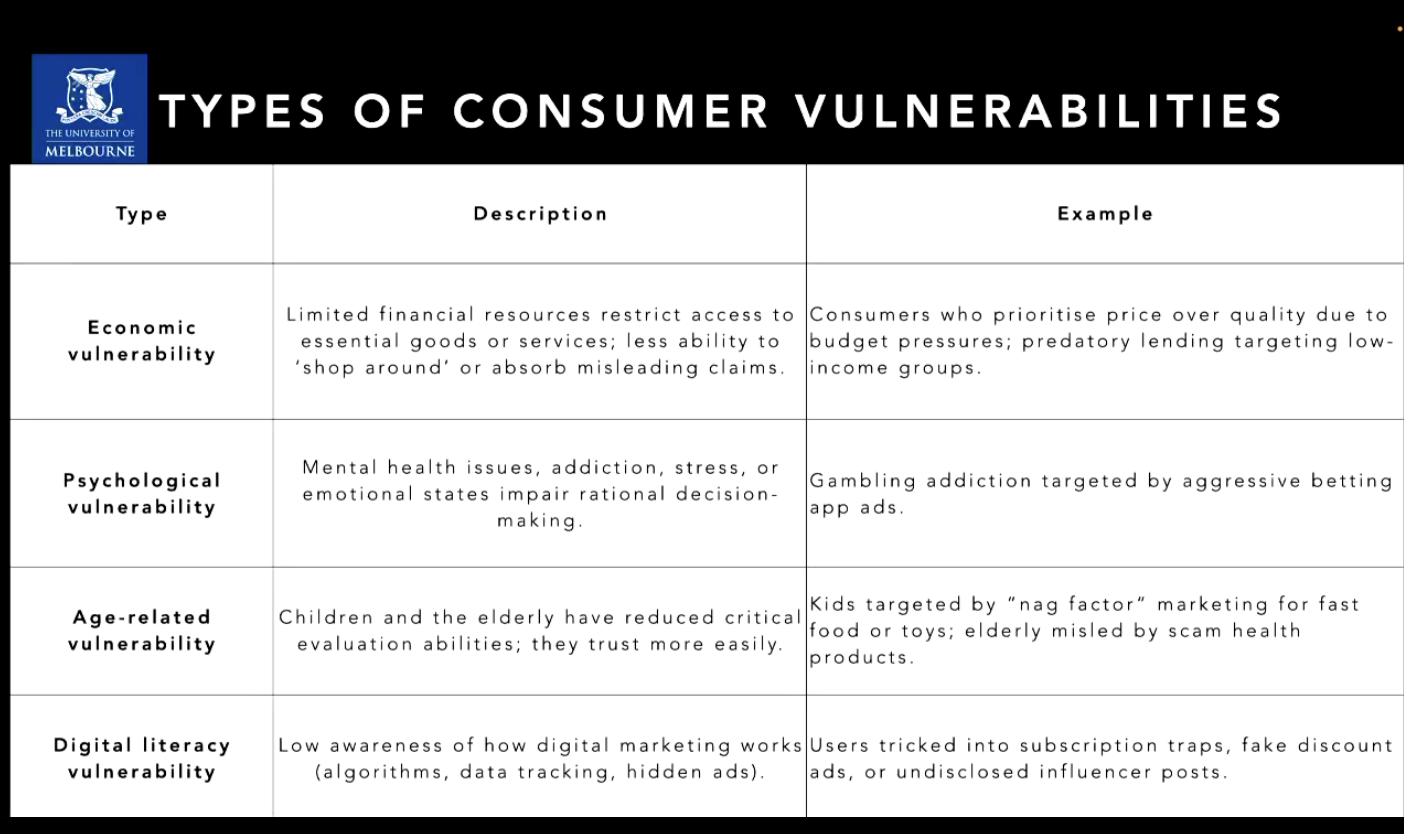
Types of Consumer Vulnerabilities
Economic: Limited financial resources restrict access.
Psychological: Mental health issues impair decision-making.
Age-related: Reduced critical abilities in children/elderly.
Digital literacy: Low awareness of digital marketing tactics.
Why Ethical Marketing Must Protect Vulnerable Consumers
Businesses have a moral responsibility. Need to respect autonomy, avoid exacerbating vulnerabilities and ensure justice and fairness.
Example: Food Insecurity
Lack of consistent access to affordable, nutritious food
Aggressive fast food marketing targets vulnerable groups.