Control of gene expression
Key words
Exon
Coding part of DNA
Intron
Non coding region of DNA
Operon
A group of genes that function as a single transcription unit
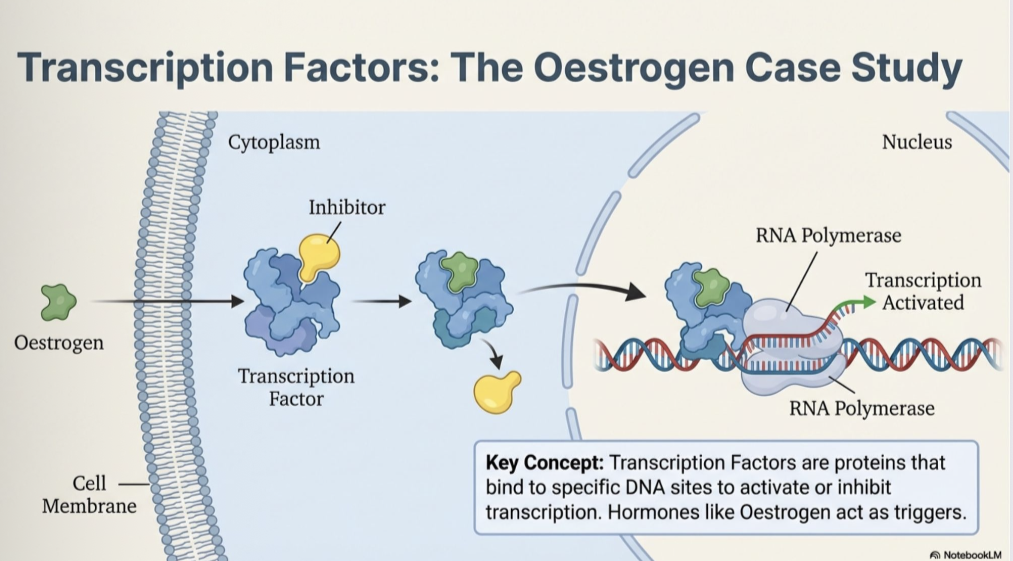
Transcription factor
Protein or short non coding RNA that can combine with a specific site on a length of DNA and inhibit or activate transcription of the gene
Acetylation
Addition of acetyl or phosphate groups
Methylation
Addition of methyl groups
Gene types
Housekeeping genes
Genes required constantly for essential metabolic pathways
Respiration enzymes
Tissue specific genes
Genes required only by specific cells at specific times
Protein based hormone for growth
Regulating genes
Transcriptional control
When genes are turned on or off
Post-transcriptional
mRNA can be modified (the editing of primary mRNA and the removal of introns to produce mature mRNA) which regulates translation & the types of proteins produced
Translational control
mRNA can be modified (translation can be stopped or started)
Post-translational
Proteins can be modified after synthesis which changes their functions
Transcriptional control
transcription ON switch
Acetylation
Reduces positive charge on histones
Attraction to DNA decreases
DNA uncoils
Transcription OFF switch
Methylation
Makes histones hydrophobic
Binds DNA tighter
Prokaryotic control: The Lac Operon
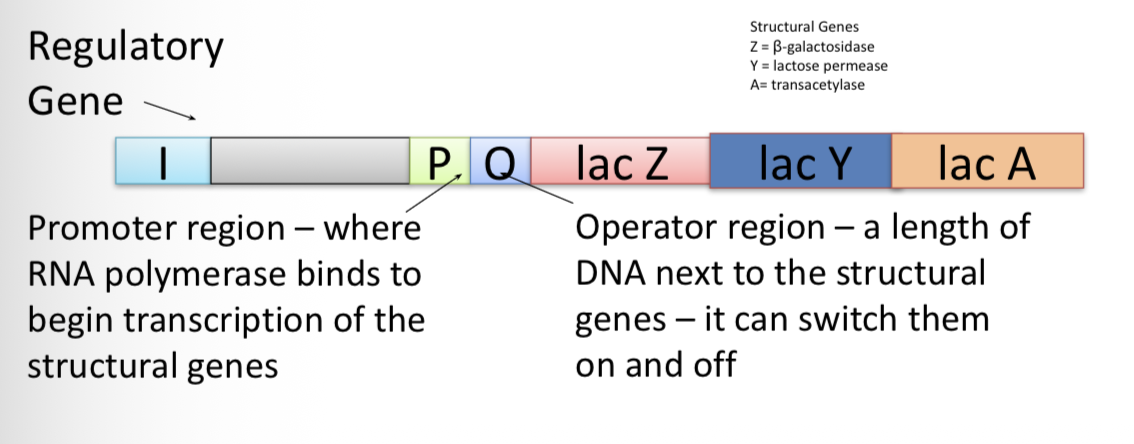
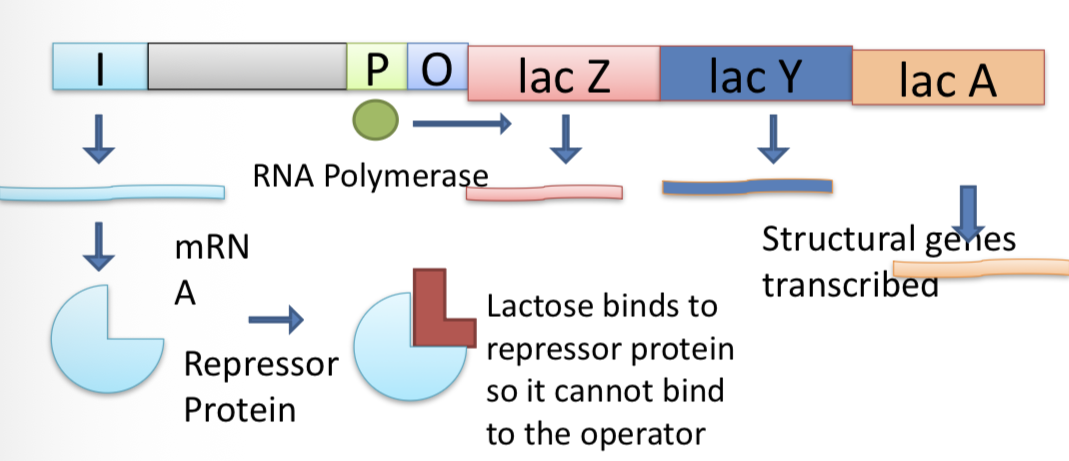
the lac operon is a section of DNA in the bacterial genome containing a number of genes
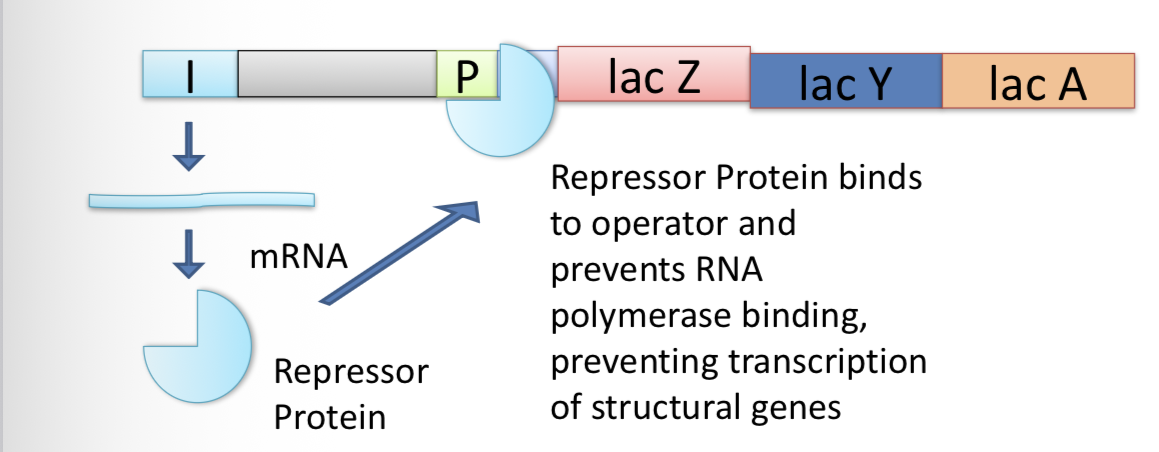
No lactose present
When lactose is absent the repressor binds to the operator, blocking transcription
The cell saves energy by not producing unnecessary enzymes
lactose present
Structural genes expressed as gene products are needed
Lactose causes repressor protein to undergo a conformational change
Post transcriptional control
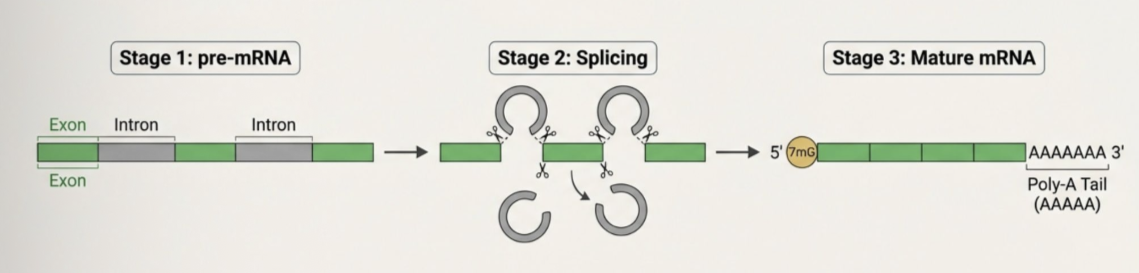
Splicing
Removal of non coding introns and joining of coding exons
stabilisation
5‘ cap and 3‘ tail delay degradation in the cytoplasm
RNA editing
Base sequences can be changed to create different proteins from the same gene
Translational control
degradation
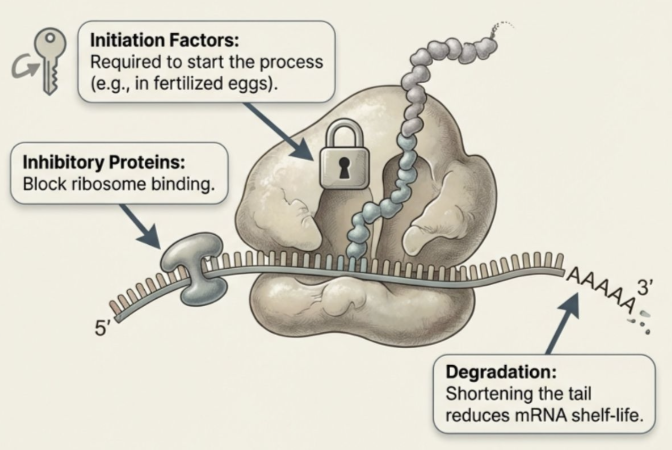
Shortening the mRNA poly-A tail reduces its shelf life and stability
Inhibitory proteins
Binding of specific proteins to mRNA prevents it from attaching to ribosomes
Blocks translation
Initiation factors
Specialised proteins that aid in the binding of mRNA to ribosomes
Their activation is often required to start the process
Post translational control (insulin case study)
Preproinsulin
Folding and shorteining
Proinsulin
Addition of non protein groups
Sugars
Lipids
Phosphates
Active insulin
Activation by protein kinases
Phosphorylation
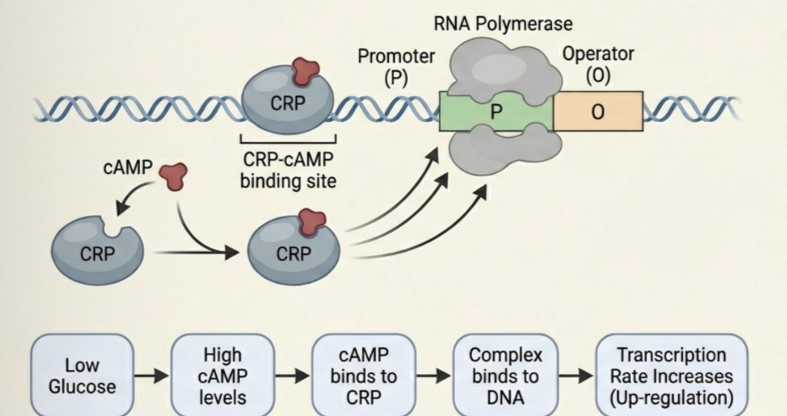
Fine tuning: up regulation by cAMP
the cell prefers glucose
It only speeds up lactose digestion when glucose is scarce
The cAMP-CRP complex acts as a positive regulator
Enhancing the transcription efficiency initiated by RNA polymerase in the absence of glucose