Chapter 9A
Fixed Exchange Rates and Foreign Exchange Intervention
Motivation
Many countries try to fix or “peg” their ex rate to a currency or group of currencies by intervening in foreign ex markets.
Many countries with flexible or “floating” ex rate in practice have managed floating ex rate;
the central bank “manages” the ex rate by buying + selling currency and assets, especially in periods of ex rate volatility.
choice between fixed or floating ex rate depends on country characteristics.
Macroeconomic Policy Goals
Internal balance describes the macroeconomic goals of;
producing at potential output (at “full employment”) and
price stability (low inflation)
an unsustainable use of resources (overemployment) tends to increase prices;
an ineffective use of resources (underemployment) tends to decrease prices.
volatile aggregate demand + output tend to create volatile prices;
price-level movements reduce economy’s efficiency by making real values less certain and less useful guide for economic decisions.
External balance is achieved when a current account is;
not so deep in deficit the country may be unable to repay foreign debts,
nor so strongly in surplus that foreign borrowers cannot repay debts.
e.g. pressure on Japan in the 1980s and China in the 2000s.
Key Issues
Domestic policies affect other countries
Global interdependence of open economies
When countries have trouble meeting payments on past foreign loans, foreign creditors become reluctant to lend them new funds and may even demand immediate repayment on earlier loans; this is called sudden stop in foreign lending.
Assets, Liabilities, and the Money Supply
Central Banks purchase or sell domestic assets, and alter money supply. The money multiplier determines effect on money supply.
The sale of assets by the central bank is paid for with currency or a check written to the central bank;
both are denominated in domestic currency
central bank puts currency into its vault or reduces amount of bank deposits;
causes supply of money in circulation to shrink
transaction leads to equal decreases of assets and liabilities.
When the central bank sells domestic or foreign bonds, domestic money supply decreases.
The purchase of assets by the central bank is paid for with currency or a check written from the central bank;
both are denominated in domestic currency
both increase supply of money in circulation
transaction leads to equal increases of assets and liabilities.
When the central bank buys domestic or foreign bonds, domestic money supply increases.
Foreign Exchange Markets
Central banks trade foreign govt bonds in foreign ex markets.
foreign currency deposits and foreign govt bonds are often substitutes;
both are fairly liquid assets denominated in foreign currency.
quantities bought + sold of both influence the ex rate.
Sterilisation
Since buying + selling foreign bonds in foreign ex markets affects domestic money supply, central banks may want to offset this;
offsetting effect is called sterilisation
if central bank sells foreign bonds it can buy domestic bonds — to leave supply of money in circulation unchanged.
Fixed Exchange Rates
To fix the ex rate, central banks influence quantities supplied + demanded of currency by trading domestic + foreign assets; so that the ex rate stays constant.
Foreign ex markets are in equilibrium when:
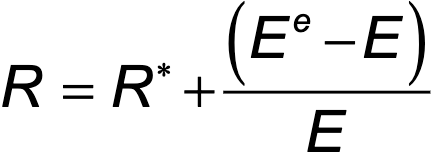
Central banks must trade foreign + domestic assets to fix the ex rate at level E⁰ where:
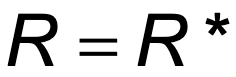
Alternatively, central banks may adjust quantity of monetary assets in the money market until domestic interest rates = foreign interest rates, given level of average prices and real output:
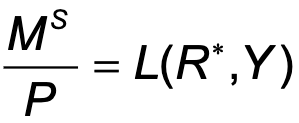
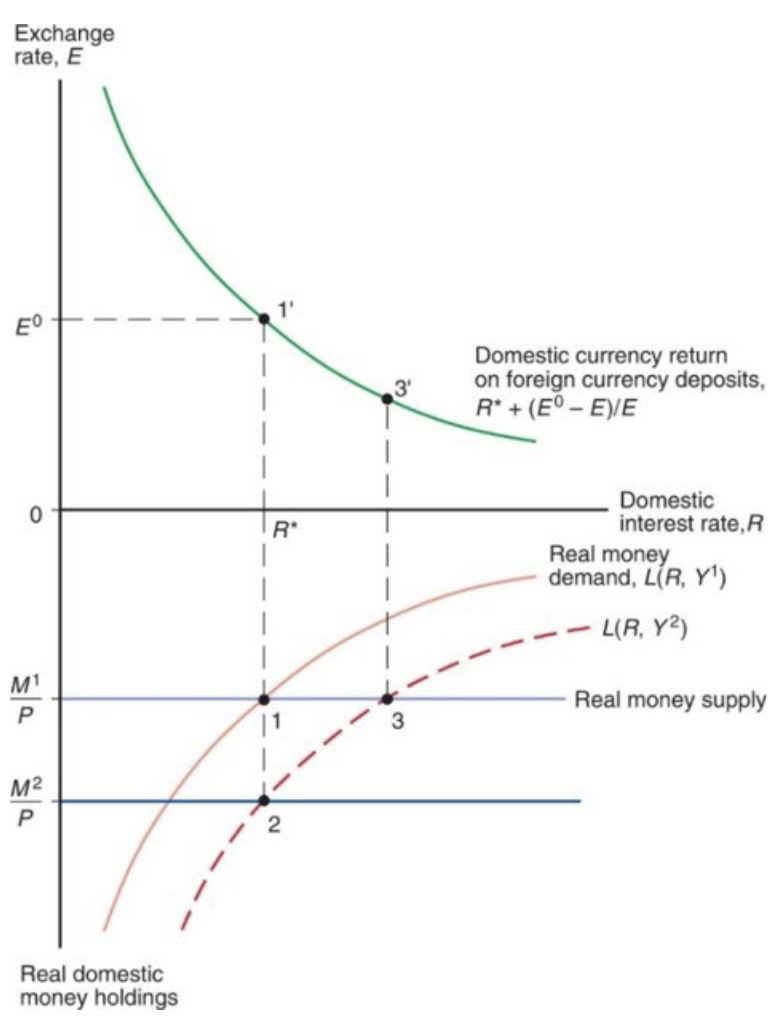
Suppose the central bank has fixed the ex rate at E⁰ but output levels rise, raising demand for real monetary assets;
this is predicted to put upward pressure on interest rates and value of domestic currency
to respond, the central bank should buy foreign assets;
thereby increasing domestic money supply, and reducing interest rates in the short run
Alternatively, by demanding (buying) assets denominated in foreign currency and by supplying (selling) domestic currency, the price (value) of foreign currency increases and the price/value of domestic currency decreases.
Asset Market Equilibrium With a Fixed Exchange Rate,

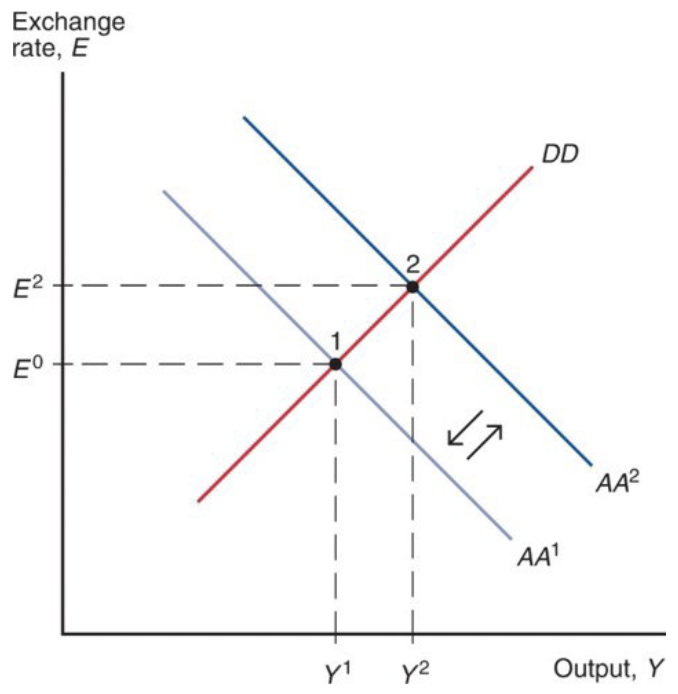
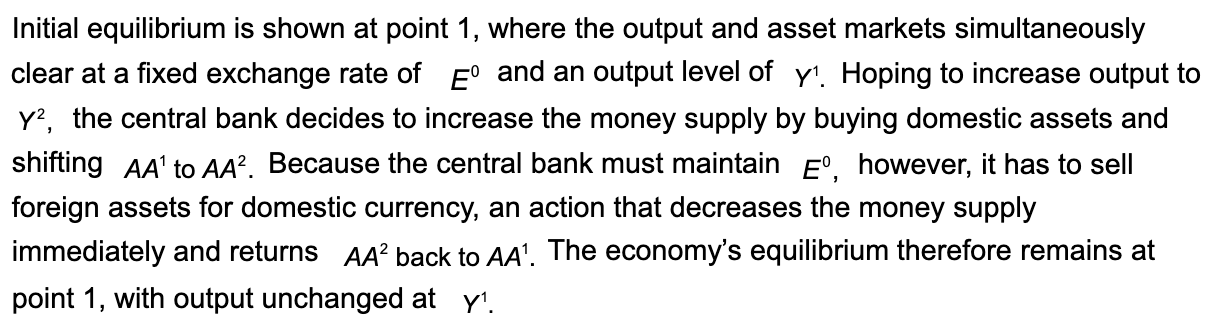
Monetary Policy and Fixed Exchange Rates
When central banks fix the ex rate and maintain domestic interest rates = foreign interest rates, they are unable to use monetary policy to influence output + unemployment.
Fiscal Policy and Fixed Exchange Rates in the Short Run
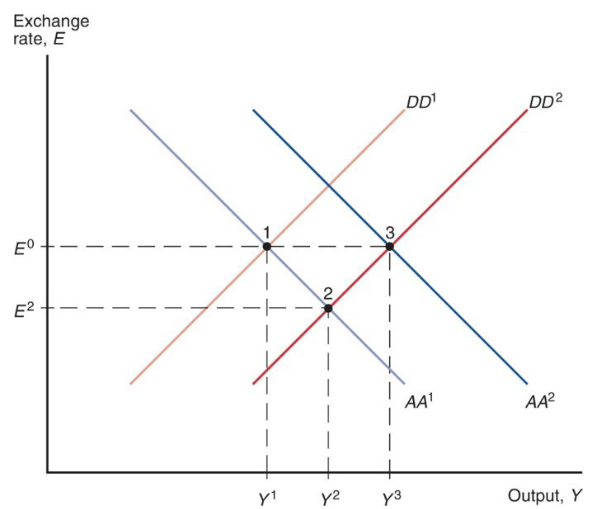
Temporary changes in fiscal policy are more effective in influencing output and employment in the short run:
the rise in AD + output due to expansionary fiscal policy raises demand for real monetary assets;
puts upward pressure on interest rates + domestic currency.
to prevent appreciation of domestic currency, the central bank must buy foreign assets;
thereby increasing money supply and decreasing interest rates.
Fiscal Expansion Under a Fixed Exchange Rate

Fiscal Policy and Fixed Exchange Rates in the Long Run
When ex rate is fixed, there is no real appreciation of the value of domestic goods in the short run.
but, when output is above its potential level, wages + prices tend to rise in the long run.
rising price level makes domestic goods more expensive (real appreciation)
AD + output decrease as prices rise; DD curve shifts left (up).
prices tend to rise until employment, AD and output fall to normal (potential or natural) levels.
Prices are predicted to change proportionally to changes in money supply when central bank intervenes in foreign ex markets;
AA curve shifts down (left) as prices rise
nominal ex rates will be constant (as long as fixed ex rate is maintained)
but, real ex rate will be lower (real appreciation).