Heredity & Karyotypes
Heredity
Pedigrees are essential tools in genetics that provide a visual representation of the genetic relationships within a family. These diagrams serve as a roadmap for geneticists and researchers to track the inheritance of specific traits or diseases across multiple generations. Each symbol in a pedigree represents an individual within the family, while lines connecting the symbols illustrate the relationships between them. By carefully analyzing the patterns within a pedigree, scientists can decipher the mode of inheritance for a particular trait or disease. For example, autosomal dominant traits are typically represented by specific patterns in a pedigree, while autosomal recessive traits may exhibit different inheritance patterns. Overall, pedigrees play a crucial role in understanding the transmission of genetic information within families and are instrumental in genetic counseling and research endeavors.
Blood type trait in humans displays this type of inheritance. Multiple allele.
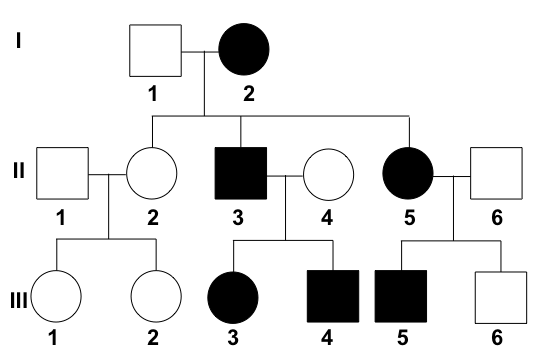 Often the boxes are represented as males.
Often the circles are females.
The shaded represents or displays the “affected” trait.
The unshaded represents or displays the “ unaffected” trait.
The roman numerals you see to the side, is the generation.
Recessive Trait is characterized by an affected CHILD with unaffected parents( saying that one of them was the carrier).
Make SURE that even if there is ONE pair of recessive traits, then the trait is recessive. To sum at all if their is a pair of family where the child is affected then it is a recessive trait/
Such as:
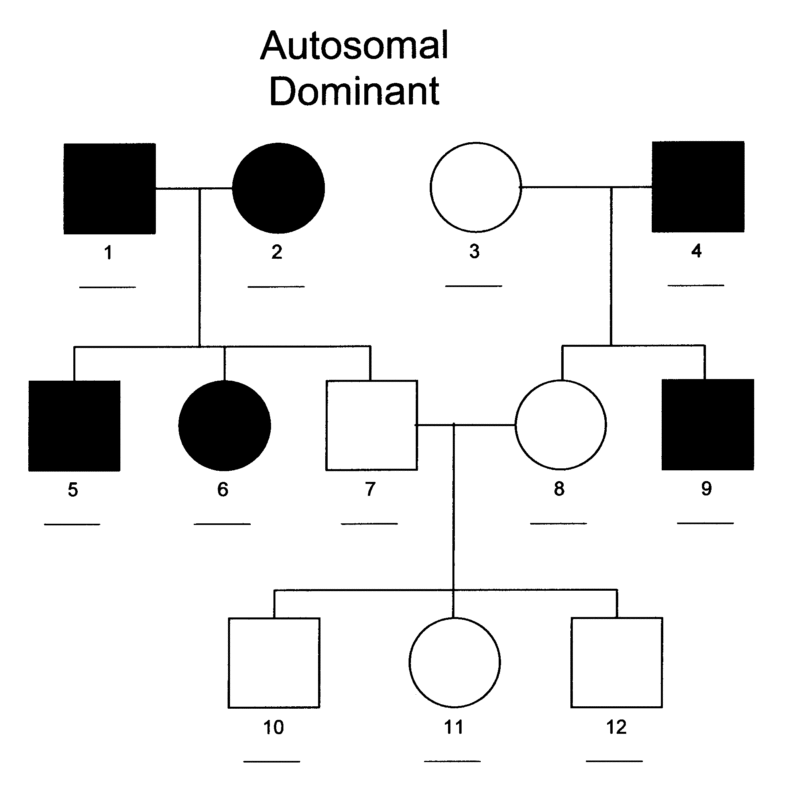
Autosomal dominant
Where in a pedigree, the male and the females are affected the same. The same amount of males and the same amount of females affected. Not an OVERWHELMING ratio.
Autosomal recessive:
Autosomal Recessive Inheritance: Autosomal recessive inheritance occurs when a trait is expressed only when an individual inherits two copies of the recessive allele. This means that both parents must be carriers of the recessive allele for the trait to be expressed in their offspring. Examples include cystic fibrosis and sickle cell anemia.
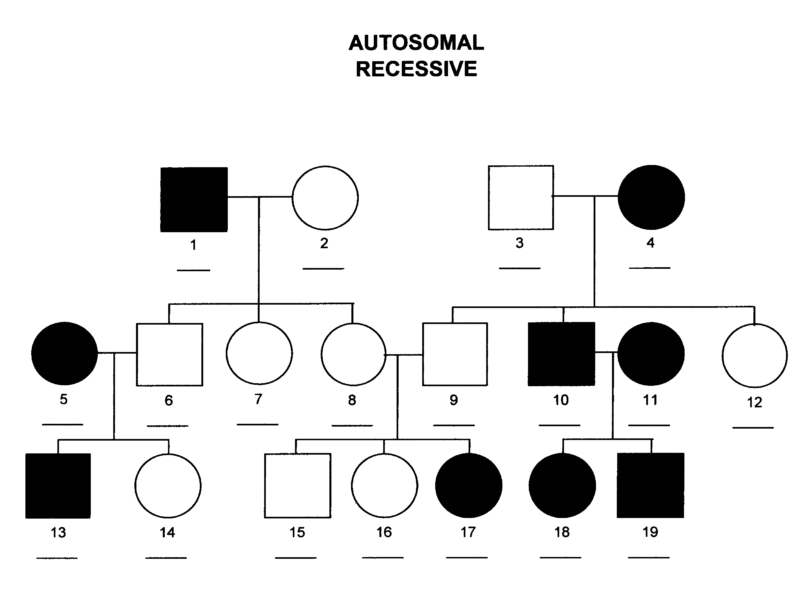 EVEN FOR AUTOSOMAL RECESSIVE,IF THERE IS ONE PAIR IT . IF THERE IS A PAIR OF FAMILY WHERE THE CHILD IS AFFECTED AND NOT THE PARENTS, THEN IT IS RECESSIVE.
sex-linked
Look for a pattern where MALE are much MORE likely to be affected, or ONLY OR MORE males are affected. Due to having only one X chromosome. Overwhelmingly.
Karyotypes
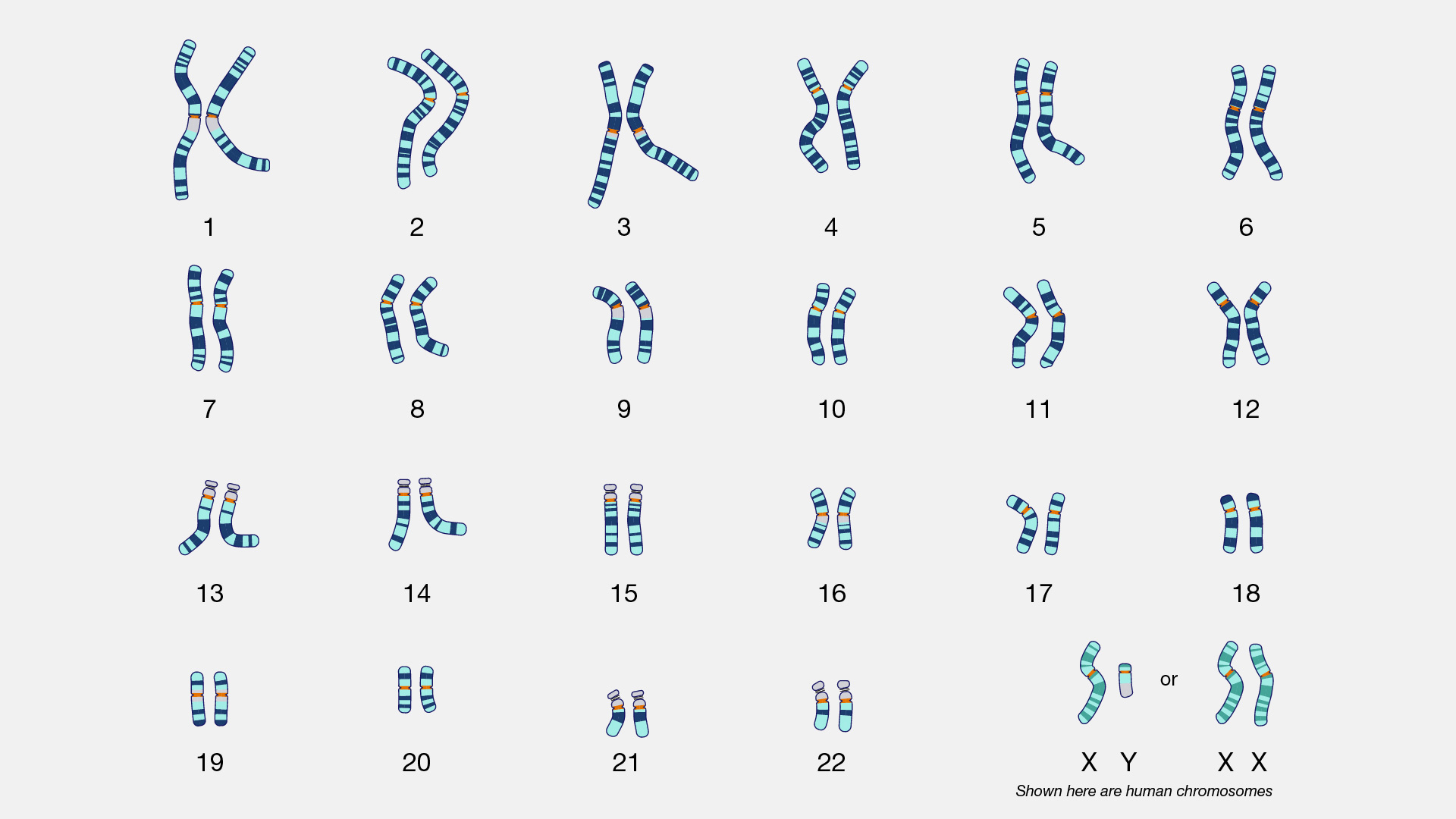
Karyotypes: The visible number and appearence of chromosomes visible in an eukaryotic cell.
You can see from here if there are any abnormalities.
Chromosomal Disorder: Problem with the ordering of the chromosome called Trisonmy-13.
The 13 being the number or pair the three chromosomes is on .
The Tri- is the amount of chromosome.
Aneuploidy- whether is one, or missing or altered chromosome.
We see anueploidy because of nondisjunction.
Nondisjunction: Where there is a failure of homologous chromosome or sister chromatid to separate properly during cell division.
There are sex chromosomes in karyotypes that can be distinguished.
XX- A female karyotype
XY- A male karyotype
Then apart from the sex chromosomes the other 44 chromosomes we have are called the autosomal chromosomes.
Chromosomes come in pairs. Normally, each cell in the human body has 23 pairs of chromosomes (46 total chromosomes).
1 pair of sex chromosome.
 Which of the following is the final product of oogenesis? one large ovum (egg) and three small polar bodies
Oogenesis is the process of the development of an ovum( egg).