3.3 Revenue, costs and profits
Revenue
Total revenue = Quantity sold x price
OR Average revenue x output
Average revenue = Total revenue / quantity
Marginal revenue = Change in TR / Change in Quantity - the change in a firms revenue from selling one extra unit of output
Maximising revenue occurs when MR = 0
Elasticity
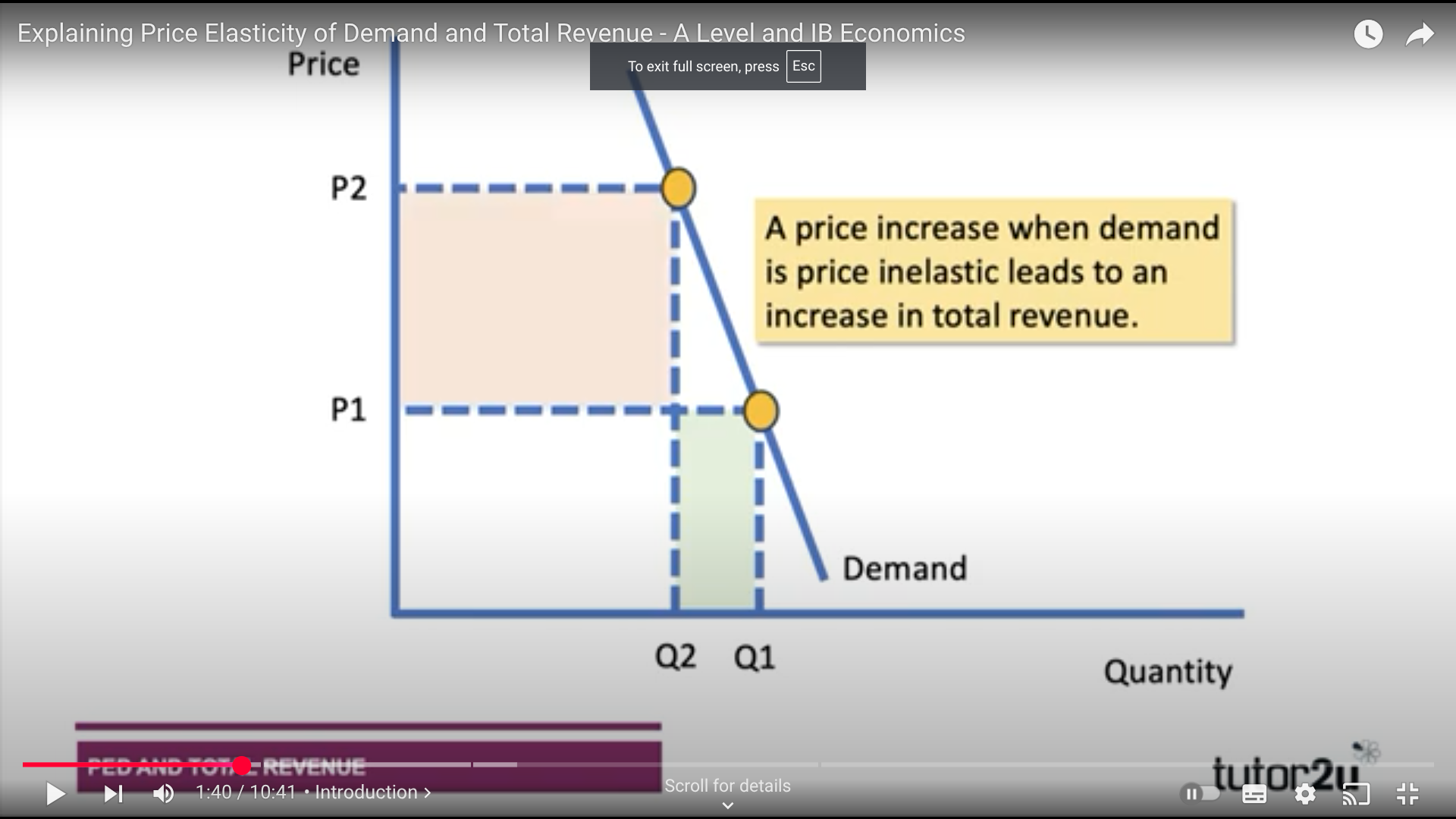
When demand is price inelastic then a price rise will mean a business will increase their total revenue as the fall in QD will be less than proportional to the rise in price
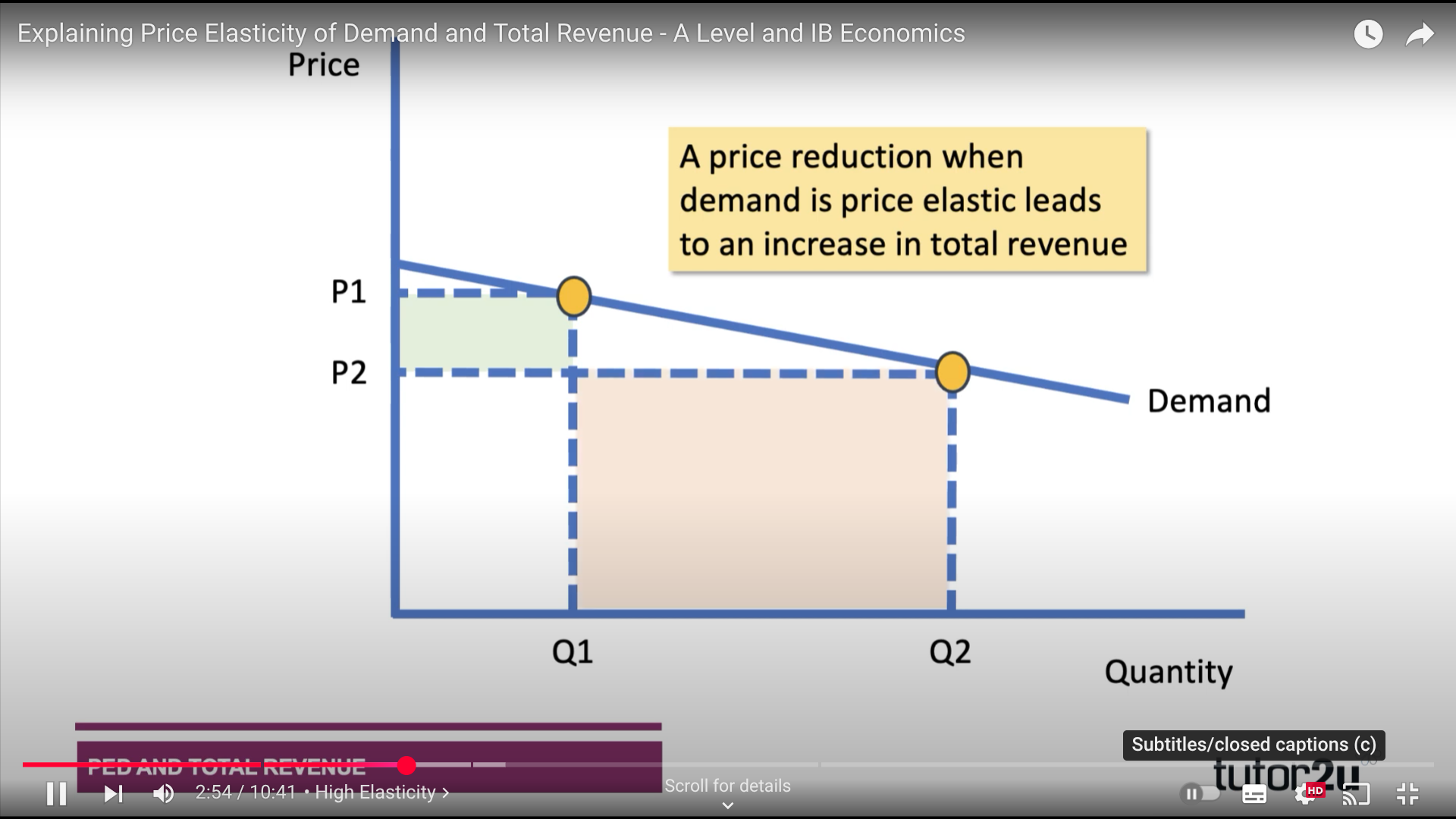
A price reduction in a product with high elasticity of demand will increase TR
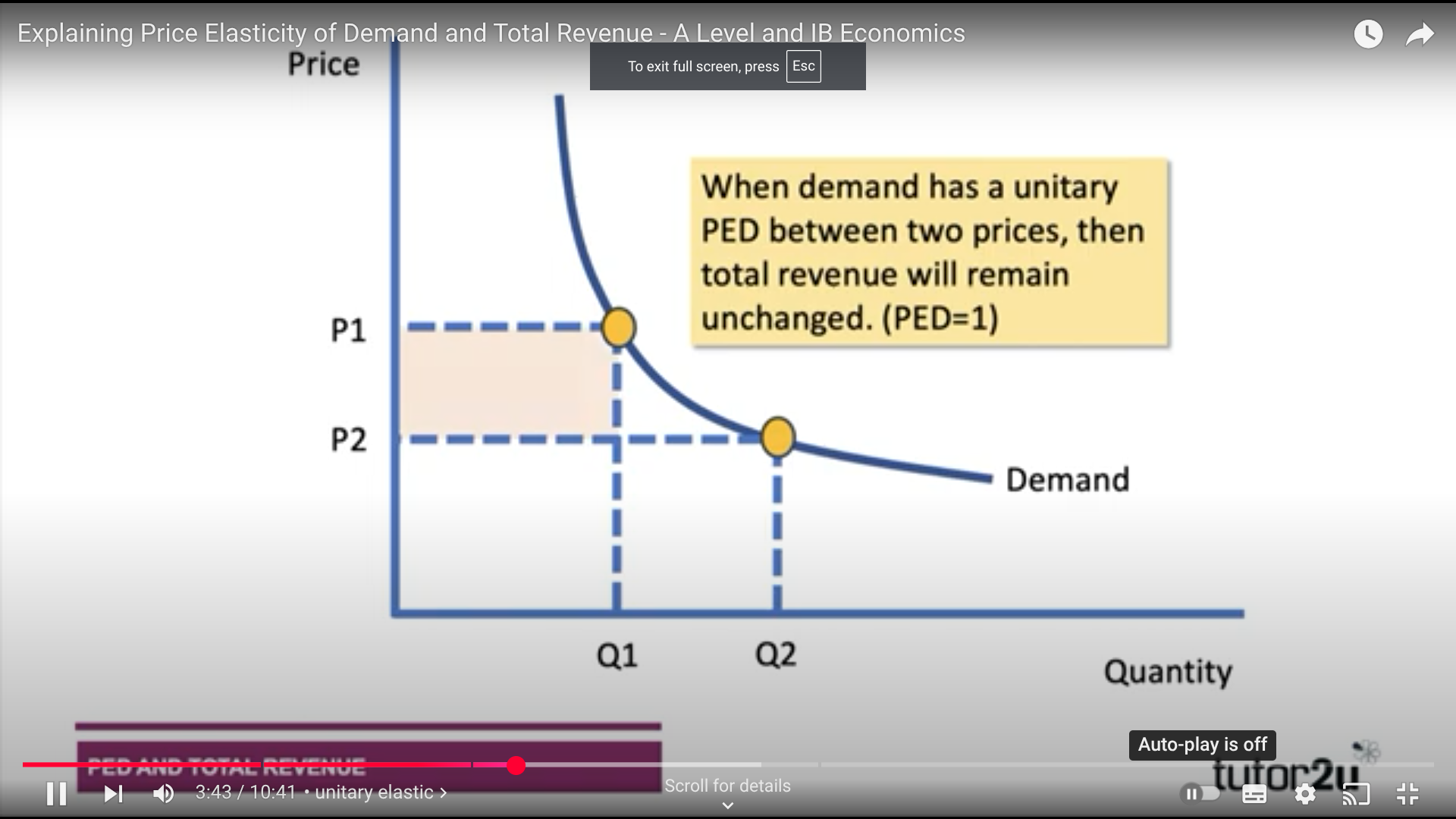
When PED is unitary then TR will remain unchanged
Price maker = a firm with the ability to alter prices due to market power
MR is less than AR because to sell additional units the price of all units must be lowered
Price taker = A firm with no market power, selling as the market price only
MR = AR because every unit sold is at the exact same price
TR is upward sloping with a constant gradient
Costs
Short run = a period of time where at least one factor of production is fixed
Long Run = All factors of production are variable
Fixed costs = Costs that do not directly vary with output i.e. rent, salaries and interest on loans
Variable Costs = Costs that do directly vary with output i.e. wages, utility bills, raw material costs
Total Fixed Costs
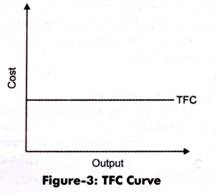
Average Fixed Costs - TFC / Q - AFC decreases with output so downwards sloping
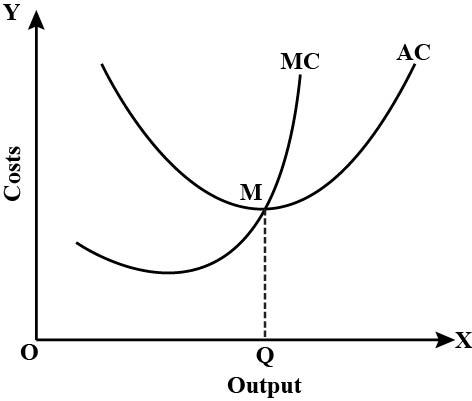
Average variable costs - U shaped - at lower output levels output rises faster than TVC and at higher output levels rises slower than TVC
Average total costs = AFC + AVC

Marginal and Fixed Costs ( Short Run )
MC = the total change in total costs when output increases by one unit
Calculated by the change in costs / Change in output
The law of diminishing returns:
States that as more units of variable factors are added to fixed FoP output will rise at first then fall
This is because capital becomes more scarce and marginal product ( change in output from one extra worker ) falls causing MC to rise
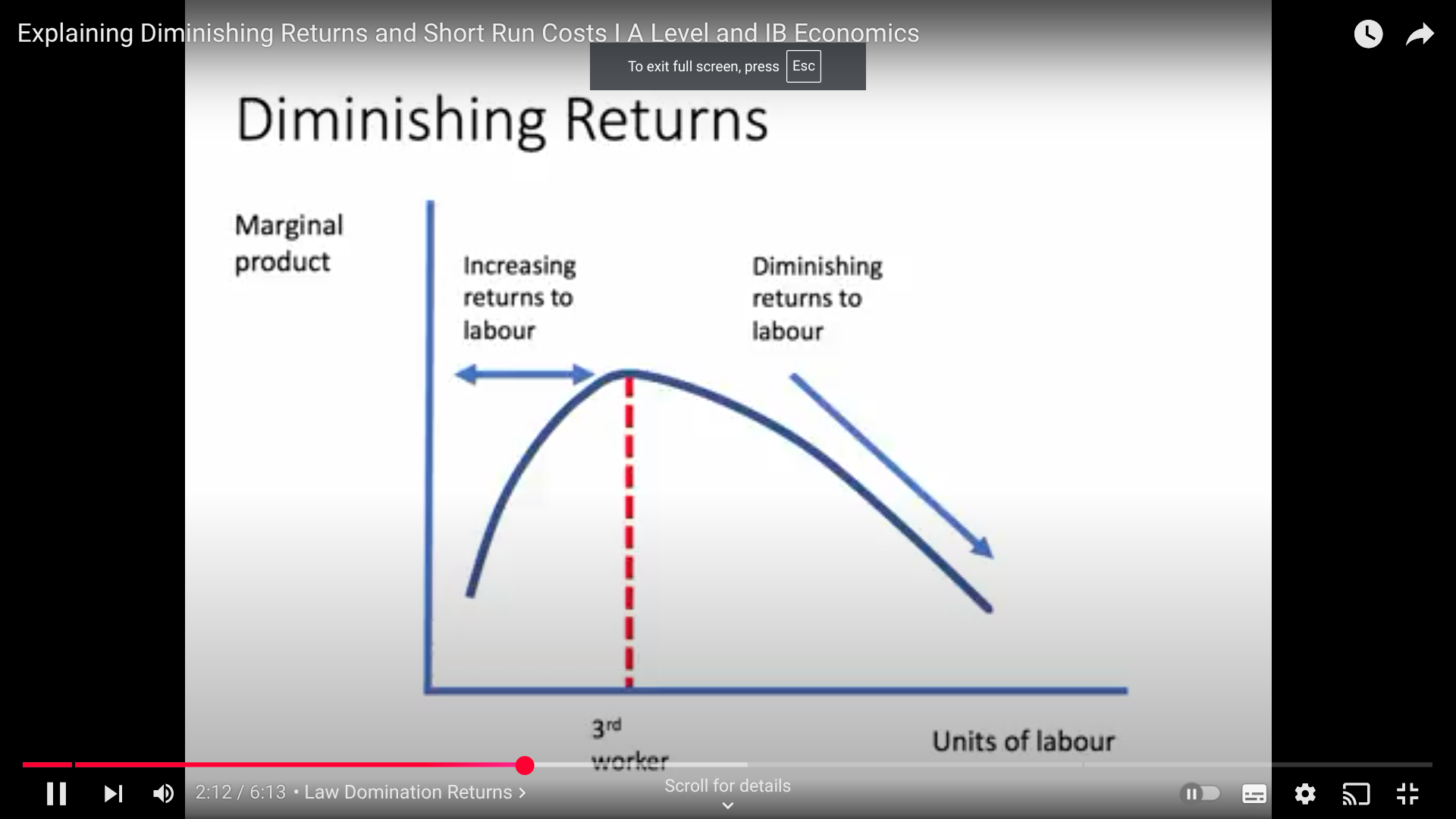
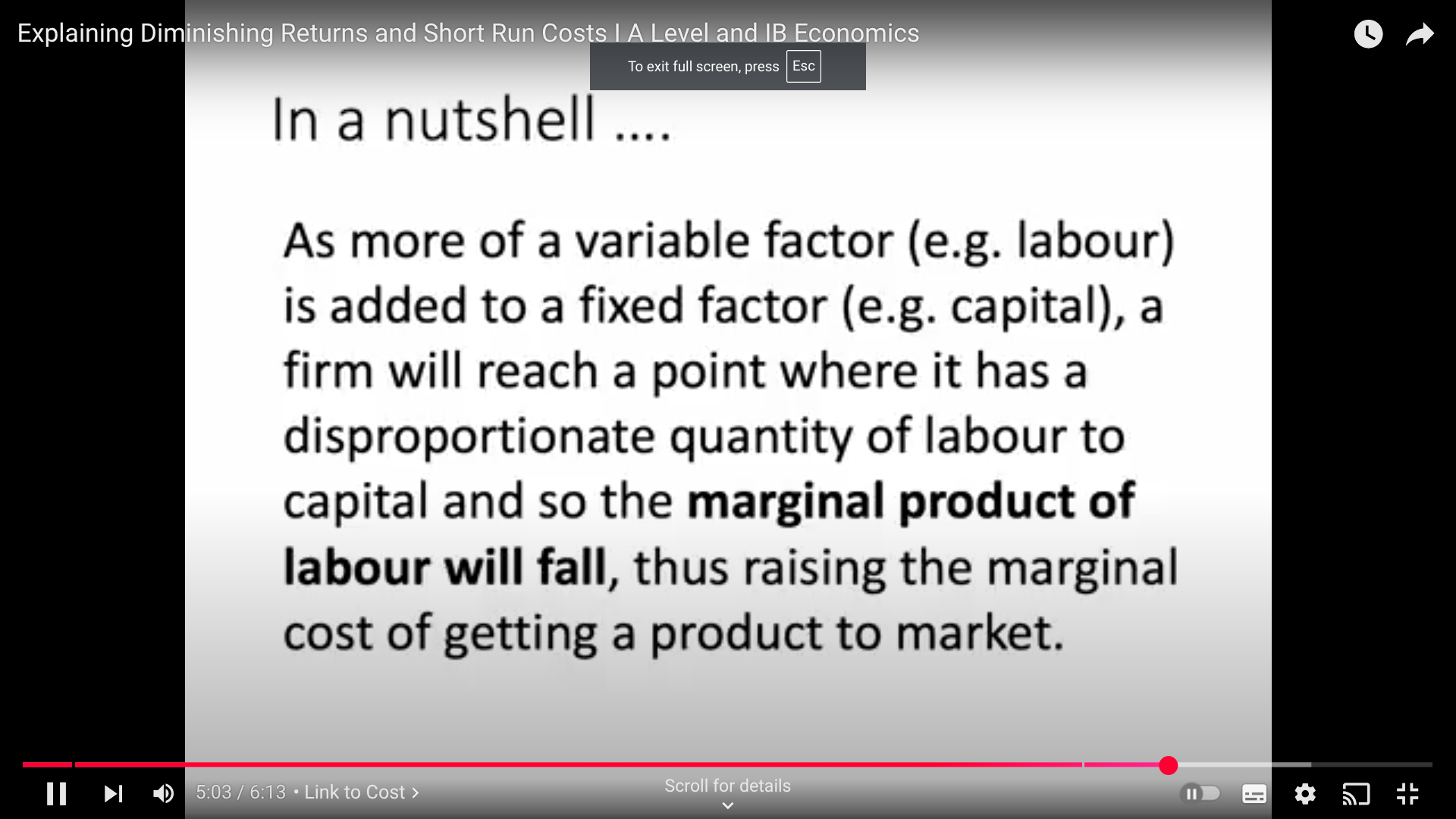
The law of diminishing returns causes a fall in marginal product of labour
This causes average product to fall
Which then causes AVC and MC to rise
Long Run Average Costs
Assume that all FoP are variable
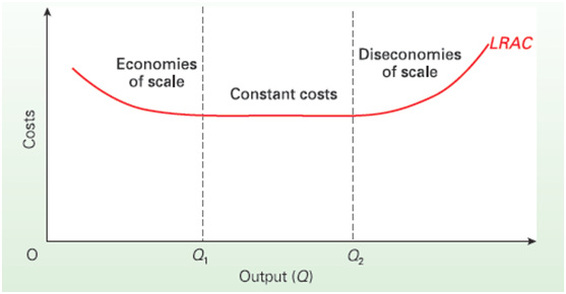
Economies of scale = % output > % input
Constant costs = % output = % input
Diseconomies of scale = % output < % input
Shutdown point
In the short run firms will continue to produce output so long as price per unit is equal to or greater than AVC
Price = Min AVC = shut down point in a competitive market
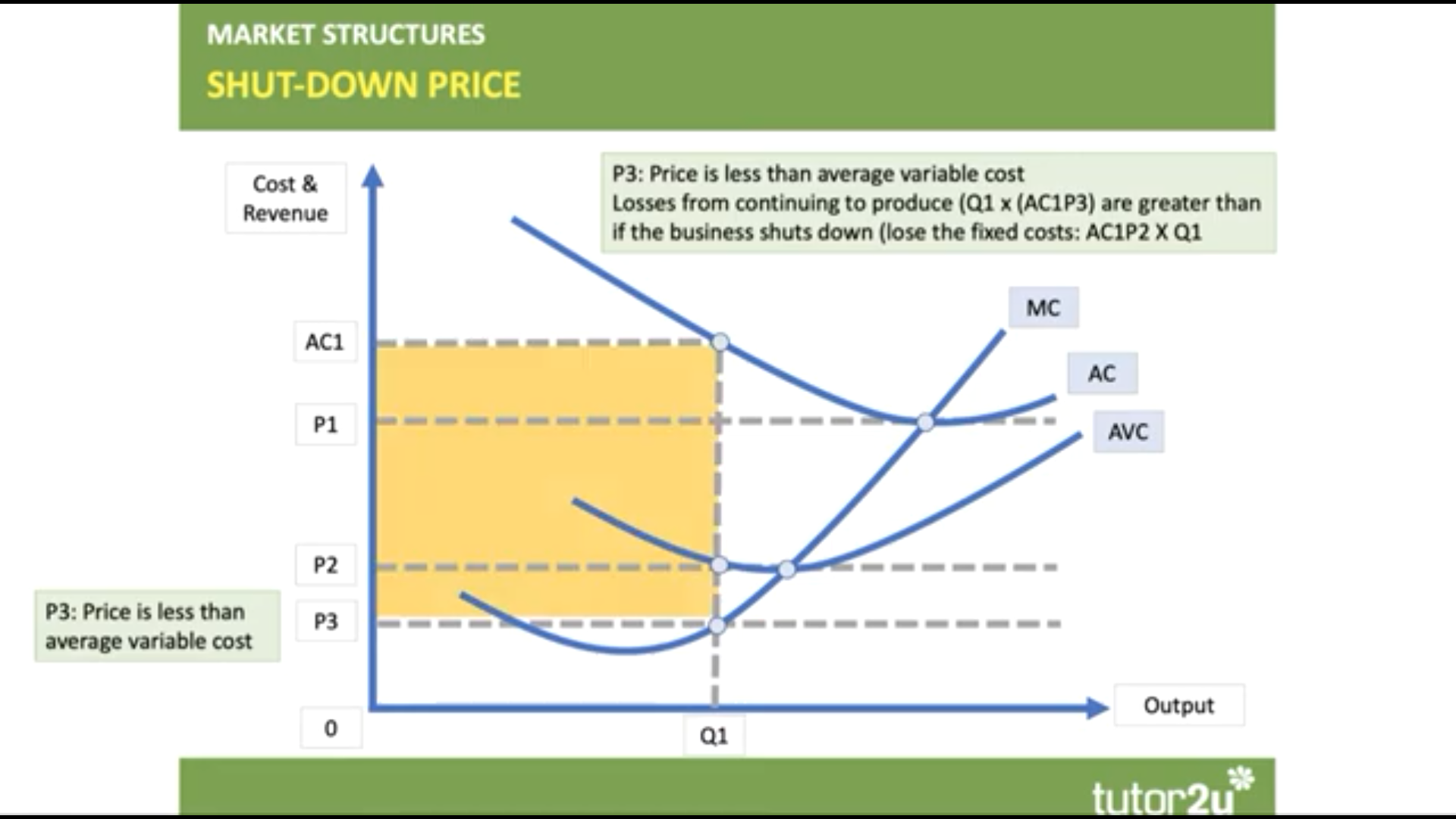
In the Long Run a business needs to make atleast normal profit this is where just enough is made to keep FoP in their current use
Firms may be able to survive whilst making a loss due to profit saticficing or just an economic downturn i.e. travel in the pandemic - this may be cross subsidised in other areas