Week 2: psychodynamic approach
School of thought (Theories)
How therapists understand and support clients
each approach has specific ideas about human behaviour, emotions and change
Psychodynamic (unconscious):
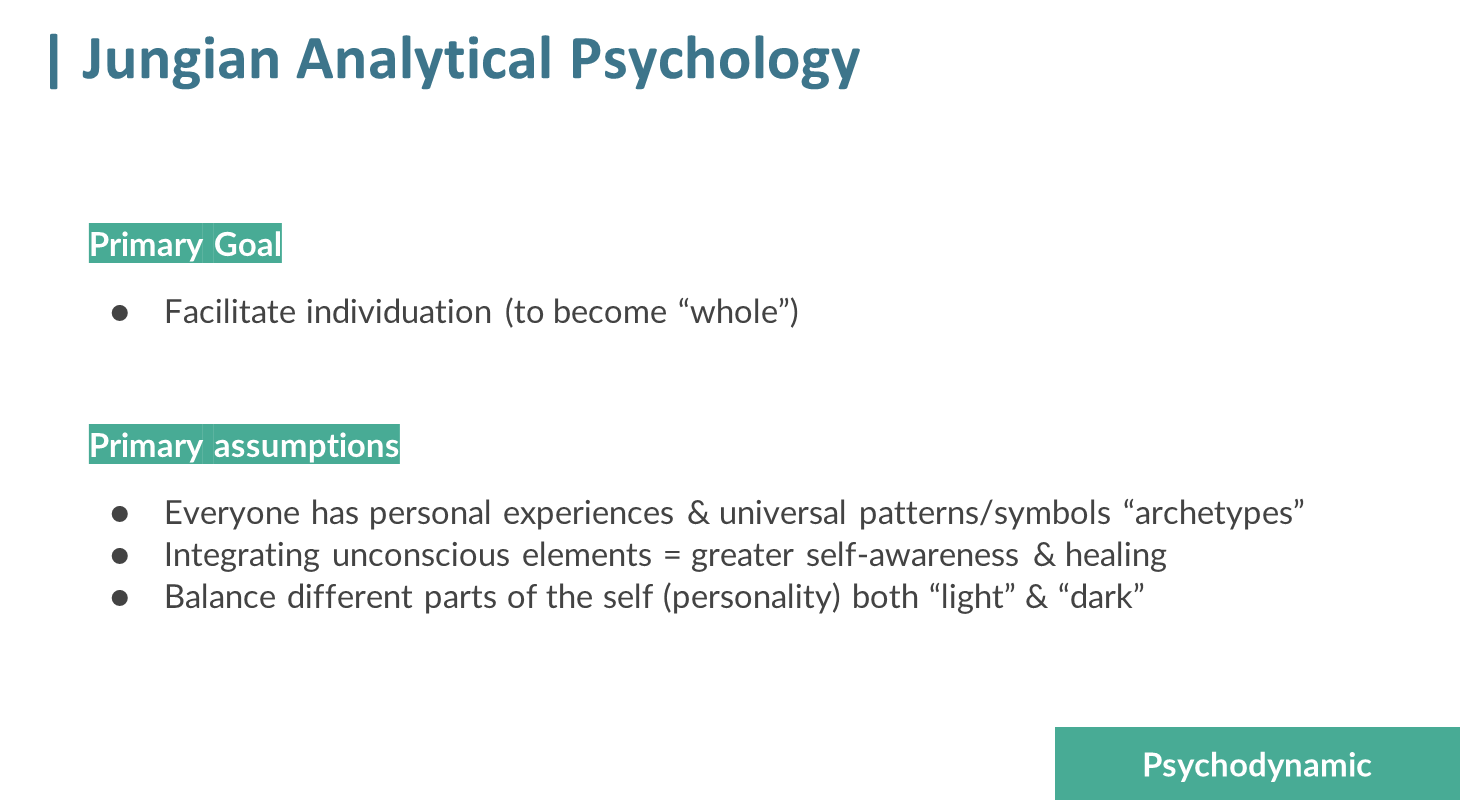
lay the groundwork for understanding the unconscious mind, early childhood experiences, and personality development
key techniques:
encourages clients to speak freely without censorship
sharing thoughts, memories and feelings
openly expressing emotions, reduced anxiety and provided relief
Alistair Ross Chapter 3, Psychodynamic practice in Reeve’s (2022)
Humanistic (Growth):
represent a significant shift towards understanding an individual’s subjective experience and the importance of self-actualisation
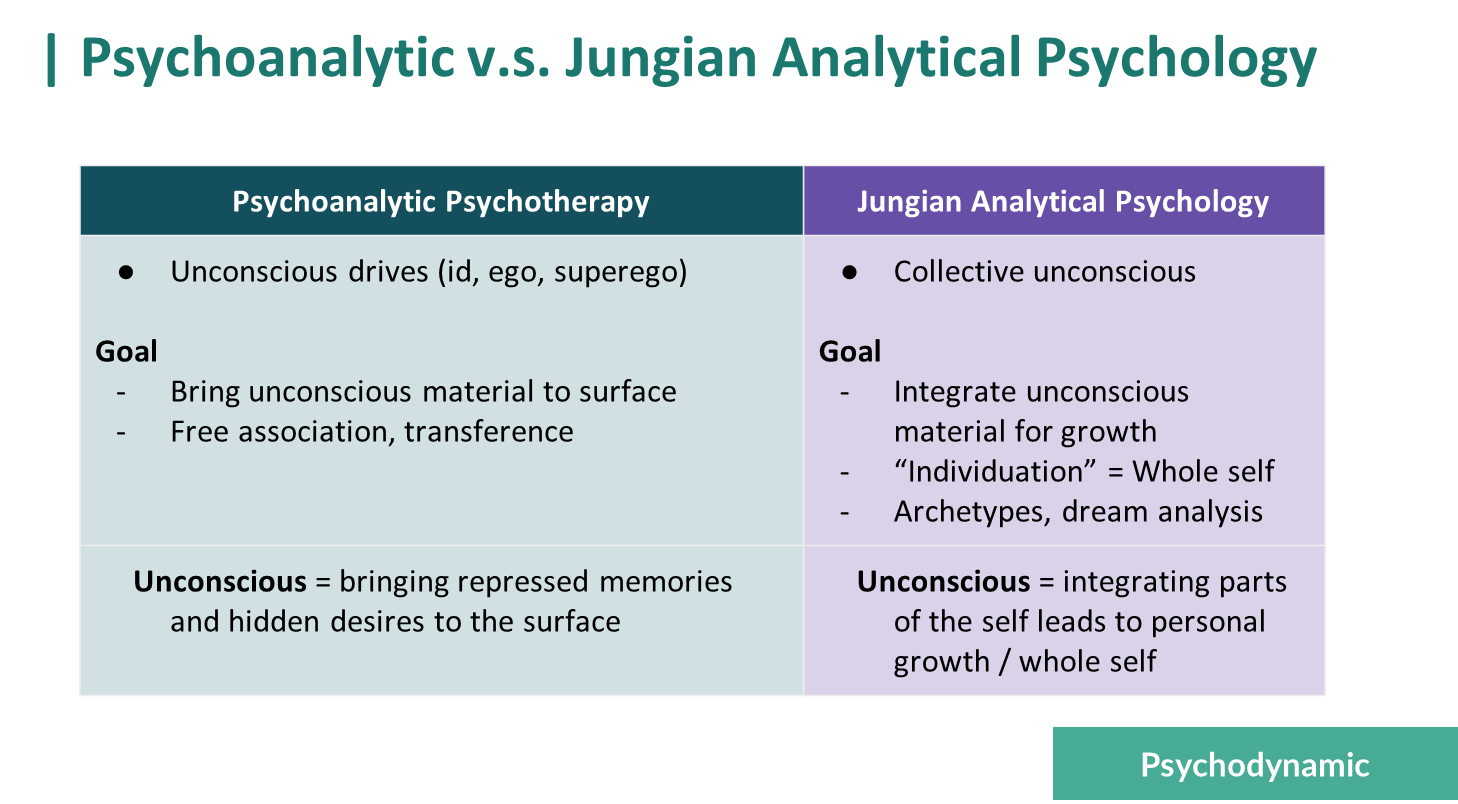
psychoanalytic therapy
The foundational therapy of the psychodynamic approach
emphasises the role of the unconscious mind
unconscious desires, early childhood experiences, and the interactions between the id, ego and superego
Freud believed that unresolved conflicts from early childhood could cause adult psychological problems
psychological distress is the result of unresolved conflicts
unprocessed early experiences
unbalanced id, ego, superego
Psychodynamic approach: assumptions
id: what we’re aware of (immediate gratification)
basic desires (hunger)
primal, impulsive and unconscious from birth
no consequences
no morals
ego: what we can recall (rational mind)
‘reality principle’
mediates id & superego
balances impulses
societal expectations
Superego: hidden; influence behaviour (moral conscious)
internalised societal norms
operates across all levels
strives for perfection
moralistic
guilt/shame
Ego
the ego mist resolve these conflicts to balance external reality
Excessive pressure from the id and superego can overwhelm the ego, leading to anxiety and defence mechanisms
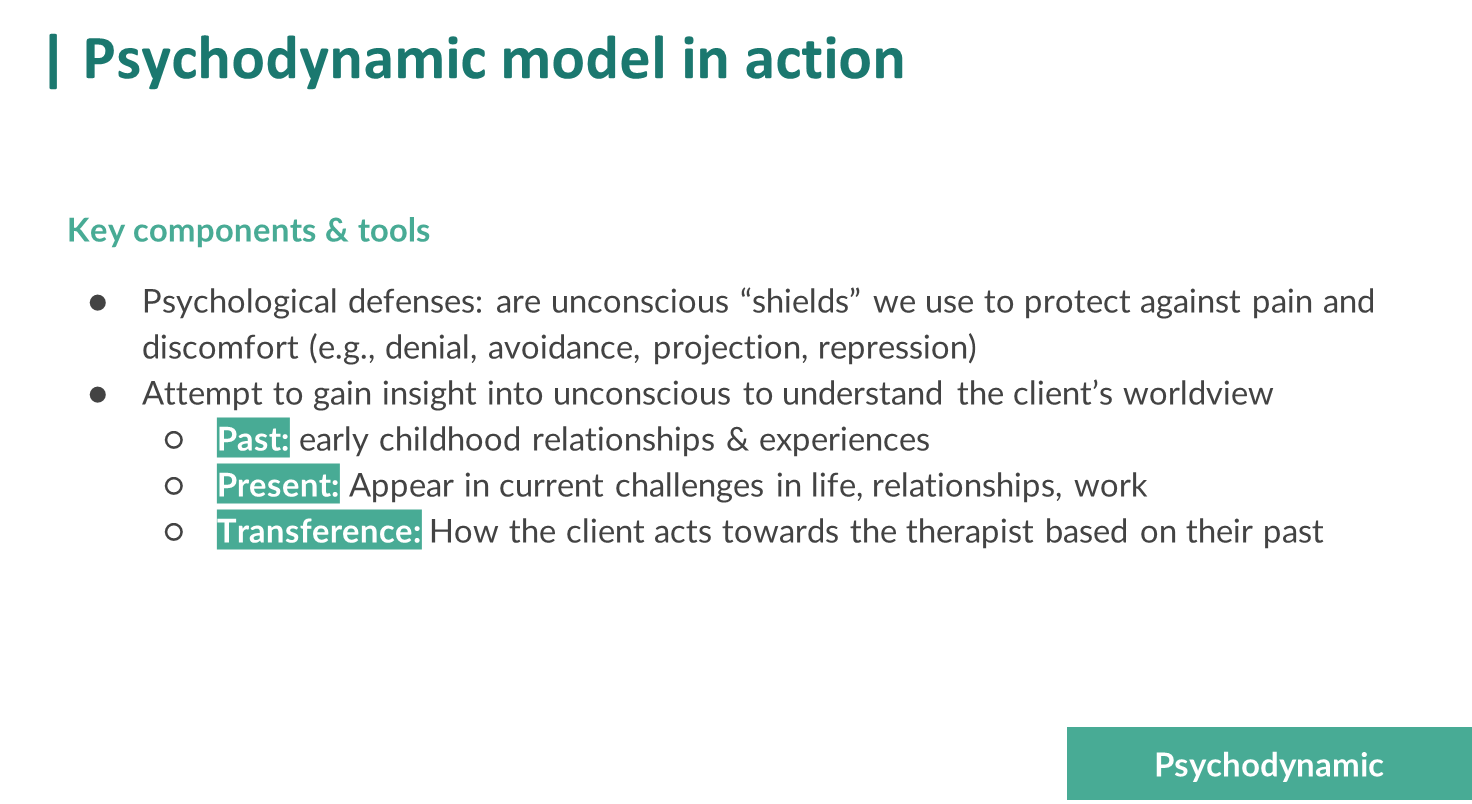
Ego defence mechanisms
to manage internal conflict, the ego employs unconscious defence mechanisms
repression: pushing distressing memories into the unconscious
denial: refusing to acknowledge reality
projection: attributing one’s unacceptable thoughts to others
Therapeutic applications
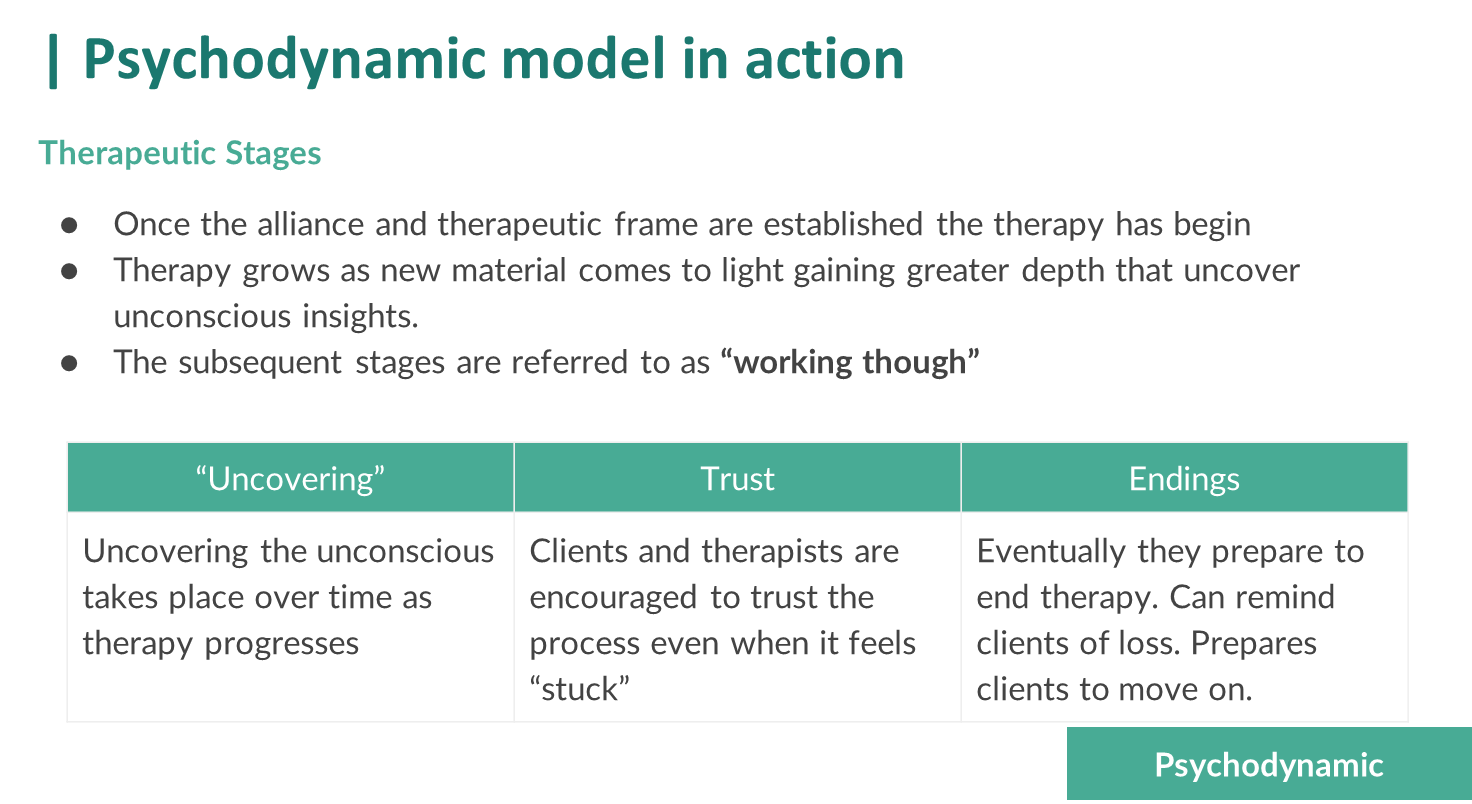
understand internal conflicts
distress stems from conflicts between the id, ego, superego
conflicts are explored and processed in therapy
access unconscious
the unconscious can explain conflicts
Use Free association & dream analysis to access & understand the unconscious
Develop healthier coping strategies
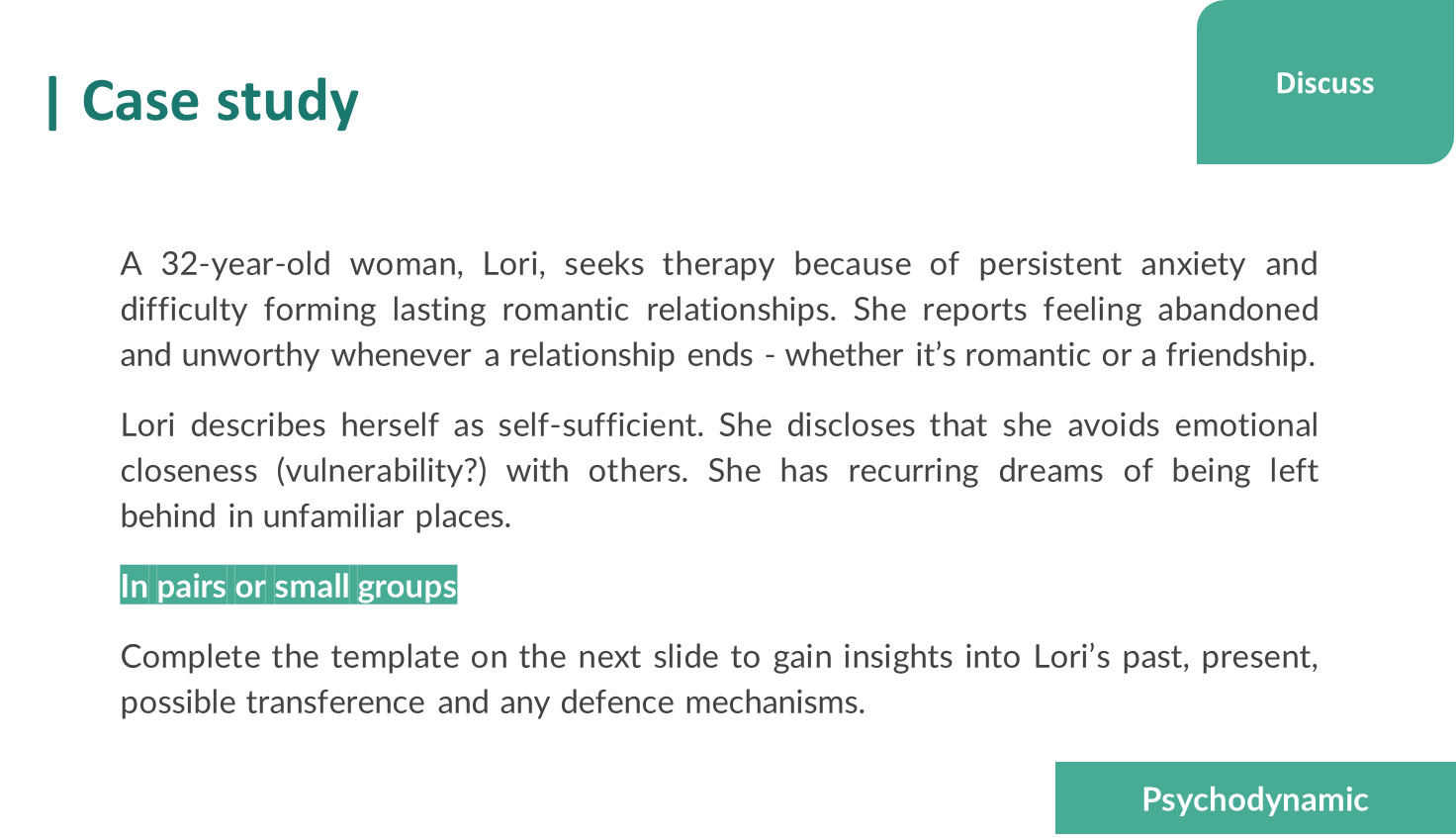
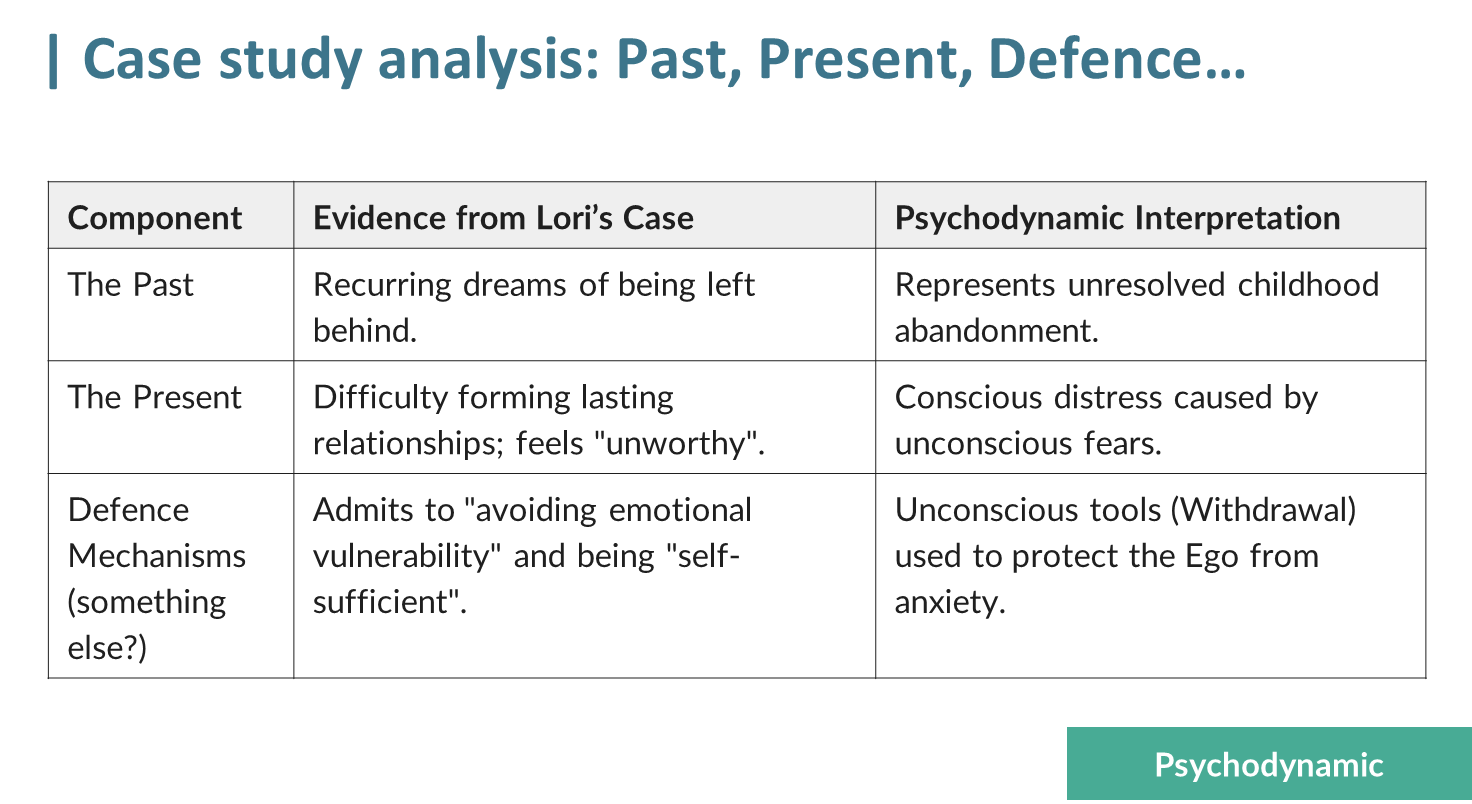
therapy identifies defence mechanisms that protect internal conflicts (like projection)
alternative, healthier strategies are developed
strengthen ego
therapy aims to strengthen the ego to better mediate the id and superego
build self-awareness, tolerate distress, & respond to difficulties
Psychodynamic model in action: key components
Therapy relies on a “therapeutic frame” (rules) to create safety:
consistency = same room, same time, every week
Boundaries = transparent fees, endings, contract, confidentiality
suspended attention (therapist tool)
actively listening for insights into the unconscious
verbal language, body language, content of language or dreams