2.2.5 Net Trade (X-M)
Exchange rate (XR)
The price of one currency expressed in terms of another currency
There is no such thing as a strong or weak currency
Only becomes stronger or weaker comparatively
When a currency has increased in value/ become stronger, it has appreciated or the external value has increased
A stronger pound is good for UK importers because the things you are buying abroad are (as far as the consumer is concerned) cheaper
A stronger pound is bad for UK exporters - makes it look expensive
Stronger does not always mean better
(X-M) = the value of exports and imports
= (Px x Qx) - (Pm x Qm)
Stronger pound
Px stays same, Qx goes down = decreases the value of exports
Pm decreases, Qm increase = depends on the elasticity of the product
S - stronger
P - pound
I - imports
C - cheaper
E - exports
E - expensiver
Stronger pound (X-M) = more negative number
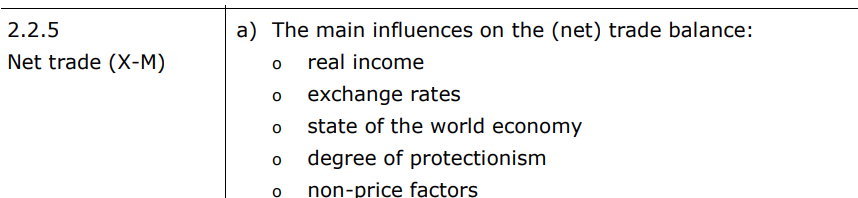
The main influences on the net trade balance:
Real income
If our incomes increase, we spend more on imports - X stays constant, M increases = smaller net trade = smaller AD
As incomes rise, AD increases
Exchange rates
A strong pound = cheaper imports = buy more = M increases
A strong pound = expensive exports = X decreases
(X-M) decreases
State of the world economy
If the rest of the world gets richer - AD should increase as a result
As more countries are able to buy Exports
Degree of protectionism
Protectionism: the barriers that one country puts on another (e.g. tariffs)
Higher tariffs should reduce imports because it will be more expensive to bring in goods
However, it can cause higher price levels which is inflation
If you are tariffing, the other countries will also put them in place = cancels out - therefore exports will decrease
Non-price factors
Trade is also affected by things like the quality of our products
e.g. British chicken > American chicken
Higher price can