DISASTER READINESS AND RISK REDUCTION
5 IMPORTANT WORDS
DISASTER - a serious disruption of the functioning of a community or a society at any scale due to hazardous events interacting with conditions of exposure, vulnerability, and capacity.
DISASTER RISK - the potential loss of life, injury, or destroyed or damaged assets which could occur to a system, society or a community in a specific period of time, determined probabilistically as a function of hazard, exposure, vulnerability and capacity.
VULNERABILITY - The conditions determined by physical, social, economic and environmental factors which increase the susceptibility of an individual or community to the impacts of hazards.
HAZARD - a dangerous phenomenon, substance, human activity or condition that can cause loss of life, injury or other health impacts, property damage, loss of livelihoods and services, social and economic disruption, or environmental degradation.
EXPOSURE - The people, property, or other elements present in hazard zones that are thereby subject to potential losses.
NATURE OF DISASTER
NATURAL DISASTER - tragedies caused by natural forces such as earthquakes, floods, typhoons, and volcanic eruptions, which occur without direct human intervention but significantly impact communities.
MANMADE DISASTER - catastrophes resulting from human activity, technological failures, or negligence, including industrial explosions, oil spills, chemical leaks, or structural collapses.
EFFECTS OF DISASTER
DISPLACED POPULATION - groups of people who are forced to leave their homes or habitual places of residence as a result of, or in order to avoid, the effects of a disaster.
HEALTH RISKS - the potential for disease outbreaks, injuries, and the deterioration of physical well-being caused by lack of clean water, poor sanitation, and disrupted medical services.
FOOD SCARCITY - the shortage or lack of access to adequate food supplies due to the destruction of crops, livestock, or distribution networks.
EMOTIONAL AFTERSHOCKS - the psychological trauma, stress, anxiety, and mental health challenges experienced by survivors following a catastrophic event.
RISK
is the possibility of something bad happening, comprising a level of uncertainty about the effects and implications of an activity, particularly negative and undesirable consequences.
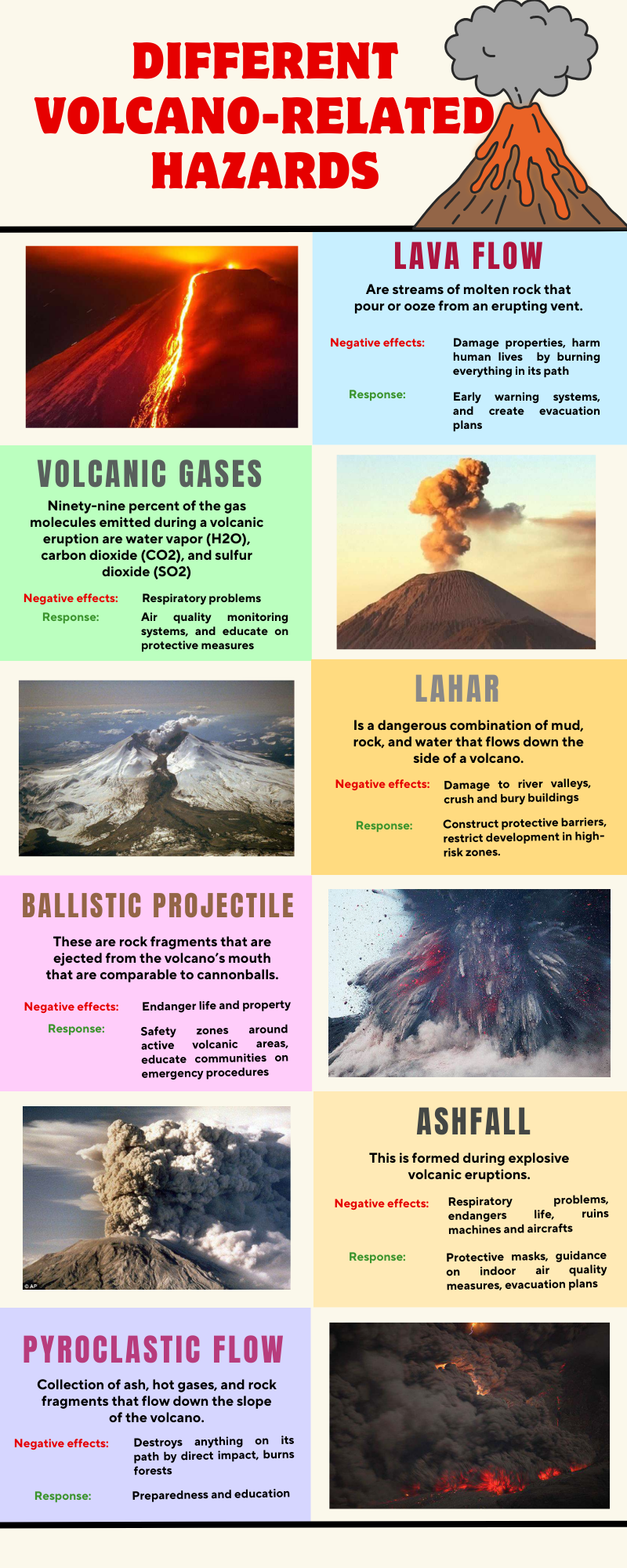
VOLCANO RELATED HAZARD
LAHAR
ASH FALL
PYROCLASTIC FLOW
LAVA FLOW
BALLISTIC PROJECTILES
VOLCANIC GASES
EARTHQUAKE and RECALL
EARTHQUAKE - the perceptible shaking of the surface of the earth, resulting from sudden release of energy in the Earth’s crust that creates seismic waves.
USGS - United States Geological Science
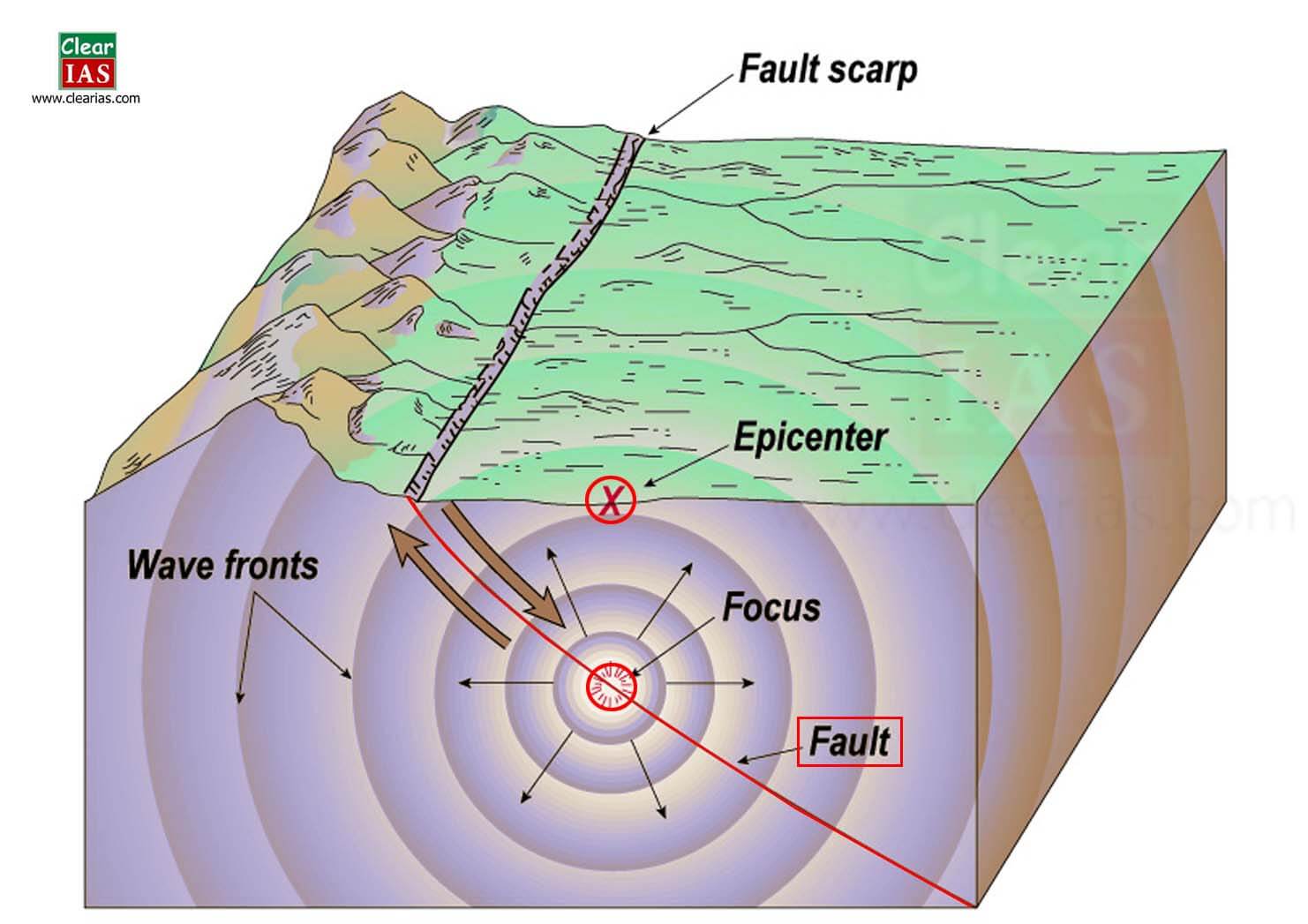
Fault / Fault plane - Where the ground split
Hypocenter / Focus - Where earthquake originates
Epicenter - where it occurs at the earth surface
Convergent Boundary - when one plate is force over another during an earthquake
Divergent Boundary - when plates drifted apart from each other
Transform Fault - when plates slip by each other
Intensity - earthquake’s property that indicates the effects and damage caused by (batay ito sa naramdaman ng mga tao at sa epekto sa kapaligiran at mga gawang infrustractura (Intensity I-X) )
Magnitude - a value that tells the reader the amount of seismic energy released by an earthquake.
EARTHQUAKE HAZARD
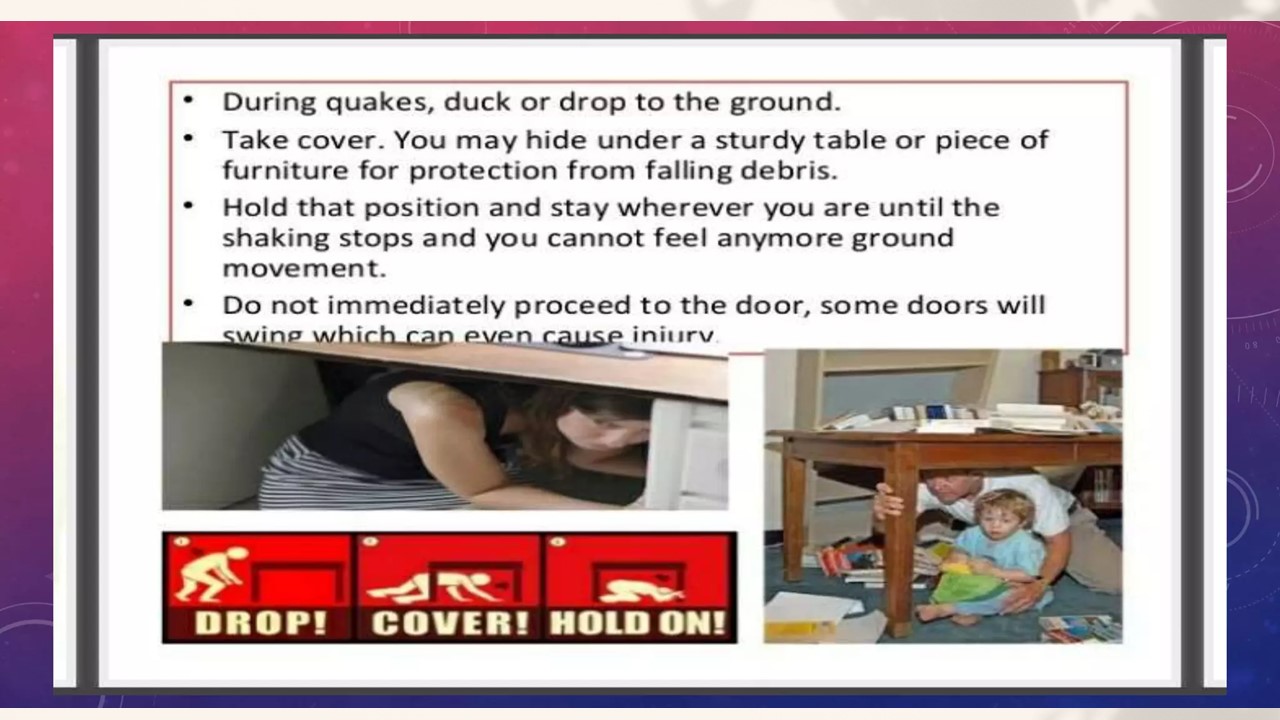
GROUND SHAKING or GROUND MOTION - the disruptive up and down and sideways motion experienced during an earthquake.
measured in the:
Velocity of ground motion
Acceleration of ground
Frequency content of the shaking
Duration
GROUND SURFACE RUPTURE and FISSURING - creation of new nor the renewed movements of old fractures, oftentimes with the two blocks on both sides moving in opposite directions.
LIQUEFACTION - occurs when water-soaked soil turns to a thick, soupy liquid during an earthquake.
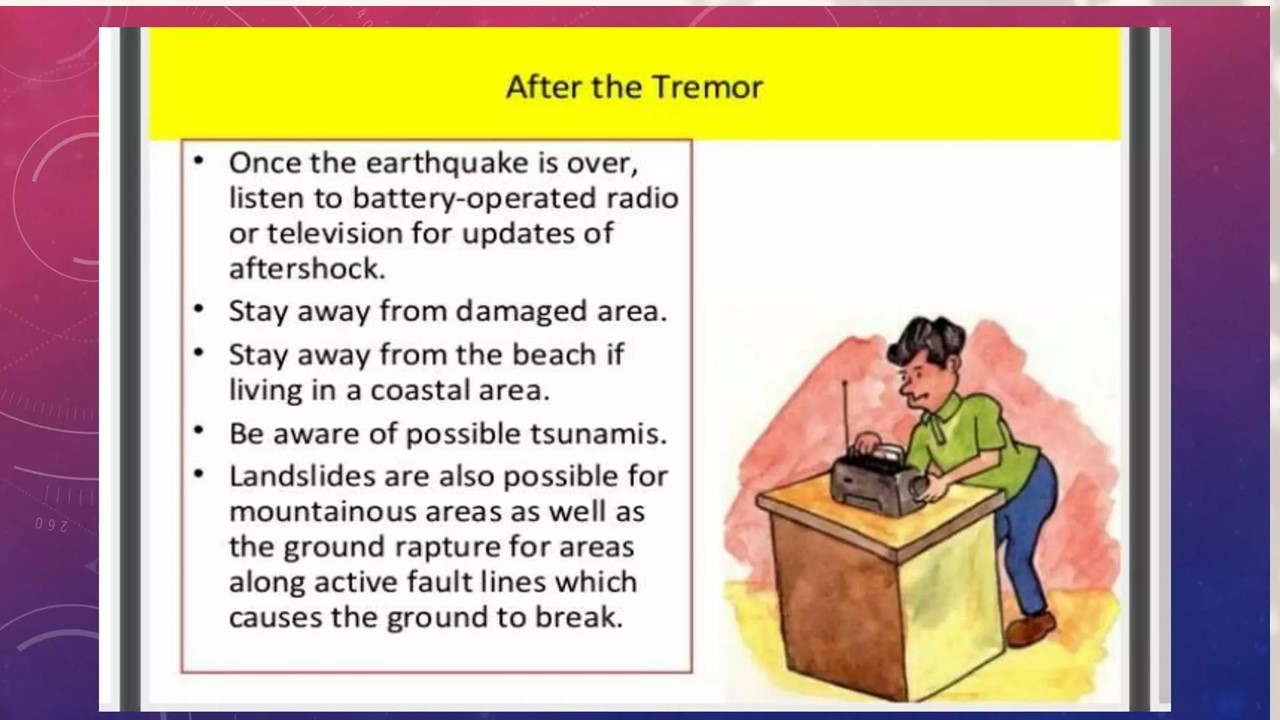
TSUNAMI - Underwater earthquakes or those occurring near coastlines can generate tsunamis, which are large ocean waves capable of causing widespread devastation along coastal areas.
LANDSLIDE induced by an EARTHQUAKE (SECONDARY)
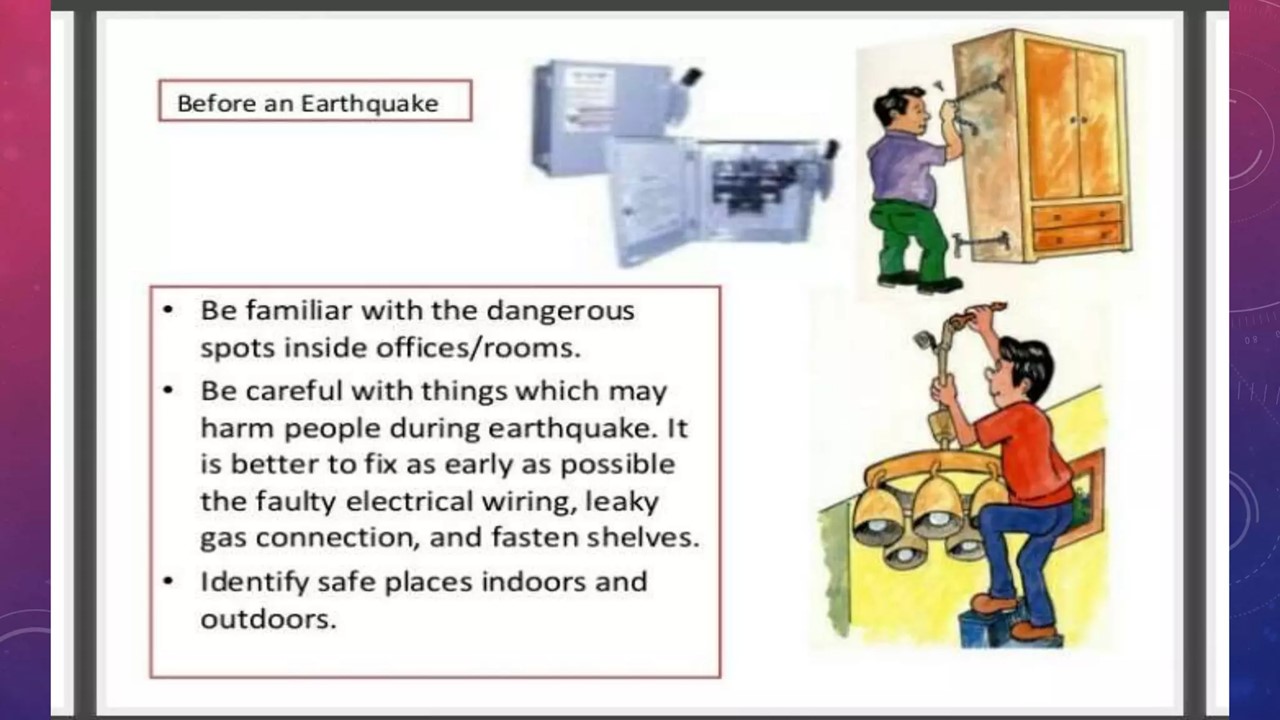
FIRES (SECONDARY) - earthquake can rupture gas lines, damage electrical system, and ignite fires in buildings and urban areas.
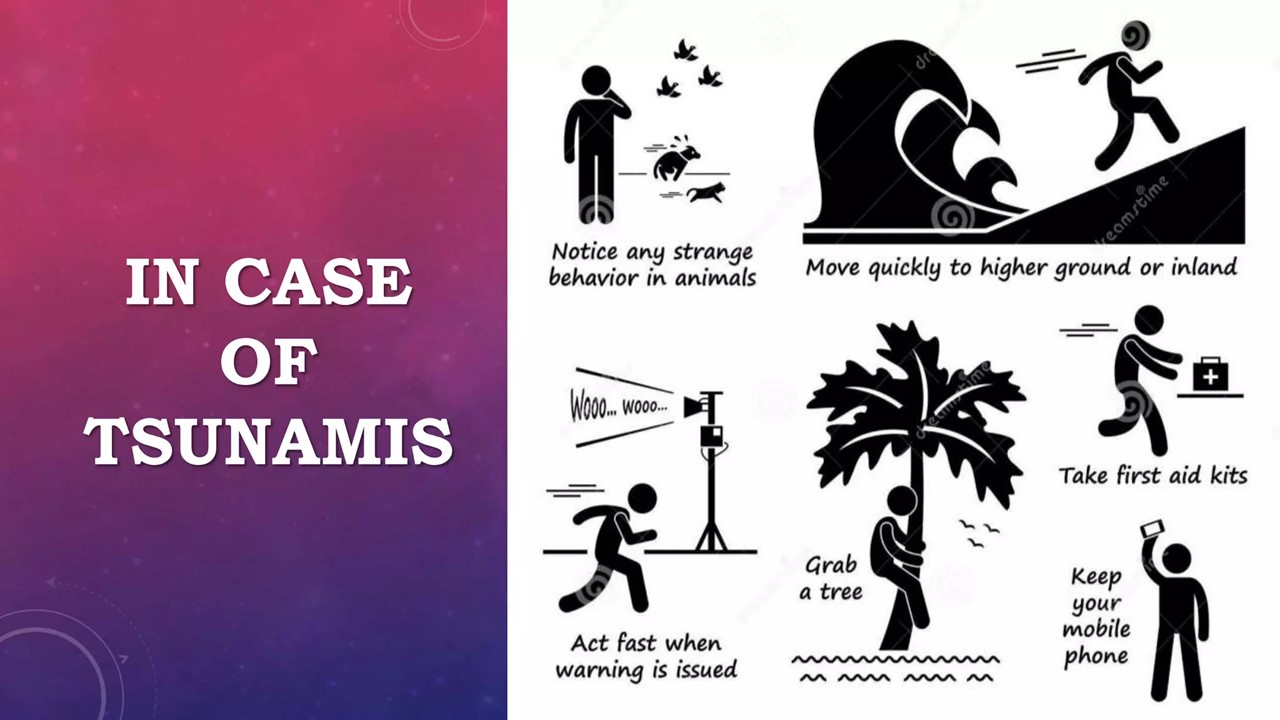
Tsunami (HARBOR WAVE or SEISMIC SEA WAVE)
Signs of an impending TSUNAMI
1. ANIMAL BEHAVIOR - Zoologist hypothesize that some animal species like elephants have the ability to sense subsonic Rayleigh waves from an earthquake or a tsunami.
2. DRAWBACL
3. SOUNDSIMILAR TO AN INCOMING TRAIN
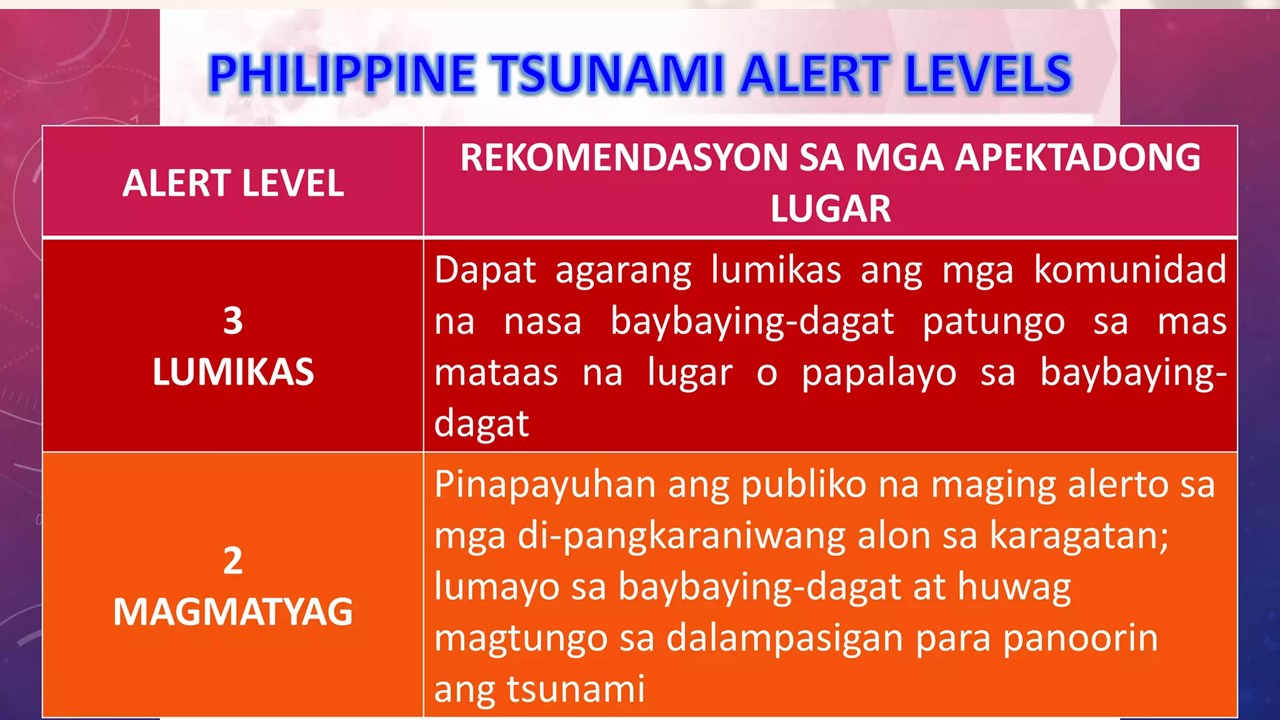
WHAT TO DO BEFORE, DURING, and AFTER EARTHQUAKE
VARIOUS ELEMENTS EXPOSED TO HAZARD
PHYSICAL HAZARD - is defined as a factor within the environment.
ex: earthquake, volcanic eruption, floods, typhoons, extreme hot or cold, and noiseCULTURAL HAZARD - also known as social hazard results from your location, socioeconomic status, occupation and behavioral choice.
ECONOMIC HAZARD - refers to major natural disaster which can and do have severe negative short-run economic impacts.
ENVIRONMENTAL HAZARD - refers to state of events which has the potential to threaten the surrounding natural evenvironment and adversely affect people’s health.