Week 7: Mars
LECTURE 3: History of Mars Observations
Mars
named after god of war because Mars is red
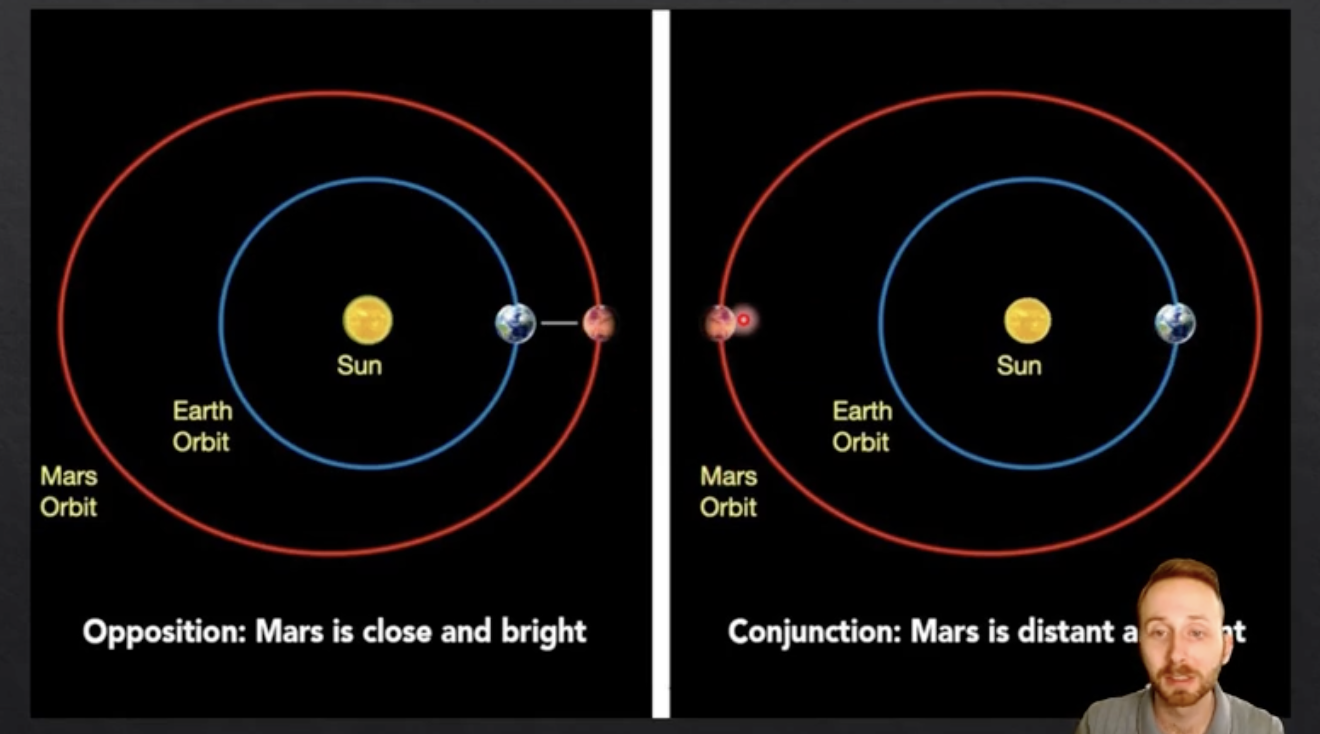
Opposition:
Opposition: when an object is on the opposite side of Earth from the sun
Mars can be observed all night when it is at opposition
it rises at sunset and sets at sunrise
mars is close and bright at opposition
Mercury and Venus cannot be in opposition because it is closer to the sun than earth and has a smaller orbit than Earth

Mars’s Surface Features (as seen back in the day)
only major planet with observable (from earth) surface features
changing polar ice caps
light and dark areas that change with “seasons”
1659: Christiaan Huygens
Huygens observed the “rotating Triangle”, indicating Mars may be rotating
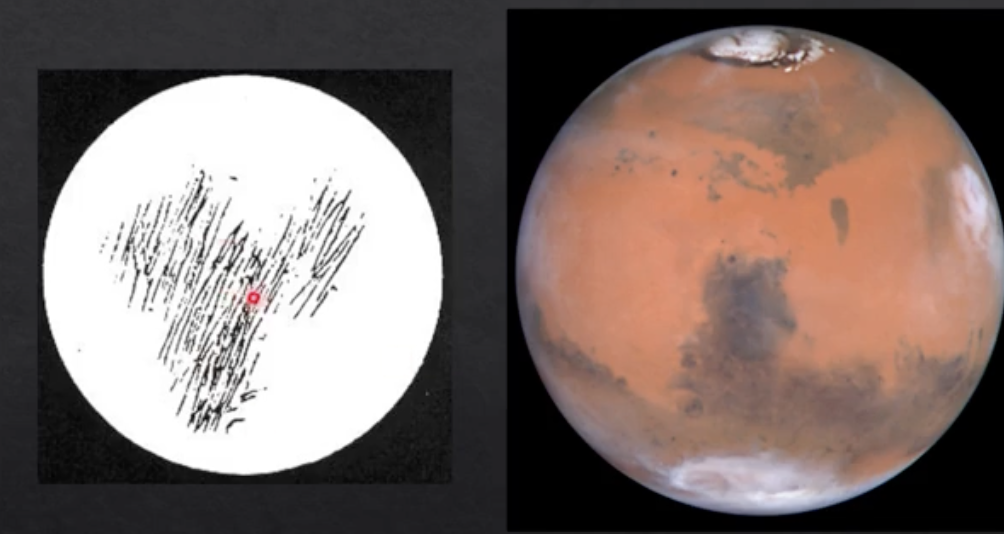
1666: Giovanni Cassini
Cassini determined the rotation period of Mars to be 24 hours and 37 minutes
1770: William Herschel
Herschel determined that Mars had an axial tilt of 25 degrees
Mars has Seasons!
Mars is very similar to Earth
1877: Giovanni Schiaparelli
Schiaparelli mapped the surface of Mars
“Canali” = Italian for channels
channels are natural waterways
was mistranslated to English as “canals”
“canals” = creature-made waterways = creature-made waterways

1894: Percival Lowell
Lowell because obsessed with seeing “canals” on Mars
build his Mars Hill Observatory
charted 160 canals that he believed channeled water from the Mars’s poles to the cities (on the equator)
but because the lens on his telescope, it is thought he was seeing blood vessels in his eyes instead of actual channels on Mars

Authors taking advantage of Idea of Mars taking over
The War of Worlds by H.G. Wells (1898)
book about Mars taking attacking Earth because they’ve ran out of water
Mars in Science Fiction
Edgar Rice Burroughs by John Carter of Mars
Fake news broadcast causing panic
LECTURE 4: Mars Features and Properties
Properties of Mars
Mars is named: after Roman god of war
rotation rate: 24 hours and 37 minutes
Mars Diameter: 4,200 miles or 0.5 Earth diameters or 0.5 🜨 (Earth) diameters
Mass: 1/10th 🜨(earth) Mass
Surface gravity: 0.38 gravity
axial tilt: 35 degrees
surface temperature:
minimum: -220 degrees F
maximum: 70 degrees F
average: -80 degrees F
indicates that Mars atmosphere is thinner than Earths
Mars’s Atmosphere
Mars’s atmosphere is thin
appears sort of reddish-pink from suspended dust
Mars’s atmosphere contains:
95% carbon dioxide
1% of Earth’s atmospheric pressure
Daily surface winds: 10-20 mph
dust storms with wind speeds exceeding 300 mph
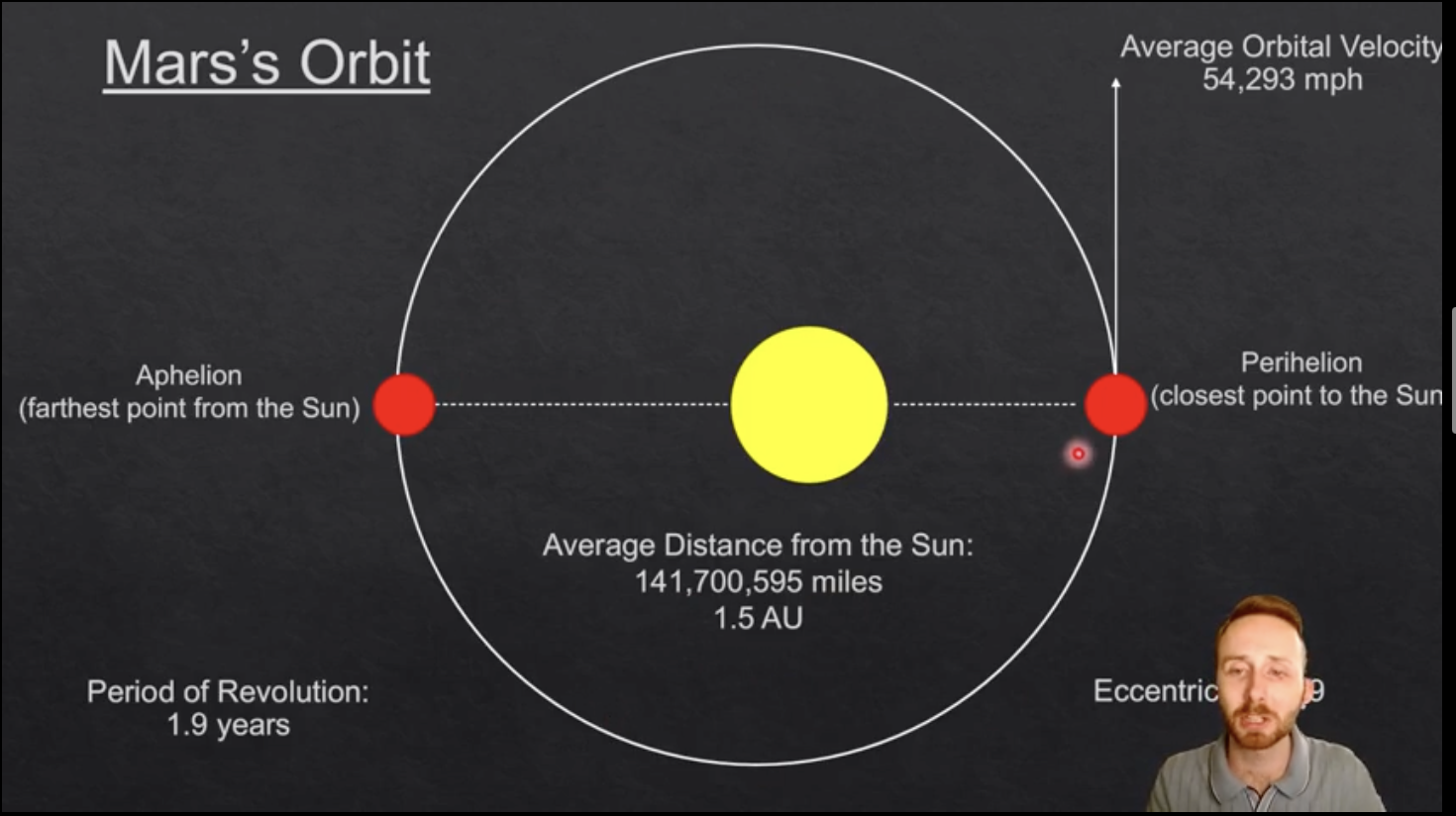
Mars’ orbit
average orbital velocity is slower than Earth’s orbit
due to Mars being further from the sun than Earth
average distance from sun = 141,700,595 miles = 1.5 AU
period of revolution: 1.9 years
Aphelion: farthest point from sun
perihelion: closest point to the sun
Surface of Mars
Largest volcano in the Solar System: Olympus Mons (Mount Olympus)
Largest volcano in the Solar System is located on Mars
no active vulcanism or plate movement
Largest Canyon in the solar system: Valles Marineris (Valley of the Mariner)
Largest Canyon in the Solar System is located on Mars
Largest (confirmed) impact basin in the solar system: Hellas Basin
Largest impact basin in the Solar System is located on Mars
Olympus Mons
Largest volcano in the Solar System: Olympus Mons (Mount Olympus)
Largest volcano in the Solar System is located on Mars
no active vulcanism or plate movement
300 mile diameter
15 miles high (2.5x larger than Mount Everest)
if standing on top of Olympus Mons = in space
if standing on top, human eye can only see Olympus Mons
Caldera: 60 miles across
largest volcano in the Solar System
same size as the state of Arizona
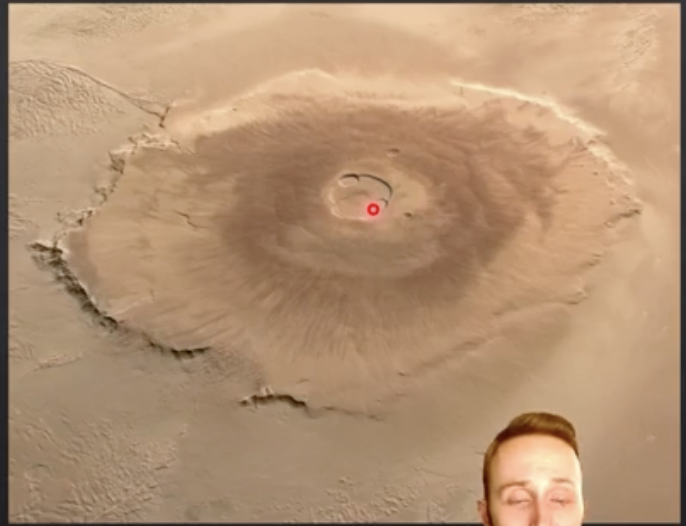
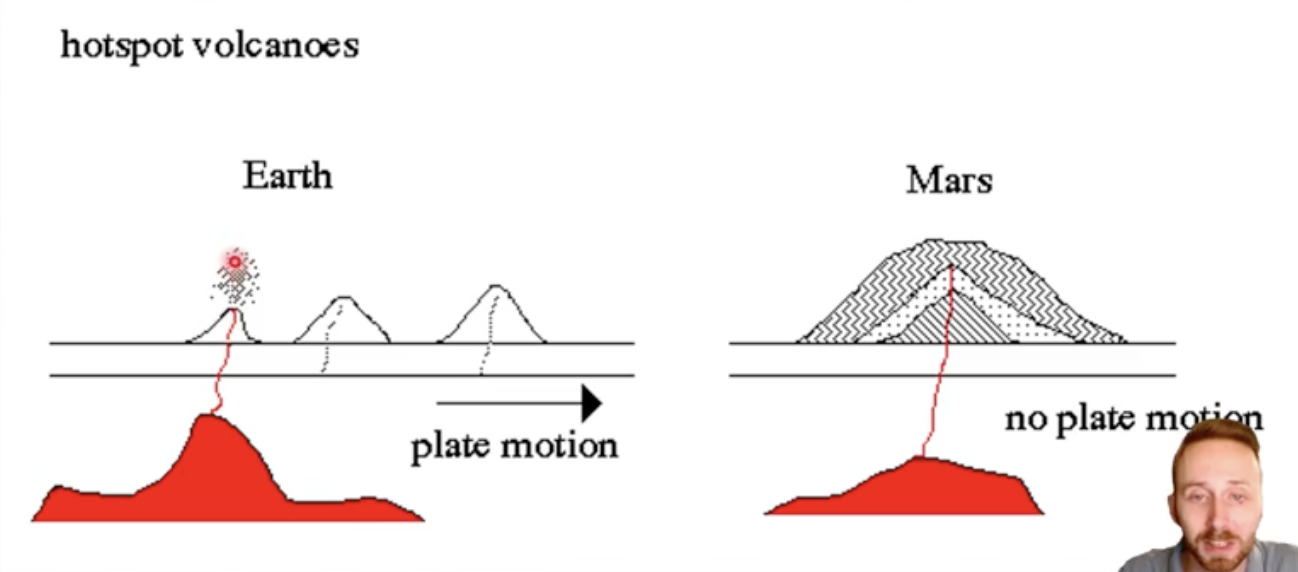
Why can Martian Volcanos get so big?
Mars does not have plate tectonic moving
results in volcanos accumulating vast amounts of magma over time, allowing them to grow larger without the displacement typical on Earth.
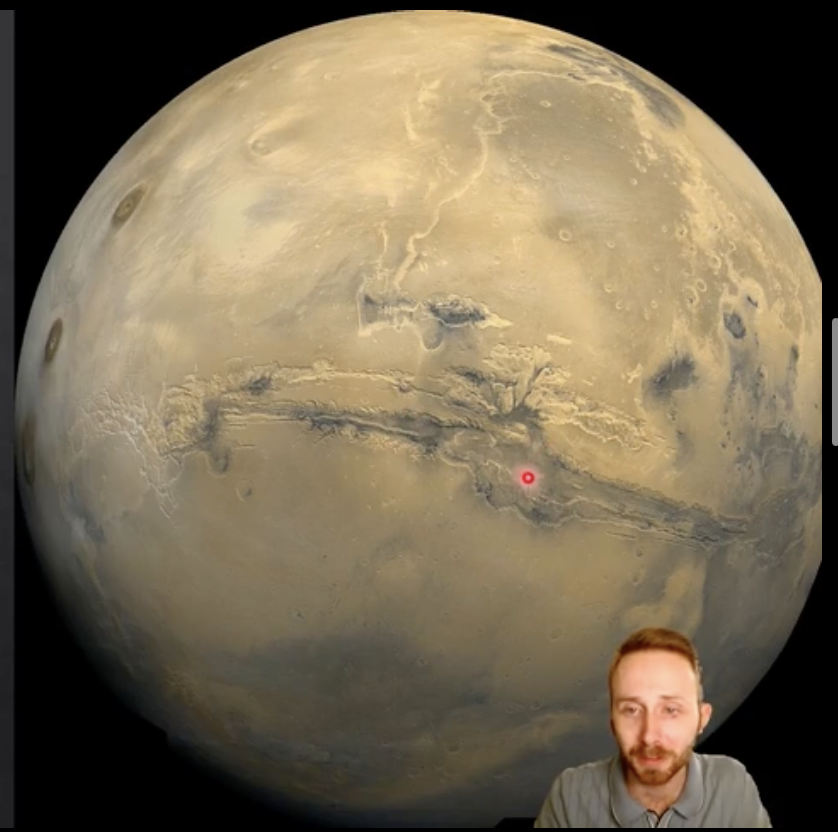
Valles Marineris
Largest Canyon in the solar system: Valles Marineris (Valley of the Mariner)
Largest Canyon in the Solar System is located on Mars
3,000 miles long
4 miles deep
60 miles across
total length is the size of the whole united states

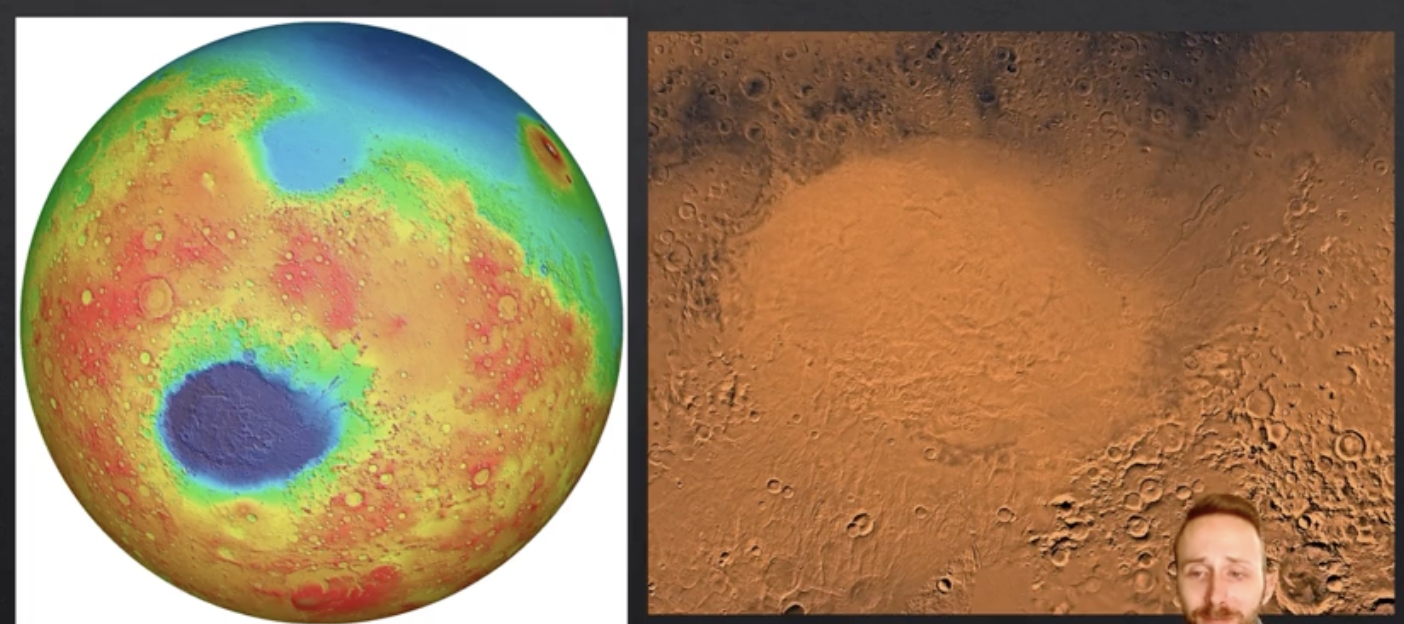
Hellas Basin
Largest (confirmed) impact basin in the solar system: Hellas Basin
Largest impact basin in the Solar System is located on Mars
Martian Soil
appears reddish-pink
54% Silicon Oxide
19% iron oxide (rust)
Not blood!

Evidence of Water Flow
Mars had a thick atmosphere and liquid water for the first 0.5 billion years
last rain storm would have been 4 billion years ago
Ancient Outflow Channels

Ancient Streams

Ancient Martian Shoreline

Salty Water Flows
liquid water boils on surface of mars because pressure is so low
salty water melts, during spring melts, and flows down mountainsides
salt in water raises boiling point

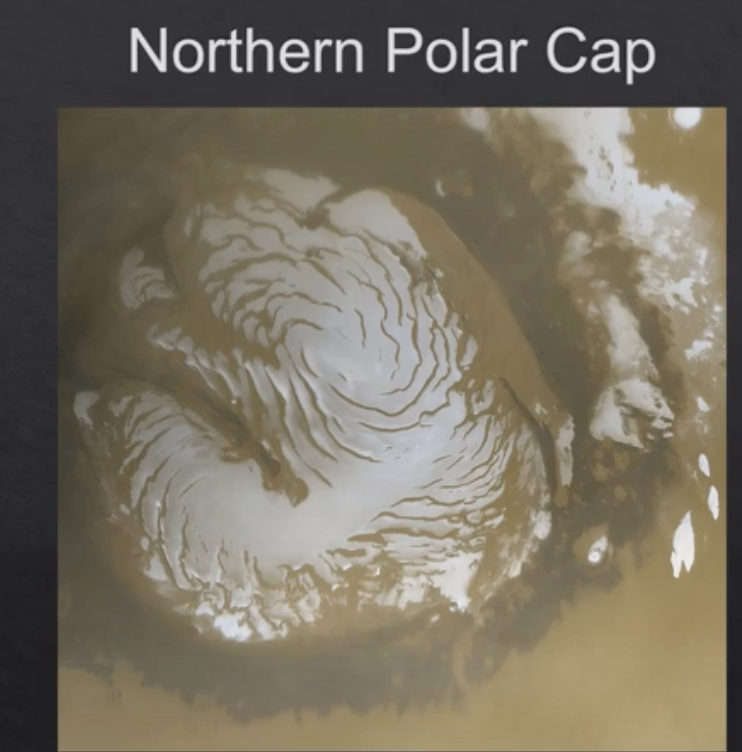
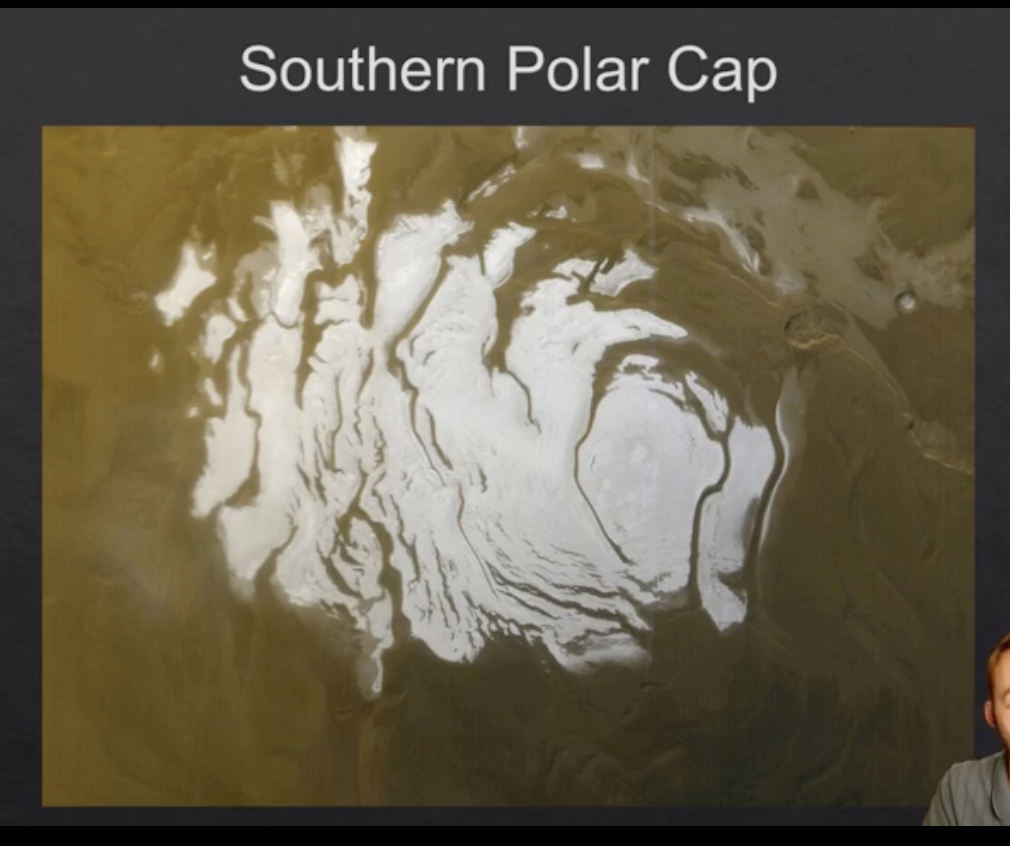
Polar Caps
Permanent North and South polar ice caps grow and shrink with the seasons
contains water and some carbon dioxide

unlike Earth, perihelion/aphelion significantly influences the seasons
at Northern Polar cap, always has water ice
at Southern Polar cap, has water and CO2 ice
Mars’s Satellites
Mars has 2 natural Satellites
Mercury has 0 Satellites
Venus has 0 Satellites
Earth has 1 Satellite
Mars has 2 Satellites
only other planet that has natural satellites
small

LECTURE 5: Missions to Mars
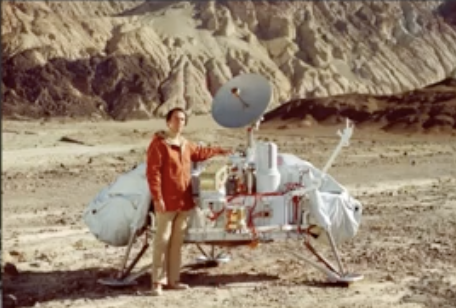
Viking 1 and Viking 2
Viking 1 and Viking 2 are the first spacecrafts to land on mars
Viking 1 = 1976

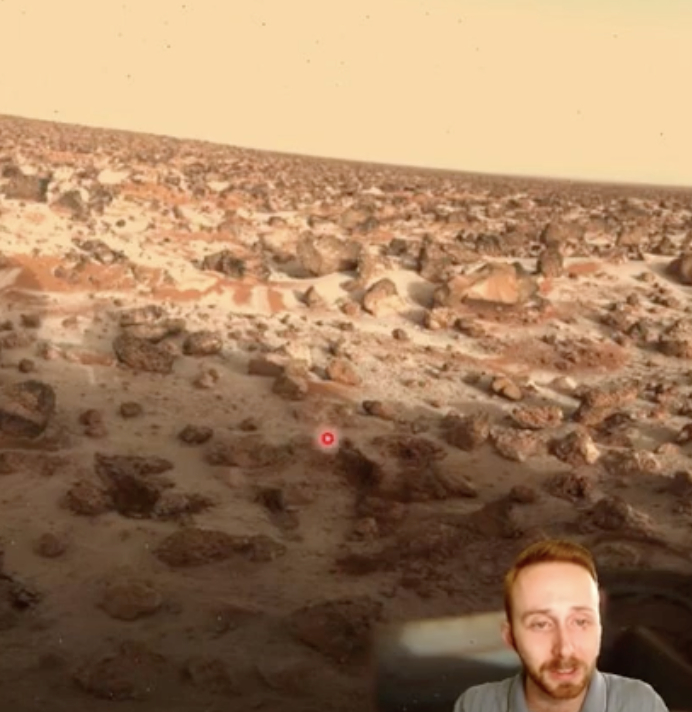
Snow on Mars, but its CO2
Mars Pathfinder (1997)
Pathfinder’s Rover: Sojourner
Sojourner was the first rover on Mars

Two More Rovers: Spirit and Opportunity
Opportunity was Mars’s longest lasting rover
lasted for 14 years

Another Rover: Curiosity
Curiosity is the oldest rover that is operational
landed in 2012 and is still operational (16 years)
Curiosity found more evidence of ancient rivers

Sky Crane
sky crane was a technology used during the landing of the Curiosity rover, designed to gently lower the rover onto the Martian surface.

Perseverance
perseverance is the most recent, functional rover on Mars
launched in 2020
landed in 2021
Ingenuity: Perseverance’s little helicopter buddy