Reserve Market: AP Macro Exam Prep
Overview of Macroeconomics - Unit 4: Limited Ample Reserves and the Reserve Market
Analogy: Money as Blood in the Economy
Importance of Money Supply
Money is likened to the lifeblood of the economy; necessary for health and function.
Historical context: During the Great Depression, a 30% decrease in the money supply exacerbated economic struggles.
Limited Reserves
If banks hold little excess reserves, new money flows into the economy quickly.
Results in lower interest rates due to increased lending.
Note: A noticeable effect on the economy – akin to feeling symptoms of anemia.
Ample Reserves
Ample reserves in banks make new money additions or removals less impactful.
Changes in the money supply do not significantly alter lending behavior or interest rates.
Comparable to having plenty of blood in the body; changes go unnoticed.
Traditional Monetary Policy Effectiveness
Policies Depending on Reserve Levels
The impact of changing reserve ratio, discount rate, or conducting open market operations hinges on existing reserve levels.
Limited reserves lead to noticeable economic effects from these policies.
Ample reserves render these traditional methods ineffective.
Alternative Measures
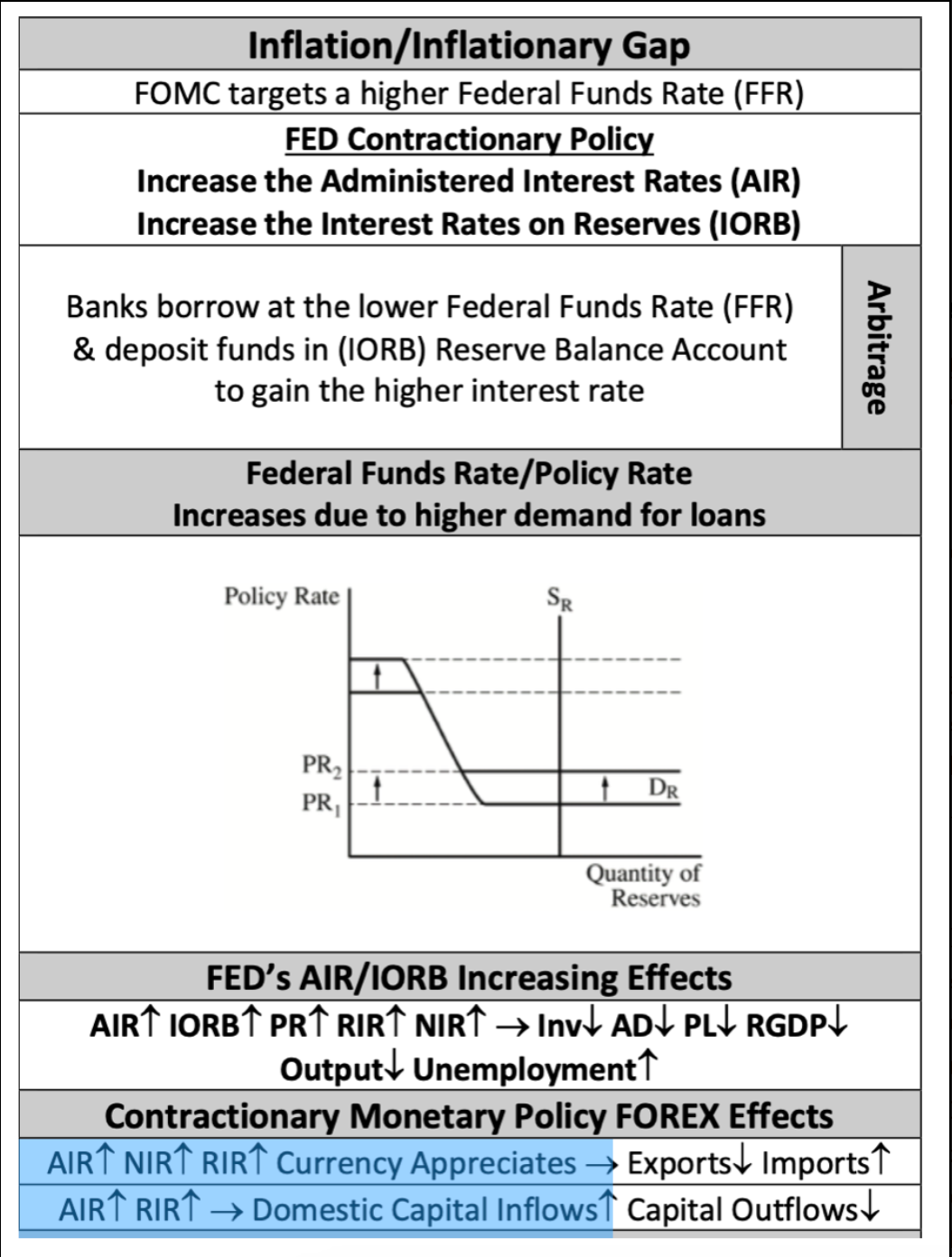
The Central Bank may need to adjust the interest on reserves to influence the economy when ample reserves are present.
Graphical Representation
Labeling the Graph
Y-axis: Policy Rate
X-axis: Quantity of Reserves
Graph Details
Demand Curve (A1): Horizontal at first, then downward sloping, then horizontal again indicating limited to ample reserves.
Supply of Reserves (A2): Vertical supply curve reflects the limited reserve portion.
Policy Rate Dynamics (B):
Increased money supply lowers policy rates in limited reserves.
Beyond a point, changes in reserves do not affect policy rates.
Increasing Interest Rates in Ample Reserves
Central Bank actions: Increase interest on reserves to exert upward pressure on interest rates.