Climate change
Recap from Feb 4th: Trade-offs
Resource acquisition trade-offs
once resource instead of another
seed size vs. dispersal
getting a degree vs getting a job
CAM plants (open stomata at night): only CO2 at night but hang onto its water = slow growth rate overall VS. C3 plants grow quickly but need more water to work
Resources allocation trade-offs
one purpose instead of another
fish growing (to reproduce later) instead of reproducing early
Feb 6th: Climate change
1) CO2 and other gases create a greenhouse effect that captures heat
Greenhouse effect: energy comes in from the sun, hits the earth’s surface, re-radiates back into space, and some proportion is absorbed by the atmosphere and radiates back onto the earth
Ice age: periods that were colder
Earth’s energy budget:
ALl energy comes from the sun: solar radiation
some are immediately reflected back into atmposhere
majority (70%) is absorbed by land, ocean, within the atmosphere(clouds) ===> heats up the earth’s surface
the absorbed energy is re-radiated back out
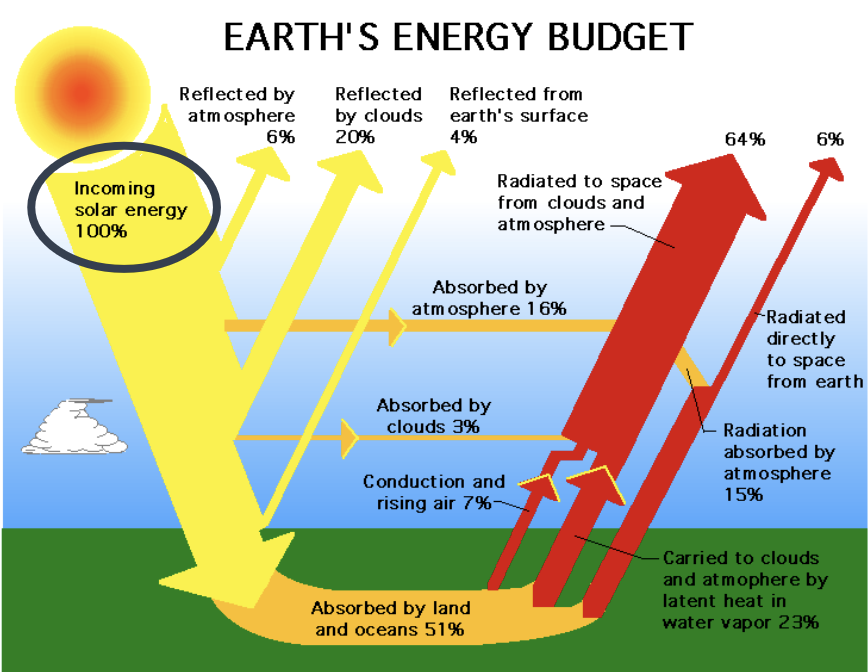
> Changes in the type of surfaces: energy absorbed by water vs. energy absorbed by land
feedback loops: glaciers melting that can have a big impact
Milankovitch cycles: natural changes in sun’s intensity that affect the earth’s climate; earth’s orbit responsible for ice ages; LONG time spans
earth tilt(T)
shape of orbit around the sun (E)
earth’s wobble on its orbit (P)
QUICK natural changes:
volcanic activity affecting the reflectivity of the earth’s atmosphere
the ash and other chemicals increase the radiation reflected bc the land and water can’t absorb it (they block it from coming to the land)
changes the amount of radiation that is immediately reflected back into space
can lead to: crop failures, livestock death
QUICK human-caused changes
a) changing the amount of energy reflected (earth surfaces)
b) changing the amount absorbed by the earth’s atmosphere
increasing the amount of greenhouse gases (more is absorbed by the earth’s atmosphere)
CO2
N2O
CH4
fluorinated compounds
water vapor
Global warming potential = warming effect and residence time (set relative to COs); how effective a gas is at absorbing the radiation and how long it sticks around in the atmosphere
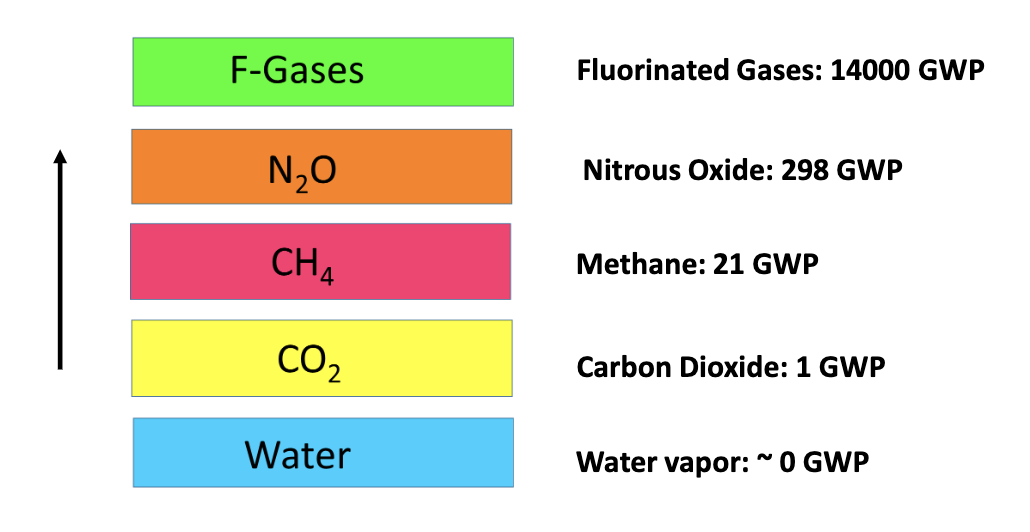
> water vapor is low bc of low residence time and absorbance of radiation
Relative order
Climate impact = GWP * quantity of the gas
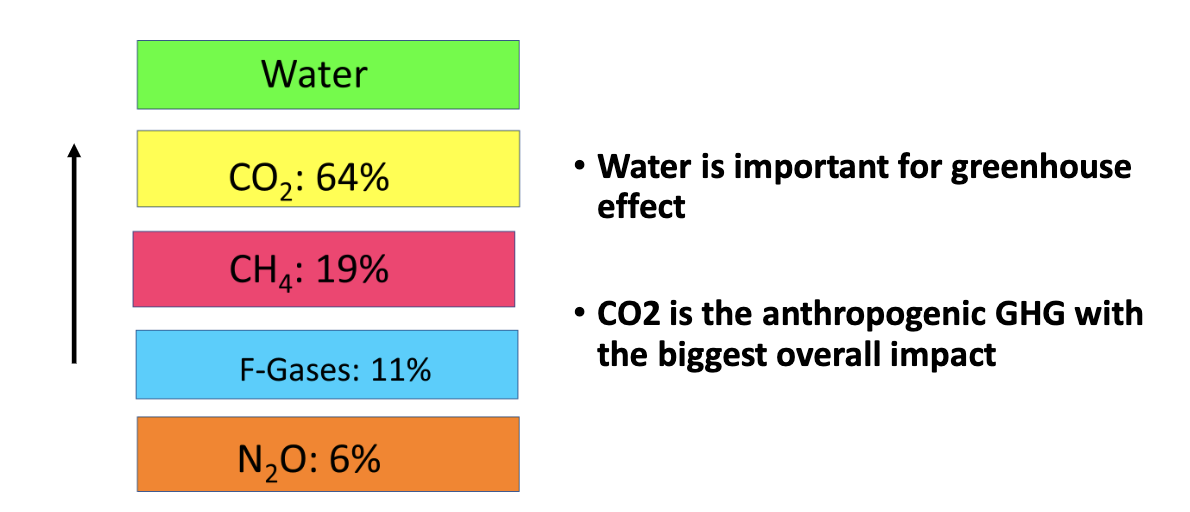
anthropogenic: man-made
CO2 is the highest man-made
H2O is the naturally occurring (not directly emitted)
Negative feedback: a system in which a change promotes other changes that bring it back to the original state
toward equilibrium
shivering/sweating
Positive feedback: A change promotes further change toward an extreme
labor and contractions
Water Vapor Feedback: positive feedback
1) CO2 ++
2) global temp ++
3) increases evaporation = increased water vapor === more ++ in temp
Other + feebacks:
> Warm air holds more water vapor
cold air can condense it into a liquid
> Warm water holds less dissolved CO2 = release more CO2 (+t)
> Decreasing reflectivity of earth’s surface
Albedo: the reflectivity of a surface
color of surfaces: dark surfaces absorb more light (infrared radiation: heat)
2) Human CO2 emissions alter the global climate and future projections
We can know how past climate changes occurred through:
gas bubbles trapped in ice cores: drill down into ice to get cores
snowflakes trapping air: sample of the atmosphere
chemistry of fish otoliths
count backward (bone was formed) and analyze the oxygen atoms in a ring and distinguish based on oxygen isotopes (some are more likely to form as rain vs snow)
growth rates in tree rings
count backward to see how much they grew
> Climate and Carbon are highly correlate
> Current CO2 is higher and increasing more rapidly than in the past
fossil fuel consumption increased exponentially in the last years
Make predictions based on a model, then put in an estimate (projections in a range)
Emission scenarios: different choices humans can make
business as usual
immediate reductions
The International Panel on Climate Change (IPCC) made their first report in 1990
> Predictions on sea level rise based on different emission scenarios
happens gradually cause it takes time for ice to melt
Short-term: Projections on temperature
Recent past: drought data; total % of area in the US