lymphatic system
Lymphatic vessels
They are similar to veins, their role is to transport lymph through its circulatory pathway. They have valves to keep lymph flowing in the right direction and prevent backflow. Once tissue fluid enters a lymphatic capillary it becomes lymph and is then collected into a larger lymphatic vessel.
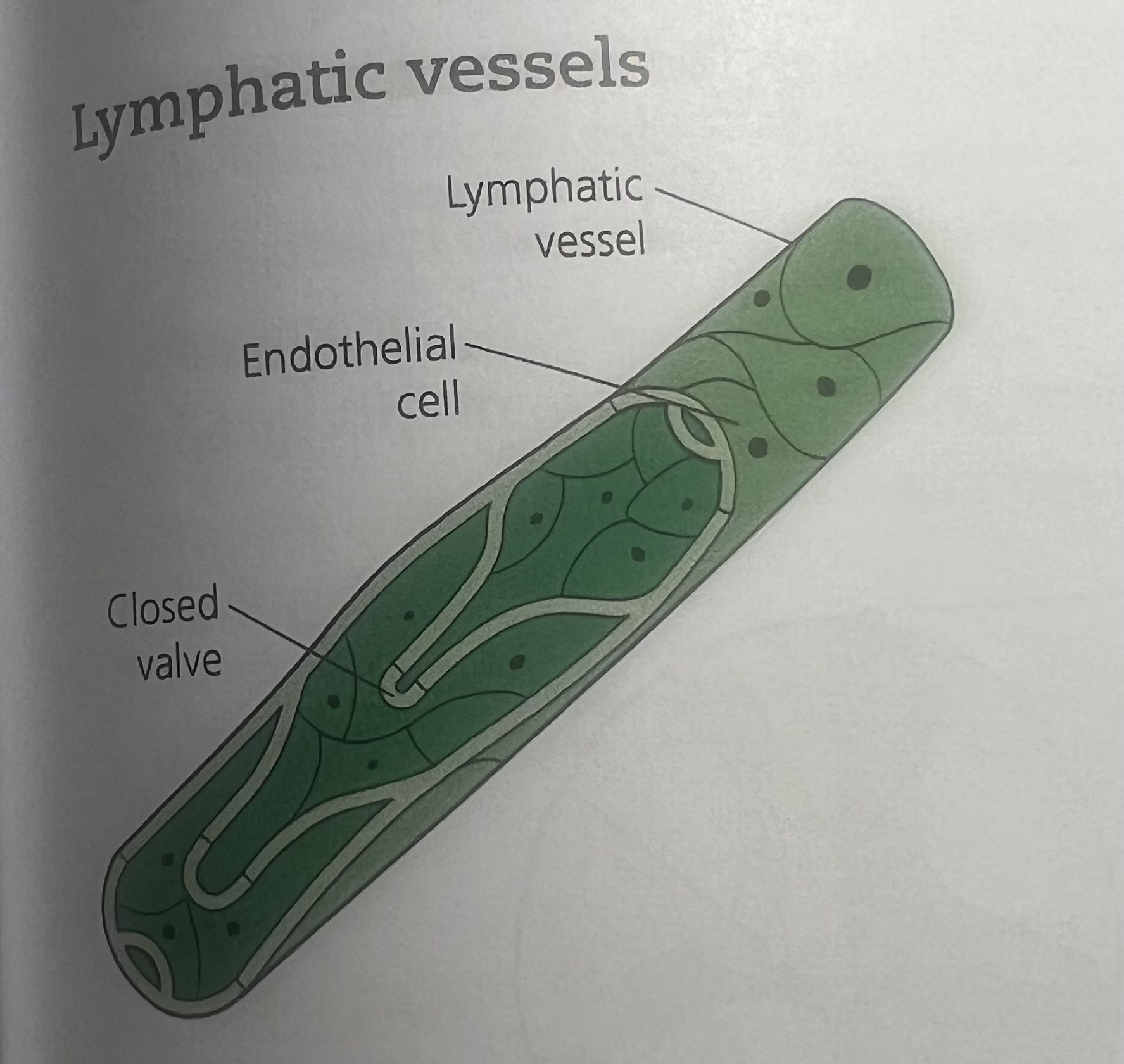
They are found in:
mammary plexus - lymph vessel around the breasts
palmar plexus - lymphatic vessels in the palm of the hand
plantar plexus - lymph vessel in the sole of the foot
Lymphatic nodes
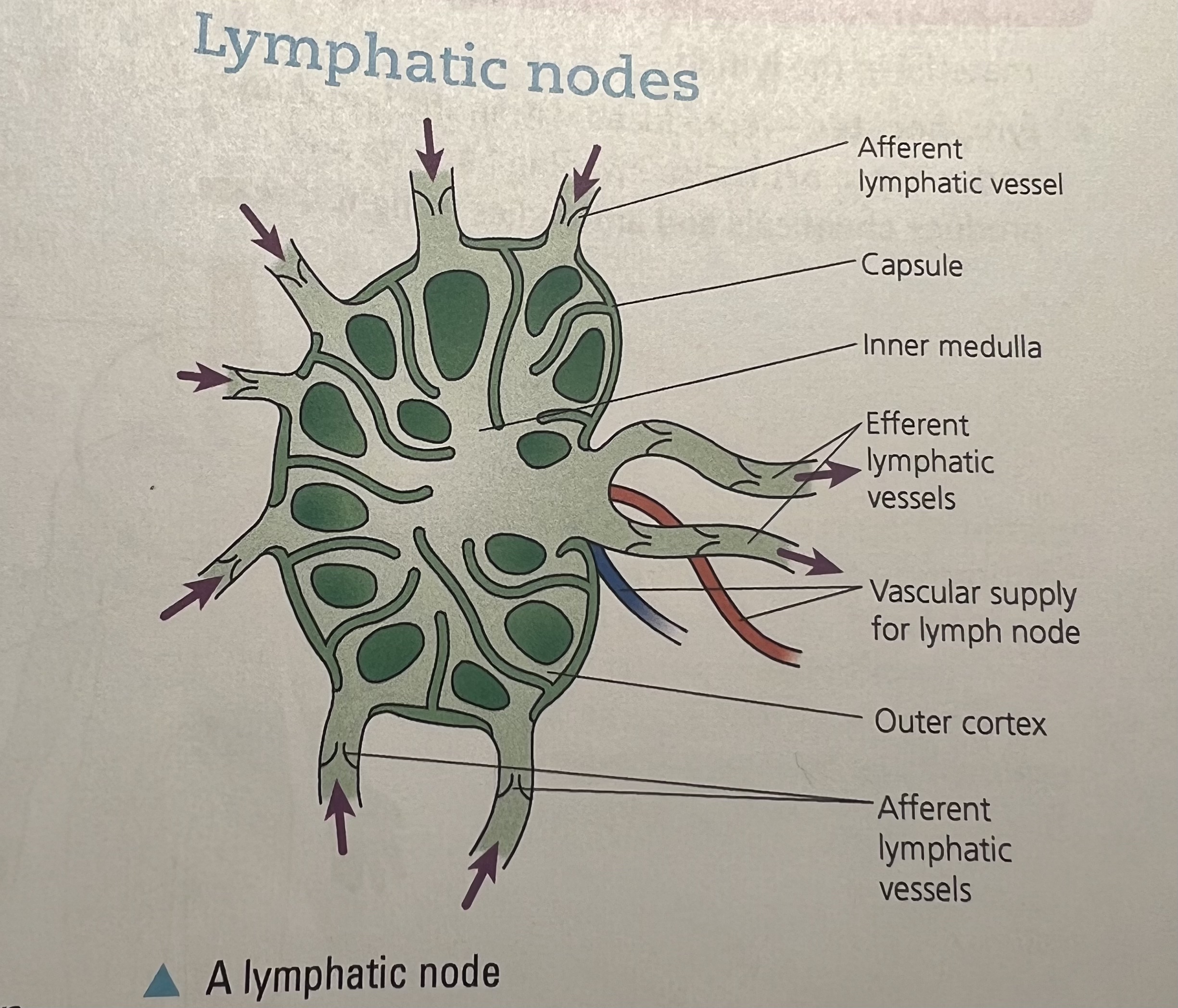
This is an oval shaped structure covered by a capsule of connective tissue. Consists of lymphatic tissue and is divided by an inner and outer medulla.
when lymph enters a node, it comes into contact with 2 leucocytes:
macrophages - engulf and destroy dead cells and foreign material in lymph.
lymphocytes - neutralise invading bacteria and produce chemicals and antibodies to fight disease.
once its filtered, the lymph leaves the nodes by one or two efferent vessels.
Lymphatic ducts
The thoracic duct is the main collecting duct of the lymphatic system, its the largest lymphatic vessel. The right lymphatic duct is short in length.
Spleen
This is the largest lymphatic organ, it is largely a mass of lymphatic tissue and contains lymph nodes.