Unit 7 Study Guide: The Latin American Boom and Modernist Narratives
Introduction to El Boom Latinoamericano
El Boom was not just a literary movement, but a publishing phenomenon in the 1960s and 1970s that catapulted Latin American writers onto the world stage. Influenced by political turmoil (like the Cuban Revolution) and European modernism (Joyce, Faulkner), these authors experimented with narrative structure, time, and voice to create a unique Latin American identity.
Key Characteristics of the Boom
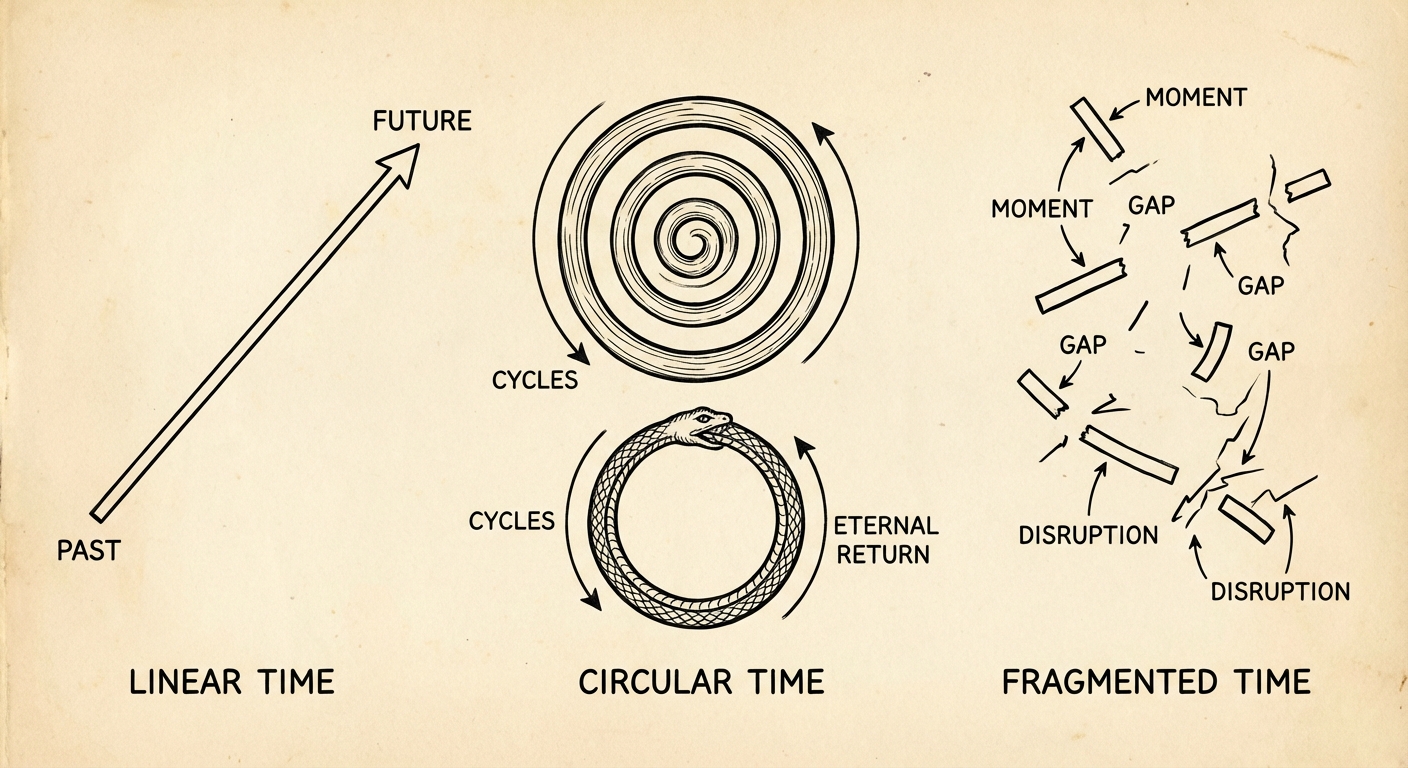
- Narrative Experimentation: Breaking linear time (tiempo no lineal), stream of consciousness, and shifting points of view.
- The Fantastic vs. Magical Realism: While related, these are distinct styles. The Fantastic creates doubt and unease (Is this happening?), while Magical Realism presents the impossible as mundane and normal.
- Social Critique: Narratives often challenge the social status quo, covering topics like poverty, indigenous rights, and political corruption.
Jorge Luis Borges: The Precursor and The Fantastic
Although Borges belongs structurally to the generation before the Boom, he is the intellectual godfather of the movement. His work is characterized by metaphysical themes: time, infinity, mirrors, and identity.
Required Text: El Sur
Plot Summary: Juan Dahlmann, a librarian who romanticizes his gaucho lineage, hits his head on a window frame, gets septicemia, and goes to a sanitarium. He eventually travels south to his ranch, enters a store, and accepts a knife fight he cannot win.
The Crucial Ambiguity: The reader never knows if Dahlmann actually travels south or if he dies in the sanitarium, merely dreaming of a romantic death on the pampa.
Key Concepts:
- Symmetry and Doubles: Dahlmann is split between his European intellectual side (Johannes Dahlmann) and his Argentine military side (Francisco Flores).
- Metaliterature: The story examines the act of reading and the desire for a "literary" death.
Required Text: Borges y yo
This short essay explores the duality of being (el desdoblamiento).
- The "Private" I: The narrator who likes coffee, maps, and hourglasses.
- The "Public" Borges: The famous author who turns the private life into literature.
- Famous Closing: "I do not know which of us has written this page."
Julio Cortázar: The Surreal and The Night Face Up
Cortázar is a master of the Fantastic. He disrupts everyday reality with sudden, inexplicable shifts in time or logic.
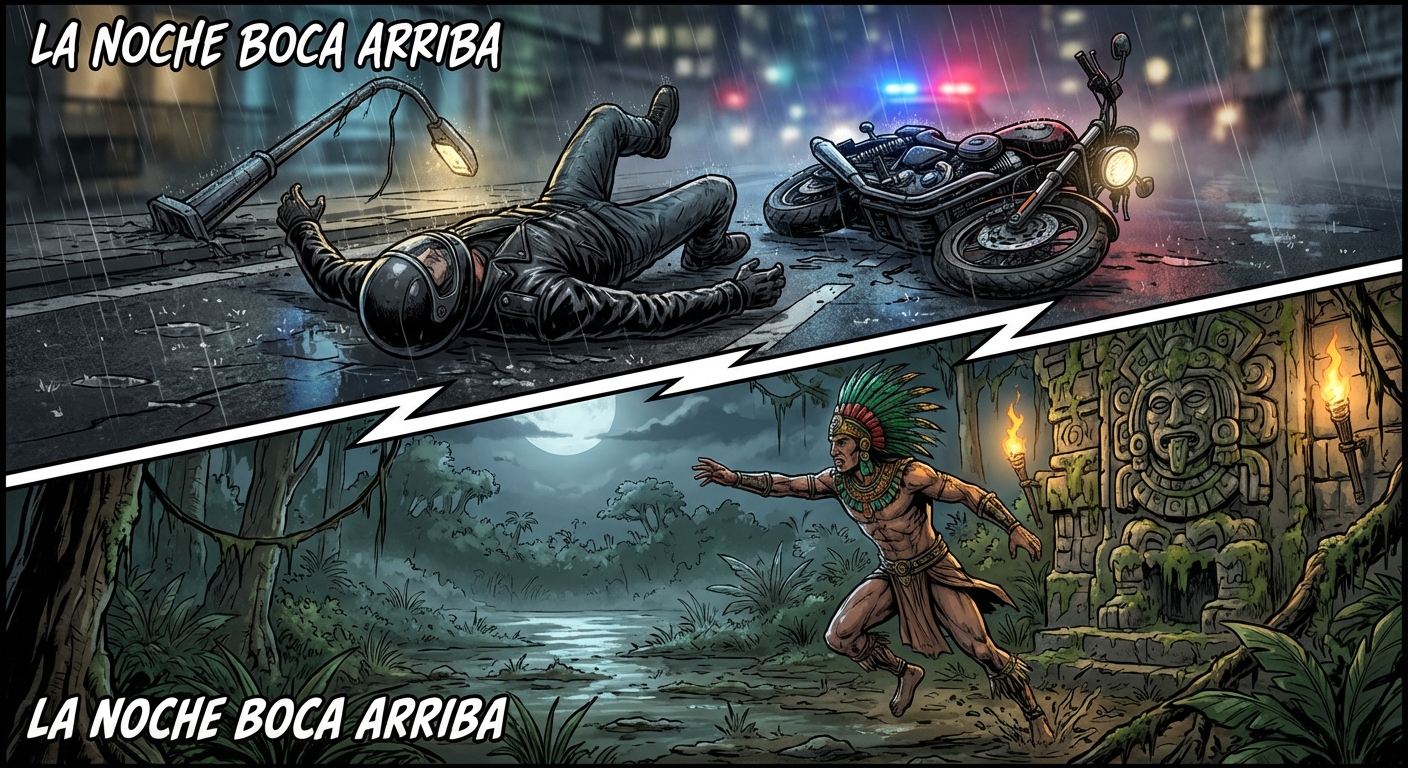
Required Text: La noche boca arriba
Plot Summary: A man crashes his motorcycle in a modern city and is taken to the hospital. Under anesthesia/fever, he dreams he is a Moteca Indian fleeing Aztecs during the Flower Wars (las guerras floridas). The "dream" becomes more vivid than the "reality."
The Twist: In the climax, the protagonist realizes the hospital and the motorcycle were the dream. The reality is that he is an indigenous man about to be sacrificed on the Aztec altar.
Key Themes & Techniques:
- Parallelism: Cortázar links the two worlds through sensory details (the smell of the swamp vs. the smell of hospital chemicals; the arm restraint vs. the ropes).
- The Nature of Reality: The story collapses the distance between the ancient past and the modern present, suggesting time is not linear.
Gabriel García Márquez: Social Realism and Magical Realism
García Márquez (often called "Gabo") is the most famous figure of the Boom, known for blending the supernatural with the hyper-realistic.
Required Text: La siesta del martes
Genre: Social Realism (Not Magical Realism).
Plot: A stoic mother and her daughter travel by train as third-class passengers to a town where the mother's son was shot as a suspected thief. They arrive during the "siesta" (when the town is asleep/closed) to visit his grave.
Key Concepts:
- Dignity of the Poor: The mother refuses to cry or show weakness before the judging eyes of the priest and the town.
- Critique of Religious Hypocrisy: The priest is apathetic and lacks true charity, while the "criminal" son was a good man who only stole to feed his family.
Required Text: El ahogado más hermoso del mundo
Genre: Magical Realism.
Plot: A gigantic, impossibly handsome drowned man washes ashore in a dull, dry village. The women name him Esteban. In preparing him for burial, the village falls in love with him.
The Transformation: Through the presence of the "Esteban," the village realizes how small and ugly their lives are. They unite to clean up the village, paint their houses, and plant flowers so that in the future, people will know it as "Esteban's village."
Key Device: Hyperbole
- The author uses extreme exaggeration (the man weighs as much as a horse, he is taller than the doorframes) to create a mythic tone.
Carlos Fuentes: History versus Modernity
Fuentes focuses heavily on Mexican identity, specifically the tension between modern Mexico and its indigenous, pre-Hispanic past.
Required Text: Chac Mool
Plot Summary: The story is told through the diary of Filiberto, a fired bureaucrat who drowns. His friend reads the diary, which details Filiberto's purchase of a statue of Chac Mool (the Mayan rain god). The statue slowly comes to life, takes over the house, demands water (flooding the basement), and eventually enslaves Filiberto.
Analysis:
- Inverted Conquest: Instead of the modern European descendant controlling the artifact, the indigenous god reconquers the modern Mexican.
- The Circularity of Time: The past is not dead; it is dormant. Modern Mexico cannot escape its indigenous roots.
- Decadence: Filiberto represents the decaying Mexican middle class—obsessed with status and collecting "culture" without respecting its power.
Comparison Table: The Fantastic vs. Magical Realism
| Feature | The Fantastic (Cortázar/Borges) | Magical Realism (García Márquez) |
|---|---|---|
| Effect on Reader | Creates fear, doubt, or confusion. | Creates wonder but acceptance. |
| The Supernatural | Is an intrusion or a glitch in reality. | Is an integrated part of daily life. |
| Example | A man waking up as an Aztec sacrifice (La noche boca arriba). | A man with wing floating into the sky while hanging laundry (Cien años… or El ahogado). |
Common Mistakes & Pitfalls
- Confusing La siesta del martes with Magical Realism:
- Correction: There is no magic in this story. It is a harsh, realistic critique of poverty and the church. Do not analyze it using magical realism terms.
- Misinterpreting the ending of La noche boca arriba:
- Correction: Students often think the Aztec part was the dream. Be careful: The story explicitly states the "infinite lie" of the dream was the hospital. The protagonist is an Aztec prisoner.
- Assuming the "Boom" is only about Magic:
- Correction: While magic is famous, the Boom is primarily about narrative complexity, political critique, and breaking linear time structures.
- Mixing up the Authors' Nationalities:
- Borges & Cortázar: Argentina (Rio de la Plata region).
- García Márquez: Colombia (Caribbean region).
- Fuentes: Mexico.