Trade
After the Stamp Act and its repeal, the government in Great Britain decided to rely on more traditional methods of taxation in the American colonies. The distinction had been drawn between internal and external taxation, and the British government took advantage of colonial recognition of the difference.
The Townshend Acts (1767)
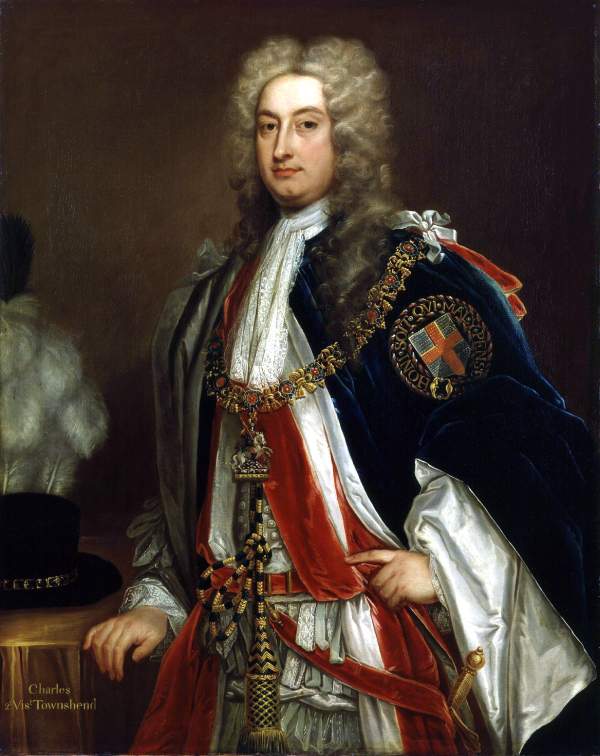
Charles Townshend
In 1767, the new Chancellor of the Exchequer (similar to the Secretary of the Treasury), Charles Townshend, enacted a new set of legislation that regulated trade and placed new taxes on common goods imported from England. Among the items that fell under these laws were goods that could only be shipped from England, such as china, lead, paint, paper, and tea. Parliament felt that the colonies were still not producing enough revenue to maintain the troops stationed in America.
Accustomed to defending themselves, the colonists did not want the military garrison for protection against a threat that they believed no longer existed in North America. As a result of the French and Indian War, the French were limited to New Orleans, and Native American tribes were primarily located on land on the other side of the Appalachian Mountains. This raised the question of who the soldiers were meant to protect the colonists from.
American colonists resented the taxes imposed by the Townshend Acts, but other provisions increased their fears that they were being treated differently from other members of the British Empire. The British government issued writs of assistance to customs officials. These writs were open-ended search warrants that allowed homes and businesses to be searched for smuggled goods for any number of reasons. To enforce the new measures, customs boards and four vice-admiralty courts were added in the colonies to bring accused smugglers to justice.
Reactions to the Townshend Acts
The Townshend Acts garnered even more resistance in the colonies. Many actions were a repeat of the events from the Stamp Act. More pamphlets and newspaper articles against the act were printed, but there were other measures taken by Americans against the policies of the British government. In response to the Townshend Acts, Massachusetts took the leading role among the colonies. In December 1767, the Massachusetts General Court (the legislative body of the colony) adopted the Massachusetts Circular Letter written by Samuel Adams, which called for the other colonies to join them in protest against the taxes. The letter went out to their fellow colonies in February and again in April. Virginia was one of the first colonies to adopt measures that claimed, once again, that Parliament could legislate for the empire and regulate trade but could not tax the colonies without consent.
In January 1768, a series of newspaper articles began to appear that created constitutional arguments against all taxation by Parliament to raise revenue. The twelve pieces, now known as the Letters from a Farmer in Pennsylvania to the Inhabitants of the British Colonies, were penned by John Dickinson, who was not a Pennsylvania farmer but a lawyer living in Philadelphia. In addition to the claims against Parliamentary taxation, Dickinson warned that continuing issues could bring conflict between the colonies and the mother country. Nonetheless, Dickinson advised the colonists to avoid committing any acts of violence in response to the new policies.
While colonial legislatures passed resolutions and private citizens drafted arguments published in the newspapers, many merchants in the colonies began taking measures to put economic pressure on Parliament to repeal the Townshend Acts. The merchants of Boston were the first to organize a boycott, structuring a non-importation agreement that asked shopkeepers to no longer import the taxed British goods beginning on January 1, 1769. The movement spread to other colonies, most notably large trading ports such as New York and Philadelphia. When the Virginia House of Burgesses passed its resolution regarding Parliamentary taxation in April, Governor Lord Botetourt dismissed them. Instead of immediately returning to their homes, the members met in the Raleigh Tavern. Led by George Mason and George Washington, they adopted their own version of the boycott agreement called the "Association."
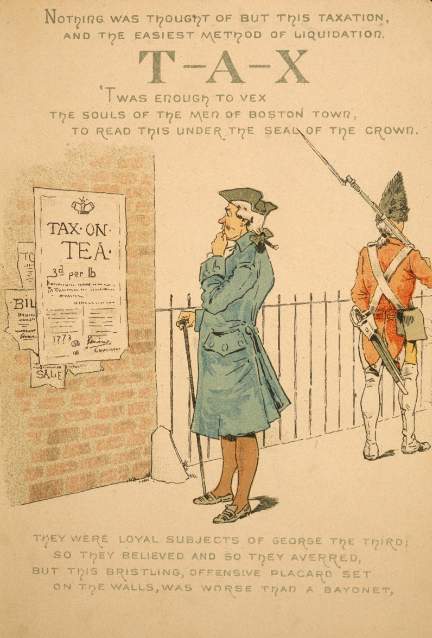
Political cartoon about the Townshend Acts
In England, it took some time for colonial protests to have any effect on governmental policy. In late January 1769, Lord North, the leader of Parliament, declared to the House of Commons that he didn't want to ever consider repealing a Parliamentary act on the basis of colonial resistance to it. Sentiment changed as the year progressed, and events took a dangerous turn. The boycotts, which were widespread by the end of the year, cut sales of British goods by as much as two-thirds in some cases. English merchants began to complain to the government that their policies, meant to increase revenue, were driving them out of business.