Mendel & Inheritance
Gregor Mendel
- An Austrian Monk (1822-1884)
- He was interested in how traits (characteristics that organisms have) were passed on from generation to generation.
- He used pea plants for his studies.
- He crossed (mated) *__true breeding__ peas.
*Pea plants that inherited the same traits from generation to generation.
Misconception of the Time
- Initially it was thought that traits “blended together”.
- However, in Mendel’s study, yellow and green pea plants only made yellow when crossed.
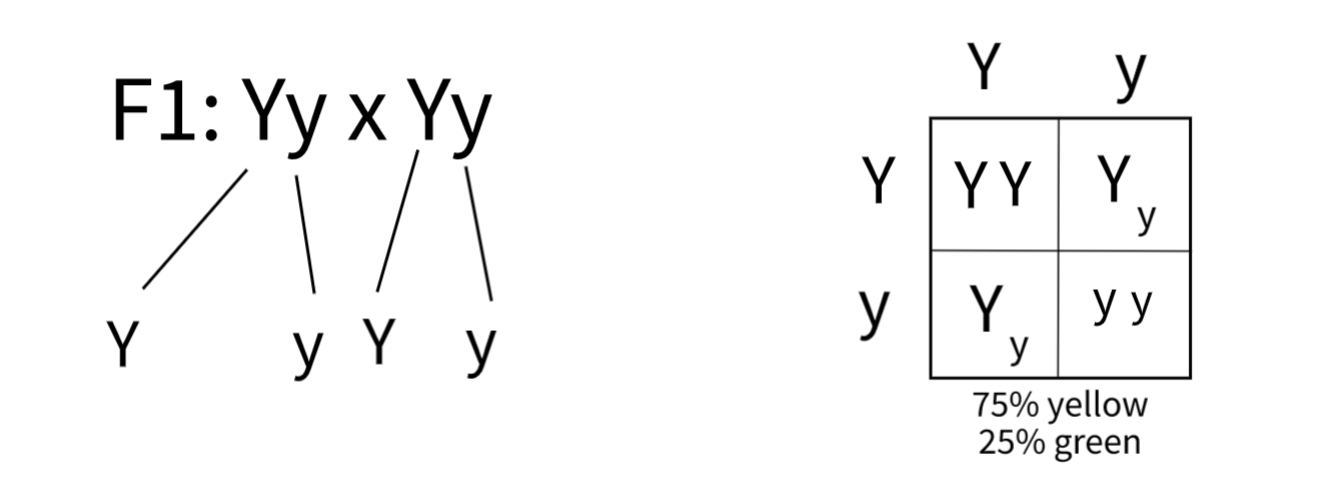
Yellow x Yellow = 75% yellow, 25% green
Solving a Genetic Problem?
How is this possible?
Step 1. Make a let statement
Let Y = yellow (in pea plants, yellow is dominant)
Let y = green (in pea plants, green is recessive)
Step 2. State the parental genotypes
P: YY x yy
YY = true-breeding, homozygous, dominant
yy = true-breeding, homozygous, recessive
Step 3. Perform meiosis to determine the possible gametes
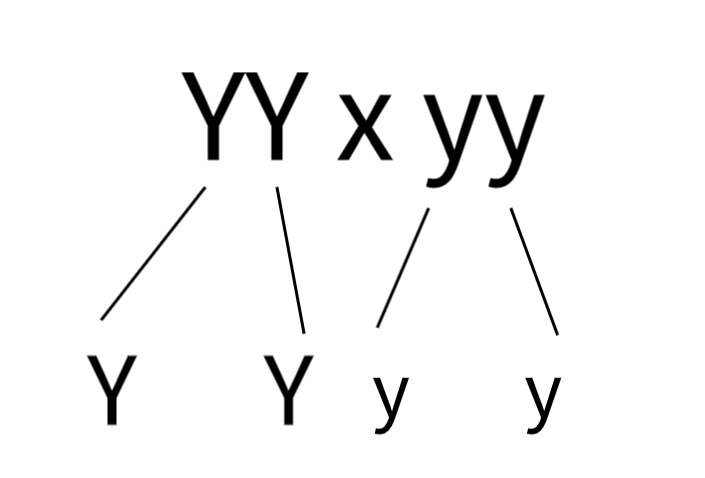
Step 4. Determine the genotypes of their children (F1) using a Punnett square.
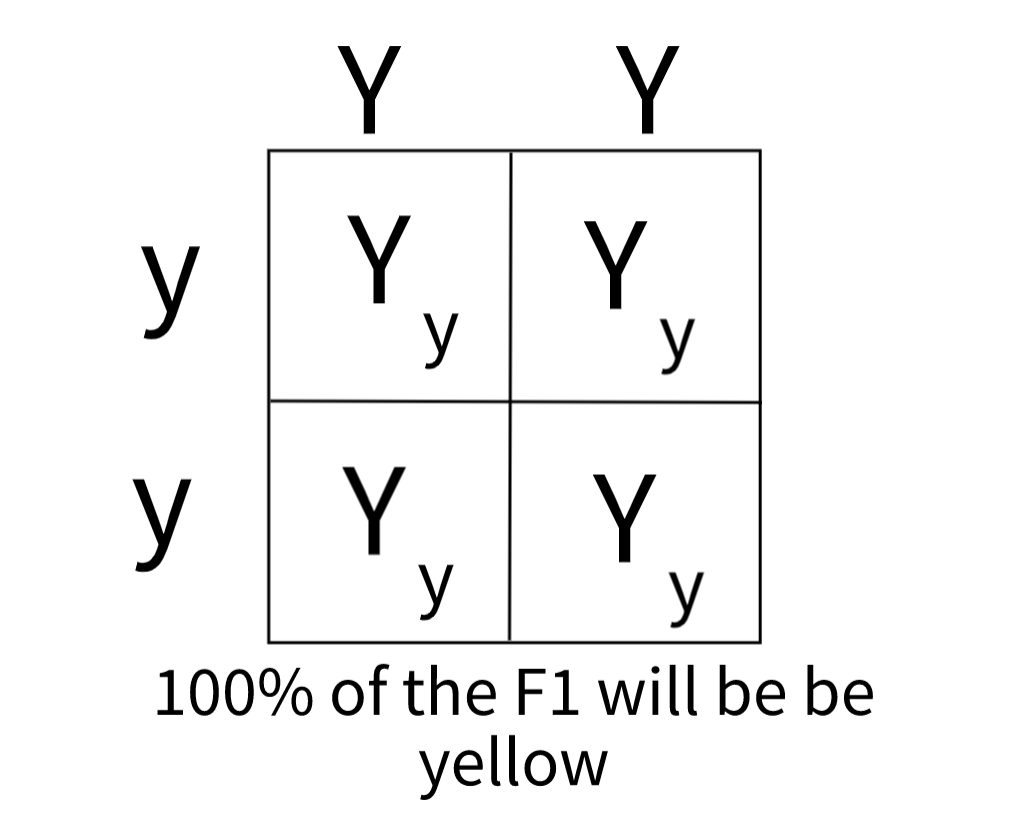
Mendel uses the results discovered from the F1 to determine the next generation (F2).
Conclusion
- Traits are encoded by genes on chromosomes
- Genes always come in pairs
Mendel’s Law: The Law of Segregation
- Every person has a pair of alleles for any trait.
- Each parent passes a random copy of alleles to the offspring when fertilization occurs
The Law of Independent Assortment
- When a gene is passed to the offspring during gamete formation, it does not affect how the gene for another trait is passed (as long as they are not linked)