Metric System
Metric System
The metric system is a decimal-based system of measurement used worldwide. It provides a standardized and consistent way to measure various quantities. Here are some key points about the metric system:
Base Units: The metric system has seven base units, which are used to measure different physical quantities. These base units include meter (length), kilogram (mass), second (time), ampere (electric current), kelvin (temperature), mole (amount of substance), and candela (luminous intensity).
Prefixes: The metric system uses prefixes to indicate multiples or fractions of the base units. These prefixes make it easier to express measurements across a wide range of values. Some common prefixes include kilo- (10^3), centi- (10^-2), and milli- (10^-3).
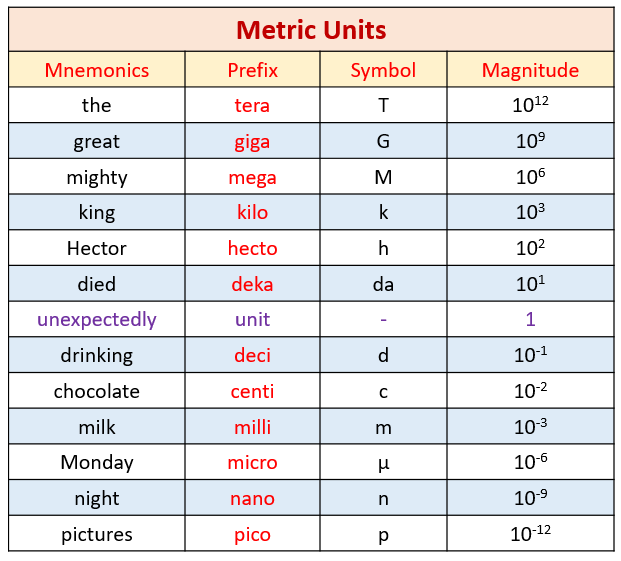
Conversion: Converting between different metric units is straightforward due to the decimal nature of the system. To convert from one unit to another, you can simply move the decimal point to the right or left by the appropriate number of places, based on the prefix used.
Advantages: The metric system offers several advantages. It is based on powers of ten, making calculations and conversions easier. It provides a universal language for scientists, engineers, and professionals across different countries. Additionally, it promotes consistency and simplifies communication in various fields.
SI Units: The International System of Units (SI) is an internationally recognized version of the metric system. It is used in scientific research, engineering, and global trade. The SI units are derived from the metric system and provide a standardized framework for precise and accurate measurements.
Usage: The metric system is widely used in many countries, including most of Europe, Asia, and South America. It is the official system of measurement in most scientific and technical disciplines. However, some countries, such as the United States, still use a mix of metric and non-metric units in everyday life.
In conclusion, the metric system is a decimal-based system of measurement that provides a standardized and consistent way to express various quantities. Its use of base units, prefixes, and easy conversion makes it a practical and efficient system for scientific, industrial, and everyday applications.