Virginia, the Cold War, and the Space Race
Introduction
The Cold War is a period of tension between the United States and its allies and the Soviet Union that lasted from the late 1940s to the collapse of the Soviet Union in the early 1990s. After World War II, the uneasy alliance between the Western Powers (Great Britain, France, and the United States) and the Soviet Union broke down as Stalin consolidated his control over the Balkan countries, Poland, Hungary, and East Germany. By 1946, most of eastern Europe was behind the Iron Curtain (a term coined by Winston Churchill to describe the separation of the Soviet bloc from the West.) When the Soviets tested their first nuclear bomb that same year, the Cold War began.
The period is characterized by a military arms race and a defense strategy known as Mutually Assured Destruction (MAD). Each side built bigger and more powerful weapons designed to discourage a nuclear war by ensuring that the aggressor would face such highly destructive retaliatory strikes that both countries would face the danger of being wiped out. Outright war became a risk neither side was willing to take. Instead, the United States and the Soviet Union clashed in proxy wars in Southeast Asia and supported rival governments throughout Latin America. Over time it became clear the creation of the nuclear bomb had rewritten the way major powers conducted war.
Virginia and the Cold War
Throughout the twentieth century, Virginia's economy became more industrialized. The military industry which developed outside of Washington, D.C. and in the peninsula at Hampton Roads and Norfolk during World War II continued to grow. The military expenditures associated with the Cold War greatly benefited Virginia's economy, helping to pull the state out of the economic slump which had plagued it since the Civil War.
Due to its proximity to the nation's capital and the strategic importance of its naval bases, Virginia remained heavily defended. Antiaircraft positions were built around every important city. The Strategic Air Command built Nike Missile Silos along the coast. The silos housed Ajax missiles ready to launch in case of an attack by the Soviet Union. Usually, these silos were built in the countryside, on isolated farms where the military could manage security. On some occasions, farms that had remained in a single family for generations were confiscated and turned into military bases. Although the missiles were removed in the 1970s when advancing technology made the Ajax obsolete, many of these silo sites have been converted into parks or historical landmarks.
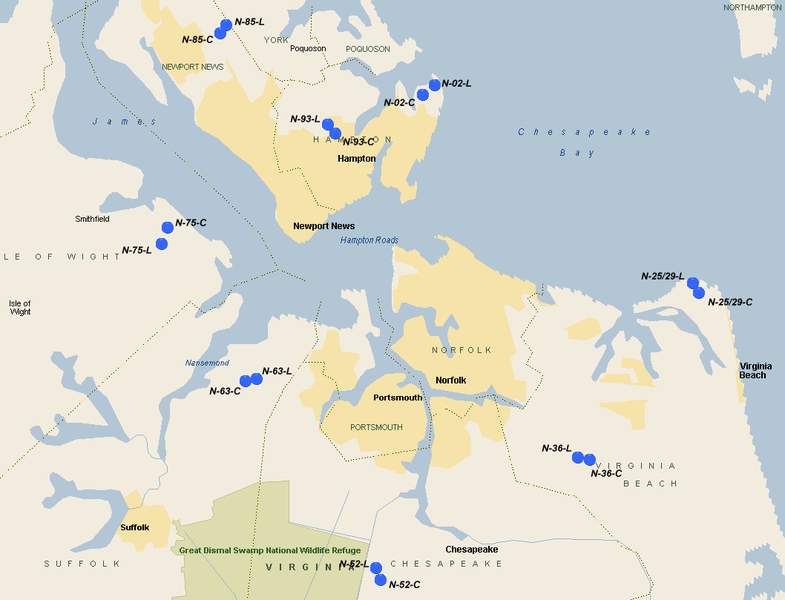
Missile silo sites in the Norfolk Defense Area
The Korean Conflict
The defining conflict of the Cold War was the Korean Conflict. It was the first military action conducted by the United Nations, although the United States supplied the vast majority of the troops and military supplies. Extremely cold weather and inhospitable terrain made a profound impression on the soldiers involved. Wary of escalating the conflict to a nuclear war, both the United States and the Soviet Union imposed limits on their military actions, leading to mounting frustration among American soldiers, who felt hampered by the politicians. Over 900 Virginians would be killed in action before the signing of the armistice on July 23, 1953.
The Vietnam War
In addition to the struggle on the Korean peninsula, the United States was also involved in another civil war in Vietnam. The Truman Doctrine stated that American foreign policy was to support nations around the world that were threatened by Soviet communism. In 1954 the United States began supporting South Vietnam's government with funding, weapons, and training in their fight against North Vietnam which was supported by the Soviet Union. Nearly 200,000 Virginians served in Vietnam over the next 21 years, including women, who were allowed in the military in supporting roles.
The result was a long and complex war that is still debated today. By the 1960s, some Americans began to protest American involvement in Vietnam. Some objected to the appalling devastation and loss of life, both Vietnamese and American; others argued that the United States had no right to meddle in the affairs of other nations. Many Americans objected to the military draft which disrupted the lives of a generation of young men. As American involvement in Vietnam approached twenty years, many Americans simply felt that the war was unwinnable.
Virginia and the Space Race
In 1957, the Cold War left the bounds of earth and entered a new frontier. On October 4 of that year, the Soviet Union launched Sputnik, the world's first artificial satellite. Shocked that the Soviets had pulled ahead in the arms race, and immediately realizing the dangers of Soviet domination of space, the United States launched its first satellite in January 1958. That summer, President Eisenhower signed the National Air and Space Act.
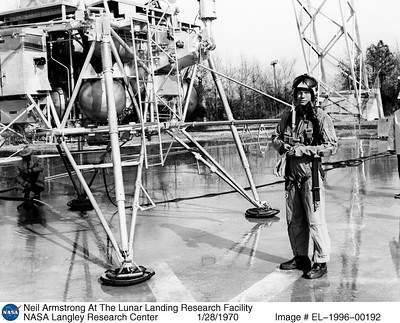
Langley Research Center, which had served as an aeronautical laboratory since 1917, quickly became the headquarters of the new National Aeronautics and Space Administration, or NASA. The scientists and technicians at Langley not only planned the early space program but also developed practical methods of preparing for the challenges of space flight. The Lunar Landing Facility allowed scientists to use cables and gantries to imitate the moon's gravity and train astronauts to land on the moon. Later they would use a similar facility as a Rendezvous and Docking Simulator for the Gemini and Apollo astronauts.
Although during the early years of the space program segregation remained an issue throughout the South, where most of the facilities were located, NASA encouraged African Americans to join the space program. While their numbers remained minuscule and advancement was difficult, the launch of the Space Race also marked the first steps toward equal opportunity employment for minorities.