General Patient Care 1 and 2
Examination Room Supplies and Equipment
A standard examination room is most often furnished with an examination table (with stirrups in a practice where pelvic exams are performed), a pillow, a footstool, a supply cupboard, a trash can, biohazardous waste and sharps containers, a rolling stool, and a chair. Oftentimes, a writing surface and a sink are present. For health care providers in specialty practices, diagnostic equipment specific to the practice may be present. Some clinics will have a dedicated exam room for specialized procedures and equipment, such as an EKG machine, nebulizer, and sigmoidoscope.
Supplies are disposable items used for patient examination and treatment. Supplies include examination table paper, paper drapes and gowns, dressings and bandages, tongue depressors, disposable gloves (sterile and nonsterile), syringes and needles (stored securely locked), and alcohol pads.
Equipment is usually more durable and requires routine maintenance and cleaning between use.
The following are examples of equipment.
Thermometer: Used to measure body temperature
Stethoscope: Used to amplify sounds in the body, such as the beating of the heart, respirations in the lungs, and bowel sounds in the abdomen
Sphygmomanometer: Used to measure blood pressure
Pulse oximeter: Used to measure oxygen saturation in the blood
Reflex hammer: Used for testing reflexes
Otoscope: Used to examine the ears
Ophthalmoscope: Used to examine the interior of the eye, especially the retina
Maintaining a Clean Examination Area
At the beginning of the day,
check that all the rooms are adequately stocked, have been properly cleaned and equipment is properly functioning.
Anticipating items that might be needed for a visit and preparing the room in advance
Surfaces should be cleaned at the beginning and end of each day and between patients to reduce the risk of transmitting infectious agents.
Clean the examination table with the proper disinfectant and allow it to dry before placing new paper on the table. The paper covering the exam table must be disposed of and replaced between each patient.
If available, change pillow covers after each patient.
Reusable equipment must be taken to the appropriate area for cleaning and disinfection, following standard precautions.
At the end of each day,
disinfect the work area and stock the exam rooms.
Stock routine items, such as gloves, paper towels, exam gowns, table paper, and sharps and biohazard waste containers, in each of the examination rooms.
Other supplies and items may need to be added depending on the patient and procedure.
.
Medical Specialties
Specialty
Description
Common Supplies and Equipment
Dermatology
A medical assistant may assist in minor surgical procedures to help obtain skin biopsies or in the debridement of wounds and collect specimens from wound cultures. Follow sterile procedures when assisting in minor surgical procedures and obtaining wound cultures.
Dermal punch biopsy
Dermal cutter
Scalpel
Gauze
Incision and drainage tray
Specimen collection swabs and containers
Cardiology
A medical assistant may need to perform electrocardiograms (EKGs) and Holter monitoring on patients with cardiac symptoms or diseases. Both tests are used to monitor and record the heart’s electric activity and are often used to diagnose heart disorders, especially regarding its rhythm and rate.
Three-channel electrocardiograph
Electrodes
EKG paper
Holter monitor
Endocrinology
Endocrinology involves hormones. Medical assistants should be familiar with venipuncture and capillary punctures (fingersticks). Medical assistants will perform glucose monitoring and patient education related to proper use of glucose monitoring equipment.
Glucometers
Alcohol pads
Adhesive strips
Test strips
Lancets
Neurology
A neurological examination focuses on the patient’s reflex response, motor response, muscle tone, speech patterns, coordination, sensory response, gait, and mental status and behavior. The MA may assist the provider throughout the exam, as directed.
Otoscope
Ophthalmoscope
Percussion hammer
Penlight
Tuning fork
Cotton balls
Safety pin
Tongue depressor
Small vials containing hot and cold liquids
Vials with different scents
Vials with different tasting liquids
Obstetrics and gynecology
This specialty practice may assist in a number of procedures, including minor surgery. A common procedure is a Pap test. A Pap test is a screening procedure that collects and examines cells from the vaginal and cervical mucosa to check for precancerous or abnormal cells.
Vaginal speculums and retractors
Cytology kits
Stitch removal sets
Dressing kits
Exam tables with stirrups
Ultrasound machine
Handheld fetal Doppler machine
Pulmonology
A pulmonology practice may conduct different tests to assess respiratory function, to assist in the diagnosis of patients with suspected obstructive or restrictive pulmonary disease, and to assess the effectiveness of medication and other pulmonary therapies.
One of the most common tests to evaluate lung function that a medical assistant may perform is a pulmonary function test (PFT). The most common tests and procedures performed are spirometry, peak flow meters, and pulse oximetry.
Spirometers are small, handheld devices that provide digital readings, and there are portable meters with integrated printers. Advanced spirometry systems are computerized and can be configured to send results directly to a patient’s electronic health record (EHR). All spirometers consist of a mouthpiece and tubing connected to a recording device.
The peak flow meter is often used for patients who have asthma to monitor their daily respiratory function and condition. The peak flow meter measures the fastest rate at which the patient exhales after taking a maximum breath.
Oxygen saturation is commonly measured by a pulse oximeter, which is a noninvasive device that is clipped on the fingertip, bridge of the nose, forehead, or earlobe.
Peak flow meter
Spirometry machine
Disposable mouthpieces and nose clips
Patient Instruction
Preparing for the Examination
Prior to the patient’s arrival,
review the patient’s medical record, including the completed history and physical examination, understand the procedure and what supplies and equipment will be needed.
several tests and procedures require specific patient preparation prior to the procedure, such as a colonoscopy or a fasting glucose test.
Explain and review the needed preparation with the patient and verify that all instructions were followed before the procedure.
If the patient did not complete necessary preparation or they have any questions, direct them to the health care provider.
Confirm that an informed consent has been signed and is in the patient’s medical record.
Take Note
Before entering an examination room that is occupied by a patient, always knock, announce yourself, and ask for permission to enter.
After Entering
Explain the procedure and the importance of the procedure in an empathetic, simple, and direct manner.
Avoid overly technical terms and encourage patient to ask questions and express any anxiety or concerns.
Undressing
Ask patients to empty their bladder before undressing. If a urine sample is required, give complete and detailed instructions.
Explain to the patient which items of clothing should be removed for the exam and instruct them whether to put on the gown with the opening in the front or the back.
Assist patients with disrobing and with stepping up onto the examination table as needed.
Inform patients where their personal clothing and belongings can be stored during the examination. Once the patient is ready, notify the health care provider.
After the procedure, assist the patient down from the examination table if needed. The patient may become lightheaded when sitting up if they were lying down for the procedure.
Allow the patient privacy when getting dressed. Assist the patient with getting dressed as needed.
Providing Patient Education
Provide the patient information about any follow-up appointments, additional exams, aftercare instructions, and referrals.
Let the patient know when to expect results from lab, radiology, or any other diagnostic tests.
Ask if the patient has any questions and direct appropriate questions to the health care provider to answer.
Older Adults
Often the medical assistant who is responsible for reviewing their medication list and verifying the dosages taken.
Allot extra time for a patient who has an extensive medication history.
Maintain a calm, relaxed, and respectful manner when interacting. Do not rush, speak clearly and slowly, and repeat questions or instructions, if necessary.
Allow ample time for the patient to process or recall information. Avoid affectionate terms, such as “sweetie” or “honey”
Physical Disability
You may need to provide additional assistance while escorting patients to the examination room or provide extra care when assisting them on or off the examination table.
Offer any assistance if it appears the patient needs it.
Allow the patient to do as much as possible independently and ask before you touch a patient.
Do not leave the patient unattended if the patient is physically unstable or appears confused.
If you are unable to remain in the room, a family member or another medical assistant should sit with the patient until the health care provider is ready
If a patient arrives in a wheelchair, assist as needed.
Communicate with the patient prior to touching them or their wheelchair.
If a transfer is necessary between a wheelchair to the exam table, request assistance from a team member.
Lock the wheels and to position the chair before trying to help the patient move from the chair to the exam table.
Children
Smile and speak to the child at eye level.
Speak gently and calmly with an even tone, avoid using “baby talk,”
Depending on the child, role playing can be helpful, particularly when preparing a patient for a procedure or trying to get more information from the patient, for example, asking the child to point on a stuffed animal where the pain may be located.
Children should never be left alone on an examination table, scale, toilet, or other place that could pose possible danger for falling or other injury.
Always place a protective hand on infants to protect them from rolling or falling.
During Procedure - Children
Plan extra time to explain to the child what is being done and to provide a sense of calmness.
Explain in simple, age-appropriate terms exactly what you want them to do.
Holding or entertaining an uncooperative child may be necessary so that an examination or procedure can be safely performed.
Environmental Considerations
Examination rooms must conform to the standards established by the Americans with Disabilities Act (ADA).
Americans with Disabilities Act (ADA) Standards - designed to make sure that people who have disabilities are not discriminated against in public places because of a lack of proper accommodations. Address such things as the width of doorways and hallways; placement of door handles, grab bars, and handrails; spatial accommodations for patients in wheelchairs; and floor surfaces.
Positioning and Draping
Supine - also known as the horizontal recumbent position, patients lie flat on their back with hands at the sides. Be sure that the patient’s feet are supported by extending the examination table.
Used to examine anything on the anterior or ventral (front) surface of the body (head, chest, stomach) and for certain types of x-rays.
May not be comfortable for patients who have difficulty breathing or who have lower back problems. Placing a pillow under the head and under the knees may help alleviate pain and provide more comfort.
Prone - patient lies face down, flat on the stomach, with the head turned to one side, and arms either alongside the body or crossed under the head.
Used for back exams and certain types of surgery
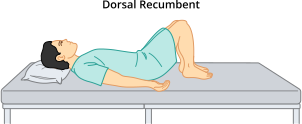
Dorsal Recumbent - patient is lying flat on the back with knees bent and feet flat on the examination table. \
Position relieves strain on the lower back and relaxes abdominal muscles.
Used to inspect the head, neck, chest, vaginal, rectal, and perineal areas.
Can be used for digital (using the gloved fingers) exams of the vagina and rectum. To drape the patient, place the drape at the patient’s neck or underarms and cover the body down to the feet.
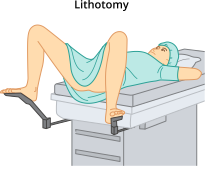
Lithotomy- similar to the dorsal recumbent position, except the patient’s feet are placed in stirrups attached to the end and sides of the table. Stirrups locked in place to ensure patient safety. After the feet are in place in the stirrups, the patient is instructed to slide down until the buttocks are positioned at the edge of the table. The patient is draped from under the arms to the ankles.
This position is used for vaginal examinations, often requiring the use of a vaginal speculum (an instrument used to hold open the walls of the vagina) and for obtaining cell samples of the cervix.
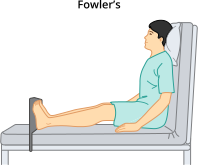
Fowler’s - patient sits on the examination table with the head of the table raised to a 90-degree angle. If able, the patient may be seated on the edge of the table with feet over the edge in an upright position.
Useful for examinations of the head, neck, and upper body.
Patients who have difficulty breathing in the supine position may find this position more comfortable.
The drape should be placed over the patient’s lap and cover the legs.
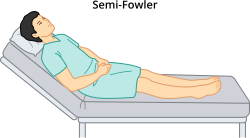
Semi-Fowler’s - modified Fowler’s position with the head of the table at a 45-degree angle instead of a 90-degree angle.
Used for postsurgical exams and patients with breathing difficulties or lower back injuries. The drape should be placed over the patient’s lap and covering the legs.
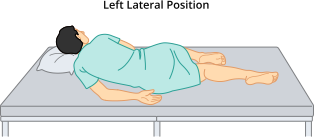
Left Lateral - also known as lateral semi-prone recumbent position and formerly known as Sims' position. Patient is placed on the left side with the right leg sharply bent upward and the left leg slightly bent. The right arm is flexed next to the head for support. The patient is draped from under the arm or shoulders to below the knees at an angle.
Used for rectal exams, taking rectal temperatures, enemas, and perineal and pelvic exams.
Knee–Chest - patient is placed in the prone position and then asked to pull the knees up to a kneeling position with thighs at a 90-degree angle to the table and buttocks in the air. The head is turned to one side, and the arms may be placed under the head or on either side of the head for comfort and support.
Used for proctologic exams, sigmoidoscopy procedures, and rectal and vaginal exams.
Parenteral medication administration - non-oral. Generally, the medication is injected directly into the body, bypassing the gastrointestinal tract.
Nonparenteral, or enteral, administration - oral medication given by the mouth delivered to the gastrointestinal tract.
Parenteral routes
Route | Location |
Subcutaneous | Injection administered below the skin layer into the adipose (fat) layer |
Intradermal | Injection administered into the dermis |
Intramuscular | Injection administered into the muscle |
Intravenous | Injection administered directly into the vein |
Other Routes of Administration
Route | Location |
Oral | Taken by mouth |
Sublingual | Placed under the tongue |
Buccal | Between the cheek and gums resulting in rapid absorption |
Inhalation | Inhaled through the mouth, passes through the trachea into the lungs; inhaled through the nose and absorbed through the nasal mucous membrane |
Ocular or otic | Drops of medication are instilled directly into the eye (ocular) or ear (otic). |
Transdermal | Applied to the skin and designed to release slowly and systemically into circulation. Administered in an adhesive patch in a single layer drug, multi-layer drug, drug in resevoir, or drug matrix. |
Topical | Applied to the skin or mucous membrane (faster) and acts locally. Administered as creams, ointments, or emulsions. |
Rectal | Inserted into rectum |
When calculating an individual dose, we must have three pieces of information and the formula:
The desired dose (D)
The dosage strength or supply on hand (H)
The medication’s unit of measurement or quantity of unit (Q)
X=D/H×QX=D/H×Q
X=the amount to administerX=the amount to administer
Prescription medications require a medication order by an authorized health care provider to be dispensed to patients.
Nonprescription, also called over-the-counter (OTC), medications do not require a prescription.
brand name (or trade name) is the name assigned by the medication manufacturer.
generic name is the standard or official name and assigned by the United States Adopted Names (USAN) Council and the World Health Organization (WHO).
Different types of medication forms.
Tablets
Capsules
Oral suspension
Emulsions
Lozenges
Liquid
When Giving the Patient Medication Tell the patient what the medication is, what it is given for, the dosage, and the route that will be used.
The first check of Medication is comparing the medication order to the medication.
The second check of Medication occurs when preparing the medication for administration. The third check of Medication is completed when returning the medication back to the shelf.
Right Patient - Use two patient identifiers, to verify the right patient. Then verify that data with the information on the medical record or medication administration record (MAR).
Right Medication - Check the label three times to verify the medication, strength, and dose—often referred to as the “three befores.”
Right Form - Medications can come in several different forms. The same medication can be available in several different forms. Each form of medication has benefits in terms of effectiveness, ease of use, and safety.
Right Dose - Compare the dosage on the prescription in the patient’s MAR with the dosage on the medication’s label and determine if medication calculations need to be performed to arrive at the prescribed dose.
Right Route - Compare the route on the prescription in the MAR with the administration route they are planning to use. Determine whether the route is appropriate for the patient and that the medication formulation is right for that route.
Right Time - In most office and clinic settings, MAs give medications right after the provider writes the order. Nevertheless, always confirm whether the medication has any timing specifications, such as the patient having an empty stomach or waiting several hours after taking another medication (such as an antacid) that might interact with the new medication.
Right Technique - MAs must know the correct techniques for administering every medication they give by every route, for example, taking an apical pulse prior to administering digoxin to ensure the patient’s pulse is not less than 60.
Right Education - Prior to administration of a medication, explain to the patient the name of the medication, the ordering provider, and the reason and intended effect of the medication; disclose any side effects; and confirm any allergies the patient may have.
Right Documentation - Always document administering a medication after the patient receives it, not before. If you do not administer a medication as prescribed, the documentation must include this and why the patient did not receive it. Proper documentation includes date, time, quantity, medication, strength, lot number, manufacturer, expiration date, consent obtained, and patient outcome.
Eye Instillation aka ocular or ophthalmic administration, a common duty of a medical assistant. All optic medications must be sterile, and sterile procedures must be followed before and during the administration.
patient should be lying down or sitting back in a chair with the head tilted back.
Clean any debris from the eye area. Provide a tissue to the patient to blot excess medication.
The patient should look toward the ceiling with both eyes open.
With nondominant hand, gently pull down the lower lid of the affected eye using the thumb or two fingers to expose the conjunctival sac.
Gently rest the dominant hand on the patient’s forehead and dispense a drop approximately ½ inch above the sac.
If a cream or ointment is being administered, evenly apply a thin ribbon of the ointment along the inside edge of the lower eyelid on the conjunctiva, moving from the medial to lateral side.
Release the eyelid and instruct the patient to close the eyes.
Repeat if the other eye requires treatment. Remove any excess medication with a clean tissue.
Ask whether the patient is feeling any discomfort or pain and observe for any adverse reactions. Apply a clean eye patch, if ordered.
Ear Instillation - medical assistant may also be asked to perform an ear instillation (otic administration).
Have the patient lie on one side with the affected ear facing up.
With nondominant hand, pull the pinna of the auricle (outer ear) outward and upward for adults and outward and downward for infants and children.
Hold the applicator ½ inch above the ear canal and administer the number of prescribed drops.
Have the patient remain in the position for at least 5 min.
Ask whether the patient is feeling any discomfort or pain and observe for any adverse reactions.
Loosely insert a small, clean wad of cotton, if ordered, before treating the other ear, if applicable.
Types of Allergic Reactions
Mild symptoms and treatment of allergic reactions - hives, itching, rashes, watery eyes, and nasal congestion. Treatment usually includes an over-the-counter hydrocortisone cream and an antihistamine.
Moderate and severe allergic reactions - abdominal pain, coughing, diarrhea, dyspnea, dysphagia, swelling of the face, nausea and vomiting, convulsions, and unconsciousness.
Anaphylactic shock - systemic allergic reaction that can be life threatening without immediate medical intervention.
Initial symptoms of weakness, sweating, and dyspnea and can progress to hypotension, arrhythmia, difficulty in swallowing, and convulsions.
Anaphylactic shock can occur within minutes after exposure to the allergen, or a delayed reaction could occur within a couple of hours.
For medication allergies, ask and document the following.
Name of the suspected medication, prescribed (brand or generic) and non-prescribed (over-the-counter) medications
Timeframe of the reaction from initiation of the medication
Strength and formulation
Description of the reaction
Indication for the medication being taken (if there is no clinical diagnosis, describe the illness)
Date and time of the reaction
Number of doses taken or number of days on the medication before onset of the reaction
Route of administration
After administration of any medication, ask the patient to wait 20 to 30 minutes before leaving for observation of any possible adverse reactions or allergic reactions.
Sterile Techniques
All reusable medical devices can be grouped into one of three categories according to the degree of risk of infection associated with the use of the device.
Critical devices, such as surgical forceps, come in contact with blood or normally sterile tissue
Semi-critical devices, such as endoscopes, come in contact with mucus membranes
Non-critical devices, such as stethoscopes, come in contact with unbroken skin
Take Note
Unsafe injection practices that have resulted in disease transmission have most commonly included the following.
Using the same syringe to administer medication to more than one patient
Accessing a medication vial with a syringe that has already been used to administer medication to a patient, then using the remaining contents from that vial or bag for another patient
Using medications packaged as single-dose or single-use for more than one patient
Failing to use aseptic technique when preparing and administering injections.
Needles
Come individually wrapped.
Check the expiration date on the wrapper to make sure the needle is still in good quality.
In rare cases, old needles may bend or break.
Do not place the exposed or uncapped needle on a tray or countertop.
A clean needle may be recapped for protection prior to injection using a one-handed scoop method.
Alcohol Swabs and Vials
Necessary to wipe off vials or wrap around the neck of an ampule, as well as for skin preparation.
The top of the vial stopper should be wiped with an alcohol swab each time it’s used.
Do not introduce the needle into the vial more than once. Each repuncture into a vial dulls the needle and predisposes the equipment to contamination.
Gauze pad is used to apply pressure or hold at the site after administration.
Adhesive bandage should be available if there is bleeding at the site.
Reasons for Parental Administration:
Allow for better absorption into the body
Administer a more precise level of medication
Patient needing a rapid effect
Inability of the patient to receive the medication through a different route of administration
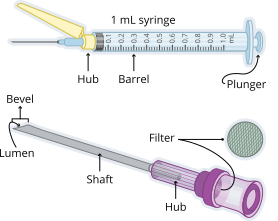
Parts of a Syringe
Barrel is a cylinder that holds the medication and has volume marking on its side.
Plunger forces the medication through the barrel and out the needle.
Parts of a Needle
The needle consists of a hub, shaft, and bevel.
Hub is what is twisted on to the syringe.
Bevel is the angled tip, when inserting, bevel should be up.
Lumen is the opening of the needle.
Shaft is the length of the needle.
Needle’s gauge (G) - the size of the opening of the needle, or lumen. The higher the gauge, the smaller or narrower the lumen is. For example, a 25 G has a smaller lumen than an 18 G needle.
Injection Sites
Subcutaneous (SC) and Sites - administered beneath the skin and into the adipose (fat) tissue.
Allows for slow, sustained release of a medication with long duration of effect.
Used to administer smaller doses of medication, usually less than 1.5 mL.
Common SC medications are insulin, heparin, immunizations, and allergy medications.
Injections sites
Most common, the upper, outer arm; abdominal region; and the upper thigh.
Lesser common areas are the scapula (upper back area) and lower back/upper buttocks.
Pinch at least 1 inch of skin in order to inject below it.
45 degrees from the surface of the skin
Subcutaneous (SC) injection sites
Intradermal (ID) and Sites - administered between the upper layers of the skin, between the epidermis and dermis.
Injection Sites
Most common site for ID injections is the mid forearm.
Forearm: Often used to administer a tuberculosis (TB) test
Forearm: Measure using one hand width above the wrist and one hand width from the elbow or antecubital space
Rare cases, the upper chest and scapula (upper back) regions may be used.
Upper chest and scapula: Used for skin tests, such as allergy testing.
Very small amount of a medication may be injected, often 0.1 mL or less.
Angle of the needle is almost parallel to the skin, or 5 to 15 degrees
Do not massage or apply pressure or a bandage to the site after injection.
Intramuscular (IM) and Sites - administered into the muscle of the patient.
Common sites are the deltoid (shoulder), ventrogluteal (outer hip), and vastus lateralis (upper, outer thigh) muscles.
Generally allow for larger administration of medication than SC and ID injections.
Up to 3 mL of a medication may be administered into the ventrogluteal and vastus lateralis for adults. Older adults and thin patients may only tolerate up to 2 mL in a single injection. No more than 1 mL should be given in the deltoid.
Common medications that are administered via IM injections are antibiotics (penicillin), hormones (testosterone), and some vaccines.
90-degree angle to the skin
Should be avoided for infants or children younger than 3 years of age. The site of injection on the deltoid should be 1 to 2 inches below the acromion process. The deltoid muscle can only hold up to 1mL of medication.
Ventrogluteal site - involves the gluteus medius and minimus muscles and is a safe injection site for adults, children, and infants.
Provides the greatest thickness of muscle that is free of nerves and blood vessels, and it has a narrower layer of fat.
Preferred site for all oily and irritating solutions for patients of any age.
To locate the site, place the heel of your hand on the greater trochanter (right hand placed on left hip and left hand placed on right hip), the middle finger is placed on the iliac crest, and your fingers are spread. Give the injection where the V is made between your index finger and middle finger (position the thumb pointing towards the groin).
Injection site can hold up to 3 mL of medication.
Vastus Lateralis Site - muscle is located on the lateral side of the thigh.
Injection site is halfway down the muscle, between the greater trochanter and the lateral femoral condyle.
Site recommended for children younger than 3 years of age.
Before giving an IM injection, make sure to avoid injuring nerves and blood vessels.
Injecting into a vein may result in faster absorption of the medication than prescribed.
Site, Angle, and Needle Selection for Injections
Type | Common Sites of Injections | Angle of Injection | Needle Size | Needle Length |
Subcutaneous (SC) | upper, outer arm; abdominal region; and the upper thigh | 45 degrees | 23 -25 G | 5/8 inch |
Intradermal (ID) | forearm | 5 to 15 degrees | 25-27 G | ¼ to ½ inch |
Intramuscular (IM) | deltoid, ventrogluteal, vastus lateralis | 90 degrees | 22-25 G | 1 to 1 ½ inch |
Don nonsterile gloves. Clean the site with an alcohol swab for 30 seconds using firm, concentric circles. Allow the site to dry to prevent introducing alcohol into the tissue, which can be irritating and uncomfortable. Remove the guard cap from the needle by pulling it off in a straight motion. A straight motion helps prevent needlestick injury.
Giving SC Injection
Gently grasp and pinch the area selected as an injection site using nondominant hand.
Hold the syringe in dominant hand between the thumb and forefinger like a dart and insert the needle quickly at a 45-degree angle.
After the needle is in place, release the tissue with nondominant hand.
With dominant hand, inject the medication.
Avoid moving the syringe. Withdraw the needle quickly at the same angle at which it was inserted.
Using gauze, apply gentle pressure at the site after the needle is withdrawn. Do not massage the site.
Giving ID Injection
Use your nondominant hand, spread the skin taut over the injection site.
Taut skin provides easy entrance for the needle and is also important to do for older adults, whose skin is less elastic.
Hold the syringe in the dominant hand between the thumb and forefinger, with the bevel of the needle up at a 5- to 15-degree angle at the selected site.
Place the needle almost flat against the patient’s skin, bevel side up, and insert the needle into the skin. Keeping the bevel side up allows for smooth piercing of the skin and induction of the medication into the dermis.
Advance the needle no more than an eighth of an inch to cover the bevel.
Once the syringe is in place, use the thumb of the nondominant hand to push on the plunger to slowly inject the medication.
Carefully withdraw the needle out of the insertion site using the same angle it was placed.
Giving IM Injection
Stabilize the skin around the injection site by pulling the skin taut with the forefinger and thumb of your nondominant hand.
With dominant hand, hold the syringe like a dart and insert the needle quickly into the muscle at a 90-degree angle using a steady and smooth motion.
After the needle pierces the skin, use the thumb and forefinger of the nondominant hand to hold the syringe and inject the medication.
Remove the needle at the same angle at which it was inserted.
Cover the injection site with sterile gauze using gentle pressure and apply a bandage if needed.
Vials
Plastic or glass container that has a rubber stopper (diaphragm) on the top. The rubber stopper is covered with a metal lid or plastic cover to maintain sterility until the vial is used for the first time.
Some manufacturers do not guarantee a sterile top even though it is covered, and therefore it is necessary to wipe the top with alcohol pad with first use and any use after.
Multidose vials usually expire after 28 days unless the manufacturer states otherwise.
Make sure you write the expiration date on the vial upon opening.
Single-dose vials contain a single dosage of medication for injection. Many vials are single dose because it is safer.
Even if medication is in a single-dosage vial, it should still be measured and drawn up according to the prescribed amount.
Reconstitution - requires the adding a liquid diluent to a dry ingredient to make a specific concentration of a medication.
Withdrawal from a Vial Technique
Before withdrawing medication from a vial, wipe the top with alcohol and allow it to dry.
A vial is a closed system, and air must be injected into it to allow for withdrawal of the medication.
If air is not injected into the vial before the medication is withdrawn, a vacuum remains in the vial that makes the withdrawal of medication difficult.
Inject air equal to the amount of solution being withdrawn into the air space between the solution and the rubber stopper, invert the vial, and the withdraw the desired volume of medication.
Ampule
Sealed glass container designed to hold a single dose of medication.
Ampules have a particular shape with a constricted neck.
Designed to snap open.
The neck of the ampule may be scored or have a darkened line or ring around it to indicate where it should be broken to withdraw medication.
Withdrawal from an Ampule Technique
Snap the neck off by grasping it with an alcohol wipe, sterile gauze, or ampule protector.
Aspiration of the medication into a syringe occurs easily and may be accomplished with a filter needle, if required by the medical practice’s policy.
A filter needle prevents withdrawal of glass or rubber particulate.
When the needle is inserted into an ampule, take care to prevent the shaft and tip of the needle from touching the rim of the ampule.
Withdraw medication into the syringe by gently pulling back on the plunger, which creates a negative pressure and allows the medication to be pulled into the syringe.
Discard the needle used to withdraw the medication and replace it with a new needle.
Premeasured syringes and cartridges - prefilled syringes that are single dosed and packaged with the needle that is provided by the manufacturer.
Disposable and supplied already loaded with the substance to be injected.
Convenient and help ease the administration process.
Common prefilled syringes are often used for immunizations and for emergency administration, such as naloxone for overdoses and sodium bicarbonate for shock and cardiac arrests.
Hypodermic Syringe
There are generally three types of syringes: hypodermic, tuberculin, and insulin.
Hypodermic syringes - come in a variety of sizes from 0.5 to 60 mL and even larger. Syringes are calibrated or marked in milliliters but hold varying capacities. Of the small-capacity syringes, the 3 mL syringe is used most often for the administration of medication.
Tuberculin syringe - narrow syringe that has a capacity of 0.5 mL or 1 mL. The 1-mL size is used most often. The syringe is calibrated in hundredths (0.01 mL) and tenths (0.1 mL) of a milliliter.
Used to accurately measure medications given in very small volumes (e.g., heparin).
Often used in pediatrics and for diagnostic purposes (e.g., skin testing for tuberculosis).
Recommended that dosages less than 0.5 mL be measured with a tuberculin syringe to make certain that the correct dosage is administered to a patient.
When using a tuberculin syringe, read the markings carefully to avoid error.
Insulin syringes - designed for the administration of insulin only. Insulin dosages are measured in units. Insulin syringes are calibrated to match the dosage strength of the insulin being used. They are marked U-100 and are designed to be used with insulin that is marked U-100. U-100 insulin should be measured only in a U-100 insulin syringe. It is important to note that for U-100 insulin, 100 units = 1 mL. Insulin syringes do not have detachable needles. The needle, hub, and barrel are inseparable.
Controlled substance - any medication, whether prescription or illegal, that has the potential for abuse or addiction.
records of their prescribing and dispensing must be protected from misuse by storing them under double lock, such as a combination of two keys.
logbook or electronic signoff and a daily count by two people are required
The Drug Enforcement Administration (DEA) - maintains oversight for legally prescribed and used narcotic drugs and for containment of illegal drugs.
Refrigerated medications between 2˚ and 8˚ C (35˚ and 46˚ F).
Frozen medications must be stored between –50˚ and –15˚ C (–58˚ and 5˚ F).
A MAR, medication administration record - a report that serves as a legal record of the medications administered to a patient at a facility by a health care provider or professional.
Should include key information about the patient’s medication, including the medication name, dose taken, date and time, route given, special instructions, and any reaction to the medication.
Must be filled out each time a patient is administered a medication.
Page 2
Sample Medication Administration Record
Patient Medication Administration Record
Patient Name:
| Allergies: | DOB: | ||||
Date | Drug Name | Dosage | Provider | How often/How long | Time | Route |
Transcribing - Taking the information from a medical provider’s order and transferring it to the MAR
Information Documented in the MAR
Any allergies or history of allergies
What medication is being administered
Medication dosage
Administration route
When is it being administered—what time, how often, how long
The name of the health care provider who prescribed the medication
Medications must be stored in the proper environment where temperature, light, and moisture are kept at appropriate levels. Different medications require different storage temperatures. Most medications’ temperature requirements will fall into one of the following categories.
Room temperature is 20˚ to 25˚ C (68˚ to 77˚F).
Refrigeration means 2˚ to 8˚ C (35˚ to 46˚ F).
Storing Medication
Clearly separate topical medications, such as creams and ointments, from other medications.
Cleaning products, urine test reagent tablets, disinfectants, household poisons, and any other substances that are potentially harmful should be clearly labeled and stored in their own locked area far from all medications.
Check the temperature daily when storing regular medications and twice daily for stored vaccines
Removal of Medication
Must be removed and disposed of immediately if they are discontinued, expired, contaminated, deteriorated, unlabeled, or in cracked, soiled, or unsecured containers.
Any time you remove a medication from storage to dispose of, document the disposal on the Medication Disposition Record.
Medication Expiration
Dates do not always mean that a medication has been found to be unstable after the date of expiration.
The expiration date is the date that the manufacture has determined a medication to be stable in the original sealed container based on stability testing and accelerated degradation studies.
Once the seal on the medication’s original container has been broken, the expiration date may not apply because all expiration dates are related to the storage conditions stated on the labeling.
Irrigation Instruments, Supplies, and Techniques
Irrigations (or lavage) of the eye and ear are done for a variety of reasons. The eye can be irrigated to remove a foreign body or chemical irritants. The ear can be irrigated to remove a foreign body or remove wax that prevents the health care provider from seeing the tympanic membrane through the otoscope.
Eye Irrigation
Eye irrigation is the process of using a sterile solution to flush the eyes of any foreign bodies or any toxic chemicals. Eye irrigation requires sterile technique and equipment. As with all procedures, review the patient’s medical record and the health care provider’s order. Introduce yourself and identify the patient. Explain the procedure to the patient and reason why it needs to be performed.
Assemble the equipment and two sets of the supplies and equipment if both eyes are to be irrigated. This may include a sterile basin, a return basin, sterile solution, a sterile irrigating syringe, sterile gauze, tissues, towel, a waterproof drape, and nonsterile gloves. Perform a triple check of the medication and provider’s order and the rights of administration and check for expiration dates on the medication and all supplies.
Warm the irrigation solution to normal body temperature by placing the solution in a basin of warm water. Place the patient in a supine or sitting position and place a waterproof drape on the patient’s shoulder to absorb any solution if any spills. Perform hand hygiene.
Cleanse the eyelid with a gauze pad moistened with the sterile solution, making sure to maintain sterility at all times. Clean from the inner to outer canthus (corner) of the eye, where the upper and lower lids meet. Repeat with a newly moistened gauze pad until the eyelid is free of dirt and other debris. Instruct the patient to tilt the head toward the side that is being irrigated, to hold the return basin below the affected eye, and to look straight ahead on a fixed object while keeping both eyes open.
Using the thumb and index finger of your nondominant hand, pull upward on the patient’s upper lid and downward on the patient’s lower lid—hold the eye open and maintain this position throughout the irrigation. With the dominant hand, hold the irrigating bottle of solution on or near the bridge of the nose and hold the tip of the solution about an inch above the eye. Do not to touch any part of the eye or skin with the tip of the solution applicator. Start squeezing the bottle so that the solution flows from the inner canthus to the outer canthus in a steady stream directed toward the lower conjunctiva.
Take Note
Continue the flow until the irrigation solution is empty and the desired results are achieved, such as removal of debris. Repeat if the other eye requires treatment.
Take the collection basin from the patient and dry the eyelid with gauze, once again moving from the inner to outer canthus. Provide the patient with a towel to dry any skin that may have gotten wet during the procedure and help the patient to a comfortable position. Examine and take note of any visible debris in the return basin. Discard the solution from the return basin, throw away disposable items, remove gloves, and wash hands.
Ear Irrigation
Ear irrigation is necessary to remove impacted cerumen, or earwax, or a foreign matter from the ear. It will be important for you to explain the procedure to the patient and prepare them for possible mild discomfort. Patient preparation will be similar to the eye irrigation procedure. Supplies you will need are an ear syringe, sterile basin, return basin, warmed irrigation solution, a waterproof drape, towel, and gauze or cotton balls.
For ear irrigation, have the patient sitting or lying on the side with the affected ear facing up. Place a waterproof drape over the shoulder on the side that is being irrigated. Using an otoscope, examine the affected ear, taking note of any cerumen or foreign bodies (if allowed by practice policy). Cleanse the outer ear with a gauze pad moistened with the irrigating solution. Instruct the patient to tilt their head toward the side that is being irrigated and to hold the ear wash basin tightly below the affected ear. Gently insert the disposable tip into the ear so that it is positioned toward the top of the ear canal. Start spraying the solution by pushing the trigger on the spray bottle, checking to be sure the tubing remains straight. Continue to spray until you have used up the solution, the maximum time has been reached, or you have obtained the desired results (cleared the ear of cerumen).
Remove the tip from the patient’s ear, allow any residual solution to drain out, and place a loose cotton ball in the canal.
Take Note
Take the return ear basin from the patient, observing for any debris, and instruct them to lie on the side that was irrigated for 15 minutes.
Dry the outside of the ear. If policy allows, examine the ear with an otoscope to see if all cerumen has been removed. (If not, check with provider about proceeding.) Have the provider check the ear and follow any additional orders. Dispose of the supplies in a waste can and clean the area. Remove gloves and wash your hands.
Legal Requirements for Content and Transmission of Prescriptions
Medication orders, or prescriptions, may be written, electronic, or verbal. These orders may be transmitted electronically, faxed, or delivered by hand to the pharmacy by the patient. Regardless of the method, it is important to follow the policies and procedures identified by the facility.
Most prescriptions are created electronically. EHRs in the ambulatory care setting allow prescriptions to be ordered and transmitted to a pharmacy selected by the patient. E-prescribing applications streamline communications between pharmacies and prescribers. The e-prescribing tool can automatically send the prescription to the pharmacy via a fax server or through secure electronic transmission of prescriptions. In addition, pharmacies have the capability to request refills electronically or to pose routine questions to the health care provider via the e-prescribing system rather than through a phone call to the provider. This process is more efficient because refill requests can be queued up and reviewed at the health care provider’s convenience. The provider will be able to review those requests anywhere using a hand-held device (PDA) or a remote computer. This results in increased efficiency and fewer pharmacy calls to the provider.
Written orders may be created and transmitted in different ways as well. Instead of manually being created on a paper form (such as a prescription pad), they may be computer-generated paper prescriptions. The preparation of the prescription is carried out on a computer, typically in an EHR, and then printed on paper. The advantage here is that the printed-paper copy eliminates issues caused by poor penmanship and the EHR software can perform a number of edits to reduce the occurrence of clinical errors. The software can also check the prescription against a list of known allergies and against a list of the patient's other medications for contraindications. Once the prescription is printed on paper and manually signed, it is still a written paper prescription. The patient will need to deliver the prescription to the pharmacy to fill the order. The written order on a prescription form or computer-generated paper prescription may be scanned and transmitted via email or fax.
With the advances in health information software, electronic creation and transmission of prescriptions has made the process fast, efficient, and more secure. Using the medical practice’s EMR software, health care providers can enter prescription information into a computer device (tablet, laptop, desktop computer) and securely transmit the prescription to pharmacies using a special software program and connectivity to a transmission network. When a pharmacy receives a request, it can begin filling the medication right away. Electronic prescribing (e-prescribing) can also reduce opportunities for diversion of controlled substances by eliminating the use of paper forms, which can be lost, stolen, and used illegally.
For e-prescribing, the EHR system that has been implemented in the medical practice must have a prescribing software that has been approved or authorized to transmit electronic prescriptions, especially for controlled substances. In some cases, a medical practice or health care organization may choose to adopt a standalone prescribing software instead of a software application associated with an EHR system. Regardless of the system, the software or application must meet DEA approval for transmission of a prescription.
On June 1, 2010, DEA’s rule on Electronic Prescriptions for Controlled Substances (EPCS) became effective. The rule provided health care providers with the option of writing prescriptions for controlled substances electronically. The regulations also permitted pharmacies to receive, dispense, and archive these electronic prescriptions. In order for any pharmacy to receive an electronic prescription for a controlled substance from a prescribing health care provider, the pharmacy must use software that has been approved through a third-party audit and certification process to attest the software is DEA EPCS compliant. If either the pharmacy or health care provider does not use the approved or verified software to transmit the prescription, the electronic prescription will be considered invalid.
Many states require health care providers to use e-prescriptions for both controlled and noncontrolled substances with very few exceptions. Paper prescriptions will no longer be allowed in some states due to potential to alter the prescription written on paper. All pharmacies across the state must be capable of accepting those prescriptions as well.
When creating an electronic prescription, medical practices will be able to select the prescribed medication based on a list of medications, strength, dosage, quantity, route of administration, and refills from a drop-down menu. The medical practice can securely transmit the prescription to a pharmacy of the patient’s preference. When a pharmacy receives a request, it can begin filling the medication right away, with the medication ready for pickup when the patient arrives.
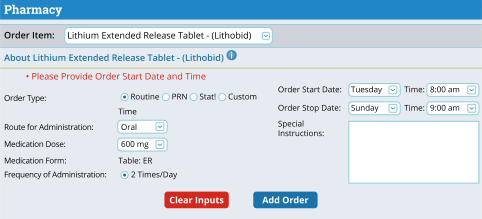
Electronic medical order
In addition to the elements required on all prescriptions, electronically generated prescriptions must also have the following.
A DEA number of the prescribing health care provider if the prescription is for a controlled substance
The telephone number of the health care provider
The time and date of the transmission
The name of the pharmacy to which the prescription is sent.
Specialty pharmacies have similar functions to other pharmacies in that they dispense medications as prescribed by a health care provider to treat patients’ conditions and diseases. However, these pharmacies prepare and dispense intricate medications for more complex, chronic, and rare health conditions (such as cancer, HIV/AIDS, immune diseases, hormone deficiencies, and bleeding disorders). They will stock many of the medications that are not usually found in your community or retail pharmacy.
Specialty pharmacies provide services that include training in how to use these medications, comprehensive treatment assessment, patient monitoring, and frequent communication with caregivers and the patient’s health care providers. In addition, specialty pharmacies are able to manage special storage, handling, and administration requirements; perform ongoing monitoring of patient safety and medication efficacy; and prepare and deliver high-cost treatments, some exceeding $10,000.
Specialty pharmacies may serve specific purposes. For example, nuclear pharmacies are a specialty area of pharmacy practice dedicated to the compounding and dispensing of radioactive materials for use in nuclear medicine procedures. Radioactive materials used in pharmaceuticals (radiopharmaceutical) may be used for diagnostic imaging and therapeutic procedures. For example, a radiopharmaceutical can be administered orally, by injection, or via other routes to diagnose cancer, kidney disease, urinary bladder disease, and liver disease.
Specialty medications have complex profiles that require intensive patient management and, in some cases, special handling. Although some are taken orally, many of these medications need to be injected or infused, at times in a medical practice or hospital. Some medications and treatments are required by the FDA to be prescribed and dispensed only by certified physicians and pharmacists. Specialty pharmacies may provide these medications, along with required education and monitoring.
Specialty medications can be taken in many routes of administration, including oral, injection, inhalation, or by infusion. Many specialty pharmacies must compound, which is the process of combining, mixing, or altering two or more drugs or ingredients to create a medication tailored to the needs of a specific patient. A drug may be compounded for a patient who cannot be treated with a regularly prepared medication. This may include a patient that is allergic to a certain dye and needs a medication made without it or an older adult patient requiring a liquid form of a medication that the drug manufacturer only makes as a tablet. Although capsules may be compounded, other forms of compounded drugs may include injectables, syrups, creams, serums ointments, supplements, elixirs, and gels.
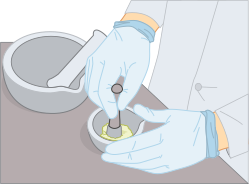
Compounding mixes two or more drugs or ingredients
Compounding medications may be prepared by a licensed pharmacist in a state-licensed pharmacy, or federal facility, or by a physician, and by or under the direct supervision of a licensed pharmacist in an outsourcing facility.
Required Components of Medical Records
Whether the medical practice uses an electronic or paper record, there are specific sections and components that are required of all patients’ medical records.
Administrative Sections
Demographic Data
Name
Address
Birthdate
Sex
Gender
Social Security number
Phone number
Employment information
Administrative Data
Notice of privacy practices form
Advance directives
Consent forms
Medical records release form
Correspondence
Any correspondence related to the patient (e.g., from patient’s insurance company, attorney, or the patient themselves)
Schedule, Financial, and Billing Information
Information regarding any appointments, insurance information, balances
Clinical Section
Health History
Chief complaints
Present illness
Past medical history
Family history
Social history
Review of systems
Physical Examination
Assessment of each body part
Allergies
All known patient allergies
Medication Record
Detailed information related to patient’s medication
Problem List
Problems identified, updated each visit
Progress Notes
New information each time the patient visits or telephones the office
Laboratory Data
Any laboratory reports obtained on the patient
Diagnostic Procedures
Electrocardiogram report
Holter monitor report
Spirometry report
Radiology report
Diagnostic imaging report
Continuity of Care
Consultation report
Home health care report
Therapeutic service documents
Hospital documents
Implement Updates in an EMR/EHR
Although EMR and EHR are often used interchangeably, there are differences. An EMR is an electronic version of a patient’s medical history. It is used within a single organization. An EHR also contains the patient’s EMR, except it can be incorporated across more than one health care organization. EHRs are designed to reach out beyond the health organization that originally collects and compiles the information. They are built to share information with other health care providers, such as laboratories and specialists, so they contain information from all the clinicians involved in the patient’s care.
Health care providers and organizations are required to report statistics on communicable and infectious diseases (HIV/AIDS, tuberculosis, sexually transmitted infections) to local and state government agencies. These agencies will also collect this data and report it to the federal government and agencies, such as the CDC.
Since health care providers are required to report cases of births, deaths, and communicable diseases, this information can be collected and provides the vital records or statistics that are maintained by state and local governments. Vital records are useful because they offer detailed information that includes the incidence (new cases) and prevalence (existing cases) that can inform public health decisions. For example, increased incidences of deaths and head injuries from motorcycle accidents led to helmet laws.
Federal and state governments and agencies often use health information in medical records when making decisions related to health care. Their decisions may be related to new and existing policies and legislation that govern health care and other areas as well. Health information may be used to determine the type of coverage that Medicare or Medicaid patients receive. For example, the Centers for Medicare & Medicaid Services, the federal agency that oversees these programs, reviews the history of care provided to its beneficiaries and determines the cost and quality of care to decide on reimbursements and enact legislation. These decisions and the legislation affect future coverage, reimbursement, and availability of services for Medicare and Medicaid beneficiaries.
As a part of EHR adoption, many state and federals laws were created to enforce health care providers to use a computerized provider order entry (CPOE) system, which helped to make health care delivery safer and more efficient. CPOE is an electronic process that allows a health care provider to enter medical orders electronically into a system instead of the more traditional order methods of paper, verbal, telephone, and fax. Once you have electronically entered an order for lab tests, prescription medications, radiology tests, and referrals, the CPOE system interfaces or integrates with other EHR components, such as the pharmacy or laboratory system, to process the order. By reducing the use of written orders, this reduced medical and medication errors since it prevented transcription errors, misplaced decimals, and illegible handwriting. The following is an overview of the benefits of a CPOE system.
Reducing the potential for human error
Reducing time to care delivery
Improving order accuracy
Decreasing time for order confirmation and turnaround
Improving clinical decision support at the point of care
Making crucial information more readily available
Improving communication among health care providers and professionals and patients
By enabling health care providers to submit orders electronically, CPOE can help get medication, laboratory, and radiology orders to pharmacies, laboratories, and radiology facilities faster, saving time and improving efficiency. CPOE can improve workflow processes by eliminating lost orders and ambiguities caused by illegible handwriting, generating related orders automatically, monitoring for duplicate orders, and reducing the time required to fill orders. It can also help to reduce errors by ensuring health care providers produce standardized, legible, and complete orders.
In many cases, a CPOE is either paired with or has a built-in clinical decision support system (CDSS). A CDSS helps patient care by enhancing medical decisions with targeted clinical knowledge, patient information, and other health information. For example, a CDSS can automatically check for medication interactions, medication allergies, and errors in medication dosage and frequency. More advanced CDSSs can prevent the prescription that has been ordered at too high of a dose, alert when a medication needs to be prescribed for or after a procedure, prevent over prescribing due to abuse, and even assist in prescribing the correct treatment.
A CPOE system may be a standalone system, but now most EHR software includes a CPOE system that allows health care providers and professionals to enter patient data electronically into text boxes and dropdown menus. The use of CPOE with an EHR can also improve clinical productivity. For example, when integrated with an EHR system, a CPOE can flag orders that require pre-approval, helping to reduce denied insurance claims.
Many CPOE systems work by the following six-step process.
A provider will log into an EMR.
Once logged in, the provider will see a list of patients on the screen.
The provider can select a patient and use the system to order prescriptions, lab work, and medical scans.
The system automatically validates the order against a patient’s medical history, health insurance plan, and other relevant data that has been stored in the system.
If no error is detected, the order will be sent to a product or service provider, typically a pharmacy or lab.
Finally, this order is added to the patient’s permanent records, expediting future reviews, orders, and access for care providers.
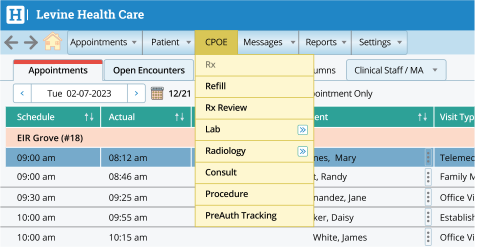
Computerized Provider Order Entry (CPOE)
The use of CPOE allows entering orders electronically rather than on paper and will result in faster turnaround times for patients and reduce life-threatening errors. Although medical assistants are not authorized to submit an order, you may be required to enter the information for an order before requesting the health care provider to authorize it.
Patient Conditions Appropriate for Telehealth/Virtual Visit
Telehealth has a broad definition. It is generally a type of service that uses video calling and other technologies to help health care providers provide patient care to a remote location, such as the patient’s home, instead of at a medical facility.
Although often used interchangeably, telehealth and telemedicine are different types of online health care services. Telemedicine refers specifically to online health care provider visits and remote clinical services, while telehealth is more expansive and includes health-related education services like diabetes management or nutrition courses and health-related training. Telehealth may also refer to remote nonclinical services, such as provider training, administrative meetings, and continuing medical education.
Insurance coverage for telehealth varies widely from state to state, with differences in how telehealth is defined and reimbursed for. For example, some states may reimburse for telemedicine but only specific telehealth services.
Telehealth most closely resembles a real visit to a health care provider, enabling two-sided communication. The provider can check on patients, inquire about the state of their health, and then prescribe an appropriate treatment. It requires interoperability across various devices to make such a visit possible, such as a web-camera, a phone, a computer audio system, or chat capabilities.
The use of telehealth has increased over the last decade due to willingness of both patients and health care providers to use it, regulatory changes enabling greater access and reimbursements, and the need for health care during pandemics. The types of care that you can get using telehealth may include the following.
General health care, like wellness visits
Prescriptions for routine medicine
Dermatology (skin care)
Eye exams
Nutrition counseling
Mental health counseling
Urgent care conditions, such as sinusitis, urinary tract infections, and common rashes
One of the most common forms of telehealth is virtual visits. Patients are able to see a health care provider or a nurse via online or phone chats. Virtual visits can offer care for many conditions, such as migraines, skin conditions, diabetes, depression, anxiety, colds, coughs, and COVID-19. In addition, health care providers may use virtual consultations where one health care provider can get input from specialists in other locations if there are questions about a diagnosis or treatment options. The health care provider can send exam notes, history, lab results, x-rays, or other images to the specialist to review.
Telehealth may include remote patient monitoring, which allows health care providers to monitor measurements from a device the patient may be wearing, such as heart rate and blood glucose levels, and that sends that information to them. Some surgical procedures may be performed remotely from a different location using robotic technology. A health care provider may also send a patient an online video to watch on proper inhaler use.
In many cases, health care providers’ encounters with patients via telehealth are as effective as standard face-to-face visits held in a medical practice. There are preparations that need to be made prior and after the medical visit for the patient and health care team.
For health care providers and professionals, the use of technology does not alter their standard of practice, ethics, or scope of practice or the laws that protect patients and health care providers.
Before the visit, request the patient to send information or forms to fill out online and return them. You may have to send instructions and information on technology requirements for any telehealth services, such as for a virtual visit. The instructions should include how the patient should sign on to join the video chat for the visit and how to use the microphone, camera, and text chat. The patient will need a smartphone, tablet, or computer with internet access to join the virtual visit. The patient should also make sure to update or install any software or applications needed. Both the patient and health care provider should find a comfortable, quiet, private spot to sit during the visit.
With advancing technology, some medical practices are able to perform remote physical examinations through viewing images and hearing sounds. As a result, health care providers can assess and treat a variety of diseases and conditions, such as cardiac and respiratory illnesses, by listening to digital heart and lung sounds live by sending the data over by a video conferencing system. The health care provider can even use video scopes to conduct eye, ear, nose, and throat examinations. In some cases, patients may also self-report vital signs and other biometric data, such as height, weight, and blood pressure. Many patients with conditions such as hypertension, obesity, and diabetes may be experienced at measuring glucose and blood pressure, and the health care provider may be comfortable with the patient self-reporting. The medical assistant should remind patients to have those measurements ready prior to the appointment.
Patient care encompasses many broad functions in a medical practice or health care organization. This includes the patient examination; preparing the patient for the examination, such as positioning them for a procedure; preparing the appropriate supplies and equipment for the procedure; explaining the purpose of the procedure; and answering questions and gaining consent. The medical assistant may be involved in more advanced procedures, such as preparing medications and administering injections.
Advances in technology have allowed patient care to be more efficient and better at meeting patient’s needs. EHRs have made patient data collection more efficient and effective and allow more secure and confidential sharing of patient information. Electronic prescribing, computerized provider order entry (CPOE), and telehealth improve access to care and give health care providers new methods to provide patient care.\
General Patient Care 2
Many office-based surgical procedures can be performed effectively and safely in the medical office. Minor office surgeries consist of procedures that can be performed without the need for anesthesia. Medical assistants assist with many duties related to minor surgical procedures. Strict adherence to aseptic or sterile technique is necessary when assisting with these procedures.
Surgical asepsis, or sterile technique, is used when sterility of supplies and the immediate environment is required, as in surgical procedures. Surgical asepsis requires surgical handwashing or scrub, sterile gloves, and sterile technique when handling materials. Sterile technique is necessary during any invasive procedure (a procedure in which the body is entered), such as making a surgical incision or an open wound.
Before the procedure, the health care provider will expect the medical assistant to assemble all the necessary supplies and equipment and set up the sterile field for the procedure being performed. During the procedure, the health care provider can ask the medical assistant to add items to the sterile field and, if properly scrubbed and wearing sterile gloves, hand sterile instruments to the provider. A sterile field is an area free of micro-organisms and is used as a work area during a surgical procedure. The sterile field must be maintained before and during the procedure.
Guidelines for Establishing a Sterile Field
Sterile packets (packages) are prepared for use in surgical procedures. Each one can contain either a single instrument, a piece of equipment, or several items packed together. These instrument packets can be purchased from a medical supply company or packaged by the medical assistant in the office. These packets are autoclaved and have sterilization indicators (tape) and are dated with the date of sterilization. The primary method of sterilization of instruments and equipment is autoclaving, which is the process of using high-temperature steam to kill any micro-organisms.
All items and packets to be autoclaved must have autoclave indicators to confirm if the item has been properly sterilized. Before using an instrument packet, check for the sterilization indicator and confirm the date. If the instrument packet has either not been autoclaved or was improperly autoclaved, the tape would not show the change of color of the indicator marks.
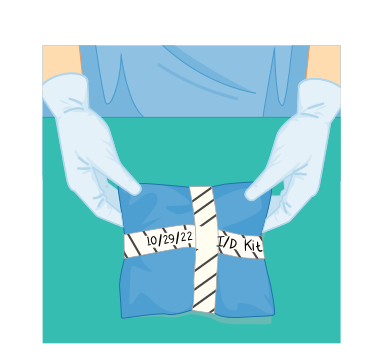
Autoclaved and dated instrument packets

Before and after of autoclave tape. The before shows several slanted lines going across it. The after shows the same slanted lines colored in going across it.
Before and after indicator of autoclave tape
A sterile field is often set up on a Mayo stand, which is a movable, stainless steel instrument tray on a stand. The tray should be disinfected and allowed to dry. Adjust the stand to slightly above the waist and position it at least 12 inches from the body.
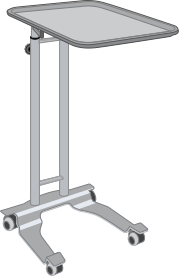
Mayo stand
If a prepackaged sterile kit is used, the packet will be placed on the Mayo stand to be opened. If creating the sterile field with individually wrapped items, a sterile drape is placed carefully on the Mayo stand to create the sterile field.
When opening a sterile packet on the Mayo stand, the flap farthest away from the MA should be opened first, followed by the sides. Then the flap closest to the MA should be opened last without reaching over. Keep in mind that the inside area of the drape is sterile and that only sterile items should be placed on the drape.
A border of at least 1 inch around the sterile drape is considered nonsterile. Therefore, do not place items in this area.

A sterile field. There is an area in the center that is surrounded on all sides by empty space. A border goes around the empty space and there is another smaller area all around the outside of the red border.
A sterile field
Once a sterile field is created, only sterile objects and health care professionals and providers (who have enacted sterilization procedures) can be allowed within the sterile field. The sterile area must be within the field of vision and above the waist. Do not leave a sterile field unattended, reach over a sterile field, or turn away from a sterile field. If items within this field must be rearranged, use sterile forceps. If a sterile item must be opened within the instrument setup, then someone wearing sterile gloves must open it. If the health care provider wants an additional instrument while performing a procedure, open a sterile packet and drop the instrument carefully onto the sterile field. Open packages so that they can easily drop onto the sterile field or be grasped by the health care provider without touching the outer wrapper.
If there is any chance of contamination, remove the contaminated item or correct the error and open a new packet. Always remember that an item is either sterile or nonsterile. When in doubt, assume the item is nonsterile.
Many minor surgical procedures can be performed in a medical office. There are advantages to office-based surgeries, such as saving the patient the time and expense of having to go into an ambulatory surgical facility or a hospital. The basic surgical setup is the standard setup with the addition of specific instruments for each procedure. Some minor procedures performed in the medical office include biopsy, removal of foreign bodies, endoscopy, colposcopy, cryosurgery, and incision and drainage.
Commonly Occurring Types of Surgical Interventions
Commonly Occurring Types of Surgical Interventions
Procedure | Description | Purpose |
Biopsy | The surgical removal of tissue for later microscopic examination. | Diagnose cancer, skin conditions, or other diseases of the body. |
Removal of a foreign object | Surgical removal of an object, such as a small splinter, or a larger object, such as a piece of wood or metal that is embedded in tissue. Splinter forceps are commonly used with this procedure. | Remove a foreign object to relieve pain and prevent infection. |
Removal of a small growth (cyst, wart, mole) | Surgical removal of a small growth from the body. | Conduct further examination of the growth, prevent future growth. |
Endoscopy | Procedure that uses an endoscope to view a hollow organ or body cavity, such as the larynx, bladder, colon, sigmoid colon, stomach, abdomen, and some joints. | Evaluate a patient having stomach pain, difficulty swallowing, gastrointestinal bleeding, diarrhea or constipation, and colon polyps. |
Colposcopy | Examination of the vagina and cervix performed using a colposcope, which is a specialized type of endoscope. With the patient in the lithotomy position, the colposcope allows the health care provider to observe the tissues of this area in detail through light and magnification. | Examine abnormal tissue development during a routine pelvic examination, when a Papanicolaou (Pap) smear result is abnormal, and to obtain a biopsy specimen. Abnormal areas of tissue or cells can then be removed for biopsy to detect cancer. |
Cryosurgery | Procedure using local application of intense cold liquid or special instrument called a cryoprobe to destroy unwanted tissue. | Can be used to destroy abnormal cells and tissues, which uses extremely cold liquid such as liquid nitrogen and an instrument called a cryoprobe. Cryosurgery can be used in conjunction with other procedures, such as a colposcopy as a treatment of cervical erosion and chronic cervicitis. |
Incision and drainage (I & D) | Lancing a pressure buildup caused by pus or other fluid under the skin. | A procedure is performed to relieve the buildup of purulent (pus) material as a result of infection, such as from an abscess. The purulent discharge can be cultured to determine what micro-organism is causing the infection and what antibiotic would be effective in treating it. |
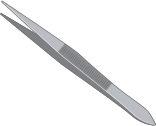
Splinter forceps. Two pieces of pointed metal attached at one end. They come to a sharp point when they each side is brought together.
Splinter forceps
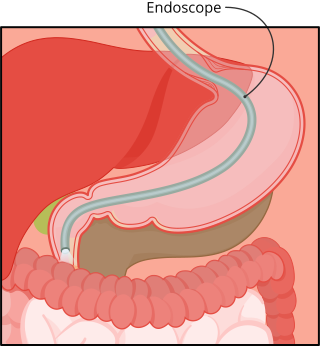
Endoscopy of the colon
Wound closure is often necessary in emergency situations and after office-based surgical procedures. Properly closing an exposed area of the body prevents infection and other complications, aids in the healing process, and minimizes scarring. There are many different types of wound closure and materials, such as sutures, surgical staples, skin closure tapes, and adhesives. The selection of which types to use when closing a wound or incision depends on the wound, how much soft tissue is exposed, how clean the wound is, and the assessment of the health care provider.
Suturing is the use of any device to close or sew together tissue after an injury or surgery. The most common method in suturing is the use of specialized thread, or sutures. Sutures are inserted by the health care provider at the end of a procedure to hold tissues in alignment during the healing process. There are a number of different types of sutures based on size, materials, and absorbability. Sutures can be made of many different materials and can be absorbable or nonabsorbable.
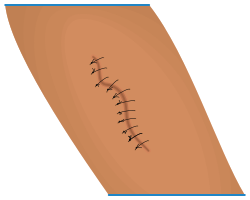
Sutures
Types and Sizes of Sutures
Absorbable sutures do not need to be removed and are digested by tissue enzymes and absorbed by the body tissues. Sutures used to attach tissues beneath the skin are often made of an absorbable material that disappears in several days. Absorption usually occurs 5 to 20 days after insertion.
Nonabsorbable sutures are used on skin surfaces where they can easily be removed after an incision heals. Sutures generally remain in place five or six days and then must be removed if they are nonabsorbable and include materials such as nylon, silk, polyester fiber, and even stainless steel. If sutures remain in the body too long, they can cause skin irritation and infection. Suture removal times differ depending on the site.
The size of the suture material, which is measured by the gauge or diameter, is stated in terms of “0”—the more 0s, the smaller the gauge. For example, 0 is thicker or larger than 6-0 (000000). Sizes 2-0 through 6-0 are the most used. Delicate tissue, such as areas on the face and neck, would be sutured with 5-0 to 6-0 suture sizes because these finer sutures would leave less scarring. Heavier sutures, such as 2-0, would be used for the chest or abdomen. The health care provider will determine the type and gauge of sutures to be used. The suture package label will indicate type, size, length of the suture material, and if it is absorbable or nonabsorbable.
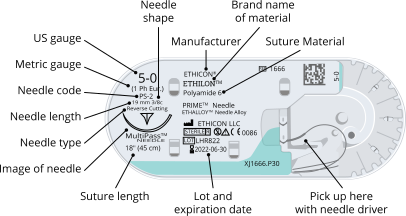
A package of sutures. The label on the outside shows the U S gauge, the metric gauge, the needle code, the needle length, an image of the needle, the suture length, the lot and expiration date, the needle shape, the manufacturer, the brand name of material, and the suture material.
Suture package label
Another common type of wound closures are staples. Staples are made of stainless steel and applied with a surgical stapler. Staples allow for the closure of wounds under high tension, such as on the trunk, extremities, and scalp. They are not generally used in delicate tissues or wounds in finely contoured areas, over bony prominences, or in highly mobile areas. Staples can shorten the closure time and are used to rapidly close an incision, which helps decrease risk of infection. Using a specialized set of extractors, staples need to be removed within 4 to 14 days.
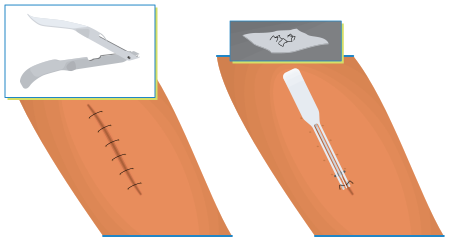
Small pieces of metal being using to attach two sides of a wound. A handheld device is being used to push the staples through the skin and attach them on the other side.
Surgical staples
Other materials used for wound closure include sterile tapes and skin adhesives. Sterile tapes are nonallergenic and available in a variety of widths. They are used instead of sutures when not much tension will be applied to a wound, such as on a small facial cut. Skin adhesives are composed of cyanoacrylate adhesives that react with water to create an instant, strong, flexible bond.
Perform Suture and Staple Removal
Medical assistants, generally, can remove sutures and staples under the delegation of a provider. As with all procedures, explain the procedure to the patient, reminding the patient that there can be a pulling sensation. Thorough inspection of the wound to approximate the edges and the absence or presence of drainage is necessary. Wounds that have crusting blood or exudate will usually need soaking with saline prior to removal of the sutures or staples. If there are any problems, have the health care provider inspect the wound before starting the procedure.
In most cases, a disposable suture removal kit will be used that includes suture scissors and forceps, or a staple removal kit will be used that includes a removal device along with sterile gauze, forceps, sterile gloves, and antiseptic. After proper hand hygiene, open the kit and create a sterile field with the wrapper. Thoroughly cleanse the skin with an antiseptic, such as alcohol or pvidone-iodine solution, and allow to dry.
To remove the sutures, cut the suture with suture scissors below the knot and as close to the skin as possible. Remove every other suture and then go back and remove the remaining sutures until all sutures have been removed, observing the incision line for separation. Remove the suture by pulling the long remaining suture out. Never pull suture material that is outside the skin through the skin.
Take Note
To remove staples, begin with the second staple of the wound and carefully place the lower tip of the sterile staple remover under the staple. Advance the lower jaw of the staple remover under the staple to be removed. Squeeze the handle together until they are completely closed. This will bend the staple in the middle and pull the edges of the staple out of the skin. Do not lift the staple remover when squeezing the handles. Remove every other staple until all staples have been removed and while observing the site.
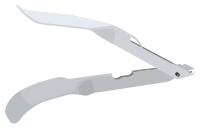
A metal scissor like tool that has a handle on one end and it pointed on the other end. The pointed end it removing staples from a persons skin.
Surgical staple remover
If at any time there is gaping, bleeding, or presence of an exudate, stop and notify the health care provider. Once all the sutures and staples have been removed, clean the wound with antiseptic, allow to dry, and dress the wound as ordered. Prior to disposal, count the number of staples or sutures that were removed. This number must be documented in the patient’s health record. Dispose of sutures in the biohazard waste container and staples in the sharps waste container. Butterfly closures can be used to provide reinforcement of the wound after removal of the sutures or staples depending on the condition and location of the wound.
Patients should have a clear understanding of what to expect during recovery, how to care for the surgical incision at home, and what to do in case of complications from the surgery. Patients can be anxious and have difficulty remembering instructions following a procedure. Provide verbal and written instructions for follow-up care. Clear instructions about postoperative medications should be given in writing as well as verbally to the patient and possibly to family members, if appropriate. Review all instructions with patients and answer questions prior to their departure. Furthermore, the patient should be instructed about whether a follow-up appointment to the office will be necessary and when that should be scheduled.
Most medical offices will have a standard set of printed instructions to send home with the patient. These instructions can include keeping the site clean and dry, not placing stress on the area, drinking plenty of fluids, getting proper rest, and returning for their follow-up appointment. Depending on the surgery or procedure, additional postsurgical or discharge instructions can include the following.
Activity restrictions: This includes bathing and exercising.
Diet restrictions: It is unlikely to have dietary restrictions following minor ambulatory surgery. However, in cases of abdominal pain, diarrhea, or vomiting, a liquid diet with progress as tolerated may be recommended by the provider.
Wound care: This includes instructions such as changing the dressing, applying medications to the wound, and observing for signs of infection.
Medications: If the patient has prescriptions for medications such as antibiotics, instruct the patient on how and when to take the medication, how it should be stored, and possible side effects.
If the patient is unable to drive after the procedure, this should be discussed with the patient prior to the surgery and again at the time of the procedure. In some cases, if the patient did not make appropriate transportation arrangements, the procedure may need to be rescheduled.
Explain when the patient should notify the health care provider of possible postoperative problems, such as fever, bleeding, swelling, or other symptoms. The medical assistant is often responsible for patient education regarding the healing process of a wound. Making sure the patient understands the importance of notifying the provider if infection is suspected is a crucial part of this education. The patient should notify the health care provider in the case of the following.
Unusual pain or burning
Swelling, redness, or other discoloration in the area
Bleeding or other drainage, including unpleasant odor
Fever of 100° F or greater (37.7° C)
Nausea and vomiting
The goal of providing care in an emergency is to help stabilize the patient and prevent further injury. Although medical offices and ambulatory clinics generally do not see emergency or life-threatening situations, they always need to be prepared, alert, and ready to respond to potential threats or emergencies in the clinical setting. An emergency is any condition that leads to cardiac or respiratory failure and mandates rapid implementation of life-saving measures, including calling 911 and cardiopulmonary resuscitation (CPR). Medical assistants should be able to handle emergencies outside and inside the medical office and on the phone.
When severe injury or sudden critical illness occurs, the patient should receive emergency care as soon as possible. The first hour after the time of injury or appearance of symptoms is considered the most critical. In fact, the first hour is often coined the “golden hour” and correlates with prognosis and the possibility of recovery. There has been no evidence to suggest survival rate declines after 60 min; however, rapid intervention in trauma and emergency situations must be provided as soon as possible for the best outcome for the patient.
The medical assistant must be able to identify emergency and life-threatening situations. Examples of life-threatening situations are cardiac arrest (heart attacks), respiratory arrest, uncontrolled bleeding, head injury, poisoning, open chest or abdominal wound, shock, and third- and fourth-degree burns.
In an emergency, the medical assistant should be able respond to the emergency and support the health care provider during this time. Evaluate the situation and provide appropriate care as directed. Every medical office should have a policy manual and an emergency preparedness plan. All staff members should be familiar with them. As a part of the preparedness and training, the MA should be trained and certified in CPR, the use of the automated emergency device, what to do if an airway is obstructed, bandaging, splinting, and managing wounds and bleeding.
When a patient or a patient’s family member calls the medical office stating they are experiencing an emergency, the medical assistant must be able to listen attentively and quickly determine how to proceed. The MA’s first step in an emergency situation on the phone is to obtain critical information. This includes the following.
The patient’s name, contact information, and location
What the situation is and when did it start
The status of the patient—conscious, breathing, presence of pulse
If the patient is not breathing, has no pulse, or is unconscious, follow the medical office’s policy. Some medical offices will require the MA or a nearby staff member to contact 911 immediately on the patient’s behalf while remaining on the phone with them.
Regardless of who calls, gather information on the nature of the situation and the location of the patient. This information will need to be reported to the emergency medical services (EMS) when calling 911 and to document it into the patient’s medical record.
Remain on the phone until EMS arrives and provide appropriate instructions depending on the injury, such as not moving the patient in case of spinal injury, not removing an object that has pierced or penetrated the patient, and applying pressure and elevating the body part if there is bleeding. Stay calm and support the person on the phone until EMS arrives and assures that the patient is being cared for.
emergency medical services (EMS)
Signs and Symptoms Related to Urgent and Emergency Situations
Signs and Symptoms Related to Urgent and Emergency Situations
Emergency Situation | Description | Sign and Symptoms | Treatment/Prognosis |
Severe hypoglycemia | Low blood glucose levels are a serious heath risk for patients with diabetes. Also called insulin reaction or insulin shock, it can occur when there is an imbalance between insulin levels and blood glucose in the body. |
| For mild or moderate hypoglycemia, the patient’s blood glucose level needs to be raised by consuming foods or liquid high in glucose. In cases of severe hypoglycemia, glucagon (a prescription medication) is administered. |
Hypovolemic shock | This occurs when a patient loses an excessive amount of body fluids or blood. It can result from internal or external hemorrhaging (hemorrhagic shock), prolonged vomiting or diarrhea, or severe dehydration. | Thirst, muscle cramping, and lightheadedness—symptoms can progress to chest pain, confusion, lethargy, and death if left untreated. | Control of blood loss, blood transfusion, and IV fluid replacement. |
Heat exhaustion or heat stroke | When the body temperature varies too much over its normal range. | Muscle cramping, which results from an electrolyte imbalance caused by loss of sodium from sweating, perspiration, and pale and clammy skin. | The individual will need to be removed from warm temperatures. Apply any available cold compresses such as ice pack. Death can result from heat stroke if it is not treated quickly. |
Hypothermia or frostbite | Exposure to cold temperatures. Frostbite occurs when the skin and tissue are exposed to freezing temperatures. Tissues are not able to get oxygen supply due to the freezing, causing the tissue to die. The tissues of the nose, ears, fingers, and toes are the most susceptible. | Frostbite includes redness and tingling. As damage progresses, the tissue becomes pale and numb. Hypothermia is an abnormal lowering of body temperature, usually resulting from immersion in cold water or being stranded in subzero weather. Signs and symptoms include shivering, numbness, confusion, paleness, and eventual loss of consciousness. | Individual will need to be removed from cold temperatures. Remove any wet clothing. Cover the individual with a blanket. Provide any available warm/dry compresses and any warm beverages. Death can result if not treated. |
Obstructed airway, or choking | Food aspiration while eating. This occurs when partially chewed food enters the trachea when talking, laughing, or coughing when eating. In children, small objects that obstruct airway include toys, toy parts, buttons, or candy. | A patient who is choking usually places their hand at their throat. This is often called “conscious choking.” The patient may not be able to cough or speak. | Abdominal thrusts are effective for forcing an obstruction for the airway for adults and children older than 1 year of age. A combination of chest thrusts and back slaps are effective for infants younger than 1 year old. |
Syncope, or fainting | A brief episode of unconsciousness. Syncope is not a disease but the result of an underlying condition or disease. | Pale, perspiring, and complain of nausea or dizziness. | Aromatic spirits of ammonia capsules, which can be easily broken and used to wake the patient. These should not be held directly under the patient’s nose but moved back and forth at least 6 inches away. |
syncope
Commonly Occurring Types of Injuries and Treatment
Sprains and Strains
Sprains are caused by a stretched or torn ligament, which are tissues that connect bones to a joint. Falling, twisting, or landing on an uneven surface can all cause a sprain. Ankle and wrist sprains are common. Symptoms include pain, swelling, bruising, and being unable to move the joint. The patient can feel a pop or tear when the injury happens.
A strain is a stretched or torn muscle or tendon. Tendons are tissues that connect muscle to bone. Trauma to the tissue, such as excessive twisting or pulling these tissues, can cause a strain. Strains can happen suddenly or develop over time. Back and hamstring muscle strains are common. Strains are common when playing sports. Symptoms include pain, muscle spasms, swelling, and trouble moving the muscle.
Treatment of both sprains and strains usually involves resting and elevating the injured area, applying cold compresses, wearing a bandage or brace, and the use of anti-inflammatory medications. Later treatment might include exercise and physical therapy depending upon the severity of the injury.
Dislocations
Dislocations occur when a bone end slips out of the socket or when the capsule surrounding a joint is stretched or torn. Dislocations occur usually at any freely moving joint, with the shoulder being the most common. Other dislocations can occur at the ankles, knees, hips, elbows, jaw, and finger. Dislocated joints often are swollen, very painful, and visibly out of place. The patient may not be able to move it.
A dislocated joint is an emergency, and the patient should seek medical attention. Treatment depends on which joint is dislocated and the severity of the injury. It might include manipulations to reposition the bones, medication, a splint or sling, and rehabilitation. When properly repositioned, a joint will usually function and move normally again in a few weeks. However, once a shoulder or kneecap is dislocated, it is more likely to dislocate again. Wearing protective gear during sports can help prevent dislocations.
Fractures
Fractures can be broadly classified as closed or open. Simple, or closed, fractures do not penetrate the skin. In open (compound) fractures, the bone breaks through the skin and is exposed. Open fractures present a greater chance of infection.
A patient with a suspected fracture will need advanced medical care. Immediate care can include stopping any bleeding by elevating the body part and applying pressure. Immobilize the injured area and apply localized cold to the area, such as an ice pack in cloth.
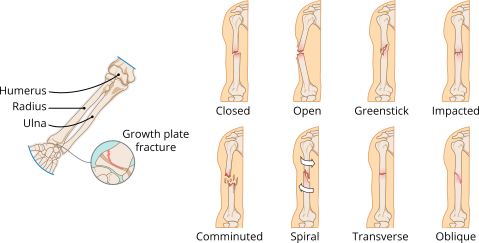
Different kinds of bone fractures. A growth plate fracture is shown along the bone in the wrist. A buckle fracture is shown as a knob on the shaft of a bone. A greenstick fracture is shown as a gouge in the shaft of a bone. Other fractures are shown in increasing level of breakage, from a crack in the bone all the way to the bone shattering into several pieces.
Types of bone fractures
Administer First Aid and Basic Wound Care
First aid is the immediate care given to the victim of injury or sudden illness. The purpose of first aid is to sustain life and prevent death. It includes the prevention of permanent disability and the reduction of time needed for recovery. First aid includes basic life support and maintenance of vital functions. The most common need for first aid is for the treatment of shock, seizures, burns, poisoning, fractures, temperature alterations, and wounds.
Shock
The response of the cardiovascular system to the presence of adrenaline, resulting in capillary constriction. This causes inadequate circulation of blood to the body tissues, lowered blood pressure, and decreased kidney function. Shock can result from trauma, electrical injury, insulin shock, hemorrhage (excessive bleeding), or as a reaction to drugs. It can occur in conjunction with other injuries or illness such as respiratory distress, fever, heart attack, and poisoning.
Anaphylactic Shock
The response of the body to an allergen such as a medication or an insect bite or sting. Early signs and symptoms of shock include pale and clammy skin, weakness, and restlessness. The pulse and respiratory rate are rapid, and vomiting can occur. Late signs of shock include apathy, unresponsiveness, dilated pupils, mottled skin, and loss of consciousness, the state of being alert and aware. Shock can result in death if the condition is not reversed. An EpiPen, a preloaded pen filled with epinephrine, is the first line of defense for an anaphylactic shock if it is readily available.
If a patient is going into shock, emergency medical care is critical, and 911 should be contacted. Then, lay the patient down and elevate the legs and feet slightly, unless this can cause the patient pain or further injury, and try to keep the patient still. Continue monitoring the patient’s pulse regularly until emergency services arrive. If the patient stops breathing, begin CPR.
Seizure
Uncontrolled muscle activity, seizures can be caused by high body temperature, head injuries, drugs, and epilepsy. During the seizure, steps should be taken to prevent injury to the patient. Help them to the floor if they are sitting or standing. Do not try to restrain them. Move objects out of their way and turn them to the side to prevent aspiration or choking. After the seizure, or the postictal phase, the patient can be confused, complain of headache, and be exhausted. Allow the patient to rest.
Poisoning
This can occur in several ways, and most poisoning occurs in the home. Poison can be ingested, inhaled, absorbed, injected, or obtained by radiation. Ingestion is the taking in of a substance by eating or drinking. Signs and symptoms of poisoning include discoloration or burns on the lips, unusual odor, emesis (vomiting), or presence of a suspicious container. Emergency care or 911 is needed if the patient presents as drowsy or unconscious, is having difficulty breathing or has stopped breathing, or is having seizures. While waiting for emergency care, try to remove any poison present on the patient, such as in the mouth, on the skin, or in the eye. Be cautious of aspiration or choking if the patient vomits and continue to monitor the patient’s vital signs in the case CPR is needed.
Open Wound
Any break in the skin, whether from injury or a surgical incision, is referred to as an open wound. When applying or changing a dressing, the medical assistant should perform proper hand hygiene prior to donning sterile or nonsterile gloves. The use of sterile gloves is needed when performing a sterile dressing change. A surgical mask worn by the medical assistant can be recommended to avoid exposure of the wound to micro-organisms.
hemorrhage
Wounds
Any break in the skin, whether from injury or a surgical incision, is referred to as a wound. Wounds can be open or closed, intentional through surgical intervention, or accidental through trauma. Wounds heal based on location, mode of injury, available blood supply, and the patient’s general health status. There are four types of wound classification.
Abrasion: outer layers of skin are rubbed away because of scraping; will generally heal without scarring.
Incision: smooth cut resulting from a surgical scalpel or sharp material, such as razor or glass; can result in excessive bleeding and scarring if deep.
Laceration: edges are torn in an irregular shape; can cause profuse bleeding and scarring.
Puncture: made by a sharp, pointed instrument such as a bullet, needle, nail, or splinter; external bleeding is usually minimal, but infection can occur because of penetration with a contaminated object, and there can be scarring.
Treatments for wounds include managing bleeding by applying pressure, proper wound cleaning, and bandaging. Deep wounds can require a suture or staple insertion.
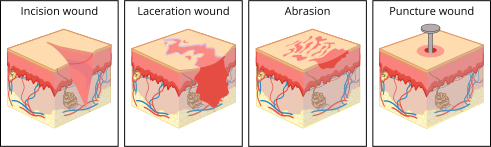
An incision wound shows the skin separated with smooth sides to the opening. It goes into the subdermal tissue. A laceration wound is jagged along both sides and goes deep into the subdermal tissue. An abrasion wound is irregularly shaped and affects the epidermis. A puncture wound shows a sharp object penetrating the epidermis.
Wound types
Wound Care
When providing first aid for a wound, controlling hemorrhage—or excessive, uncontrolled bleeding—is often necessary. There are generally three types of hemorrhaging based on the blood vessels affected: arterial, venous, and capillary. Identify the specific type of bleeding in order to provide the appropriate first aid and care to minimize the hemorrhage.
Arterial bleeding is the most severe and urgent type of bleeding. It can result from a penetrating injury, blunt trauma, or damage to organs or blood vessels. Arterial bleeding is high pressure, and, thus, the bleeding is bright red in spurts. If a large artery, such as the aorta, is ruptured or bleeding has occurred for several minutes, this is a potentially life-threatening situation and can lead to death. This type of bleeding can be hard to control because of the pressure in the blood vessels. The first step should be to put pressure on the wound with sterile gauze. Elevate the site of the bleeding. In some cases, a tourniquet will need to be applied, above the site of the bleed, if the bleeding continues. The health care provider should be notified and should advise if a tourniquet should be used.
Venous bleeding produces a steady flow of dark red blood. Similar to an arterial bleed, the site of the wound should be covered with a clean cloth or gauze, pressure should be exerted on the wound, and the area should be elevated. Capillaries are the smallest blood vessels, and bleeding is minimal. There will be a small and steady flow of blood from the site, but it will clot on its own within minutes.
After the bleeding has been controlled, clean and dress the wound. A wound must be cleaned before a sterile dressing can be applied. The health care provider should inspect the wound site and indicate what should be used to clean the wound, such as an antiseptic cleanser. Cleanse the center of the incision line or wound from the top to the bottom and discard swab. Repeat this step for both sides of the wound. Apply sterile gloves and remove sterile dressing from package. Apply over wound, avoiding dragging the bandage. This will prevent dragging more micro-organisms into the wound. Wrap bandage material over wound and securely fasten the bandage with hypoallergenic tape and check circulation. Discard all waste contaminated with body fluids in a biohazard container.
Once the wound has been cleaned, apply a new sterile dressing. After the wound is dressed, the health care provider can instruct the MA to apply a bandage to hold the dressing in place. Bandages can be gauze, fabric, or elasticized and are usually unsterile but clean. Patients should also be asked about allergies to any adhesives. Instruct the patient on dressing care and to schedule a follow-up appointment to see the health care provider.
When changing a bandage and dressing, the wound must be cleaned before a sterile dressing can be applied. Using a set of bandage scissors, cut the bandage material, to the side of both the wound and dressing. Remove the bandage without removing the dressing, if possible. Then, carefully remove the dressing by pulling the corners toward the center of the wound. When changing dressings that are stuck to the wound, soak the dressing in sterile saline or sterile water prior to removal. Always take precautions to prevent further contamination of the wound when conducting a dressing change. Once the bandage has been removed, dispose of the bandages, used gauze, and gloves into the biohazard waste container.
Take Note
Remember that dressings are sterile and that bandages are nonsterile. Dressings cover wounds, and bandages cover dressings. Care must be taken not to bandage too tightly and restrict circulation.
Signs and Symptoms of Wound Infection and Wound Stages
Wounds pass through various stages of healing, including inflammation, as the body starts to fight off potential infection. Inflammation is the body’s protective response to trauma and invasion by micro-organisms; it is generally localized around the site of trauma or infection. Signs of inflammation are redness (erythema), swelling, warmth, and pain. The three phases of wound healing or restoration of structure and function are the following.
Inflammatory phase (3 to 4 days): Marked by pain, swelling, and loss of function at the site of the wound. Blood clot forms to stop bleeding and plug the opening of a wound.
Proliferating phase (4 to 21 days): Fibrin threads extend across the opening of a wound and pull edges together; cells multiply to repair the wound, and eschar or scab begins to form to keep out micro-organisms.
Maturation phase (21 days to 2 years): Tissue cells strengthen and tighten the wound closure, forming a scar; scar eventually fades and thins.
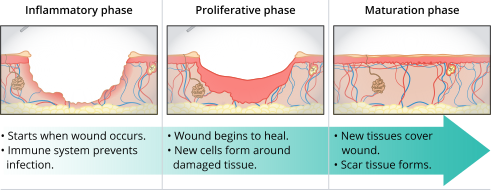
The three phases of wound healing. First box: Starts when wound occurs. Immune system prevents infection. Second box: Wound begins to heal. New cells form around damaged tissue. Third box: New tissues cover wound. Scar tissue forms.
Three Phases of Wound Healing
If the wound is not properly healing or staying clean, micro-organisms can enter the wound, and complications can occur. Wound complications include the following.
Infection (signs of inflammation, swelling, purulent or puslike drainage, fever)
Hemorrhage or bleeding
Dehiscence (separation of wound edges)
Evisceration (separation of wound edges and protrusion of abdominal organs)
Burns
Burns can result from exposure to heat, chemicals, or radiation. The severity of a burn is determined by the location, depth, and size. Injury to the face, arms, legs, and genitals are the most critical. Burns that cover more than 10% of the body surface generally require hospitalization. Burns are classified into four degrees according to their depth.
A first-degree (superficial) burn affects only the outer layer of skin tissue. The skin becomes red and discolored, and some slight swelling can occur. Healing of first-degree burns is generally rapid. Examples of a first-degree burn are sunburn and a burn caused by immersing part of the body briefly into hot water.
A second-degree (partial-thickness) burn is one that breaks the surface of the skin and injures the underlying tissue. Second-degree burns can result from a severe sunburn and exposure to hot liquids or heat. The appearance of blisters commonly indicates a second-degree burn. The skin is red or mottled in appearance. The skin can become wet when plasma is lost through the damaged skin. This type of burn causes greater pain and swelling.
A third-degree (deep-thickness) burn is deep enough to damage the nerves and bones. Tissue burned to the third degree is charred and white. A third-degree burn can cause less pain because the nerves are damaged. Third-degree burns can result from exposure to fire, hot water, hot objects, or electricity.
A fourth-degree (deep full-thickness) burn goes through both layers of the skin and underlying tissue as well as deeper tissue, possibly involving muscle and bone. There is no feeling in the area because the nerve endings are destroyed. Fourth-degree burns are often caused by flames and chemicals, such as from a hot iron or stove, fireplace, and a building fire.
Treatment of Burns
For minor burns, cool the burn by holding the area under cool (but not cold) running water for about 10 min. If the burn is on the face, apply a cool, wet cloth until the pain eases. For a mouth burn from hot food or drink, put a piece of ice in the mouth for a few minutes. After the burn is cooled, apply a lotion, such as one with aloe vera or cocoa butter. This helps prevent drying and provides relief. If a blister appears, do not break it, because this can increase the risk of infection. If a blister does break, gently clean the area with water and apply an antibiotic ointment. Cover the burn with a clean bandage. Wrap it loosely to avoid putting pressure on burned skin. Bandaging keeps air off the area, reduces pain, and protects blistered skin. A minor burn might need emergency care if it affects the eyes, mouth, hands, or genital areas. Infants and older adults might need emergency care for minor burns as well.
When treating a major burn, emergency care is needed. Call 911 or seek immediate care. Until help arrives, protect the patient from further harm. Do not try to remove clothing stuck in the burn. Remove jewelry, belts, and other tight items, especially from the burned area and the neck. Burned areas swell quickly, so ensure the patient does not choke. Make certain that the person burned is breathing. If needed, begin CPR. Cover the burn. Loosely cover the area with gauze or a clean cloth. Raise the burned area. Lift the wound above heart level if possible. Watch for signs of shock, such as cool, clammy skin; weak pulse; and shallow breathing.
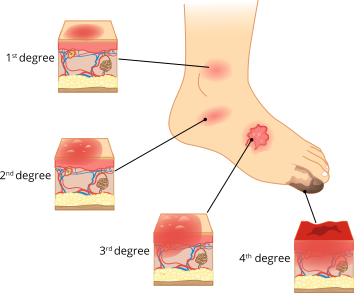
ifferent types of burns. They range from first degree to fourth degree, based on severity. First degree burns show damage to the uppermost layer of skin tissue. Second degree burns show damage to the uppermost and the next layer of tissue. Third degree burns extend into the dermal layer. Fourth degree burns show a complete destruction of the skin tissue.
Classification of burns
erythema
dehiscence
evisceration
Assist Provider with Patients Presenting with Minor and Traumatic Injury
When a patient presents to the office with minor or traumatic injuries, the medical assistant can be responsible for obtaining the chief complaint, obtaining vital signs, and assisting the provider as necessary. This can also include cleaning wounds, preparing sterile fields for minor surgical interventions, bandaging wounds, administering injections, instructing patients on the signs of infections, providing wound care, and scheduling follow-up appointments. Minor and traumatic injuries include strains and sprains, dislocations, fractures, burns, lacerations, and abrasions.
Which of the following should a medical assistant do in the case of a patient having a seizure?
Select all that apply.
a
Move objects out of the way to prevent injury.
b
Restrain the patient to minimize moving.
c
If the patient is sitting, support the patient from falling.
d
Help patient to the floor if standing.
e
Turn the patient to the side to prevent choking.
Submit
Preparation for emergencies should include a preparedness plan, or an emergency action plan, that has a detailed emergency protocol that outlines the steps to be followed in the event of an office emergency. In addition to medical emergencies, this can also include other emergencies, such as earthquakes, tornadoes, floods, fires, shootings, and bioterrorism.
The emergency action plan can include the following.
Identifying patients who have life-threatening conditions and need immediate care
Identifying when and who should contact emergency medical services during a crisis situation
The location of fire extinguishers and emergency evacuation routes
Identifying an individual to make sure all needed equipment and supplies are ready for the provider during an emergent situation
Every medical office must have an emergency kit that contains supplies needed during an emergency. The emergency kit is commonly referred to as a crash cart, but it can be a bag or a container of emergency supplies. Many emergency kits can be purchased with all the necessary items, and some states have specific requirements for emergency kits. The health care provider can also determine what items and emergency medication should be included. Equipment and medication choice should reflect each medical office’s patient population and specialty. For example, a pediatric specialty should have more medication appropriately dosed for children, and an allergy specialty practice can increase the number of epinephrine auto-injectors in the emergency kit.
Most emergency kits contain surgical instruments, such as forceps; an oxygen supply; an airway and suction device; an ambu-bag; a heart monitor-defibrillator; and emergency medications.
The medical office should have several automated external defibrillators (AEDs)—one in the emergency kit or at least accessible, usually within 3 min from any location. Automated external defibrillators (AEDs) are lightweight, battery-operated, portable devices that check the heart’s rhythm and send a shock to the heart to restore normal rhythm. Electrodes are attached to the patient who is experiencing cardiac arrest. The electrodes send information about the patient's heart rhythm to a computer in the AED. The computer analyzes the heart rhythm to find out whether an electric shock is needed. If it is needed, the electrodes deliver the shock. Most states have requirements on AEDs.
Emergency medications are often delivered as injectables or rectal suppositories for faster absorption. Some of the emergency medications that can be included are the following.
Epinephrine auto-injector: treatment for anaphylactic shock
Naloxone: rapidly reverses an opioid overdose
Morphine: treatment for pain
Nitroglycerin, sublingual or spray: treatment for chest pain
Albuterol nebulizer: treatment for difficulty breathing, shortness of breath, wheezing
Lidocaine: to treat or prevent localized pain
Atropine: treatment for bradycardia
Normal saline for IV administration: treatment for dehydration
Prochlorperazine suppositories: for nausea and vomiting
In the emergency kit, medications should be arranged so that they are easy to locate and the names are clearly visible. Clearly label pediatric medications and place them in plastic bags to separate them from other medications.
The emergency kit must be checked regularly, such as once a month, and maintained so that its contents are there when needed. Create a process for restocking, conducting inventory, and replacing the contents of the cart. Expiration dates on medications should also be checked routinely per facility policy. Expired medications should be promptly removed and replaced. The defibrillation pads on the AED or the defibrillator should be checked for expiration date. The battery charge on the monitor and/or AED should be checked and documented. The emergency kit should be in a location easily accessible to the examination rooms and that all staff members know where it is located.
All staff members should receive training on emergency preparedness and how to respond in the case of medical emergencies. To maintain a level of preparedness, the medical office should routinely conduct an emergency simulation in which an emergency situation is created and responses are practiced by health care professionals. These practice drills allow the health care team the opportunity to practice all steps in the emergency protocol as well as individual lifesaving skills. Often, unanticipated problems with the protocol or medical equipment can be identified and corrected during these practice emergency drills.
crash cart
Procedures to Perform CPR, Basic Life Support, and Automated External Defibrillator (AED)
One of the most common medical emergencies inside and outside of the medical office is a myocardial infarction, or heart attack. A myocardial infarction (MI) happens when the flow of blood that brings oxygen to the heart muscle suddenly becomes blocked. The heart does not get enough oxygen. If blood flow is not restored quickly, the heart muscle will begin to die, and sudden cardiac arrest can occur, which is when the heart stops beating. An MI and cardiac arrest are life-threatening medical emergencies that require immediate treatment. The longer the patient’s heart is without oxygen, the more damage is done to the heart muscle. Symptoms of an MI can vary, although common symptoms are the following.
Chest pain, heaviness, or discomfort in the center or left side of the chest
Pain or discomfort in one or both arms, the back, shoulders, neck, or jaw or above the belly button
Shortness of breath when resting or doing a little bit of physical activity
Excessive sweating for no reason
Feeling unusually tired for no reason, sometimes for days
Nausea (feeling sick to the stomach) and vomiting
Light-headedness or sudden dizziness
Rapid or irregular heartbeat
If a patient is experiencing an MI or cardiac arrest, immediately activate the emergency response team. If the patient is still conscious, the health care provider can administer emergency medication, such as aspirin, nitroglycerin, or thrombolytics to dissolve blood clots that can be blocking the coronary arteries in the heart. In addition, the health care provider can ask to administer oxygen to the patient via the nasal cannula or face mask.
Cardiac arrest occurs when the heart suddenly and unexpectedly stops pumping. If this happens, blood stops flowing to the brain and other vital organs. Cardiac arrest is a medical emergency and a common cause of death.
A patient experiencing a cardiac arrest can collapse suddenly and lose consciousness, stop breathing or gasp for air, not respond to shouting or shaking, and not have a pulse. Check for breathing and a pulse. Palpate for a pulse for no more than 10 seconds. If there is no pulse, use an automated external defibrillator (AED). If an AED is not available, cardiopulmonary resuscitation (CPR) should be initiated.
When using an AED, make sure the area around the patient is clear. Touching the patient could interfere with the AED’s reading of the person’s heart. Listen for voice prompts that tell when and how to give an electric pulse or shock if one is needed to restore a normal rhythm. Electrodes deliver the shock, and some deliver more than one shock. Start CPR after the shock is delivered and if the device instructs to do so.
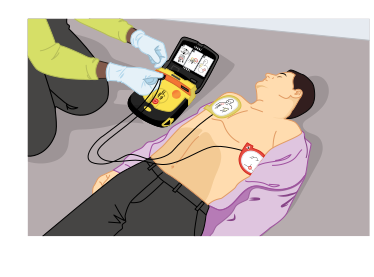
Medical personnel using an A E D on a man lying on the floor. The A E D is shown as a small box with dials and knocks on it. The medical personnel are placing electrodes on the mans chest.
Automated external defibrillator (AED)
If an AED is not available or in between AED use, initiate chest compressions and CPR. To perform CPR, perform the following.
Begin chest compressions by placing the heel of one hand in the middle of the patient’s sternum and the other hand on top of the base hand.
Give 30 chest compressions.
Use the head-tilt, chin-lift method to open the airway.
Pinch the nose closed and give two slow mouth-to-mouth breaths. The chest should rise and fall with each breath administered.
Continue giving sets of 30 chest compressions and two breaths.
If the patient recovers and there are no other signs of injury to the back or neck, turn the victim to their side.
Take Note
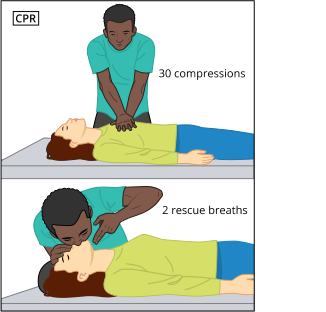
A person with both of their hands placed on the chest of a woman lying on the ground. One hand is on top of the other. A person with their mouth on the mouth of a woman lying on the ground. They have one hand under the womans chin and the other on her head.
Performing CPR
Medical assistants should be certified in basic life support and CPR (BLS/CPR) and maintain the certification. Although AEDs can be safely used by people with no medical training, medical assistants should complete a course on proper usage of an AED. Certification is also offered for AED training. Certification is often required to renew every two years.
myocardial infarction
automated external defibrillator (AED)
An MA observes a patient in the waiting room clutch their chest and collapse. Which of the following should be done first?
a
Call 911.
b
Begin CPR.
c
Use an AED.
d
Administer epinephrine auto injector.
Submit
Which of the following are common signs and symptoms in a heart attack?
Select all that apply.
a
Dilated pupils
b
Shortness of breath
c
Chest pain
d
Difficulty in coughing and speaking
e
Muscle convulsions
Submit
Durable medical equipment (DME) includes medical devices and supplies that can be used repeatedly. The most common examples of durable medical equipment used outside of a hospital are dialysis machines, continuous positive airway pressure (CPAP) machines, oxygen concentrators and ventilators, orthotics and prostheses, bed equipment (hospital beds, lift beds), mobility aids (wheelchairs, crutches), and personal care aids (bath chairs, commodes). Oftentimes, DME can be written as DMEPOS for durable medical equipment, prosthetics, orthotics, and supplies. The following is necessary to qualify as a DMEPOS.
Primarily serve a medical purpose
Be prescribed by or ordered by a health care provider
Be able to be used repeatedly
Have an expected lifetime of at least three years
Be used in the home
Only be useful to patients who have an injury or disability
In a medical office or ambulatory care setting, the medical assistant will assist the health care provider with these devices and will provide education and support for the patient. In some cases, the MA will teach the patient how to use specific DMEPOS, such as crutches and canes.
DMEPOS items can be kept in some medical offices as inventory. If the medical office purchased the item, it is allowed to bill patients and/or their insurance company for it. In other cases, the health care provider will prescribe the DME item for the patient. As with any prescriptions or treatment, the health care provider must document the patient’s diagnosis and the medical necessity for the patient to have the DMEPOS.
durable medical equipment
Prior Authorizations for Medication Durable Medical Equipment
What is considered DMEPOS is defined by Medicare, Medicaid, and other insurance companies—at least for reimbursement purposes. For example, compression leggings, incontinence pads, and ramps installed in the home are not considered DMEPOS.
For a patient to be eligible for DMEPOS, the health care provider must order the item through a prescription or medical order form to be submitted to a supplier. The health care provider must state that the DMEPOS is needed for the patient’s medical condition or injury and is for home use. Some DMEPOS items, such a power wheelchair, require a face-to-face encounter, where a visit to the health care provider is required within 6 months before the order. The face-to-face encounter must be documented in the patient’s medical record. The supporting documentation must include subjective and objective information and information used for diagnosing, treating, and managing the patient’s condition for which the DMEPOS is ordered.
For some DMEPOS items, prior authorization may be required. Centers for Medicare & Medicaid Services (CMS) established a list of items that are considered DMEPOS, called the Master List. In addition, CMS created a subset list of items requiring prior authorization, the “Required Prior Authorization List.” Prior authorization is a process through which a request for provisional affirmation or approval of coverage is submitted for review before a DMEPOS item is furnished to a beneficiary and before a claim is submitted for payment. Items that require prior authorization can include power wheelchairs, powered air flotation beds, powered pressure-reducing air mattresses and more.
To submit a DMEPOS item for prior authorization, the health care provider will submit the necessary forms and information to the Durable Medical Equipment Medicare Administrative Contractor (DME MAC) for review. If the DME MAC denies prior authorization for the patient’s equipment, the health care provider can appeal but must provide more reasons and additional documentation related to why the patient needs the DMEPOS.
Which of the following DMEPOS requires prior authorization?
Select all that apply.
a
CPAP machines
b
Thermometer
c
Power wheelchairs
d
Pressure-reducing air mattresses
Submit
Which of the following would qualify an item as a DMEPOS?
Select all that apply.
a
Used in a facility
b
Prescribed by a health care provider
c
Last for at least one year
d
Can be repeatedly used
e
Used by a patient with a disability
Submit
This module introduced many advanced skills and concepts for medical assistants, including how to assist in office-based surgical procedures. The module explored how to maintain sterile procedures, how to set up and maintain a sterile field, and how to assist with and perform different surgical procedures. This includes removing sutures and staples and, depending on the medical practice, assisting in endoscopies, cryosurgeries, and incisions and drainages.
This module additionally discussed how to identify various emergencies in the medical setting and how to prepare for them. Knowing how to prepare an emergency preparedness kit and how to stabilize and treat patients during medical emergencies are crucial skills for when an emergency situation arises. Common medical emergencies include heart attacks, cardiac arrest, wounds, burns, sprains and strains, dislocations, and fractures. Providing postsurgical care and understanding the processes involved in ordering and obtaining prior authorization for durable medical equipment are imperative to the medical assistant role.
Review Objectives
At the completion of this lesson, the medical assistant should be able to:
Prepare and maintain a sterile field.
Perform staple and suture removal.
Assist with surgical interventions and discharge instructions.
Administer first aid and basic wound care.
Identify and respond to emergency/priority situations.
Assist provider with patients presenting with minor and traumatic injury.
Order and identify durable medical equipment, prosthetics, orthotics, and supplies (DMEPOS) as well as obtain prior authorization.