Light Independent Cycle
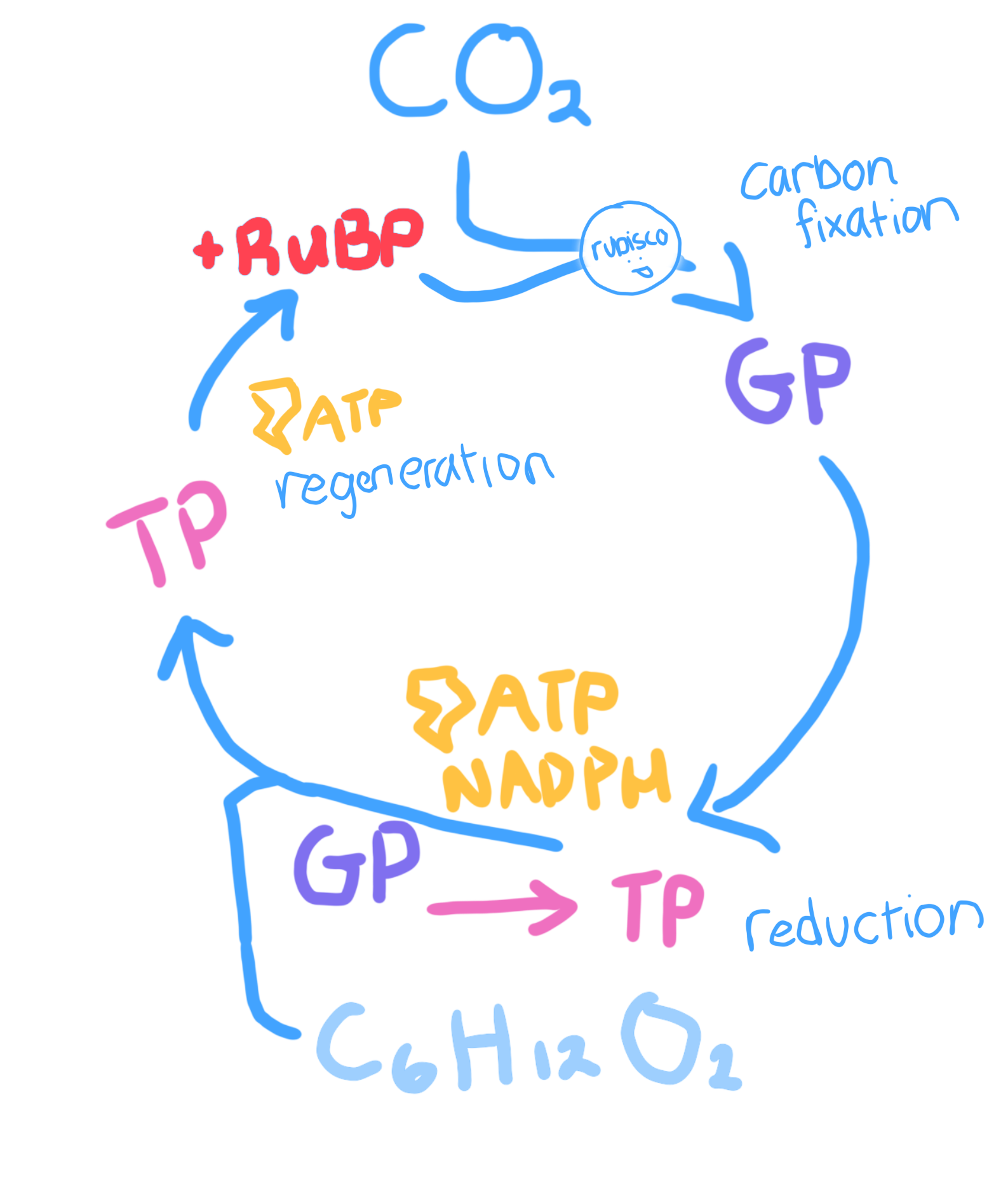
In the enzyme-filled stroma of the chloroplasts, the light-independent reaction occurs. The light-independent reaction is also called the Calvin Cycle. CO2 from the environment reacts with RuBP to form GP. This 1st step is called Carbon Fixation and occurs with the help of the enzyme Rubisco.
The 2nd step of the Calvin Cycle converts GP to TP using energy from ATP and electrons from NADPH. This is why the light independent reactions rely on the light-dependent reactions that create these 2 energy-filled molecules. Because GP is GAINING electrons, we call this 2nd step Reduction. The molecules NADP+ and ADP are sent back to the light-dependent reaction. This is why the light-dependent reaction relies on the light-independent reaction.
The final step of the Calvin Cycle is called Regeneration because several TP molecules are converted back into the starting molecule, RuBP. This last step also uses energy from ATP molecules that were created in the light-dependent reaction. About 1/6 of the TP molecules are not used in the final step, instead they enter another reaction used to form the final product of photosynthesis: glucose.
The Calvin Cycle (Light Independent Reaction) occurs in the stroma. The first step of Carbon Fixation occurs through the enzyme Rubisco as reactants CO2 and RuBP form the product GP.
Second, GP is converted to TP using energy from ATP and electrons from NADPH (from the light dependent reaction)—a reduction reaction. NADP+ and ADP are sent back to the light dependent reaction. Both reactions rely on each other for their function.
Lastly, TP is converted back to RuBP using the energy from the ATP molecules in the light dependent reaction. ⅙ of the remaining TP molecules are used to produce glucose for the plant to use.