Accounting for Current Liabilities - Chapter 9 Notes
Learning Objectives
C1: Describe current and long-term liabilities and their characteristics.
C2: Identify and describe known current liabilities.
C3: Explain how to account for contingent liabilities.
A1: Compute the times interest earned ratio and use it to analyze liabilities.
P1: Prepare entries to account for short-term notes payable.
P2: Compute and record employee payroll deductions and liabilities.
P3: Compute and record employer payroll expenses and liabilities.
P4: Account for estimated liabilities, including warranties and bonuses.
P5: Identify and describe the details of payroll reports, records, and procedures (Appendix 9A).
P6: Account for corporate income taxes (Appendix 9B).
C1: Current and Long-Term Liabilities
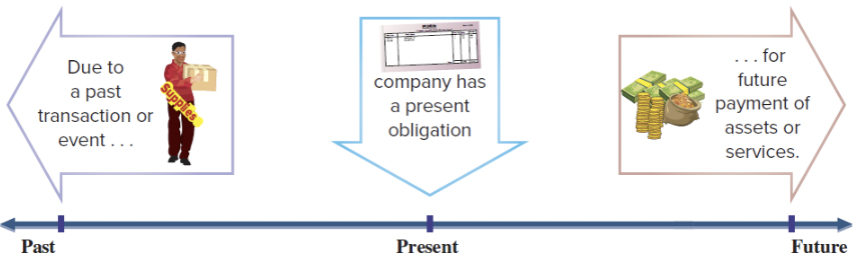
Current Liabilities: Obligations due within one year or the company’s operating cycle, whichever is longer.
Long-Term Liabilities: Obligations due after one year or the company’s operating cycle, whichever is longer.
Uncertainty in Liabilities: Can exist in:
When to pay.
Whom to pay.
How much to pay.
C2: Known Current Liabilities
Known Liabilities: Are current liabilities, examples include:
Accounts Payable.
Sales Taxes.
Unearned Revenues.
Notes Payable.
Payroll Obligations.
Multi-Period Known Liabilities.
Sales Taxes

Example: On August 31, Home Depot sold materials for that are subject to a 5% sales tax.
Sales Taxes Payable = \6,000\times5=\
Unearned Revenues
Example: On June 30, Selena Gomez sells in tickets for three concerts.

On October 31, Selena performs a concert. Revenue recognition:
\900,000\times1/3=\

P1: Short-Term Notes Payable
Short-Term Notes Payable: A written promise to pay a specified amount on a stated future date within one year.
Most notes bear interest.
May arise from:
Overdue account payable.
Borrowing from a bank.
Note Given to Extend Credit Period: Date of Payment
Example: On August 23, Brady Company asks McGraw to accept cash and a 60-day, 12% note to replace its existing Account Payable.

On October 22, Brady pays the note plus interest to McGraw.
Interest expense = \500\times12\%\times\left(\frac{60}{360}\right)=\

Note Given to Borrow from Bank
Example: On Sept. 30, a company borrows from a bank at 12% interest for 60 days.

On Nov. 29, the company repays the principal of the note plus interest.
Interest expense = \2,000\times12\%\times\left(\frac{60}{360}\right)=\

When Note Extends Over Two Periods
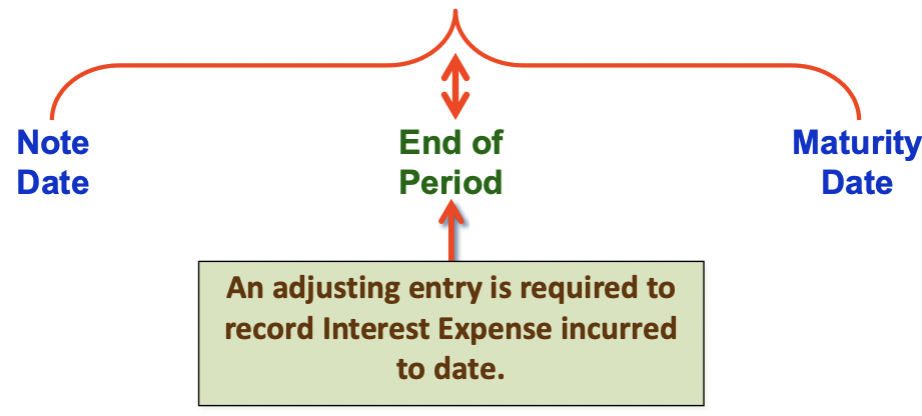
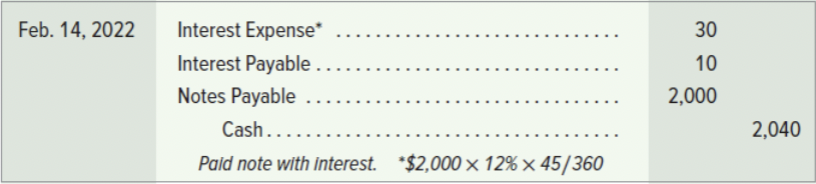
Example: On Dec. 16, 2021, a company borrows from a bank at 12% interest for 60 days. An adjusting entry is needed on December 31.

On Feb. 14, 2022, the company repays this principal and interest on the note.
P2: Employee Payroll Deductions and Liabilities
Payroll Liabilities: Arise from salaries and wages, employee benefits, and payroll taxes levied on the employer.
Employee Payroll Deductions
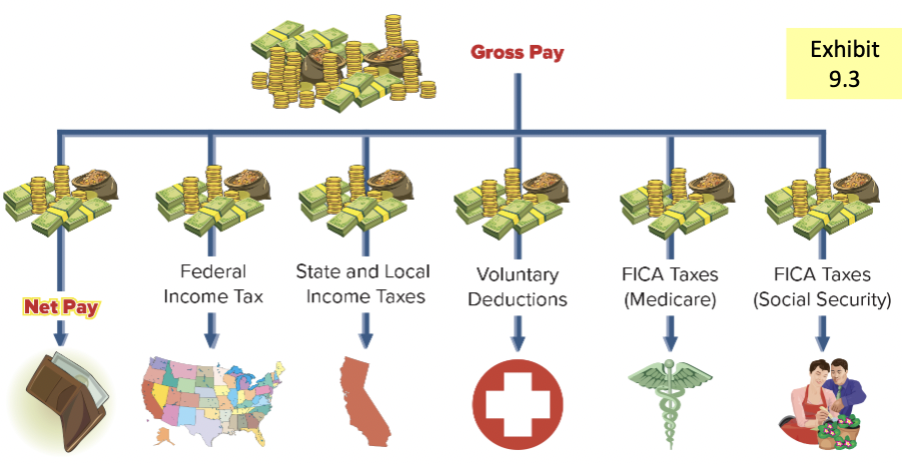
FICA Taxes: Federal Insurance Contributions Act (FICA)
FICA Taxes — Social Security: 6.2% of the first earned in the year (2020).
FICA Taxes — Medicare: 1.45% of all wages earned in the year (2020).
Employers must pay withheld taxes to the Internal Revenue Service (IRS)
Employee Income Tax: Federal Income Tax, State & Local Income Taxes
Amounts withheld depend on the employee’s earnings, tax rates, and number of withholding allowances.
Employers must pay taxes withheld from employees’ gross pay to appropriate gov. agency
Employee Voluntary Deductions: Amounts withheld depend on the employee’s request (e.g., charitable giving, insurance premiums, pension contributions, union dues)
Employers owe voluntary amounts withheld from employees’ gross pay to designated agency .
Recording Employee Payroll
Journal entry example provided to record payroll expenses and deductions for an employee.
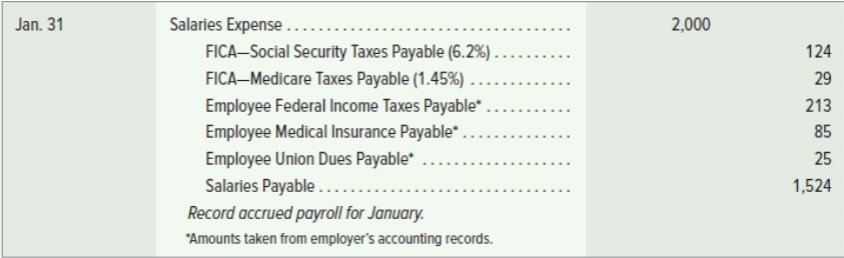
Journal entry example provided to record cash payment.

P3: Employer Payroll Expenses and Liabilities
Employers pay amounts equal to that withheld from the employee’s gross pay for FICA taxes.
FICA–Social Security Taxes
FICA–Medicare Taxes
Note: A 0.9% Additional Medicare Tax is imposed on the high-income employee for pay usually in excess of (this additional tax is not imposed on the employer, whereas the others are).
Federal & State Unemployment Taxes
Federal and State Unemployment Taxes
Federal Unemployment Tax (FUTA): 6.0% on the first $7,000 of wages paid to each employee. A credit up to 5.4% is given for SUTA paid, —> net rate = 0.6%
State Unemployment Tax (SUTA): 5.4% on the first of wages paid to each employee. Merit ratings may lower SUTA rates.
Recording Employer Payroll Taxes
Journal entry example is provided to record the employer payroll taxes for January.
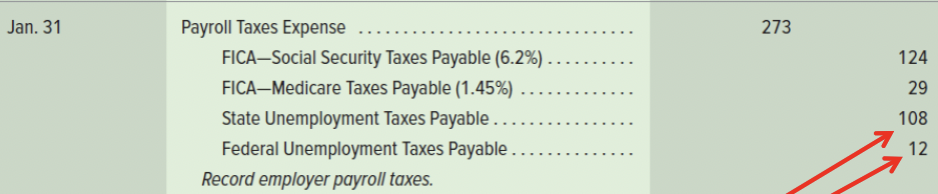
FICA amounts are the same as that withheld from the employee’s gross pay.
Example:
SUTA: \2,000\times5.4=\
FUTA: \2,000\times0.6=\
Internal Control of Payroll
Four key areas of payroll activities that should be separated and monitored:
Employee hiring, payroll preparation, timekeeping, payroll payment
Multi-Period Known Liabilities
Includes Unearned Revenues and Notes Payable
Unearned Revenues from magazine subscriptions often cover more than one accounting period.
A portion of the earned revenue is recognized each period, and the Unearned Revenue account is reduced.
Notes Payable often extend over more than one accounting period.
A three-year note would be classified as a current liability for one year and a long-term liability for two years.
P4: Estimated Liabilities
Estimated Liability: A known obligation of an uncertain amount that can be reasonably estimated.
Examples: pensions, health care, vacation pay, and warranties.
Health and Pension Benefits
Employer expenses for pensions or medical, dental, life, and disability insurance
Example: An employer agrees to pay an amount for medical insurance equal to , and contribute an additional 10% of the employees’ gross salary to a retirement program.

Vacation Benefits
Assume an employee earns two weeks of paid vacation each year.

When the employee takes vacation, a journal entry is recorded.

Bonus Plans
Assume that a bonus of will be paid to employees to be shared by all.

Warranty Liabilities: Definition
Seller’s obligation to replace or fix a product (or service) that fails to perform as expected within a specified period.
Seller reports expected warranty expense in the period when revenue from the sale is reported.
Seller reports warranty as a liability.
Warranty Liabilities: Journal Entries
Example: On Dec. 1, 2021, a dealer sells a car for with a maximum one-year or 12,000-mile warranty covering parts. Past experience indicates warranty expenses average 4% of a car’s selling price.

On Jan. 9, 2022, the customer returns the car for repairs. The dealer replaces parts costing .

C3: Contingent Liabilities
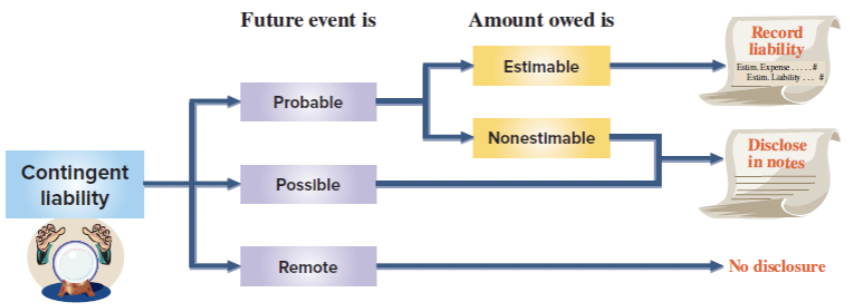
Potential obligations that depend on a future event arising out of past transactions.
Reasonably Possible Contingent Liabilities
Potential Legal Claims: A potential claim is recorded if the amount can be reasonably estimated and payment for damages is probable. If the potential claim cannot be reasonably estimated but is reasonably possible, it is disclosed.
Debt Guarantees: The guarantor usually discloses the guarantee in its financial statement notes. If it is probable that the debtor will default, the guarantor reports the guarantee as a liability.
Other Contingencies: Include environmental damages, possible tax assessments, insurance losses, and government investigations.
Uncertainties That Are Not Contingencies
Uncertainties from future events are not contingent liabilities because they are future events and do not arise from past transactions. These are not disclosed.
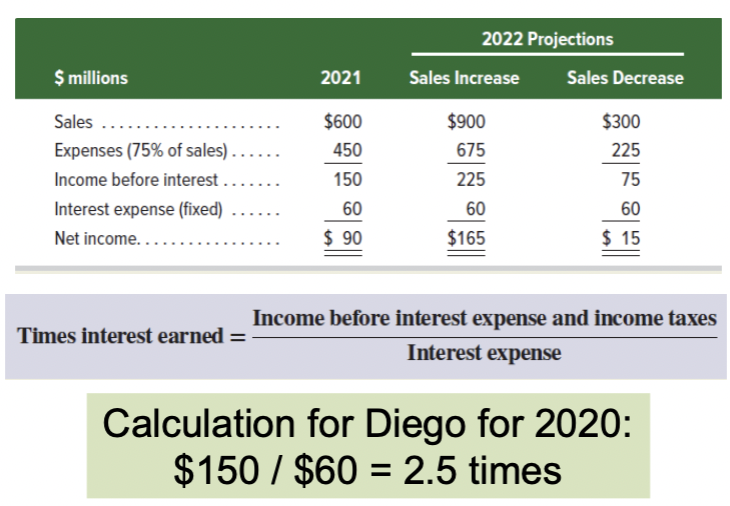
A1: Times Interest Earned Ratio
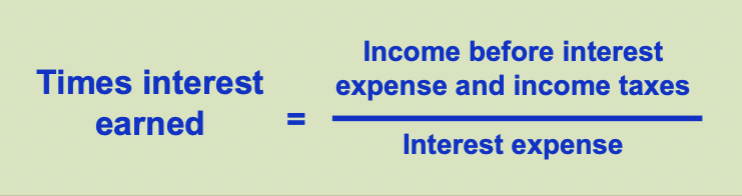
If income before interest and taxes varies greatly from year to year, fixed interest charges can increase the risk that an owner will not earn a positive return and be unable to pay interest charges.
Times Interest Earned: Illustration
.5 : times \$25,000\$21,000\$4,000$$ deferred:
