4.1: Structures of Genetic Material
Heredity
- passing or traits from parents to offspring
- a trait is a specific characteristic or feature exhibited by an organism
- ex: hair colour, blood type, tongue rolling
Genetics
- study of heredity and variation of inherited traits
- two kinds of genetic material found in cells
- RNA-ribonucleic acid
- DNA-deoxyribonucleic acid
DNA
- contains specific information that makes each type of living creature unique
- distinct sequences of genetic information (genes)
- govern expression of a trait
- information encoded by a sequence of nucleotides
Structure of DNA
- each strand of a DNA molecule is made up of individual units called nucleotides
- nucleotides composed of three things
- phosphate group
- sugar group
- nitrogenous base
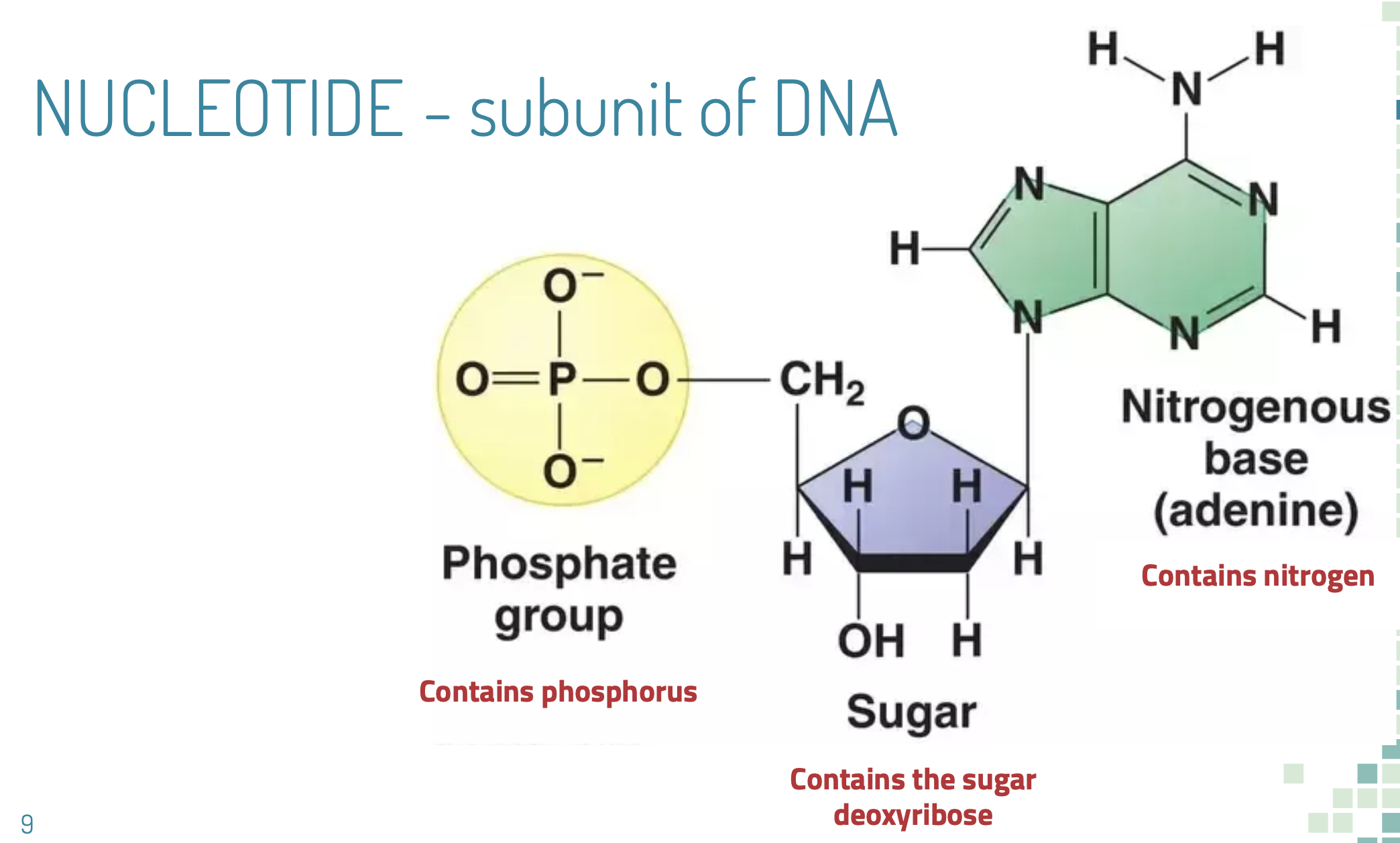
- four types of nucleotides each with a different nitrogenous base
- adenine
- guanine
- cytosine
- thymine
- double-stranded molecule
- strands held together by hydrogen bonds that form between complementary base pairs
- each nitrogenous base pairs with another in a particular matter
- adenine and guanin are purines (2 rings)
- cytosine and thymine are pyrimidines (1 ring)
- nucleotides in ladder held together through phosphodiester bonds
- sugars and phosphate groups form the backbone of a DNA strand
- nitrogenous bases protrude from the backbone
- two strands run antiparallel
- one end is 5’, other is 3’
- ladder like structure that twists into a spiral staircase
- double helix
- rungs of nitrogenous base pairs
- twisted ladder describes double helix
- DNA is wound into chromatin within the nucleus
- chromatin is tightly wound into chromatids
- \