MODULE 4.1: ATTENTION
what is attention?
William James (1890)
“Everyone knows what attention is. It is the taking possession
by the mind, in clear and vivid form, of one out of what seem
several simultaneously possible objects or trains of thought.
Focalization, concentration, of consciousness are of its essence.
It implies withdrawal from some things in order to deal
effectively with others...”
Hal Pashler (1998)
“No one knows what attention is.”
ATTENTION: the functionality of “restricting cognitive processes so that they operate on a subset of the available information for the purpose of improving the speed or accuracy of the processes”
quote from Luck & Vercera (2002)
elements of attention
selection among alternatives
serves to improve the effectiveness of mental processes
restricting-
how we decide what to restrict and what to allow?
attentional control/executive control/cognitive control
learning check
which of the following is NOT an element of attention that is highlighted by our working definition?
A. selection among alternatives
B. improving effectiveness of mental (cognitive) processing
C. focalization and concentration of consciousness
D. restricting cognitive processes
E. controlling cognitive processes
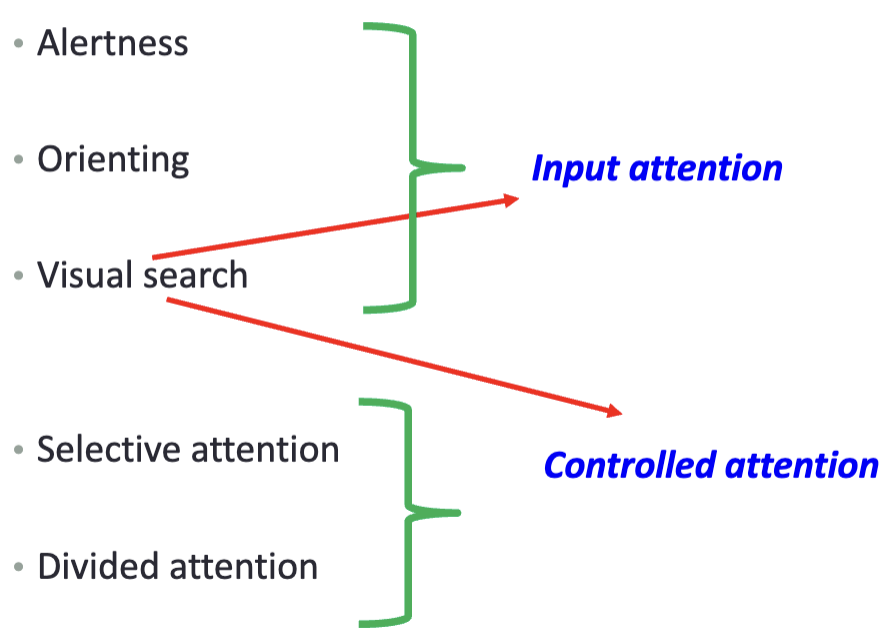
types of attention/functional-neural components of attention
ALERTNESS: achieving and maintaining an alert state
ex- as a lifeguard on a beach, watching for unusual patterns of activity in or near the water
ORIENTING: shifting attention reflexively based on a cue
ex- suddenly becoming aware of a rock thrown towards you
VISUAL SEARCH
ex- picking out your favorite player on a football field
SELECTIVE ATTENTION
ex- studying for a test while ignoring sounds from the tv in the next room
DIVIDED ATTENTION
ex- hitting tennis balls while also chatting with your tennis partner
EXECUTIVE CONTROL OF ATTENTION: resolving conflict among choices
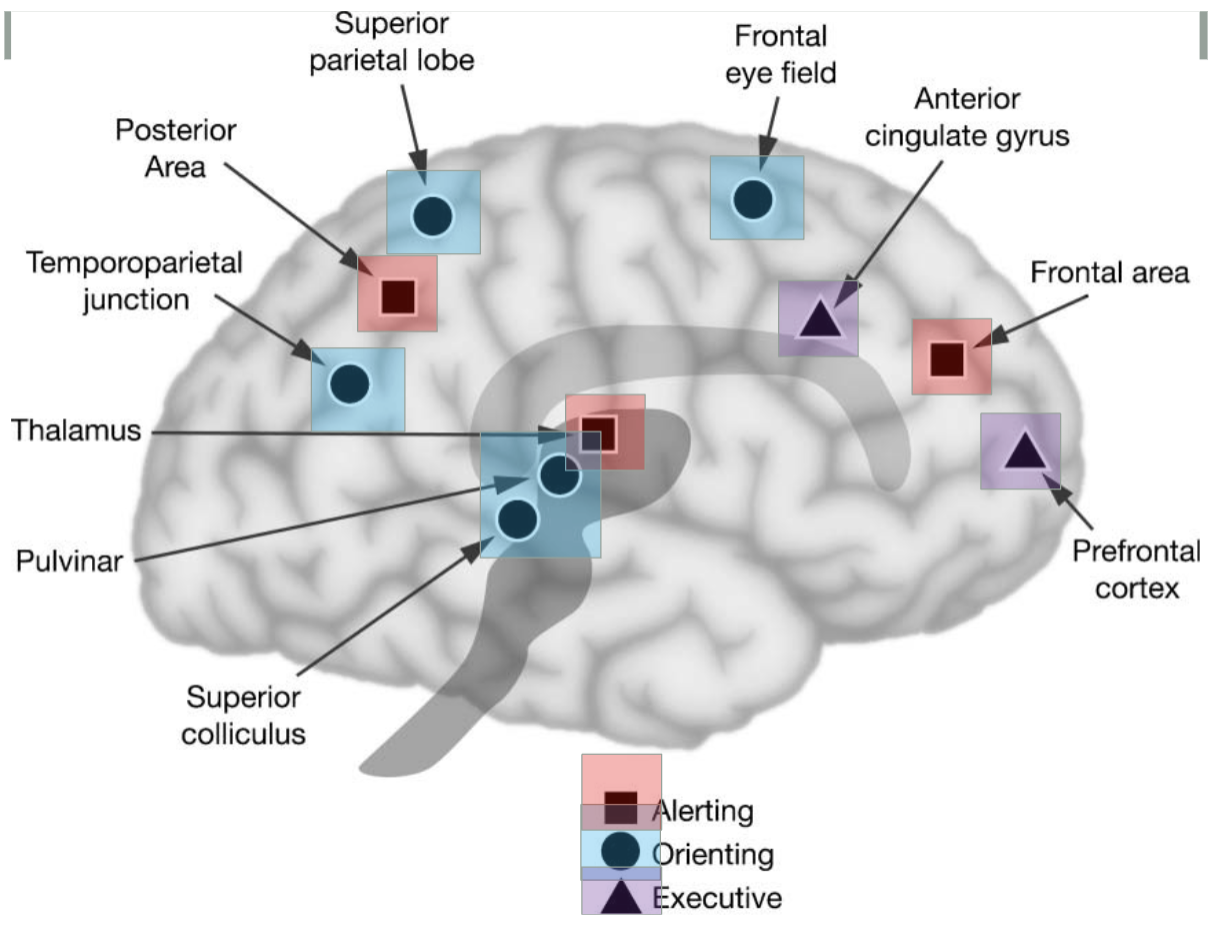
alertness, vigilance, orienting
ALERTNESS: being prepared to detect some important stimulus
VIGILANCE: maintaining over time (difficult to maintain)
ORIENTING: reflexive response to stimulus (orientation by social cues)
visual search
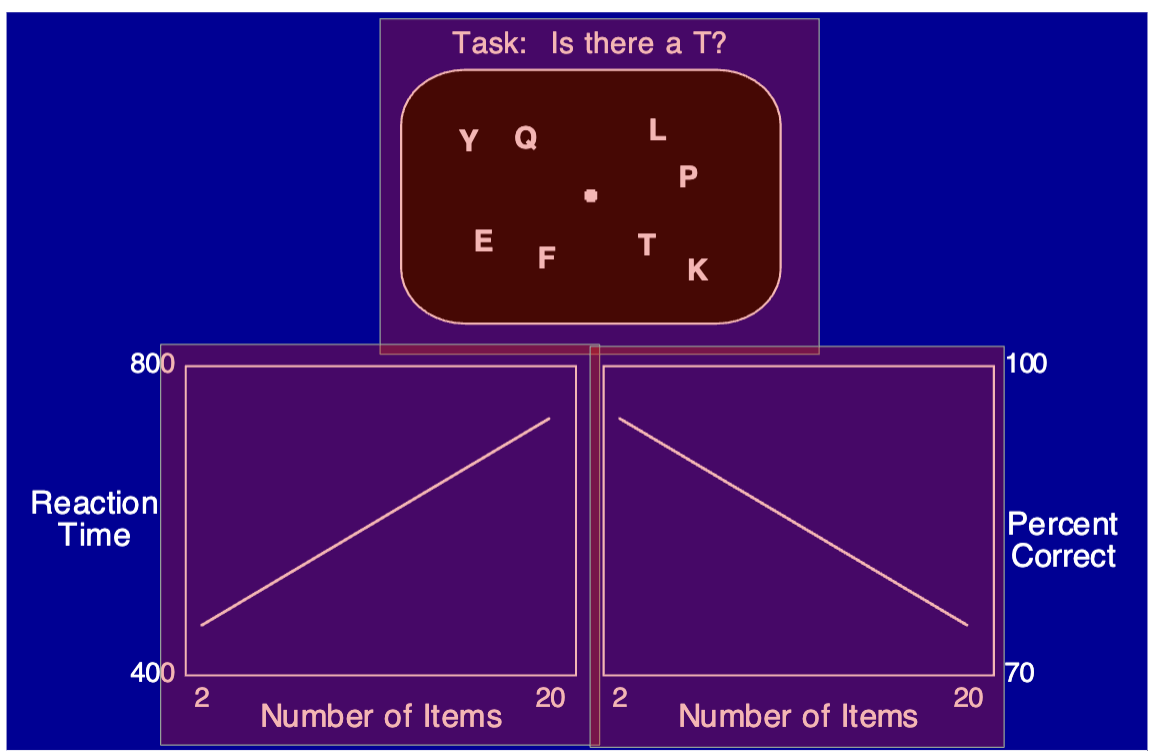
FEATURE SEARCH: target discriminated from non-target objects by single feature
don’t need to “pay attention”
attentional capture/”popout”
CONJUNCTION SEARCH: target discriminated from non-target objects only be the combination of features (2 or more)
need to “pay attention” to find target
controlled attention
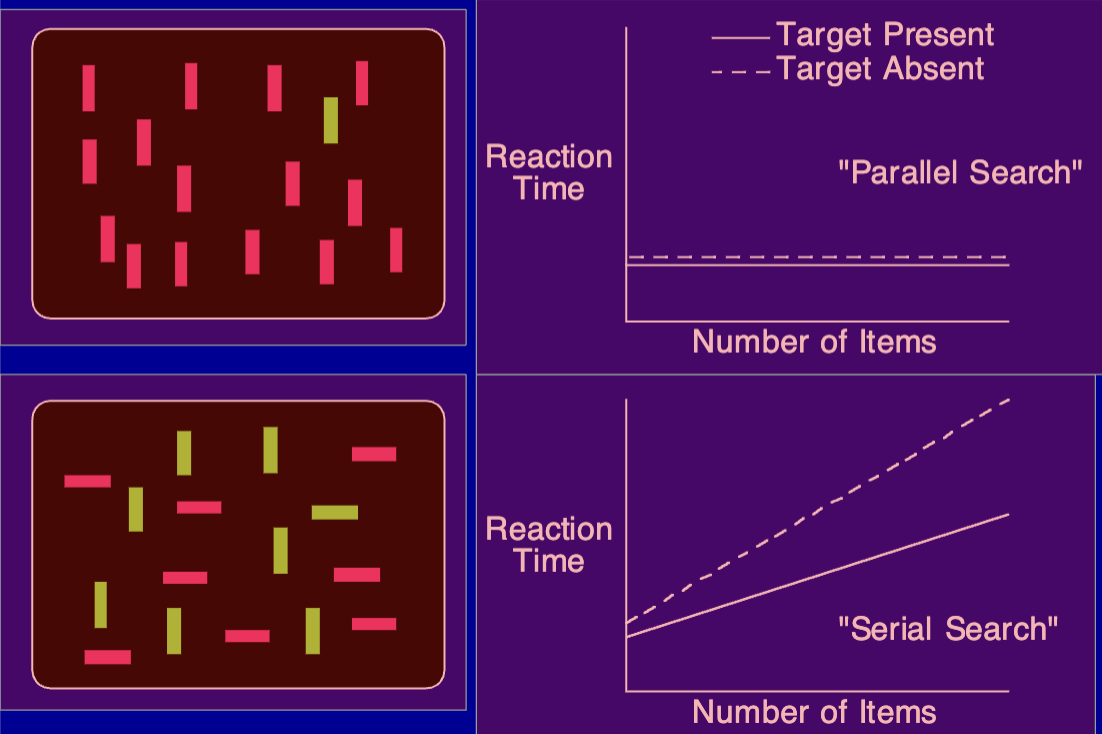
feature search
target discriminated from non-target objects by single feature
green rectangle?
conjunction search
target discriminated from non-target objects only be the combination of features (2 or more)
green vertical rectangle?
learning check
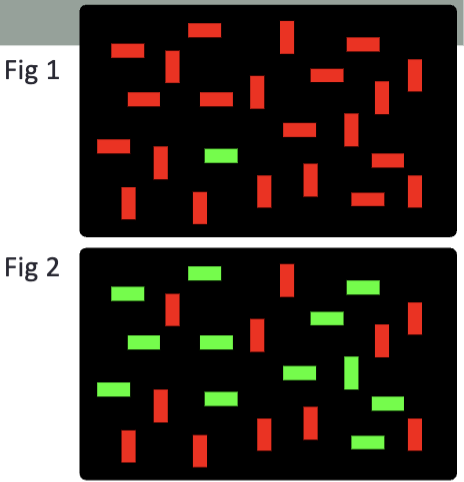
Search W: Is there a green rectangle in Fig 1
Search X: Is there a green rectangle in Fig 2
Search Y: is there a green vertical rectangle in Fig 1
Search Z: Is there a green vertical rectangle in Fig 2
which of the following is true about the type of search involved?
A. W, X, Y: Feature; Z: Conjunction
B. W: Feature; X, Y, Z: Conjunction
C. W, X: Conjunction; Y, Z: Feature
D. W, X: Feature; Y, Z: Conjunction
feature integration theory
Anne Treisman & Gary Gelade (1980)
perceive simple features (colors) without focused (controlled) attention
need focused (controlled) attention to perceive objects defined by multiple features
need for controlled attention- to integrate the features of an object
preattentive and attentive stages