lect 7: retroviruses
Introduction
retroviruses - RNA viruses that have reverse transcriptase (rt)
rt converts ssRNA → dsDNA (violates central dogma)
dsDNA integrated into host chr
only when integrated is lifecycle active
can cause persistent infection
nucleocapsid → 2 strands of ssRNA + rt + protein coat
the 2 strands are loosely associated via tRNA from the previous host
tRNA acts as RNA primer for rt)
+ssRNA but genome isn’t transl
enveloped virus, have internal P matrix and surface envelop P
genome has 2 identical R seq at either end
many cancers associated with carcinogens that alter c-onc genes to mut level of expr
Life Cycle
bind and enter
host range - species specificity, specificity within species can attack
cell type specificity - type of cell within a host
uncoat genome - lipid membrane bilayer melts into host cell’s
ssRNA → dsDNA via rt
dsDNA LTR seq (extended versions of the R from ssRNA) acts as insertion seq and integrates into genome by transposition (virus now provirus)
transc to make mRNA
transl to make proteins
assemble virions
budding
release via secretion
don’t lyse cells → persistent infection
Reverse Transcriptase (ssRNA → dsDNA)
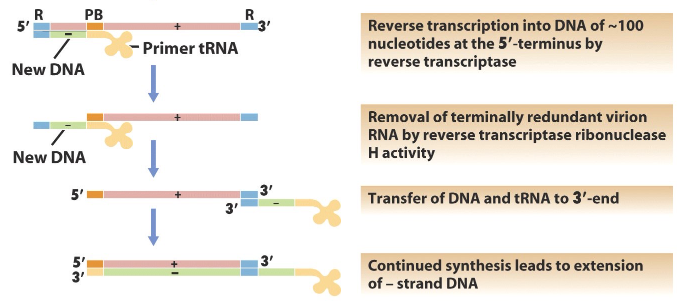
start: tRNA is bound ~1/3 of the way into the genome
rt binds to it and synth DNA strand from tRNA to the 5’ end of +ssRNA (5’ → 3’ on -dsDNA)
-ssDNA strand still has “primer” tRNA attached
ribonuclease h (RNAh - acts on heteroduplex) digests the RNA bound to DNA so the RNA past the tRNA binding site is gone
the comple R seq in the DNA seq (5’) disconnects and binds to the 3’ R seq
the rt (still attached to the DNA seq) then synth 3’ → 5’ (on +ssRNA) / 5’ → 3’ (-ssDNA)
end: +RNA and -DNA heteroduplex w/ 1 LTR, ssDNA overhand, and tRNA
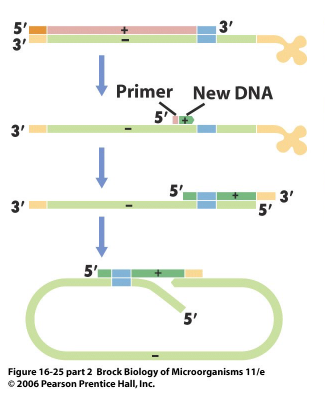
RNAh digest all +ssDNA except for a GC rich segment that serves as a primer for DNA synth (5’ end)
polymerase adds onto the 5’ primer (5’ → 3’) and synth until falls off the end (includes some of the tRNA seq)
end w/ -ssDNA + small +ssDNA(+tRNA seg)
the longer -ssDNA loops around and binds to the tRNA seg of the +ssDNA
displaces the 5’ end of the -ssDNA strand
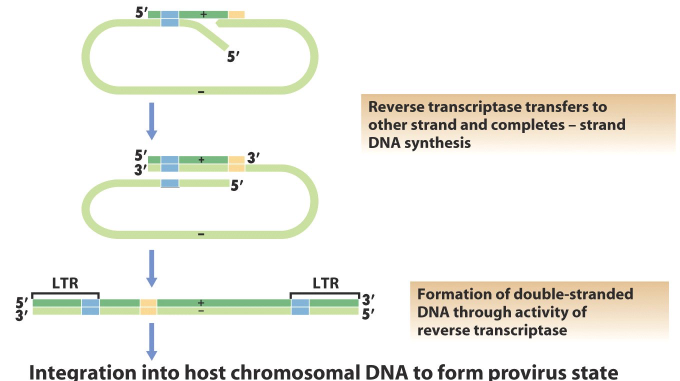
rt transfers to the other strand and completes -ssDNA synth
2 identical LTRs, an integrated tRNA segment, and a dsDNA genome
which then goes on to integrate into the host genome
Viral Genome
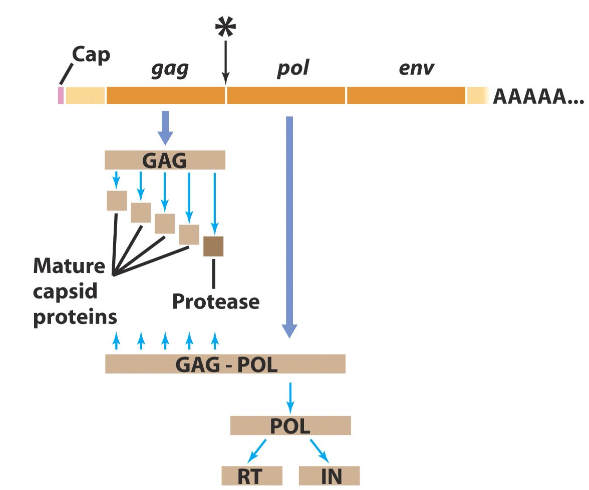
makes 2 kinds of transcripts
gag only → mature capsid P, protease
gag-pol → gag (see above), pol
pol → rt, integrase
differential splice to get full transcripts → genomes to get packaged
3 orfs:
gag - transc into polyP, cleaved with the encoded protease to make multiple su → nucleocapsid P
pol - also transc into polyP; encodes P like rt, protease, and integrase
env - encodes envelope components
Phylogeny
many classes included
not rooted, can’t easily relate them other viruses and the 3 domain tree
simple viruses vs complex viruses - whether they have additional genes or not
outside of gag, pol, and env
og called RNA tumor viruses bc most have ability to neoplastically transform normal cells → tumor / cancerous
2 types, dept on how quickly and robustly they transform cells
acutely transforming viruses - takes days to transform cells, v efficient in culture, have v-onc genes
chronically transforming viruses - takes months to develop tumors, low efficiently, only transform cells in whole orgs, don’t have v-onc genes
go thru usual process of infection but starts tumor growth when BY CHANCE the genome integrates next to a c-oncogene in genomes
the viral enhancer / regulation (in LTR) inc replication and transc of the viral one and can do the same to oncogene, viral enhancer overcomes cellular one
if oncogene already in use → chromatin already open → more likely for virus to integrate there
1st discovered was RSV (rous sarcoma virus), acutely transforming virus
RSV / Acutely Transforming Virus
discovered in 1911 by peyton rous - injected healthy chickens with cell-free extract of tumor from diseased chicken, which induced cancer and tumor growth
first demo of transmissible oncogenetic agent
solution with tumor was passed thru filter that excluded bact and cells → only viruses small enough to pass thru
has 4 orfs: gag, pol, env, onc
extra gene (onc) confers oncogenetic properties
has specific names (src, myc, abl, and so on) depending on the specific virus but onc used overall
both genomes integrate into host cell’s
genome has size constraints so partially/fully delete other genes in genome to make sense
survives and can infect bc of the other ssRNA strand in the virus
if 1 has the onc gene, then can afford to partially delete others
when packaging: random
2 onc-containing ssRNA → virus nonfunctional
1 onc-containing + 1 not → ideal
2 non-onc ssRNA → functional, infectious, not cause tumor growth
can carry transduced cellular oncogenes (v-onc) that come from transduction (taking in cell DNA during packaging), mut version of c-onc (cellular oncogene)
for every v-onc gene in a virus, there’s a c-onc equiv in a cell
have onc and v-onc, diff dept their origin
onc - general term, sometimes virus evo it, sometimes picked up
v-onc - specifically mut version of cellular gene