Spermatogenesis
Learning Objectives
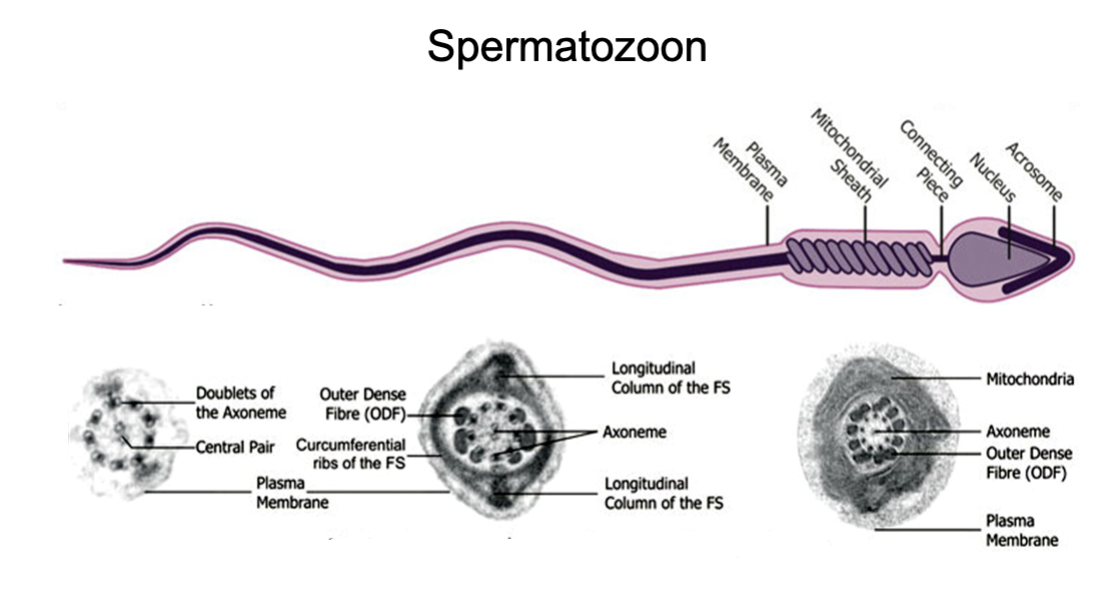
Describe the basic structure and function of spermatozoa
Understand the functional anatomy of the testis
Outline the sequence of spermatogenesis
Understand the hormonal control of spermatogenesis
Outline the mechanism of erection and ejaculation
Describe basic parameters in semen analysis
Spermatozoa - Structure and Function
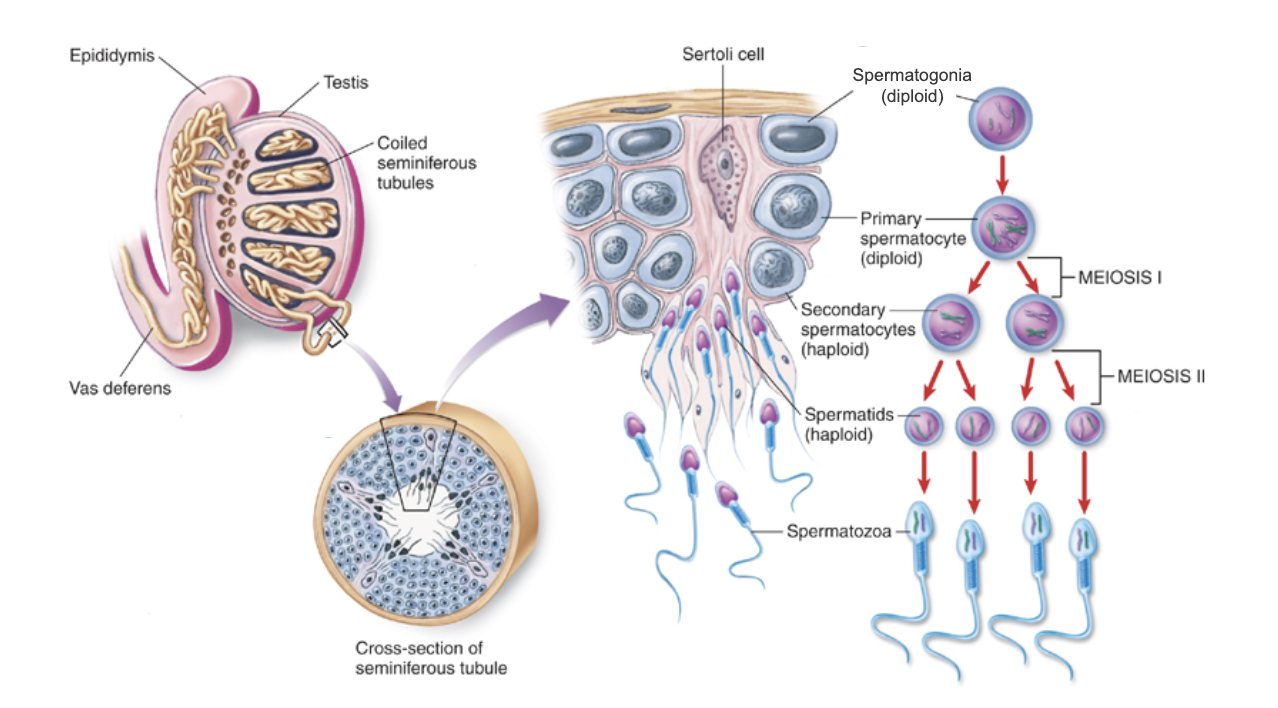
Sertoli Cells:
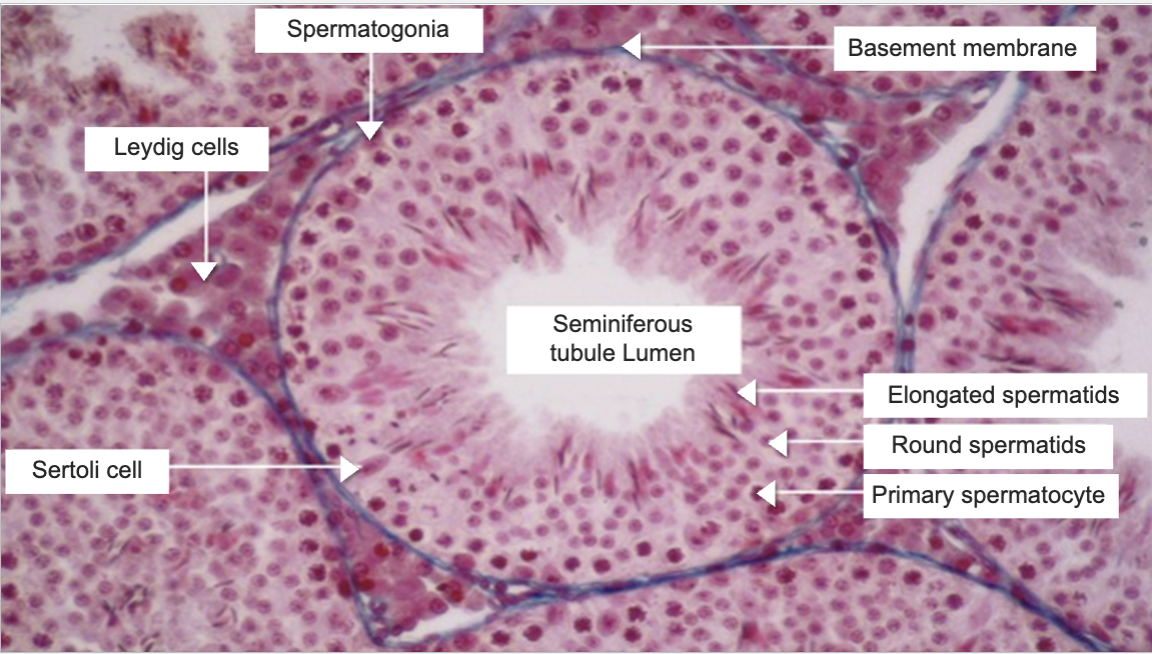
Located near the basement membrane of seminiferous tubules.
Form tight junctions (blood-testis barrier), creating an immune-privileged environment for spermatogenesis.
Control the adluminal compartment, filled with secretions aiding sperm development and immune protection.
Seminiferous Tubule Wall:
Comprised of Sertoli cells.
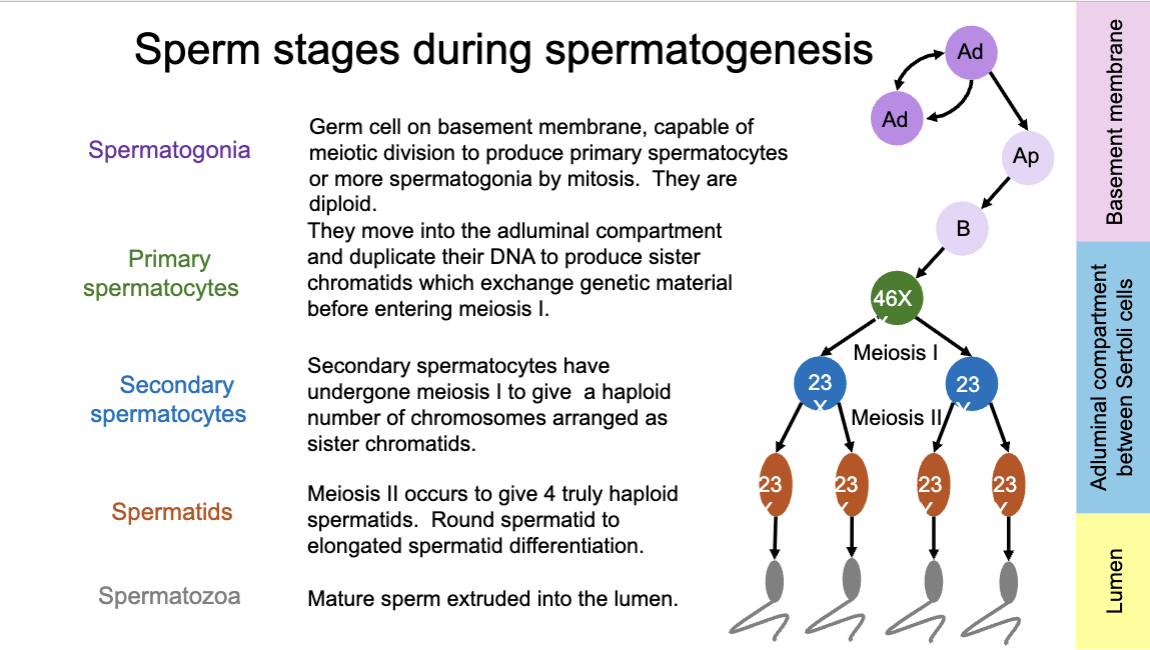
Primary germ cells (spermatogonia) reside on the basement membrane.
Spermatogonia divide and develop through meiosis into spermatozoa, progressing towards the lumen.
Leydig Cells:
Reside in interstitial spaces between seminiferous tubules.
Produce testosterone, which regulates spermatogenesis.
Sperm Maturation:
Sperm are produced at the edge of the seminiferous tubules and move towards the lumen.
After release into the lumen, sperm are washed into the epididymis, where they mature.
Maturation requires days in the epididymis.
Testis - Anatomy
Structure:
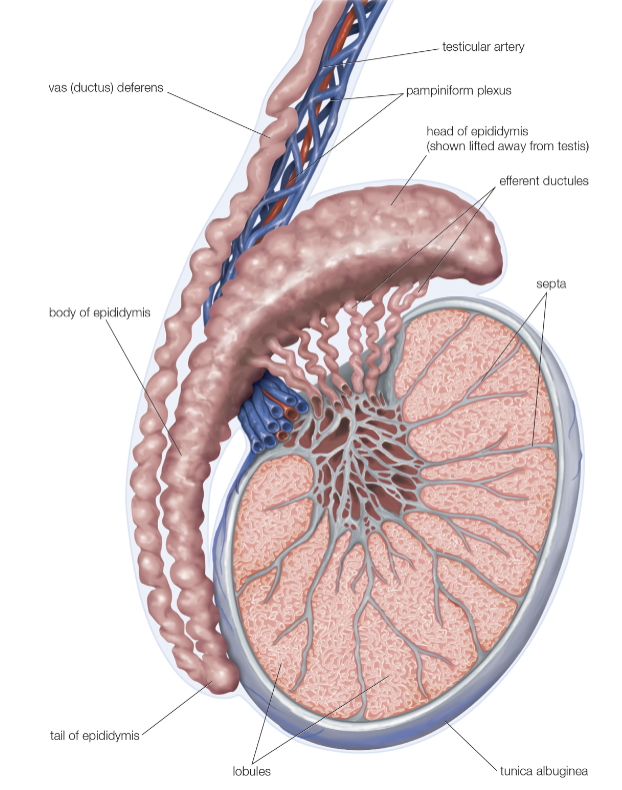
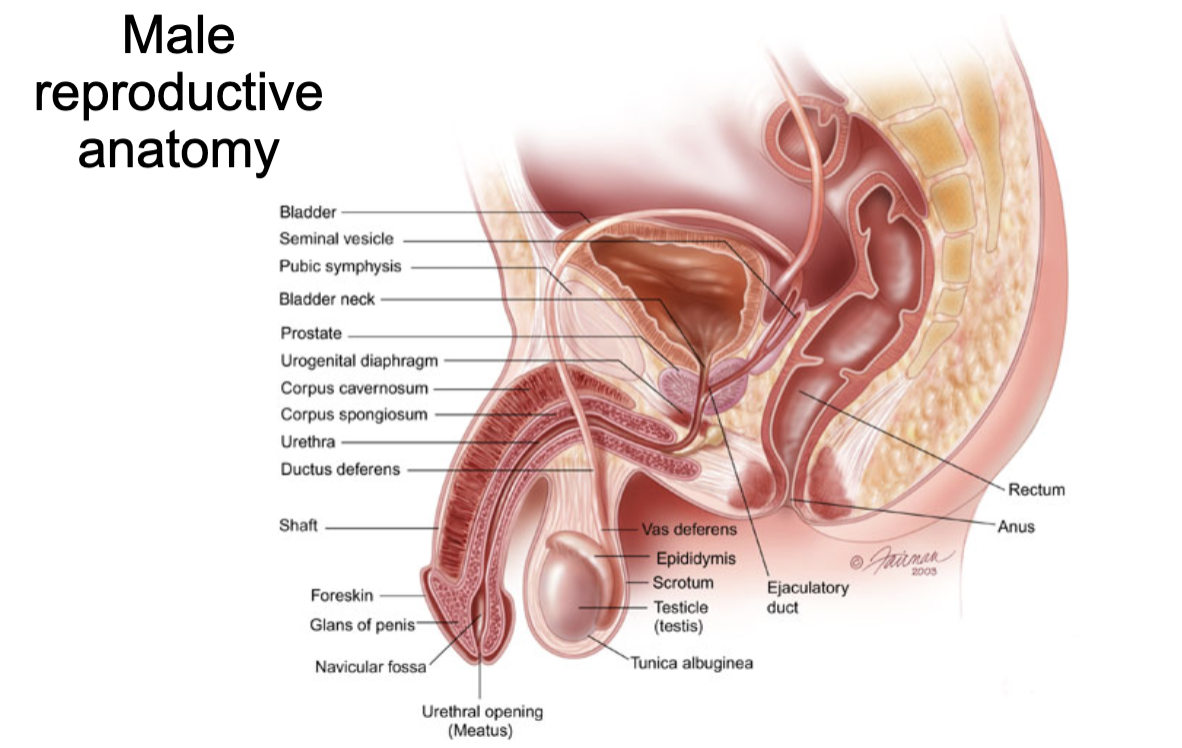
Testes are located in the scrotum, maintaining an optimal temperature (1.5–2.5°C below body temperature).
Consists of ~100 lobules per testis, each containing tightly coiled seminiferous tubules (~600 meters in total).
Well-vascularised and innervated
Components:
Seminiferous Tubules: Site of spermatogenesis; 90% of the testicular mass and 600m long in each testis - tightly coiled
Rete Testis: Channels that collect sperm from seminiferous tubules and transport them to the epididymis.
Epididymis: Stores and matures sperm.
Vas Deferens: Transports sperm during ejaculation.
Approximately produce 1500 sperm per seconf
Overheating: Reduces sperm count and can be assessed using an orchidometer.
Spermatogenesis - Sequences and Hormonal Control
Spermatogenesis is a cyclical process taking ~74 days, with new cycles starting every 16 days.
Stages:
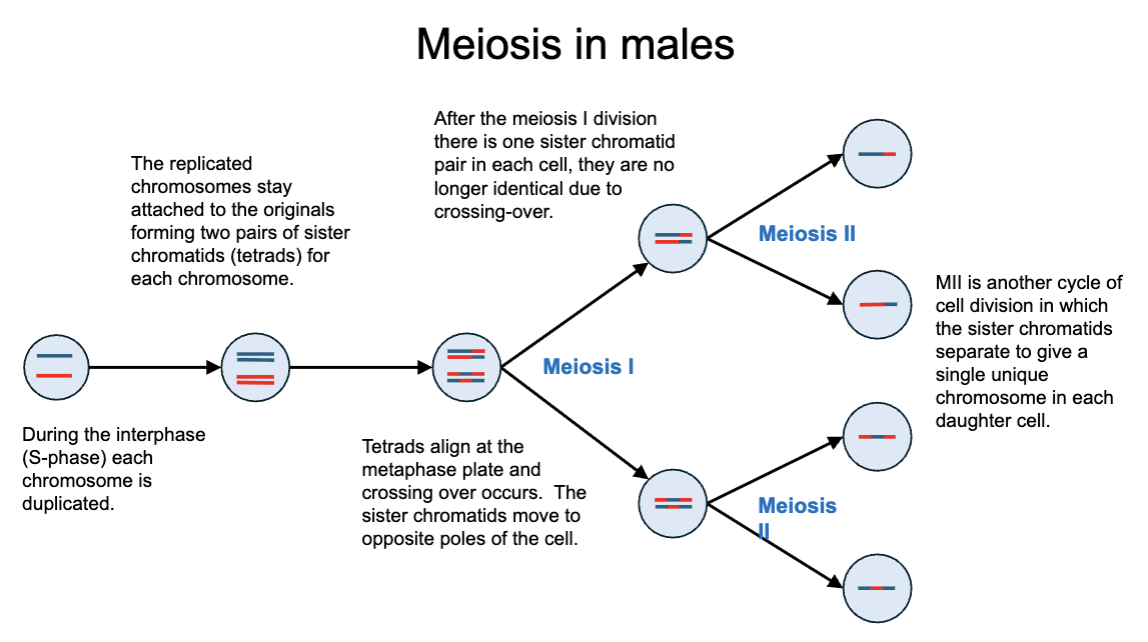
Mitotic Proliferation:
Spermatogonia divide mitotically.
Some remain as stem cells, while others differentiate into primary spermatocytes.
Meiosis:
Primary spermatocytes undergo meiosis I and II, forming haploid spermatids.
Spermiogenesis:
Spermatids elongate, lose cytoplasm, and develop an acrosome and flagella.
Key Features:
Cells remain connected by cytoplasmic bridges, forming a syncytium for synchronous development.
Spermatids are eventually released into the lumen of seminiferous tubules.
4. Hormonal Control of Spermatogenesis
GnRH (Gonadotropin-Releasing Hormone):
Released in a pulsatile manner from the hypothalamus.
Stimulates the anterior pituitary to release LH and FSH.
LH (Luteinizing Hormone):
Acts on Leydig cells, stimulating testosterone production.
FSH (Follicle-Stimulating Hormone):
Binds to Sertoli cells, promoting their survival and function.
Testosterone:
Maintains spermatogenesis by stimulating Sertoli cells.
Intratesticular levels are 100x higher than plasma levels.
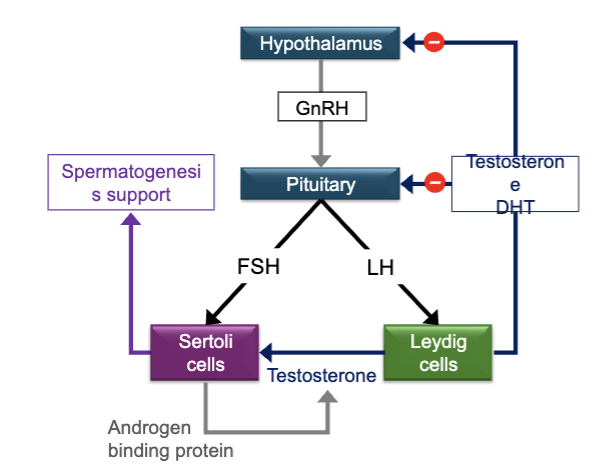
Leydig cells contain LH receptors and primarily convert cholesterol into androgens. Androgens stimulate Sertoli cell function and thereby initiate and maintains sperm production.
Sertoli cells contain FSH receptors which establishes a quantitatively normal healthy Sertoli cell population.
Androgen binding protein (ABP) binds to testosterone and DHT maintaining high concentrations of androgens within the seminiferous tubules.
Intra-testicular testosterone levels are 100x those in plasma, important for spermatogenesis.
The same molecule as ABP is produced by the liver and is known as sex hormone binding globulin (SHBG) This transports androgens in the circulation and makes them available to tissues
Anabolic Steroids: Suppress LH and FSH release, leading to testicular atrophy and reduced sperm production.
Erection and Ejaculation - Mechanisms
Erection:
Controlled by the parasympathetic nervous system.
Arteries dilate, filling the corpus cavernosum and spongiosum with blood, while veins constrict to maintain hydraulic pressure.
Ejaculation:
Controlled by the sympathetic nervous system.
Coordinated smooth muscle contractions move sperm from the epididymis to the vas deferens, mixing with seminal and prostatic secretions before being expelled.
Neurological Control:
Parasympathetic: Point (erection).
Sympathetic: Shoot (ejaculation).
Somatic: Score (final expulsion via perineal muscles).
Semen Analysis
Bulbo-Urethral Gland: Produces a clear viscous secretion high in salt, known as
pre-ejaculate. This fluid helps to lubricate the urethra for spermatozoa to pass through, neutralizing traces of acidic urine.Seminal Vesicles: Secretions comprise 50-70% of the ejaculate. Contains proteins,
enzymes, fructose, mucus, vitamin C and prostaglandins. High fructose concentrations provide energy source. High pH protects against acidic environment in
vagina.Prostate: Secretes milky or white fluid roughly 30% of the seminal fluid.
Protein content is less than 1% and includes proteolytic enzymes,
prostatic acid phosphatase and prostate-specific antigen which
are involved in liquefaction. High zinc concentration 500–1,000
times that in the blood is antibacterial.
Normal Parameters:
Ejaculate volume: 1.5–6 ml (~120 million sperm per ejaculate).
Initial portion of ejaculate is sperm-rich; liquefies after 10 minutes (liquefaction failure indicates abnormalities).
Sperm Composition:
Seminal Vesicle Secretions (50–70%): Fructose (energy source), enzymes, mucus, prostaglandins.
Prostate Secretions (30%): High zinc concentration, antibacterial properties, liquefaction enzymes.
Bulbourethral Gland Secretions: Pre-ejaculate, lubricates urethra and neutralizes acidity.
Sperm Capacitation:
Occurs after ejaculation, taking 4–8 hours.
Prepares sperm for fertilization by modifying the acrosome.