Fungi
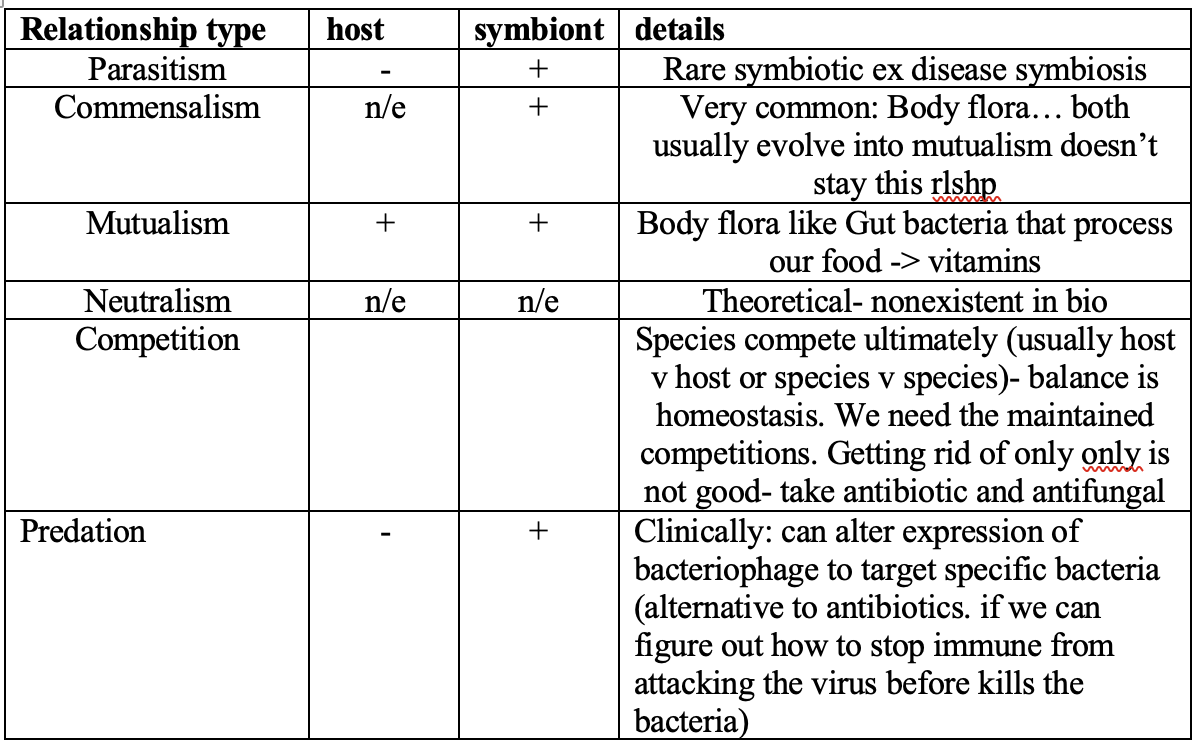
Symbiosis (Quality of Microbe–Host Relationships)
Eukaryotic Microbes & Life-Cycle Fundamentals
Include fungi and protozoa (plus arthropods & helminths briefly mentioned).
Shared trait with plants: complex life cycles involving both diploid and haploid stages.
Organisms unable to “seek a mate” must survive as both genome states.
Humans are exclusively diploid; fungi/protozoa can alternate.
Reproduction via standard eukaryotic processes → mitosis and meiosis.
Fungi – General Characteristics & Morphology
Study = Mycology.
Enormous morphological diversity:
Single-celled yeasts (e.g., Saccharomyces spp.).
Multicellular forms (molds, mushrooms).
Dimorphic fungi – can alternate between yeast-like (single) and mold-like (multi) forms depending on environment; most pathogenic fungi fall here.
Metabolism
Non-photosynthetic → heterotrophic (ingest food)
Many are saprophytic – eat dead organic matter (fallen trees, carcasses, feces, etc.) and drive decomposition.
Therapeutic & Industrial Importance of Fungi
Therapeutics
Antibiotics: Penicillin (Penicillium) – first true antibiotic. was from fungi
Cholesterol drugs: statins (Crestor, Liptor) from fungi metabolites
Immunosuppressants: transplants
Homeostasis- Candida alicans if grow too much can make us sick
Food & Beverage
alcohol & Bread leavening
cheese (blue cheese, feta, gorgonzola) (swiss and cheddar= bacteria)
Cheese: bacterial cheeses (cheddar, Swiss) vs. fungal cheeses (blue, feta, Gorgonzola – the blue veins are fungal, not cheese!).
Food spoilage- majority fungi are psychotropic→ love to grow in refrigerator
Agriculture
plant pathogens- smut and rust are primary sources of harming plants
Mycorrhizae: symbiotic mutualistic fungi relationship with the alfalfa plant. they enhance nutrient uptake in plants, improving growth and resistance to pathogens by 2x
Biochemistry of fungal cell wall → chitin
Fungal Phyla Overview (Phylogenetic “Big Four”)
Ascomycetes (75% of all fungi)
Can be single-celled, multicellular, or dimorphic (only phylum with all three options).
Basidiomycetes
Home of true mushrooms/toadstools.
Mostly multicellular, some single-cellular
Reproduce sexually; very few asexual species.
Zygomycetes
Strictly multicellular.
source of molds
Chytridiomycetes
Only aquatic fungi.
Sexual spores have flagella → only motile fungal spores.
Asexual Reproduction via Spores
Fundamental contrast with bacteria
bacteria: 1 spore → not considered reproduction
fungi: thousands of spores→ replication and genetic variation capabilities
Spores are the primary means of fungal reproduction and dissemination.
Seasonal pattern for many species: massive releases in spring and fall maximize chances of finding suitable conditions.
Major Spore-Producing Strategies
Sporangiospores
Spores formed inside a membranous sac (sporangium) → rls upon rupture and is airborn
pro: Timed release in favorable seasons increases successful colonization.
con: Vulnerable before maturity (an animal steps on it → entire season’s output lost).
Arthroconidia
Hyphal fragments breaks off and become spores (thallus)
Usually not wind-borne; drop and moved by water flow.
Conidiospores ("Conidia" = Latin dust)
No surrounding membrane. Spores "bud" continuously from hyphae tips.
pro: can’t be "cut off"; as long as the mold is alive, spores are produced.
con: continuous production ⇒ majority spores ever successful (energetic waste).
Fungal Anatomy
(note- Yeasts are unicellular and lack these structures.)
fungi can grow from:
A spore (sexual or asexual reproductive structure)
A thallus: a fragment of the fungus that continues growing like a plant cutting.
hyphae- branching filaments formed from the spore/thallus (fungus structural filaments)
Vegetative hyphae – mass of growth: absorb nutrients
Reproductive (fertile) hyphae – make spores
Rhizoids- anchors to structure for support only
Haustoria – specialized parasitic rhizoids that penetrate host cells.
Clinical significance: infections with haustoria often require tissue removal and to antifungals because the fungus is bound to tissue.
Mycelium – visible mass = sum of all hyphae.
Clinical Priorities with Fungi
minor infections very common, severe infections not common bc must enter thru an opening to the body
numbered based on highest concern
Hypersensitivity- Allergy / Asthma
Airborne spores
Spores can reach (≈ ) altitude and spread hundreds of miles laterally.
Intoxication – fungi produce many toxins
Aflatoxin produced by Aspergillus – food-borne carcinogen; constant concern for grains, and crops
important for agriculture
Ergot produced by Claviceps purpurea on rye –
pro: drug ergotamine → used in surgery b/c cuts off blood supply
con: powerful hallucinogen (salem witch trials)
Amanita toxins – one mushroom cap may cause fatal liver damage.
Mycosis (actual infection) – fungal rare and opportunistic
Categories of Mycoses
Level | Typical Examples | Key Points |
|---|---|---|
Superficial (Dermal) infection | Athlete’s foot, ringworm | On surface; barely serious. most common |
Subcutaneous infection | Sporothrix spp. – "Rose-gardener’s disease" | Fungus introduced traumatically into the skin (rose thorn); fungus can’t invade deeper or leave; spreads laterally; often requires surgical cleaning + topical antifungal.
|
Systemic infection | Pulmonary, blood-borne, CNS forms | mostly opportunistic and dimorphic fungi (ascomycetes)
|
(opportunistic fungi) | candida albicans Aspergillus | fungi will only cause a disease under certain conditions |
Immunocompromise – Broader Than You Think
Any breach or physiologic change that opens a route into tissue counts (wet, macerated feet in soldiers → “jungle rot” / trench foot).
Classic severe immunosuppression (AIDS, leukemia, chemotherapy) still poses the highest risk for deep/systemic disease (e.g., invasive aspergillosis).
Dimorphic Fungi
Mold Phase
Mold grows in the environment
favorable growth conditions: lots of nutrients of Oxygen
produces thousands & thousands of spores (airborne particles)
spores inhaled → the infectious particle
Yeast Phase
body provides drastically diff conditions: low & nutrients and high temp. cannot become multicellular
cannot become multicellular so becomes yeast → causes pathogenic illness
Phylum Ascomycota
75% of known fungi.
yeasts or molds: Only phylum containing dimorphic species.
Industrial & medical importance:
includes most medically important fungi-
Penicillium (source of penicillin & food molds).
also largest pathogenic contributor bc contains dimorphic
Culinary morels & truffles (not true mushrooms technically mold).
3 Pathogens discussed
1. Histoplasma capsulatum
dimorphic fungus; endemic to eastern USA (east of the Rockies – wetter climate).
sporangia erupts and can cause outbreaks via pulmonary route
allergies in spring, sometimes a cold, even more rare: pnemonia or blood borne infection
2. Aspergillus sp.
dimorphic
most common airborne allergen worldwide! present on 6 of 7 continents.
Produces aflatoxin; also a top airborne allergen.
Typical diseases
(ABPA) Allergies & hypersensitivity.
sinusitis
Pulmonary aspergilloma- (“fungus ball” pneumonia).
especially w/ immunocompromised ppl, when breath spore in, starts as pneumonia and the yeast grows into mold in the lungs
golf-ball-sized masses obstruct bronchi.
absolutely worst: sporulate in lungs and spread to brain (cerebral aspergillus)
3. Candida
Normal human skin & mucosal flora.
2 species
C. albicans
majority
have overtime evolved to become opportunistic pathogens bc lived with humans so long
infection sites:
Oral- “thrush” (neonatal, old ppl, STI)
Vaginal- “yeast infection”
Invasive (systemic)- “Candidemia” (deathly, fungi enter blood) often occurs from surgical procedures
Babies- diaper rash
C. aurus
multi drug-resistant fungus (some resistant to all)
often contracted in hospitals
more contractible → spreads easily between ppl and surfaces w/o too much energy compared to normal fungi which need lots of energy to do so
Phylum Zygomycota
multicellular rarely pathogenic
coenocytic hyphae: no septum in their hyphae (no places for fragmentation)
Rhizopus: bread molds
digest starch and sugar (cannot digest cellulose)
the only pathogenic type
Phylum Basidiomycota
called “club fungi” → spore containers
always have septate hyphae
includes: mushrooms, toadstools, rusts & smuts
pathogen
human: few→ Cryptococcus neoformans (affects immunocompromised)
plants: many→ Rusts and Smuts which infect the plants.
they don’t harm us but the things they carry and produce do
toxic: Deathcap mushrooms
Eukaryotic Parasites: Vectors
ectoparasites- attach to outside of host
arthropods like ticks and lice and they function as vectors
endoparasites- attach to inside of host
fungi, protozoa, helminths (worms)
Vectors:
usually multicellular carriers of disease
Mechanical vector A → pathogens ‘hitches’ a ride and you eat
very common, not so severe
Mechanical vector B → pathogen inside arthropod so need to enter us via blood (mosquito, west nile virus)
less common, more severe