Medical Management
Medical Management
Treatment of obesity generally includes lifestyle modification, pharmacologic management, and nonsurgical or surgical interventions.
Lifestyle Modification
The first approach used to treat obesity consists of lifestyle modification aimed at weight loss and then weight maintenance. The U.S. Preventive Services Task Force recommends that all adults with BMIs in excess of 30 kg/m2 be advised to engage in multicomponent behavioral interventions that include (Curry et al., 2018; LeBlanc et al., 2018):
Setting weight loss goals
Improving lifestyle behaviors (e.g., healthy diets, increased physical activity)
Addressing barriers to change
Considering the use of adjunctive pharmacotherapy agents
Self-monitoring and strategizing ongoing lifestyle changes aimed at a healthy weight
The most effective behavioral interventions are interactions that occur frequently and require active participation. These highly engaging experiences may include individual counseling sessions between the primary provider and patient, group nutrition education sessions, and physical activity sessions, to name a few (LeBlanc et al., 2018; Tondt et al., 2023). A modest weight loss of 5% of total body weight is associated with significant clinical improvements and benefits to patients with obesity (Office of Disease Prevention and Health Promotion, 2023). Therefore, setting achievable outcomes with patients may reinforce healthy behaviors and result in health improvements.
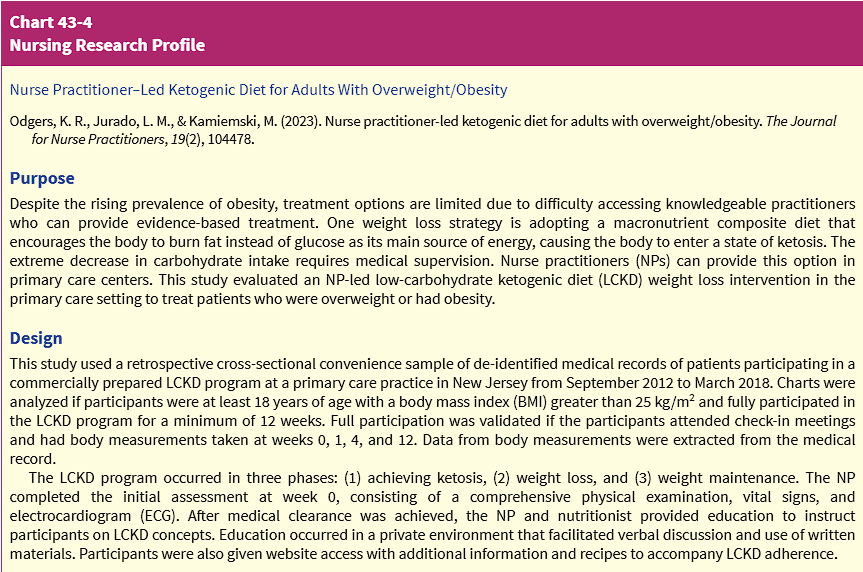
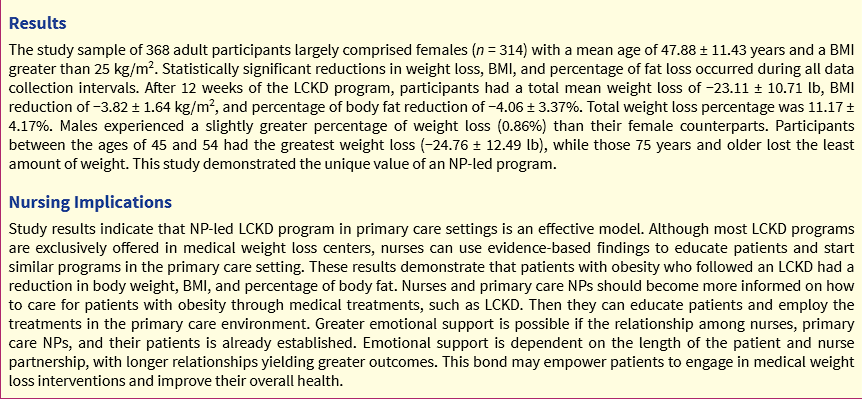
A patient with obesity should plan to meet with a dietitian to discuss a caloric reduction that is sensitive to personal preferences such as culture and lifestyle. This includes a change in dietary habits in order for weight loss to be sustained over the long term. It is important to identify current dietary patterns and typical daily caloric intake in order to recommend an appropriate diet plan. Patients with obesity should be counseled that reducing dietary caloric intake or incorporating more healthy foods is a necessary component of weight loss therapy. Assessing food records or 24-hour recalls or conducting dietary interviews are all effective methods to gather baseline dietary information from patients (see the “Dietary Data” section in Chapter 4). Establishing realistic goals that keep patient preferences in mind maximizes successful weight loss efforts. In general, a deficit of between 500 and 1,000 calories daily from baseline is typically required in order to achieve a 5% to 10% reduction in weight within 6 months (Tondt et al., 2023). Focusing on removing or limiting consumption of ultraprocessed foods is recommended (Tondt et al., 2023). Successful weight loss occurs when patients consistently make healthy dietary choices (Abiri et al., 2023). Currently, there is a lack of evidence to determine which diet plans are superior in terms of achieving long-term weight loss. A systematic review noted that very low-energy diets and those requiring formula meal replacement are most effective for weight loss for patients who have diabetes and are struggling to manage their weight (Churuangsuk et al., 2021). One approach to weight loss involves the ketogenic diet, a low-energy diet, coupled with monitoring by advanced practice nurses (Odgers et al., 2023). See the “Nursing Research Profile” in Chart 43-4
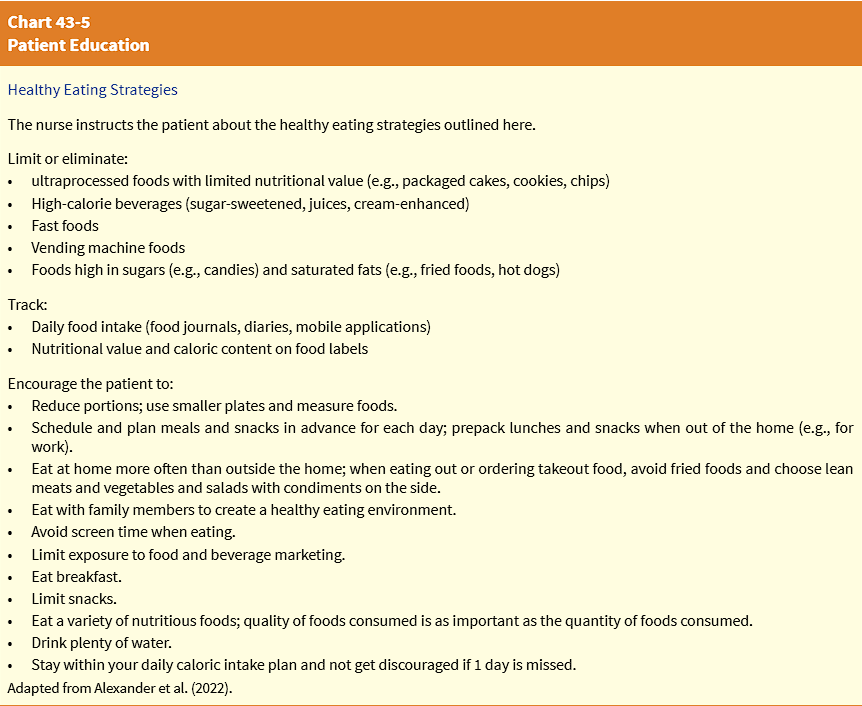
It is not necessary for patients to purchase commercial diet plans in order to achieve weight loss and embrace healthy diet habits. Most dietitians advocate healthy diets that include few ultraprocessed foods and sugars and are heavy in plant-based foods (Abiri et al., 2023; Alexander et al., 2022). The Dietary Approaches to Stop Hypertension (DASH) diet and Mediterranean Diet are examples of superior healthy noncommercial diets. These diets provide a strong foundation for achieving and maintaining weight loss due to their focus on consuming fewer fats and carbohydrates and increasing consumption of lean meats and vegetables (Abiri et al., 2023; Alexander et al., 2022) (see Chapter 24, Mediterranean Diet and Chapter 28, Table 28-3). Patient education tips for managing ongoing healthy eating strategies are noted in Chart 43-5.
Making improvements in both diet and physical activity may yield quicker results than focusing solely on dietary improvements (Alexander et al., 2022; Morgan-Bathke et al., 2023). The patient’s current level of physical activity can be assessed using the acronym “FITTE,” which stands for the frequency, intensity, time (duration), type, and enjoyment experienced with physical activity (Tondt et al., 2023). Increasing physical activity through promotion of an exercise regimen is a key recommendation for burning calories and promoting weight loss. Physical activity recommendations for all adults include at least 150 minutes of moderate-intensity aerobic exercise weekly or 75 minutes of vigorous-intensity aerobic exercise weekly (Alexander et al., 2022; U.S. Department of Health and Human Services, 2018). In addition, muscle-strengthening exercises that engage all major muscle groups should be done at least twice weekly (Olateju et al., 2023). Patients with obesity who were previously sedentary and deconditioned may not be able to achieve this at the start. It is important to assess patient mobility to determine how to establish a physical activity program that will result in weight loss and improved exercise tolerance (Alexander et al., 2022). Incorporating a physical activity regimen that meets FITTE criteria can help develop and support healthy physical activity habits (Tondt et al., 2023).
In addition to promoting healthy exercise and diet habits, ensuring healthy sleep habits is an additional lifestyle strategy associated with weight loss and maintenance of a healthy weight. Sleep deprivation can cause changes in cortisol levels that promote weight gain (Alexander et al., 2022). Advising patients with sleep disturbances to plan to be in bed with lights out at least 7 hours prior to wake-up time; create a dark, relaxing bedroom environment; avoid activities that can cause arousal around bedtime (e.g., text messaging); and avoid beverages with caffeine after lunchtime are helpful strategies to promote a restful night’s sleep consonant with weight reduction.
Pharmacologic Therapy
Patients who are not successful at meeting sustainable weight loss and BMI goals from lifestyle modifications alone may be prescribed weight loss medications (Table 43-2). Patients who are prescribed weight loss medications often yield a clinically meaningful weight reduction of 5% to 20% when accompanied by healthy lifestyle behaviors (Bays et al., 2022). Patients taking weight loss medications should be counseled that these prescriptions are meant to supplement, not supplant diet modification and exercise (Bays et al., 2022; Schmitz & Aronne, 2023). Indications for weight loss medications include a BMI greater than 30 kg/m2 or a BMI greater than 27 kg/m2 with a concomitant morbidity related to being overweight (e.g., type 2 diabetes, hypertension) (Schmitz & Aronne, 2023).
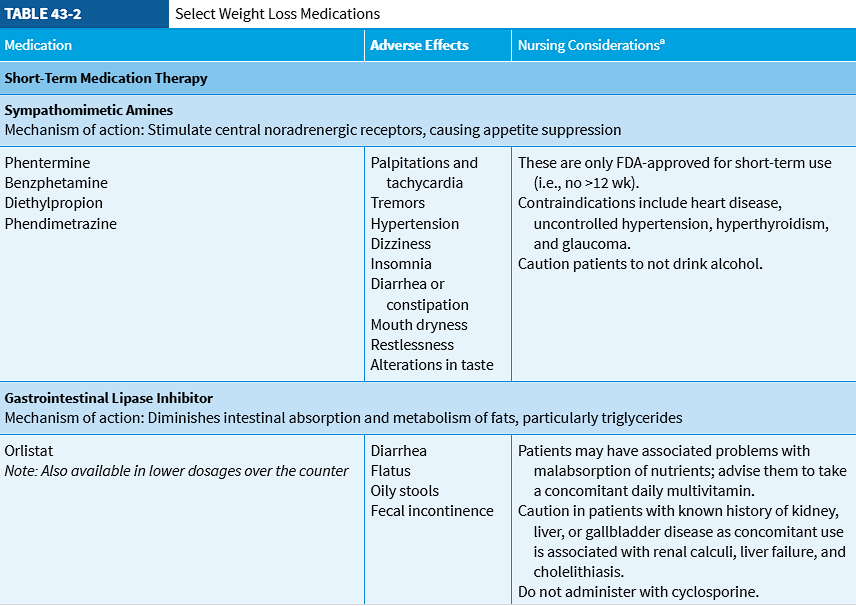
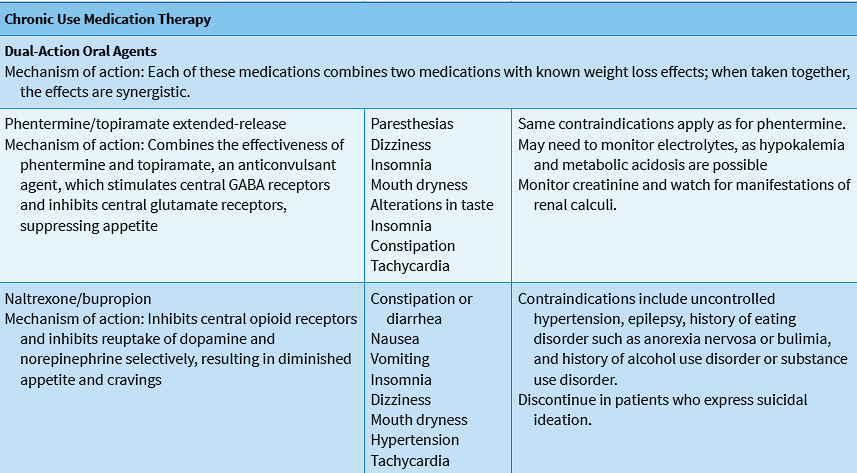
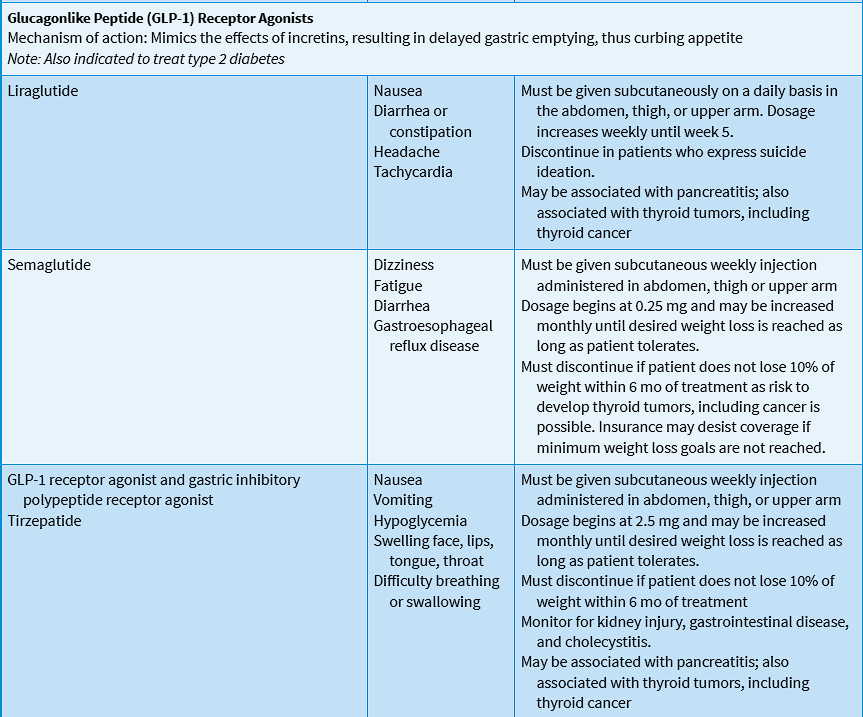
Weight loss medications either inhibit GI absorption of fats or alter central brain receptors to enhance satiety or reduce cravings (Bays et al., 2022; Tondt et al., 2023). These medications are categorized for either short-term or chronic use (Tondt et al., 2023). Pharmacologic agents from the sympathomimetic amines class are designed for short-term use (i.e., no longer than 12 weeks) due to their many side effects. It is not uncommon for patients to regain weight once they are no longer taking these medications (Bays et al., 2022; Tondt et al., 2023). Continued pharmacologic management is warranted with continuation of weight loss medications approved for chronic use to avoid recurrence of weight gain. Other drugs may be considered for patients with genetic deficiencies and hormone imbalances, such as the melanocortin 4 receptor (MC4) agonist setmelanotide, which restores genetically impaired leptin melanocortin and MC4 pathways to elicit satiety and reduce hunger sensations.
Short-term and chronic use medications each have distinct side effects and contraindications; therefore, selection of these agents is individualized (see Table 43-2). The patient is closely monitored while taking the prescribed weight loss medication for adverse effects that may require additional interventions (Bays et al., 2022; Schmitz & Aronne, 2023). Dosing is typically slowly increased upward over 12 to 16 weeks to facilitate a target goal of 3% to 10% reduction in body weight, depending on the medication. Gradually increasing the dosage of these medications also minimizes the adverse effects of these medications. Patients should anticipate remaining on weight loss medication therapy long term. Abrupt discontinuation of weight loss medication therapy is ill-advised and often results in recurrence of weight gain. The prescribed medication is discontinued and replaced with another weight loss medication if at least 3% to 10% of baseline body weight (depending upon the medication) is not lost after 12 to 16 weeks of weight loss medication therapy or the patient has intolerable adverse effects from the medication (Bays et al., 2022; Tondt et al., 2023). Patients who have maximized the use of available weight loss medication options without reaching a clinically meaningful weight loss may be referred for other weight reduction therapy (e.g., metabolic and bariatric surgery).
Alert
Weight loss medications are believed to be teratogenic. People who may become pregnant should be screened carefully and advised to avoid pregnancy if they seek a prescription for a weight loss medication.
Nonsurgical Interventions
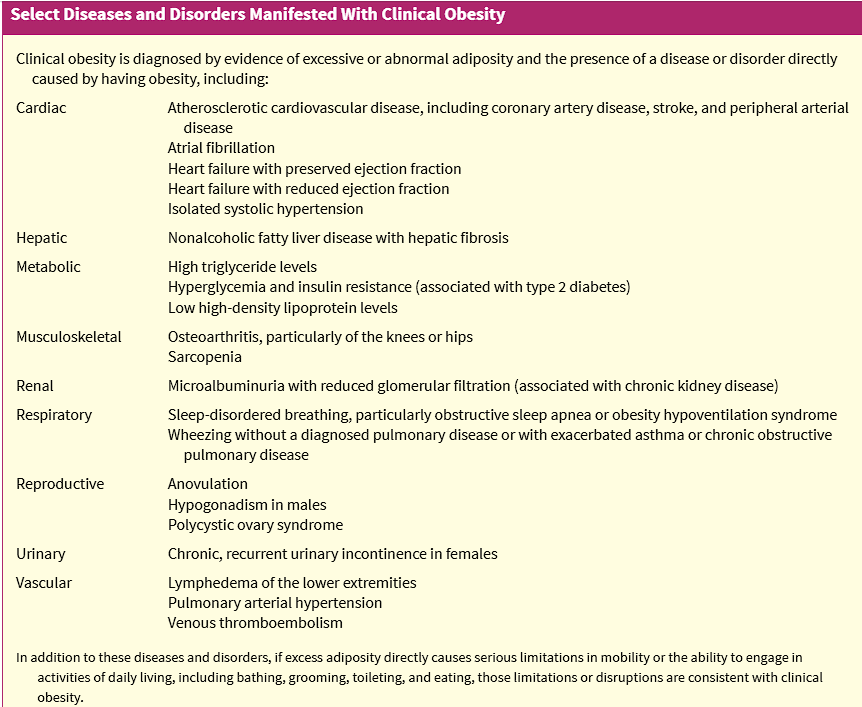
Adult patients with obesity who do not respond to lifestyle interventions or weight loss medications and who have either class III/severe/extreme obesity (i.e., BMI in excess of 40 kg/m2) or class II obesity (BMI 35 to 39.9 kg/m2) with obesity-related diseases or disorders (e.g., OSA, type 2 diabetes) may be candidates for metabolic and bariatric surgical interventions (see later discussion). As an alternative, some patients may elect to pursue minimally invasive interventions, which may include intragastric balloon therapy or vagal blocking therapy.
Intragastric balloon therapy involves endoscopic placement of a gas-filled balloon or a saline-filled dual balloon into the stomach. The mechanism by which these devices result in weight loss is poorly understood but may be related to increased feelings of satiety and decreased gastric emptying (Perdomo et al., 2023). Post insertion, the intragastric balloon(s) remain in place for 6 to 12 months and are then deflated and removed. Studies suggest greater weight loss with these than with lifestyle interventions alone (Perdomo et al., 2023). Early adverse effects include complaints of nausea and vomiting, which are generally transient and do not require balloon removal. Although infrequent, complications can include gastric or esophageal ulceration or perforation (Perdomo et al., 2023). Balloon rupture can occur over the long term and may cause intestinal obstruction (gastric outlet obstruction). In order to monitor for this serious complication, it is recommended that the balloon be impregnated with methylene blue prior to insertion so that patients with silent ruptures can report the presence of green urine to their primary providers and receive timely interventions to remove the deflated balloons before they cause obstruction. Patients who seem unlikely to return for follow-up appointments are not candidates for intragastric balloons. Balloons should be removed within 1 year of placement; longer placement periods are associated with increased likelihood of rupture and intestinal obstruction (Perdomo et al., 2023).
Vagal nerve stimulation is an alternative procedure that involves placement of a pacemaker-like device that causes intermittent “blocking” of the vagus nerve. Vagal blocking results in diminished gastric contraction and emptying, limited ghrelin secretion, and diminished pancreatic enzyme secretion; these cause increased satiety, decreased cravings, and diminished absorption of calories, all of which lead to weight loss (Malik & Waheed, 2023).